
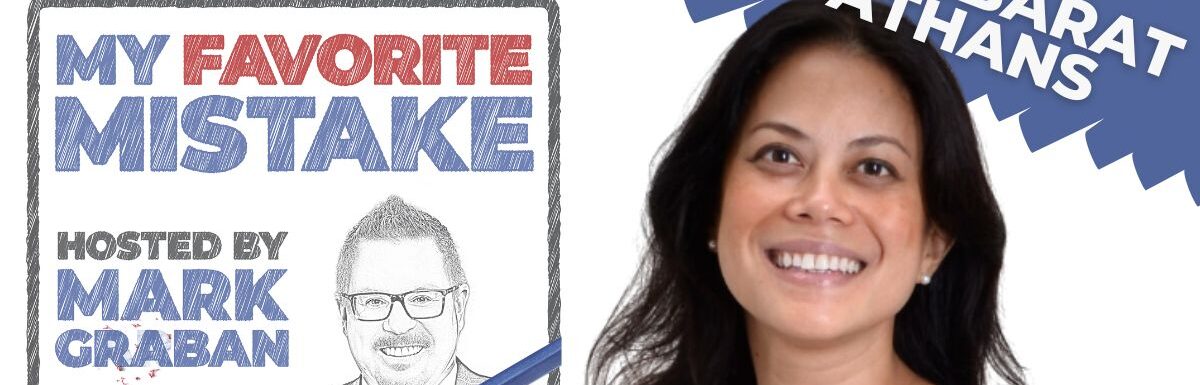
Irna Hutabarat Athans is an innovation strategist, MIT Sloan grad, author, poet, and former Tango World Championship competitor. Her favorite mistake was walking away from technology entirely because she felt it was soulless and couldn't accommodate her values. It took years for her to realize she didn't need to choose between her humanity and the tech world.
Listen:
Check out all episodes on the My Favorite Mistake main page.
My guest for Episode #347 of the My Favorite Mistake podcast is Irna Hutabarat Athans, an innovation strategist, author, speaker, and MIT Sloan graduate. She has led teams across high tech, capital markets, manufacturing, and supply chain, and now focuses on making complex technologies like blockchain and AI accessible and human-centered. She's also the author of Blockchain for Girls and the People Who Love Them and Poems for the Dying, a trophy-winning public speaker, and once competed in the Tango World Championship in Buenos Aires.
Irna's favorite mistake was walking away from technology entirely because she felt it was soulless. Despite having an MBA from MIT, she couldn't find the spark — her real passion was literature, Greek tragedies, and Thomas Hardy. So she left tech and became a tango dancer, a writer, a world traveler. That decision cost her years of income and impact. The turning point came at a conference where she challenged a room full of entrepreneurs about the jobs AI would eliminate. A woman in the audience told her, “The fact that you asked that question is the very reason you have to lean into AI — because AI is now driven by people who do not ask those questions.”
From there, Irna started using AI not as a search engine but as a thinking partner, applying chain of thought reasoning to surface limiting beliefs about money, success, and whether someone with her values belonged in technology. Through that process she arrived at a personal mission: to be a creator, creating something she enjoys, that people will pay for, and that makes the world a better place. We also talked about what blockchain actually is beyond crypto, why only 6.4% of blockchain VC funding goes to women-led companies, and why the convergence of AI, blockchain, and quantum computing needs more diverse voices at the table.
Themes and Questions:
- Why do talented people walk away from industries that need their perspective most?
- How can AI be used not just for productivity but for deep self-reflection and personal growth?
- What is chain of thought reasoning, and why does it matter more than copy-paste prompts?
- How do limiting beliefs about money, success, and identity shape career decisions?
- What is blockchain beyond crypto, and why does the distinction matter?
- Why does only 6.4% of blockchain VC funding go to women-led companies?
- How do analog skills like reading literature and writing letters build the critical thinking AI demands?
- What happens when technologies like AI, blockchain, and quantum computing are built without diverse voices?
- How do you find the overlap between what you can do, what you want to do, and what others will pay you for?
- Can AI help surface beliefs you don't even know you're carrying?
- How do you bring humanity and values into a field that feels soulless?
- What role does psychological safety play when people are exploring their own limiting beliefs with AI?
Scroll down to find:
- Video version of the episode
- How to subscribe
- Quotes
- Full transcript
Find Irna on social media:
Memorable Moments from the Conversation:
Click on an image for a larger view

Subscribe, Follow, Support, Rate, and Review!
Please follow, rate, and review via Apple Podcasts, Podchaser, or your favorite app—that helps others find this content, and you'll be sure to get future episodes as they are released.
Don't miss an episode! You can sign up to receive new episodes via email.
This podcast is part of the Lean Communicators network.

Other Ways to Subscribe or Follow — Apps & Email
Automated Transcript (May Contain Mistakes)
Mark Graban: Hi, welcome to My Favorite Mistake. I'm your host, Mark Graban. Our guest today is Irna Hutabarat Athans, an innovation strategist, author, and speaker. She's an MIT grad — that's how we got connected. She's led teams across high tech, capital markets, manufacturing, and supply chain, and now focuses on helping people and companies make sense of complex technologies, including blockchain and AI, turning that into something human and accessible. She's a published poet. One of those books is titled Poems for the Dying. She's a trophy-winning public speaker and once competed in the Tango World Championship in Buenos Aires. Her most recent book is Blockchain for Girls and the People Who Love Them. So, Irna, welcome to the podcast. How are you today?
Irna Hutabarat Athans: Mark, I'm doing well, and thank you for that introduction. I think you did a better job than I did describing myself in a few sentences. I'm gonna borrow some of your descriptions.
Mark Graban: Well, it's hard to sit and listen to yourself being introduced or described that way. But thank you for being here. I've gotta ask before we get into anything mistake related — Tango World Championship. How did that go? Are you still competing?
Irna Hutabarat Athans: How did that go? I didn't win. I think there were about 500 people and we probably came out like 450 out of 500, and I joked that maybe the other 49 didn't show up. I'm by no means an expert tango dancer, but I did well enough that I could compete in a world championship.
Competing in the Tango World Championship and Walking Away from Dance
Mark Graban: That's still impressive even to make it to the world championships. Are you still dancing, for fun or competitively?
Irna Hutabarat Athans: No, I'm not. I married a man who does not dance, and it saddens me. I tried to drag him and convince him. He's like, no, no, no. So no, and I miss it with all of my heart. My blockchain book was actually inspired by the years that I lived in Buenos Aires learning tango. I lived there during a very difficult period — they call it the dollar blue period, where you couldn't get your money out. But we can talk about that later. I don't dance anymore, but I do have a newsletter called Tango Heart that connects lessons from tango to lessons about leadership and technology.
Mark Graban: Well, you and my wife could commiserate sometimes. She also married a man who doesn't dance. But at an event she goes out and dances where it doesn't require a partner or choreography.
Irna Hutabarat Athans: I do that kind of dancing as well. The free movement dance and things like that. And I listen to tango music on my long drives and I sing tango, and later I will connect tango with AI. But that's something I'm gonna do later on.
Irna's Favorite Mistake: Walking Away from Technology
Mark Graban: Well for now, Irna, before we jump into other topics, as we always do here, I'm curious — from the different things you've done, what's your favorite mistake?
Irna Hutabarat Athans: I had many mistakes. Choosing my favorite is hard, and choosing one that's relevant to this call was harder. But I believe one of my favorite mistakes that other people could learn from is that I tried to walk away from technology because I felt that it was soulless. It didn't have a soul. It felt empty, and I had different kinds of jobs in technology that didn't make me happy, so I chose to walk completely away from it. And that was a mistake.
Mark Graban: When did you discover that decision was a mistake? It probably felt right in the moment. Or it felt like you had to, or you wanted to walk away. Tell us more.
Irna Hutabarat Athans: That's a really good question. I only discovered it as a mistake recently. I would say within the past 12 months or the past two years — that was how recently I learned that it was a mistake. I did not see technology as needing someone with my set of skills and values. I actually felt I wasn't unique enough for it, and the impact it was making wasn't unique enough to convince me to be passionate about it. That was why I danced tango. I became a tango dancer, I became a writer. I became a world traveler. I became a language learner. I just didn't do things related to technology because I didn't want to be a part of big data. I didn't want to be a part of AI. I didn't want to be a part of all the things that were cool about technology at that time.
The Values Disconnect Between the Humanities and Tech
Mark Graban: What was the values disconnect? You mentioned it being soulless. Tell us more about what was missing or what didn't fit for you.
Irna Hutabarat Athans: I participated in several startups, and some of the startups I led. I started startups at my own company, joined one of my MIT classmates for one of his companies. We failed. We failed a few times, and looking back at why we failed and why we walked away — my passion wasn't in it. It's like I had a degree from MIT. The name of the university has technology in it. But my passion was reading literature. I love reading Greek tragedies. I love English literature. Books by Thomas Hardy resonated with me and stayed with me forever. And somehow I couldn't connect that to the field of technology for which I prepared my skills, my career as a launchpad. And maybe I was led into MIT by the need to prove something to the world. The need to prove something to my dad, who I love very much. The need to prove that I'm a woman and I can do it. But these were all the wrong reasons. At some point in my life it hit me — what is it that is authentically you, Irna? And at that time I believed it wasn't technology. And that cost me many years in great income-generating potential.
Mark Graban: What was your degree at MIT? You can give the course number, but we'll need to translate that into words also.
Irna Hutabarat Athans: That's a very MIT thing. Everything is a course number. It was Course 15, so it is my MBA. But my focus was on innovation, bringing innovation to the market. I was a teaching assistant for the MIT New Enterprises class. I was actually teaching assistant for Noubar Afeyan, who was the founder and CEO of Moderna. And as a TA, I reviewed business plans. I worked with VCs. I sat through courses as a TA for two semesters where entrepreneurs shared what made them successful and VCs shared what they look for in a successful startup. I was in the midst of all of that, but what was missing was the spark. I do believe that successful people need to have that spark in terms of doing what they're doing, and I couldn't find my spark in tech at that time.
Finding the Overlap Between Talent, Passion, and Purpose
Mark Graban: But you found it. You're really making me think of the overlap between what we can do, what we have the talents to do — clearly you have the talents to get in and to graduate from MIT — but finding the overlap between what you can do, what you want to do, and what others are willing to pay you for.
Irna Hutabarat Athans: I love it, Mark. It's hard to find that overlap. It took me a while, and it took me with the help of AI to find it.
Mark Graban: So that's the irony of it. The tech that you ran from ended up being helpful. Tell us more about that. I see things all the time like, here are these power prompts that you can put into AI to get the most out of it. What can we learn from how you used AI to figure this out?
How a Conference Question Changed Everything
Irna Hutabarat Athans: Let me start with what happened two years ago. I went to this conference with a bunch of hotel and restaurant entrepreneurs, and they were talking about job creation and how they're most excited about how AI can replace some of the jobs that are very difficult to manage — a receptionist at a hotel, waitressing, servers, reservation management — and how AI is going to transform that business. There were probably 500 people in the room. I was listening to this and I was genuinely worried about some of my friends who are in the restaurant business, people with families. So I raised my hand and I asked these owners of hotels and restaurant chains, what do you think about the jobs that you're eliminating? What do you think of the families who depend on going to your businesses to feed their families with AI? Because that was my issue with AI — it's going to replace jobs. And many of them could not answer me.
Mark Graban: Couldn't, or they hadn't thought about it?
Irna Hutabarat Athans: They didn't care. They could not answer me, and I was upset. And maybe that's why technology — I wasn't as excited about it. But you know what happened at the end of this speech? There was one speaker that really resonated with me, and he did seem to care. He was a keynote speaker. I talked to him and said, I'm curious to know what you think. He was impressed that I asked the question. And because he was very successful, I said, I'd like to help you write your biography because he had a heart. I want to work with someone who has a heart, who's very successful in business. Maybe there's a way that I can help you with what you're doing. He said, I already have enough people working for me, but if you need mentorship, I'd be happy to mentor you. And he gave me mentorship.
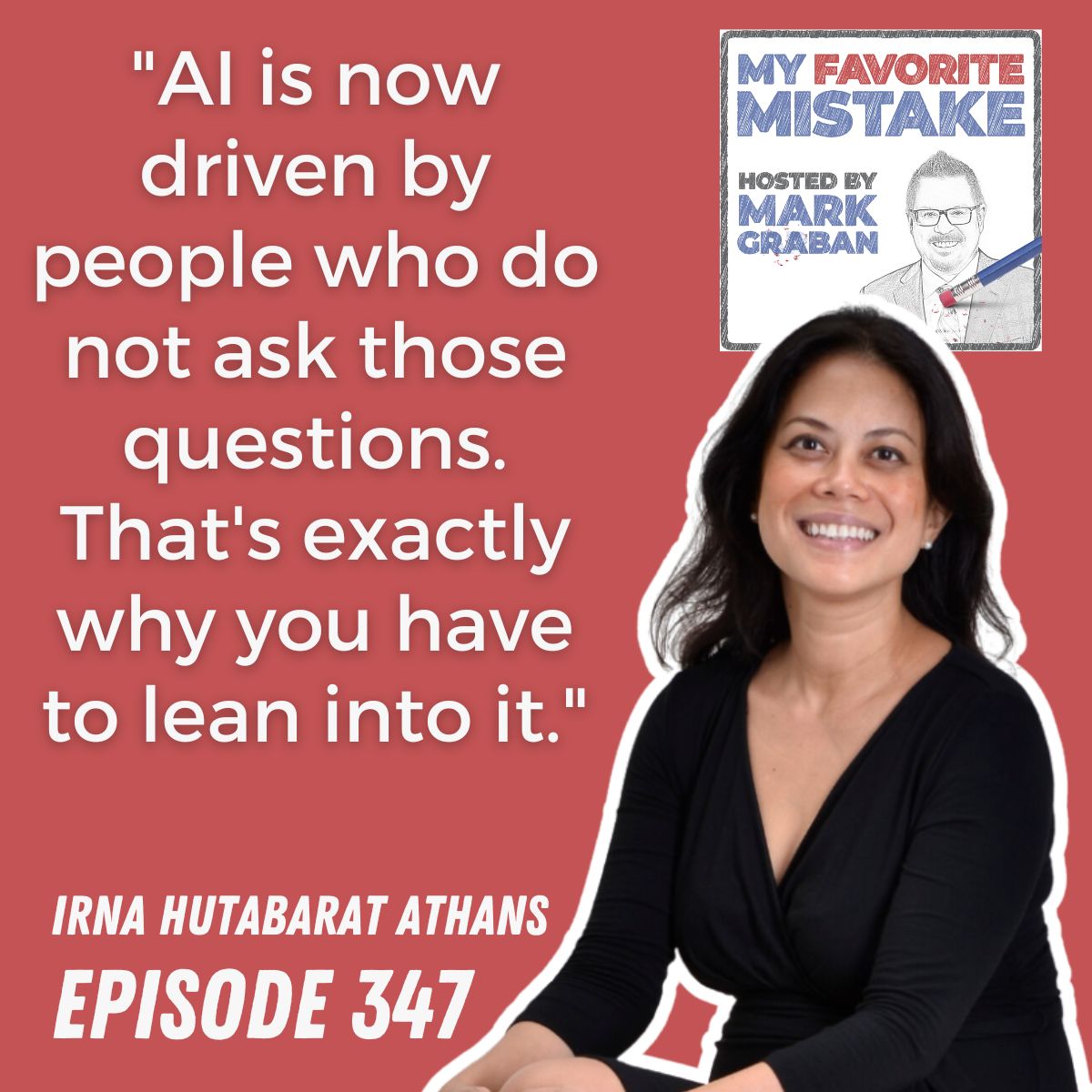
This other woman at the end also walked toward me, called me over, and she said, the fact that you asked that question is the very reason why you have to lean into AI. Because AI is now driven by people who do not ask those questions.
Using AI to Overcome Limiting Beliefs and Find Your Spark
Mark Graban: So from then, you started really learning different AI tools and changing your perception.
Irna Hutabarat Athans: Yes. And even some of the books that I wrote — writer's block can be healed with AI. One of the sources of writer's block is just the mountain that you have to climb to actually create a book. AI can help you break down tasks into mini tasks. You can even ask AI, I have writer's block, can you help me overcome that? And AI can say, what is causing this? What is the fear that you have right now? Do you feel that fear in your body? You can program it, you can create it in such a way that it guides you through the reasons for your writer's block. And it can break down your vision into chapters, into sub-chapters.
Mark Graban: So how did AI help you understand your passion for technology?
Irna Hutabarat Athans: In my experience, a better thought-out input prompt leads to better output. And there are people who share prompts to copy and paste.
Mark Graban: You're shaking your head. Does it have to be more individualized?
Irna Hutabarat Athans: That is where the secret sauce lies. I was looking at this interview by Eric Schmidt recently, former CEO of Google. He said that to be really successful at using AI, you need something called chain of thought reasoning. Chain of thought reasoning is where you go into one question, one concept, and you have the answer. But that answer leads you to more questions, and more questions, and more questions, until you get to the very source.
Unfortunately, many of us are not trained in chain of thought reasoning. Those are things that you develop as children. And our generation, Mark, the fact that we're older is actually an advantage. Someone actually called Generation X the perfect generation because we grew up with analog and we grew up with digital. The fact that I used to read books and I love reading Shakespeare and Greek tragedies — those things teach you chain of thought reasoning. If you learn how to do things in an analog way, whether it's learning how to add and subtract with a pen, or writing with a journal, or walking barefoot, or hiking in the woods — whatever it was that you did in a non-digital world — writing a letter to someone, reading that letter, and then writing back really thoughtfully, not in a text. Those things develop your critical thinking skills. And it'll allow you to interact with AI in a way that is different from someone who was raised completely in a digital world.
So I actually used AI to go deeper into my thought, go deeper into some of the limiting beliefs that I had about what is success, what is blocking me from succeeding, and what do I need to overcome these blockages.
Reframing the Mistake: You Can Bring Your Humanity into Technology
Mark Graban: It's powerful. And what I'm hearing is maybe some of the regret about leaving tech was a limiting belief that you couldn't bring your soul, your feelings, your values into it, so you ran away from it instead of leaning in to influence things.
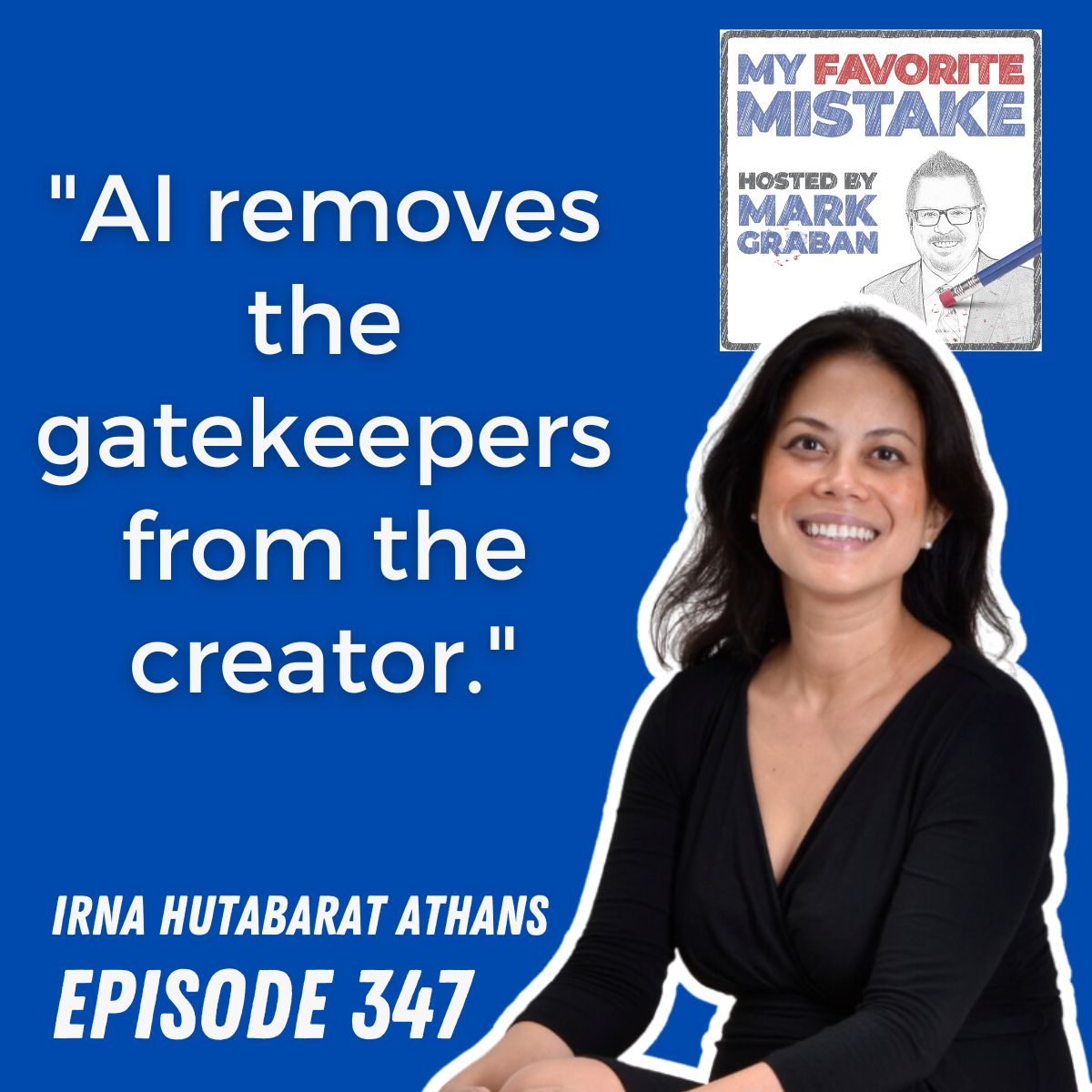
Irna Hutabarat Athans: Absolutely. That's where — you're a good listener. You reframed it very well. And AI helped me to see that, and to frame it in a way that convinced me. You can keep asking why. The most powerful question you can ask is actually why. And as a result, I finished two books in a year. I am learning how to use AI to create motion pictures. AI empowers you to be a creator. The book is just the beginning. Then you can have an audio book. You can break your books into TikTok videos. You can turn your book into a children's lesson, into courses. And what I'm passionate about is turning it into a moving picture, like a short movie or something that educates, because I'm really passionate about education. All of these things can be created with AI more efficiently, and it brings the voice of the creator out without needing funding from a VC or from a producer or from a rich parent. AI removes the gatekeepers from the creator. And that is what excites me, Mark.
AI as a Thought Partner, Not Just a Search Engine
Mark Graban: I think it's interesting. I haven't heard someone describe it that way. I tend to use AI in a very iterative way, as a thought partner. A search engine — I ask, I make a request, I get an answer. Okay, thank you, we're done. As opposed to that more iterative process. I don't eat a lot of fast food, but there was one restaurant — I won't mention the brand — but the order-taking was completely AI. And there was a big thing saying basically, you are going to be interacting with AI to start your order. This robotic interaction made me wonder, how much are you really saving in labor cost? And the AI, at least today, can't provide the warmth or the caring that might be part of the experience, not just hopefully accurate, efficient order-taking. How do we use AI to supplement people's abilities instead of replacing them?
Irna Hutabarat Athans: That's a fantastic question, Mark. I'm sure there are people doing this for a living, answering that question. But from my experience, I think there are two ways of using AI. One is the iterative way — that's why AI agents are really big, it's about repeating things. But the other way is the chain of thought reasoning, and I believe the best way to use it is by combining both. So let's say I want to create educational content for children using different AI tools — a cartoon with songs and singing and characters that cater to individualized types of children. I'm going to learn an AI stack to allow me to create that. I need to learn different AI agents that I can put together to make that happen without too much work from my side, more automation and less hands-on work. And at the end it's going to be cold, unless you add a lot of your warmth and your humanity into it, which you should create with AI using chain of thought reasoning. I do believe that is how you stay relevant.
There's a quote I've read somewhere — AI will not replace humans, but humans who know how to use AI will replace humans who do not know how to use AI. And I think if you're warm, if you're creative, if you are a creator, if you do care about the world and about the future of planet Earth, I do think it is time to lean into AI and blockchain.
What Is Blockchain, Really?
Mark Graban: Let's pivot a little and talk about blockchain. Your book, Blockchain for Girls and the People Who Love Them. I barely know, as an adult Gen X, middle-aged man — I hear the term blockchain, it was all the rage for a while, I know it's related to cryptocurrencies, but what is blockchain for those of us who don't really know?
Irna Hutabarat Athans: Thank you for asking that question. I'll define it in my own way. I think of blockchain as pure blockchain. There are those who are reinventing blockchain and want private blockchains, but I don't want to go into all that. Originally the idea of blockchain was about democracy, equality, and distribution. Equal distribution. Essentially it is a ledger. And what is a ledger? A ledger is like a notebook to record things. Right now we've been recording things and saving that data on what we call a centralized database or any type of database controlled by a group with an owner. And data can be manipulated. Data can be questioned. So blockchain is really data that is not owned by a single group, single owner, or small group. It is distributed data. And because it is distributed, this is an ideal system — it can be trusted by everybody. It's not about whether you trust Mark's data or Irna's data, or whether Harvard can trust MIT's data. It's all of our data collected on a blockchain and we work together collectively to deliver whatever promise we promise to deliver.
Why Blockchain Is Not the Same as Crypto
Mark Graban: Is that trust why cryptocurrencies are built on this? If I were to say I have a thousand coins, who am I to say? So there's this ledger that keeps track.
Irna Hutabarat Athans: Thank you for that question. I believe crypto, and the people who suffer through crypto — because crypto is a very high-risk area, and many people go into it without really understanding it — they're doing a disservice to blockchain. Because blockchain is not about crypto. Blockchain is about data. Unfortunately, the data that people care about that moves the world right now is money data. That's why the potential of blockchain right now is linked to the potential of crypto. But they are two different things. Blockchain can track the data from my food. Is my food really organic? I can trace it from production to plate. It can track whether my shirt is ethically produced, if it's really polluting rivers in parts of India I've never visited. That's data. Crypto involves financial data, and as a result it attracts a certain kind of people who want to get rich quickly. It attracts some people who are involved maybe with crime, or people who heard from their friends that it's great so they have no idea what it is but they're going to buy it anyway. It attracts speculators, and unfortunately it attracts big money that can also manipulate the market because the rules are not yet clear in terms of what you can or can't do with crypto. It's very volatile. That's why I don't really like to explain blockchain in terms of crypto. Some cryptocurrencies are stored within the blockchain, but there are different kinds of blockchain, so you really have to understand what you're investing in.
Why a Blockchain Book for Girls
Mark Graban: So why a book for girls? There are gender gaps in tech workforces and things that drive girls away from STEM education. Give us the backstory of the purpose and the meaning.
Irna Hutabarat Athans: Thank you, Mark. I looked at the numbers associated with blockchain. I think 6.4% of all VC money goes to blockchain companies led by women. And that's the biggest number. My book has the numbers that show the gap. So blockchain's not just about crypto. I actually encourage those who are going into blockchain — don't start with crypto. Really learn what it is. Read a simple book about it first. By the time it hits you, it probably won't be called blockchain because the term just got a negative rep. But blockchain is going to be everywhere. It's going to be in the way we vote. It's going to be in the way airplanes are tracked. There was a blockchain in Congress event a few weeks ago with 400 people — how the government will be using blockchain, how taxes will be managed, how creativity can be monetized, how NFTs can be tracked.
Mark Graban: We haven't heard about NFTs in a while.
Irna Hutabarat Athans: And maybe what we call non-fungible tokens — blockchain is going to be the foundation of anything that involves any type of data, whether even humanitarian data, how you distribute food aid. It's going to be on a blockchain. I went to the blockchain conference last week, the DC Blockchain Summit, where one of the key themes was that blockchain, AI, and quantum computing will merge. These are the three biggest trends in technology. If we don't have women with voices in these technologies, they will be built with the intelligence of men. And although I respect the intelligence of men, we have different brains. We think differently. I think for the human element to remain, we need to include everybody's voices — women, groups not traditionally dominant in technology and finance. I want to be a part of bringing more groups into that.
Why Technology Needs Diverse Perspectives and the Humanities
Mark Graban: Different perspectives. It needs to reflect humanity.
Irna Hutabarat Athans: Yes. Look at planet Earth. Do you want the future of technology to only reflect the experience of a small group of our planet? I don't think so.
Mark Graban: It's not a stereotype because it's a predominant reality — the white male tech bro. That's one type of person. But there's this long history of people who are educated in — it's funny, it's called the humanities. I think of the humanity that's in the humanities. I don't read the types of books that you do. I think I'm an engineer with feelings. But Steve Jobs, for example, and other people, imperfect as we all are, bring a different perspective than somebody who's purely quantitative. And it's a stereotype, but it's mostly true. MIT, in my experience, values the quant view of the world. Everything is an equation. Maybe not, though. There are other perspectives to bring into it.
Irna Hutabarat Athans: You need both. I think having an MIT degree is a blessing with what I'm doing right now. And an inspiration, Mark, are my nieces. They're great artists. They don't know about blockchain. One told me that she wants to be a marine biologist, but does she know that eventually the movement of whales will be tracked on a blockchain, and that will allow her to look at it a little differently?
Mark Graban: You know, the MIT seal — or logo, if you will — originally it was two men. It should represent two people. It's the scholar and the worker. You've got the mind and the hand.
Irna Hutabarat Athans: But I think there's a different duality. And this is not an MIT thing — think of brain and heart. Thinking and feeling. Logic and emotions. Everybody at MIT has all of that, but the emphasis is very much in one direction. I think it's changing. I went back to Sloan recently. The type of people they're bringing in are different. I graduated a long time ago.
Mark Graban: Me too. And I think the ratio of the class — I think there are like 40% women, if not more.
Irna Hutabarat Athans: Not 50% women. But I do think the institute is seeing that as well.
Mark Graban: And there are certain — I believe some of my classmates had non-traditional undergraduate degrees for coming into MIT Sloan.
Irna Hutabarat Athans: I was one of them. My undergrad was in chemistry. But I did a short stint working for CNN in Jakarta. And I used that as one of my stories for my essays. I think that made me unique because my essay was really about assuming that I'm being interviewed for CNN after graduating from Sloan. What would I say? I think I was being interviewed by Oprah. And I think because of that, I got in.
Mark Graban: But you also had scores and stuff too. And as a chemistry major, you certainly took and passed calculus.
Irna Hutabarat Athans: I did. I tutored physics.
AI Can Do the Engineering — Critical Thinking Is What Matters Now
Mark Graban: But I wonder if Sloan has more opportunity to define where are we drawing business leadership from and who and how are we educating them. Having that diversity — my class was incredibly internationally diverse, but when I was there, it was probably 70% men, which I think was actually a higher percentage of women at MIT Sloan than there was at Harvard Business School at the time. That's my recollection — nobody please sue me if I'm making a mistake there. But I think that diversity in backgrounds and perspectives is enriching.
Irna Hutabarat Athans: Especially now, Mark. Because right now AI can do the programming for you. You can create a webpage using some AI tools. The engineering can be done with AI. I think especially now it's more about critical thinking. It's about being able to command AI. And I do believe having a holistic background is helpful.
Mark Graban: A couple other questions. Is there another book coming? AI for Girls? Quantum Computing for Girls? And the people who love them?
Irna Hutabarat Athans: Yes. I believe, as Michael Jackson's song says, the children are our future. I'm working on something that will allow children to think more critically. I'm passionate about creating children's books and children's educational content that helps them overcome limiting beliefs, because I have a lot of limiting beliefs. AI helped me look at them, Mark.
Rewriting Limiting Beliefs About Money and Value
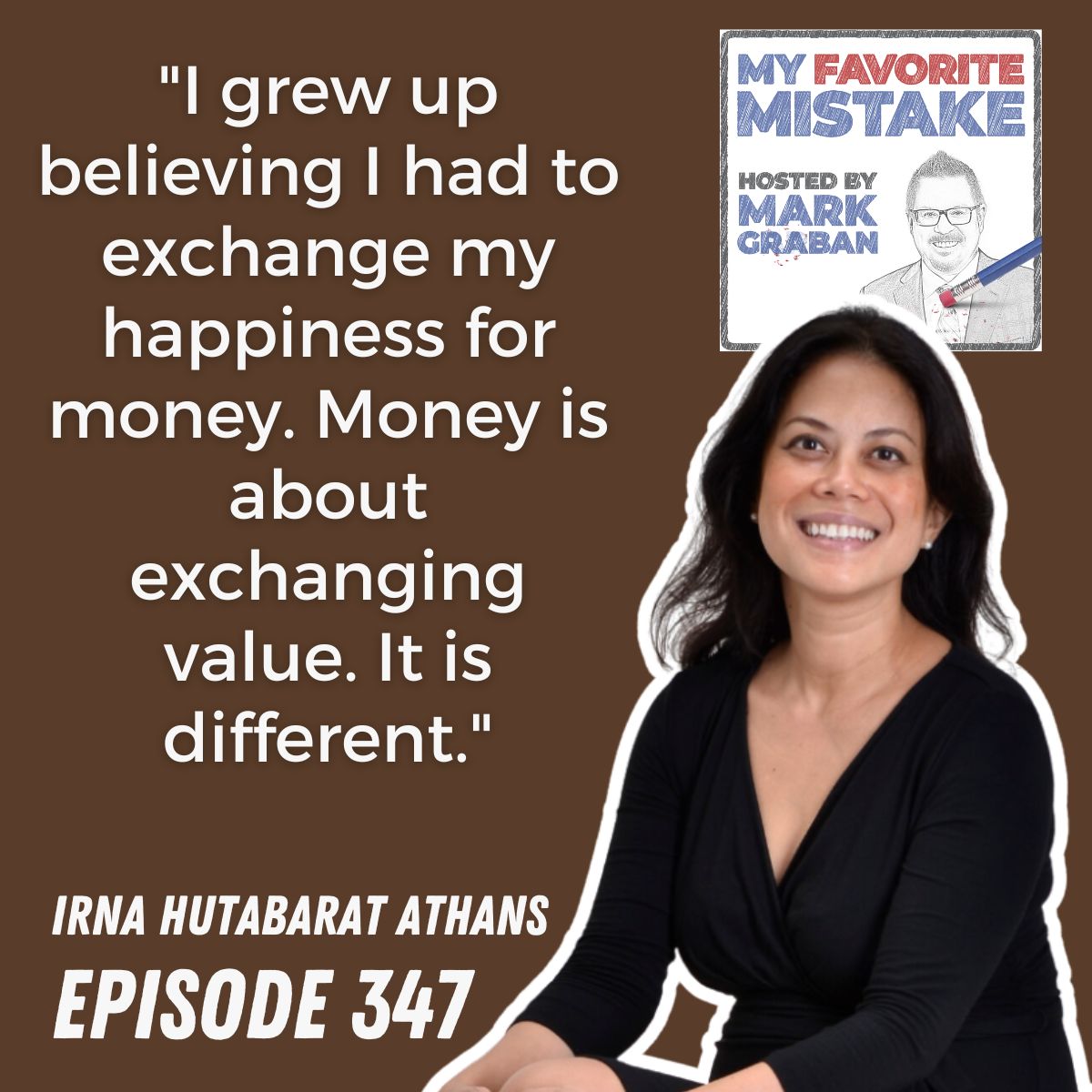
I have serious limiting beliefs about money. Because I actually believed that you have to work hard and sacrifice your time and be unhappy to earn money — that money is something you exchange for your happiness. Because I saw my parents struggling with money, arguing about money. And I didn't want that. So I grew up believing that I had to exchange my happiness in order to get money, which is not the case. Money is about exchanging value. It is different. And unless you teach your kids that from the very beginning, your kids could grow up not realizing that money is really about the exchange of value. And guess what? You can create value and find joy in creating that value. These two books — I found joy in creating them. And if I can create something of value that people will pay for, that will make the world a better place, and where Irna remains authentic to Irna — that's my life's mission.
Mark Graban: Wow. I'm just gonna let that sit for a minute. That's powerful, what you shared there. That's very meaningful.
Irna Hutabarat Athans: It took me a while to phrase that. What is it you want, Irna? To be a creator, creating something that I enjoy creating, that people will pay for, and that will make the world a better place. But it took lots of AI conversations, chain of thought reasoning, for me to come up with a statement about me. So that's why it's not just iteration. You can use it for different purposes.
Start Asking AI About Your Own Limiting Beliefs
Mark Graban: So if somebody listening is tempted to do this — and I'm tempted to after we record — do you just start the conversation with your favorite AI chat and say, can we talk about limiting beliefs that I may have that are holding me back in my life, and see where that conversation goes? It's obviously not a search engine. It's not going to tell you, hey Mark, these are your four limiting beliefs. It's probably going to ask questions.
Irna Hutabarat Athans: It is, and that's where the chain of thought reasoning comes in. AI is about asking the right questions. It's not about answers. It's about knowing how to ask the question, and the follow-up question. I think the best way is to start with that and see where you go from there. I'm actually thinking of creating the methodology that I used and creating an AI agent out of it. But I have so many things I want to create. But yes, that was one of the first things that I did. There are different things I did after that in terms of asking the right questions. That's where the critical thinking comes in.
Mark Graban: And I think one reason people maybe prefer talking to AI is it's probably not going to be judgmental if you make a mistake.
Irna Hutabarat Athans: It's not. And you can actually tell it to be compassionate.
Mark Graban: Without becoming sycophantic or blowing smoke.
Irna Hutabarat Athans: Exactly. Word it in a way that will encourage me, or ask how can I learn from this.
The Literature Teacher Who Taught That Great Books Teach You to Ask Great Questions
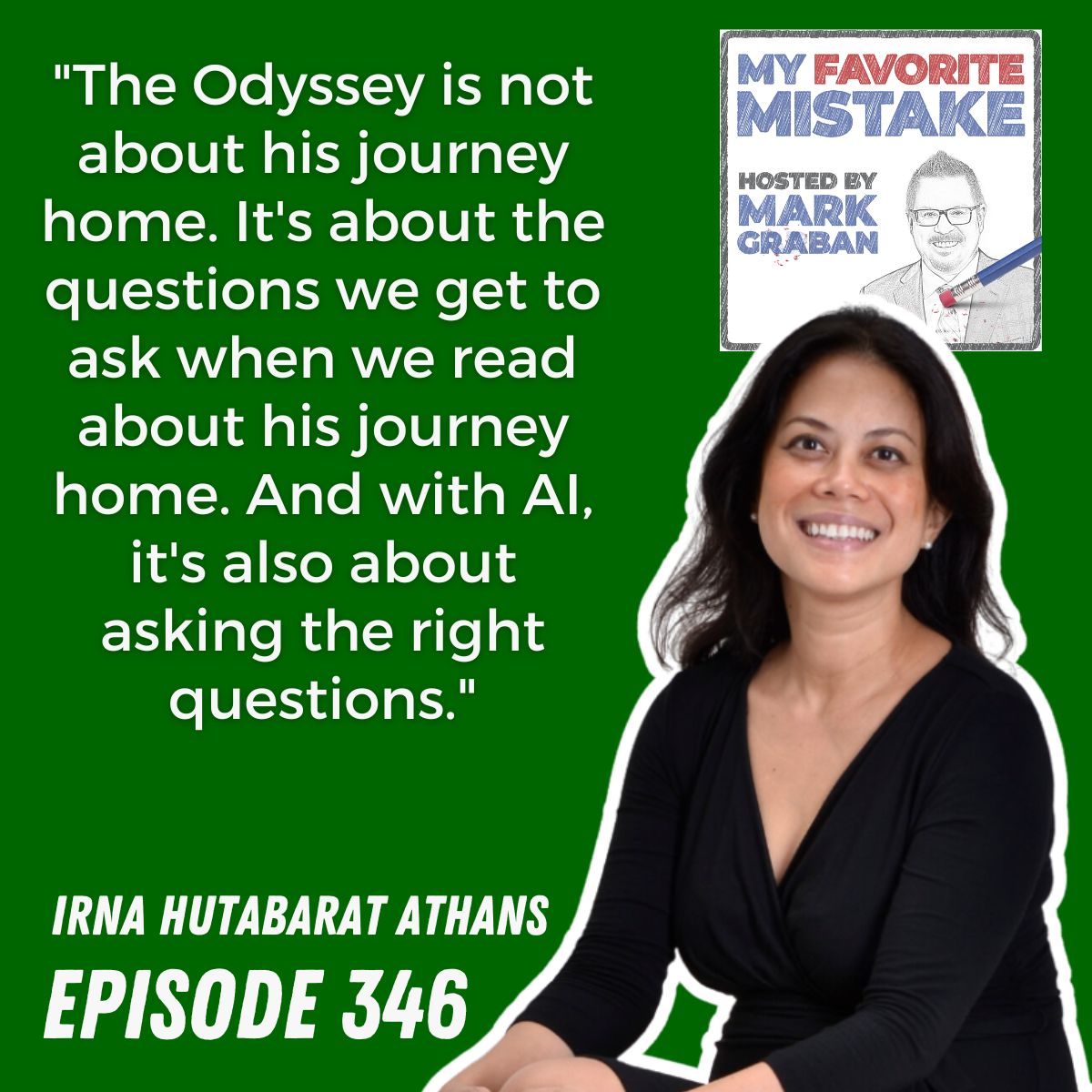
One of my favorite courses that changed my life — in fact, if money wasn't an issue before I went to Sloan, I'd probably be a literature teacher. Because the people who changed my life are literature teachers from my high school. It was an AP English class at West Springfield High School in Fairfax County. Mrs. Russell. She made us read so many great books, and she taught us this concept of the tragic hero and Greek tragedies. She actually made me realize — I was 17 years old probably — that these great books allow you to ask great questions. What is justice? What is beauty? What is truth? What is love? What is destiny? What is fate? What is free will? Can you imagine a teacher asking a bunch of 17-year-olds about to go to college to ask these questions and telling you that it's really about the question? And these writers since ancient Greek times knew it was about the question. The Odyssey is not about his journey home. It's about the questions that we get to ask when we read about his journey home. And so with AI, it's also about asking the right questions.
Mark Graban: Well, I think we're going to have to leave it at that. Hopefully I've asked some good questions. You've raised a lot of great questions and thoughts and insights with us today. Thank you so much.
Irna Hutabarat Athans: Can I just plug my website and my book in case people want to learn more about my upcoming books?
Mark Graban: Please do. Please share.
Irna Hutabarat Athans: My website is called athansmedia.com. It's A-T-H-A-N-S media, M-E-D-I-A dot com. They can learn more about me and what I'm passionate about on that website.
Mark Graban: Well thank you for that. I encourage people to go take a look. There'll be a link in the show notes. Again, Poems for the Dying is one of the titles, and Blockchain for Girls and the People Who Love Them. So, Irna, thank you so much for being here. Thank you for sharing your story and your reflections. This has been great.
Irna Hutabarat Athans: Thank you so much, Mark, for listening and for giving me a chance to speak on your podcast. You're very welcome.
Mark Graban: Thanks. Bye bye.