
In the summer of 2016, CPA Tyler McBroom got a first call about partnering with Tony Robbins’ accounting alliance. It was set for 10:30 PM, so he asked to move it inside business hours. The answer was “Sure, no problem.” Then came three years of silence and monthly follow-ups. Tyler, now CEO of TRM CPA, explains what that request taught him and why he no longer reschedules when opportunity knocks.
Listen:
Check out all episodes on the My Favorite Mistake main page.
My guest for Episode #371 of the My Favorite Mistake podcast is Tyler McBroom, a CPA and the CEO of TRM CPA, which helps business owners legally keep more of their profits. He’s the author of Cash Flow and Grow, and his firm was named the number one small employer on Best Companies Group’s America’s Best Workplaces list.
Tyler’s favorite mistake happened in 2016. He was a young partner in his father’s four-person firm, and his dad had made it clear the firm needed new ways to grow. Tyler sent a cold email to the founder of Tony Robbins’ accounting alliance, and that turned into a first call about a Tony Robbins partnership. The call was set for 10:30 PM Tyler’s time because the other side was in Australia. The day before, Tyler and his dad decided that was too late. They emailed to ask for a time within business hours. The reply was polite. Then nothing came back for three years.
Tyler kept following up about once a month, and each time he showed something new: a bigger Instagram following, a Forbes article, a growing team. In the summer of 2019 the call came back, and so did the opportunity. Looking back, Tyler sees the delay as more than lost time. He says a four-person firm would have imploded trying to onboard a hundred new clients at once. By 2019 the team had grown to 24, and those three years had built the capacity to absorb that growth. The lesson he kept is this: when an opportunity that size knocks, don’t make it work around your schedule.
We also get into how changing when the firm got paid, not what it charged, cut accounts receivable from about a third of annual sales to a week or two. Tyler explains why his dad agreed to a trial of a full-time videographer, and how that hire produced zero clients for nine months before it paid off. We cover the difference between tax avoidance and tax evasion, and the “grin test” for deductions. And Tyler describes how a daily 11:32 huddle keeps a remote firm from feeling like a collection of islands.
What You’ll Learn
- Why adapting to a rare opportunity’s terms can matter more than protecting your own schedule
- How three years of monthly follow-ups, each showing real progress, kept Tyler on the partner’s radar
- Why the delay may have protected the firm, giving it time to build the capacity to absorb a hundred new clients
- How changing when you get paid, not what you charge, can shrink accounts receivable and raise sales conversion at the same time
- Why days of sales in accounts receivable is a better benchmark than the dollar balance
- What it took to keep a social media investment alive through nine months of zero clients and a skeptical partner: his dad
- The “grin test” for deductions, and the line between legal tax avoidance and tax evasion
- How a daily huddle and mentorship-style one-on-ones hold a remote team together, even through tax season
Scroll down to find:
- Video version of the episode
- How to subscribe
- Quotes
- Full transcript
Find Tyler on social media:
Watch the Episode:
Memorable Moments from the Conversation:
Click on an image for a larger view
Subscribe, Follow, Support, Rate, and Review!
Please follow, rate, and review via Apple Podcasts, Podchaser, or your favorite app—that helps others find this content, and you'll be sure to get future episodes as they are released.
Don't miss an episode! You can sign up to receive new episodes via email.
This podcast is part of the Lean Communicators network.

Other Ways to Subscribe or Follow — Apps & Email
Episode #371: Tyler McBroom, CPA and Author of Cash Flow and Grow
Mark Graban: Hi, welcome to My Favorite Mistake. I’m your host, Mark Graban. Our guest today is Tyler McBroom. He is a CPA. He is the CEO of his company, TRM CPA. He helps business owners legally keep more of their profits. He scaled a firm past $5 million twice, and he’s the author of Cash Flow and Grow. His firm has been named the number one small employer to work for in America two years running. So Tyler, welcome to the show. How are you?
Tyler McBroom: Hey, Mark. Thanks for having me. Doing great.
Mark Graban: It’s great to have you here. I’m excited to talk about the book. I want to hear more about the culture that leads to being named a great place to work. The thing in your bio I think is interesting is legally keeping more of your profits. That would be a different show to talk about. That’s the important part — important for everyone involved. It would be a mistake for somebody to do something on the illegal side of things. But before we talk about your work and your book and everything, Tyler, we’re going to jump right in. What’s your favorite mistake?
My Favorite Mistake: Rescheduling the Tony Robbins Partnership Call
Tyler McBroom: My favorite mistake is the time that I rescheduled on Tony Robbins’ people when we had a first meeting to discuss being business partners with him. It took me three years of following up to get the meeting back on the calendar. It was a big lesson not to reschedule when opportunity knocks in a big way. But it led to a lot of valuable pieces that led me to where I am today. So that’s my favorite mistake.
Mark Graban: All right. So let’s unpack that. There’s a lot to dig into and get to the lesson learned. What was the setup for the opportunity to meet with Tony Robbins? And was it a family emergency, or, I’m guessing, it was something a little more your choice?
Joining His Father’s Firm and Looking for Ways to Grow
Tyler McBroom: It’s much less justified than that. Well, it started off — I used to be partners with my dad. When I had my first child, my daughter, it’s been 12 years ago now, I had the opportunity to move back to my hometown, be close to grandparents, and also start working with my dad. He brought me on as a partner to groom me to take over the firm, and told me that he didn’t want to take a cut in pay to bring me on as a partner, so we had to look for different ways to grow.
So I took that seriously and started looking for ways to grow. One of those was I joined this mastermind group. There were a bunch of business owners, and I got known as the tax guy in there. Then they asked me to teach a 90-day tax and personal finance course. I said, “That sounds great. I’ll probably get some clients from it.” So I said yes, and then half the people who signed up were Canadian. I don’t know any Canadian tax law, and it’s totally different from the US tax code.
How a Canadian Tax Question Led to Tony Robbins’ Accounting Alliance
Tyler McBroom: So I was like, “Well, I want to make sure that I still provide value to everybody.” I ended up reaching out to this Facebook group of accountants I was in, and asked if any Canadian CPAs were in there: “Would you like to guest for a week? You might get some clients from it.” The guy who raised his hand and said yes was the Canadian partner with Tony Robbins in Tony’s Global Accounting Advisors Alliance at the time.
We connected over the guest call to talk through the topic, and I said, “Tell me about this Tony Robbins thing.” He said, “Oh, it’s amazing. We go to his Business Mastery event. He talks about the importance of getting a second opinion on your taxes, and says, ‘I’ve handpicked the best CPAs in the world. They’re sitting in the back of the room waiting.’ Every person at that event gets a free review of their taxes as part of the event. We meet with hundreds of business owners and get a bunch of clients from it.”
I said, “Well, that sounds like something I’d be interested in being part of. We do a lot of tax planning. How do I become part of that?” He gave me the name of the guy who manages those partnerships. He was the Australian partner who had founded this whole alliance with Tony, and he gave me his email. I cold emailed him. Paul was his name. “Hey, Paul. Tyler McBroom here. We do a lot of tax planning here in the US. We’d love to find out how we become partners with Tony as part of this whole thing.” He said, “Great. Send me some of your numbers,” and his assistant set up a time. It was Tuesday night at 10:30 PM our time, because he was in Australia.
Asking to Move a 10:30 PM Meeting
Tyler McBroom: This is where the reason we rescheduled comes in. The day before the meeting, my dad and I were talking, and I was like, “Well, that’s kind of late at night for us to stay up.” So we emailed him, and instead of just saying, “Something came up, can we reschedule?” we literally put in the email, “That’s kind of late at night for us. It’s after our business hours. Can we reschedule for a time that overlaps our business hours?”
I was, like, 30 at the time, and I thought, “Sure, that’s a reasonable thing to ask.” And they said, “Sure, no problem.” And then I didn’t hear from them for three years.
Three Years of Monthly Follow-Ups
Mark Graban: Did they reach out and say, “Hey, a spot opened up,” or were they just kind of ghosting you, ignoring any follow-ups?
Tyler McBroom: After they said, “Sure, no problem,” a few weeks went by. I didn’t hear anything back from his assistant. I started thinking, “Okay, let me follow up,” and I didn’t hear anything. Then a month went by: “Hey, can we get that meeting?” I’m thinking, “Maybe that was a mistake.” I kept following up, and in the meantime, I started taking social media seriously. I hired a full-time videographer and started posting daily on Instagram and building my social media presence.
So I kept pinging him, about once a month. “Hey, can we get that meeting? Hey, I’m at 10,000 followers. Here’s some of my content. I really think I’m providing a lot of value to the business owner community. Can we get that meeting? Hey, I’m at 40,000 followers. Can we get that meeting? Hey, here’s an article I wrote for Forbes. Can we get that meeting?” Literally nothing. Not even a “No, we’re not ready right now.” Nothing. Totally ghosted.
The Callback and the Partnership Offer
Tyler McBroom: That first meeting was supposed to be, I think, summer of 2016. Finally, in the summer of 2019, I got an email out of the blue. It had been about three months since I’d followed up, but I got an email from his assistant saying, “Hey, Tyler, are you free next Tuesday?” And I said, “Well, as long as it’s not too late at night.” No. I said, “Yes. I don’t care what time. We’re scheduling that meeting.”
So we hopped on that call. He said, “Give me some updates on your numbers.” In those three years, we’d grown from four team members — it was just me, my dad, and two employees — to 24 team members. And he said, “We had a partnership that didn’t work out. Pending due diligence and background and all of that, we’ve been watching you this whole time. If you can hop on a plane to Vegas in two weeks to the next Business Mastery event, the partnership is yours.”
Mark Graban: Wow.
Tyler McBroom: It was my daughter’s first day of kindergarten, and I didn’t want to miss that. So I took her to kindergarten and took an Uber to the airport right after dropping her off. I was literally emailing back and forth with Tony’s attorneys on the way to the airport to get a simple, quick agreement in place so they could pull up chairs and set up some tables for us at Business Mastery. And suddenly we were partners with Tony Robbins.
Why the Delay Built the Capacity to Absorb Growth
Mark Graban: Wow. So it sounds like on that first opportunity, it might not have even been that they were bent out of shape. They found another partner. They were working with somebody else.
Tyler McBroom: Yeah, they were working with somebody else until that didn’t work out. They already had a partner. They were like, “Maybe we’ll consider adding you.” They wanted to have a conversation around that. And it was just like, you know what? If you can’t even stay up… I don’t know if you’ve been to a Tony Robbins event.
Mark Graban: I have not.
Tyler McBroom: For anyone who’s listening, they go until 1:00 or 2:00 AM every day. So if you can’t stay up until 10:30 PM, there’s no lottery ticket of being a partner with him.
Mark Graban: Did you —
Tyler McBroom: Well, Tony’s got the phrase, “Things happen for you, not to you.” If we had gotten that partnership when we first had that meeting, we would have imploded on ourselves trying to onboard 100 new clients when it was four employees. Whereas over those three years, we built the muscle of growth. We had a lot of growing pains already and learned a lot, so that when we went to the event, it was still overwhelming for us bringing on all those new clients compared to what we’d been doing. But we could absorb it, where we wouldn’t have been able to absorb it if we’d gotten the partnership right when we first had that meeting.
Mark Graban: So that might have been in the category of be careful what you wish for.
Tyler McBroom: Yeah, big time, at that point. Exactly.
Mark Graban: Wow. Well, that’s interesting. There are a lot of layers to that story. Did you get a chance to talk to Tony about what had happened, or do you figure it’s best to just let it be in the past?
Tyler McBroom: No, I was grateful to be partners with Tony. We don’t need to bring up the fact that we rescheduled on him.
Mark Graban: Why remind him?
Tyler McBroom: Exactly.
Mark Graban: That might have been a different mistake. And you got your daughter off to school, so that worked out.
Tyler McBroom: Yeah, exactly. Didn’t sacrifice the values there.
Tax Avoidance vs. Tax Evasion
Mark Graban: No mistake on that front. So let’s dig into your book. Again, we’re joined by Tyler McBroom, author of Cash Flow and Grow. There’s a mistake story in the book I wanted to ask you about. But first off, just real quickly, back to legal versus illegal. When it comes to taxes, there’s a difference between tax avoidance and tax evasion. Could you walk us through which one of those is legal and working within the framework of the tax code?
Tyler McBroom: Definitely. One is legal and one is very illegal. Tax avoidance is using — the tax code in the United States is about 70,000 pages long, and most of that is designed for ways that you can legally avoid taxes. It’s actually your patriotic duty to both pay your taxes and do everything in your legal power to minimize that tax bill within the extent of the legal tax code. There’s a reason that it’s 70,000 pages long: so that you do take advantage of those, ethically, and you educate yourself on how to do that, or work with a professional to do so. Tax evasion is lying about your taxes to pay less.
So tax avoidance is using laws that have been written and put in place on purpose to lower your tax bill. Tax evasion is breaking the law and lying about what you made to lower your tax bill. One results in handcuffs and jail time. The other results in more money in your pocket. So we want to go with the more-money-in-your-pocket variety, not the jail-time variety.
Two Tax Codes: One for Employees, One for Business Owners
Mark Graban: Because the most common, everyday form of tax avoidance, or at least tax delay, would be a 401(k) plan.
Tyler McBroom: Yeah. And that’s something you can do whether you’re a business owner or an employee. Really, there are two tax codes in the United States. There’s one for employees, and then there’s one for employers, for business owners. As an employee, you can do a few things, but for the most part, your tax return kind of has one correct answer. You can buy a home, so you can write off the mortgage interest. You can give a bunch of money away to charity. You can max out your 401(k), and you can open up a health savings account to make your medical expenses tax-deductible, if your plan offers it. And then, kind of recently, you can buy a short-term rental, manage it yourself, and take a bunch of depreciation on that. That’s kind of the one big planning opportunity you could take advantage of as an employee.
Then on the other side, of the 70,000 pages of tax code, 69,900 of them are for the business owner. So there’s a whole new world of tax planning that opens up when you open up a business, and the reason why is tax write-offs. Because business owners employ people, Congress creates tax incentives to incentivize business owners to do certain things. They’ll do things like R&D credits, research and development credits. You get money in your pocket for inventing new ways of doing things or creating things, or buying equipment, or buying real estate. So they incentivize you to do things by paying you, which basically means lowering your tax bill. So on the business owner side of things, there’s so much you can do to lower those taxes.
Benchmarking Accounts Receivable Against Sales
Mark Graban: So in the book, you were talking about benchmarking. One thing that stood out was that you discovered your accounts receivable was a lot slower than the benchmark, and you had no idea. I was wondering if you could walk us through how that came to be and how you learned that was the case.
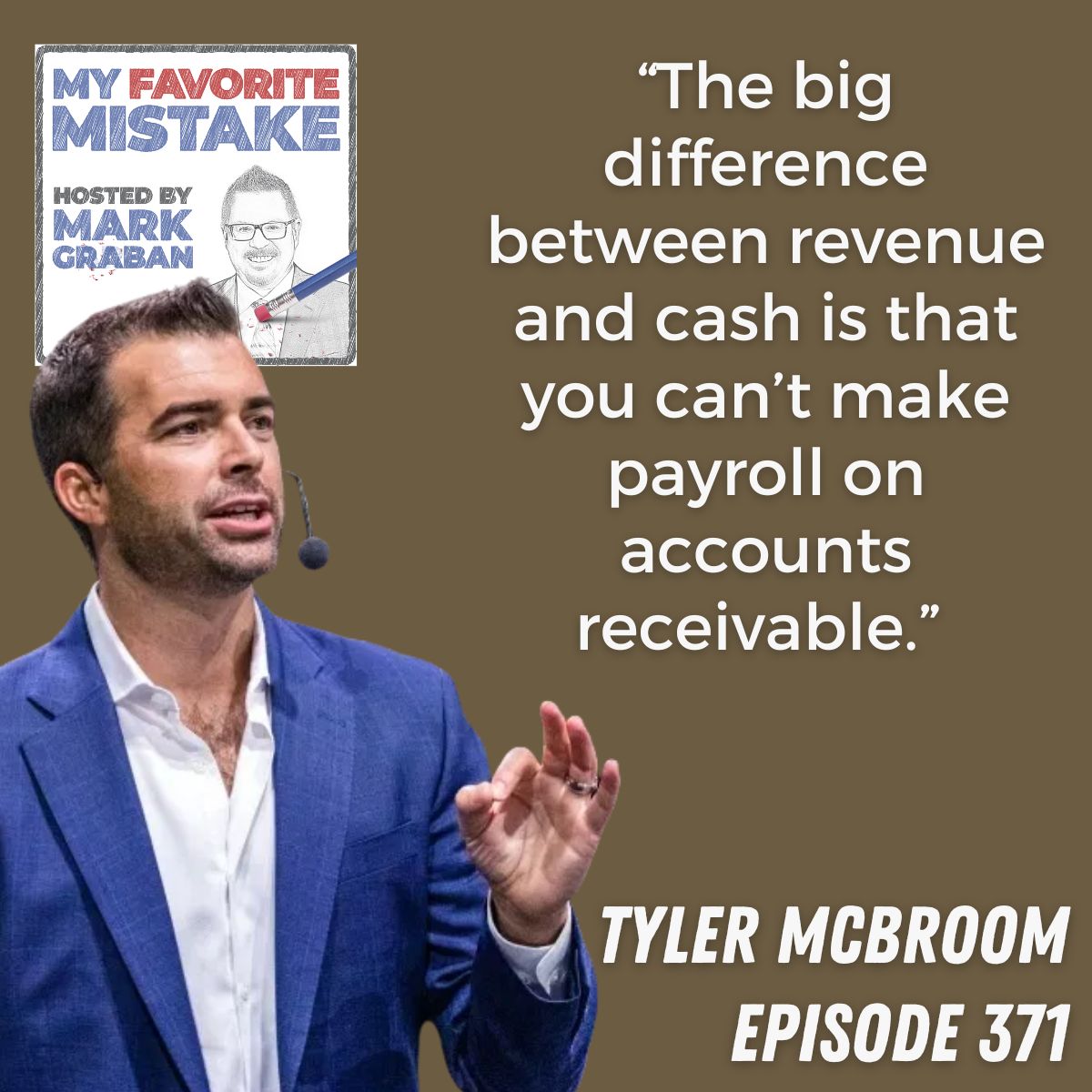
Tyler McBroom: Yeah. So I learned the big difference between revenue and cash, which is that you can’t make payroll on accounts receivable. The business was growing, and what was happening is — we were more forward-thinking in terms of getting away from hourly billing. A lot of accounting firms will do hourly billing: a month will go by, and at the end of the month they’ll send an invoice for whatever hours they’ve accrued, surprise their clients, and then hope they get paid if the client doesn’t balk at it being more than they expected. We were away from that. We were at fixed fee. But what we were doing is a great job of doing a whole bunch of work for free and then hoping the client would pay for it. We would do all the work, and then we would send them the invoice. And business owners are busy. They don’t mean to stop paying us, but they just get busy and they forget.
Days of sales in accounts receivable is the metric we were benchmarking. Why that matters more than just the dollars of accounts receivable is, if you’re a billion-dollar business, you might have a million dollars of accounts receivable and it’s not that big of a deal. If you’re a $1.5 million business and you have a million dollars of accounts receivable, that’s mayday, mayday. So you want to look at your accounts receivable relative to your sales. At the time, we were doing about $750,000 in sales, and our accounts receivable was $250,000. That is mayday, mayday. Now, if my revenue is $6 million, accounts receivable at $250,000 — I don’t love it, but it’s not a huge deal.
Changing When You Get Paid, Not What You Charge
Tyler McBroom: So we looked at some things that we could do. And by the way, if you’re listening and you have a business that has accounts receivable, you don’t necessarily need to change your price to improve your cash flow. That’s the lesson we learned. We were giving away all this tax advice for free and doing all this work up front, and then we’d get paid for it after the fact. So we started doing a quick diagnosis for free and identifying what they needed help with, but then we didn’t give them the answers until we got paid for it. We started charging up front a bulk of what we were already going to get paid anyway. We didn’t change our prices; we just changed when we got paid. And what that allowed us to do is not grow ourselves into the poorhouse, because when you’re growing, growth sucks cash.
So we shifted when we got paid, and our accounts receivable almost vanished overnight. It dropped from almost a third of the year’s sales sitting in accounts receivable down to, I think, maybe a week or two of sales sitting in accounts receivable, over the course of three to six months. It was a major shift.
What was really interesting is that it made us a little scared at first. I think one of the biggest things, especially in a service business — if you have a service business, you’re usually an expert at what you do, and so you undervalue yourself because it’s so familiar to you. We were giving all this stuff away because we were afraid to charge for it in advance, and fewer people signed up. Once we switched to charging up front and getting paid to do the work, more people actually said yes to working with us. So our conversion rate on our sales went up in addition to our cash flow improving. It was a win all around.
Mark Graban: Were these changes happening while your dad was still part of the firm? Was there any tension around the way he had always done it?
Tyler McBroom: That was within the first year or so. I would say we started doing that maybe two years into when I was a partner, because we started taking seriously that we needed to grow. We started growing, but while the revenue was growing, profit wasn’t, and certainly cash flow wasn’t. That was when we looked at that. We hired a couple of coaches, and they shed some light on things that we weren’t seeing, and that was when we made that shift. So he was still very much part of the business.
Why Fewer Clients Leave After a Price Increase Than You Think
Mark Graban: When you talk about changing this model to the fee up front, you said, “We may have lost a few clients.” Did you anticipate that might be the case, and that was just part of the whole trade-off of shifting to that model?
Tyler McBroom: It’s really interesting. So many people are scared to do a price increase. I think one of the biggest mistakes a lot of business owners make is they go years and years and years without a price increase, and then they realize, “Oh, shoot, we’re behind and we’re overdue,” and they make a huge price increase and it pisses all their clients off. Whereas if you just do a little bit each year, they don’t even notice it. But sometimes you do have to do a big price increase. One clue is if more people are coming through the door, your team is buried, and you can’t keep up with the growth. That’s a sign you probably need to raise your prices.
What’s really interesting — I’ve done a couple of major price increases, talking 40 to 50% at a go, a couple of times in my 10 years of being a business owner — is that way fewer people leave than you think. People don’t like to change. And a lot of them, especially if you’re undervaluing yourself in the first place, go, “Oh, I was wondering when this was going to happen anyway.” They knew that they were getting a deal, because you’re providing so much more value than they’re paying you.
So if you’re someone who’s listening to this and you’re scared to do a price increase because you think you’re going to lose all of your clients, what’s really cool when you do the math is this: if you double your price, which is a big jump, you could lose half of your total client base and still have the same revenue.
Mark Graban: Right.
Tyler McBroom: But you have half the work to do. So your costs are a lot less —
Mark Graban: More profitability.
Tyler McBroom: Yeah, and your headaches. That’s the thing about a price increase: it goes straight to the bottom line. A revenue increase from more work has costs. So you can increase your revenue, but if your margins are, say, 20%, and you go get $100,000 worth of new work, that adds $20,000 to your bottom line. If you increase your prices across your entire client base by $100,000, that’s $100,000 straight to the bottom line.
Social Media as a Growth Engine and a Trust Buffer
Mark Graban: Let’s talk about the growth of your firm. How much of that was through the social media efforts and exposure that way?
Tyler McBroom: It’s been a pretty significant amount. I would argue that it’s what helped me get my partnership with Tony Robbins, so the domino effect and ripple effect of leaning in and going all in on social media 10 years ago — it would be difficult to fully quantify, but it’s definitely been a game changer for a lot of reasons. Right now, if we’re looking at organic plus running ads — and ads become cheaper when you have an organic presence too — I’d say it’s a little over half the business that we get annually.
What it has done, though, is it’s not just more business; it’s educated better clients. Because the way that I put out content on social media, it’s all value. It’s giving away everything for free. Clients come into the conversation, the sales call, and they go, “I learned more from watching three of your social media posts than I have working with my accountant for 10 years. So if I’m getting that for free, what am I going to get when I pay you?” People are afraid to give things away for free, but it actually has more educated clients showing up at your door.
The other thing it does: in any business, it’s all on the back of humans doing the work or delivering the product, and so mistakes are going to happen. You’re going to goof up in service delivery at some point. What I’ve found that’s really interesting, that I didn’t expect as a benefit of having a social media personal brand where you’re out there giving tons of value all the time, is that you get a trust buffer built in with clients who come from following you on social media. If you happen to take too long to deliver something, or something fell through the cracks, they assume the best, because they know, like, and trust you through the value you’ve already given them. That’s a huge competitive advantage compared to someone who just hired you, doesn’t know you, paid you their first dollar, and then you screw up — and that’s your only shot.
I don’t want to make a habit of going around screwing things up. But over meeting with hundreds and thousands of clients over the years, it’s going to happen. You’d be foolish to think you’re never going to make a mistake. So that’s been a side benefit that I didn’t foresee.
Convincing His Dad to Hire a Videographer
Mark Graban: Now, it seems like your dad thought the social media hire and activity was a mistake, because it’s not like that’s an overnight impact, right? There was a lot of time and effort invested in growing your audience. Tell us about working through that. How do you decide, “Hey, we need to stick with it,” versus, “Ugh, let’s pull back”? It’s hard, right?
Tyler McBroom: Oh, yeah. At the time, I think our total headcount was maybe eight people, and I wanted one of those people to be a videographer, in a CPA firm. That is a tough one to convince. The reason the timing was right for me was I was just browsing LinkedIn, and I came across this guy’s profile. He lived nearby and had done an internship for Gary Vaynerchuk, who is like the OG of social media. I had been a huge disciple of Gary’s. I met him in 2011, and I was like, “This is how I want to build.” The Thank You Economy was one of my most influential business books. So the fact that he had done an internship on Team GaryVee, I was like, “Okay, this guy’s going to at least get it a lot more than some random person I would hire out of nowhere.”
So I said, “Dad, let’s just see what happens.” He was like, “What do you mean we’re going to put a full-time salary on this guy?” I forget if it was three months or six months, but I said, “Give it that long, and if we get nothing from it, I’ll pay for it out of my own pocket.” And he was like, “All right. But for the record, I don’t think this is wrong.” Fast-forward a couple of years, and we were doing this at a speech, and he said, “I thought he was crazy, but then it turned out to be all right.”
Nine Months of Zero Clients, and Why Social Media Isn’t Free
Tyler McBroom: So he came in, and for the first nine months, we were posting three times a day, every day, and got zero clients. We got our first client from it nine months in. Then one of my other clients, who I’d met through giving speeches, had built a social media following, and he gave me a couple of nuggets on how to grow my account. My account was at, like, 5,000 followers or something. He goes, “You need to be at least at 50. Your content’s great; you’re just not getting in front of enough people.” So he taught me how to grow, and then it was off to the races. Fast-forward six months after that, and suddenly we were at least breaking even on the salary. Another three to six months after that, we were getting 30 to 40 appointments a week from organic social media posts.
Mark Graban: Wow.
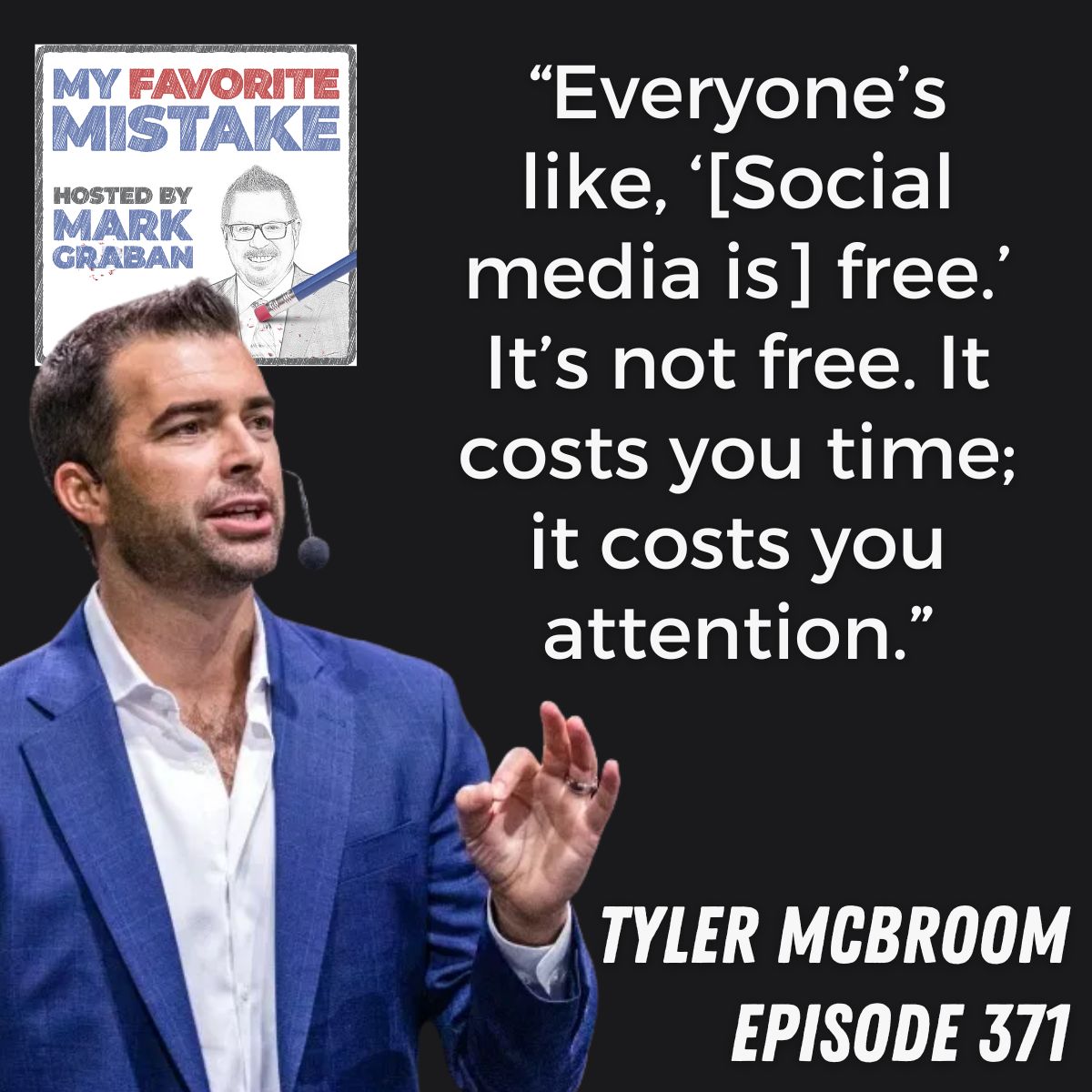
Tyler McBroom: So it was a whole bunch of work up front for zero reward. Thankfully, I enjoy getting in front of the camera and doing the content. It was costing us money and costing me time, but I did enjoy doing it. That’s the biggest thing about social media. Everyone’s like, “It’s free.” It’s not free. It costs you time; it costs you attention. And to do it the right way, especially today, it costs you actual human capital. You’ve got to have people to actually put the content out there, to put enough volume out to compete. But it can pay dividends in a big way down the road.
Mark Graban: Well, like you said earlier, you can’t make payroll on accounts receivable. You also can’t make payroll off of the number of followers. But that number of followers should lead to more eyeballs and real clients and real money coming in the door.
Tyler McBroom: It’s got to be the right followers, though, too. A lot of people chase that follower metric. They chase the vanity metrics, and they’re the wrong followers who can’t buy from you. So it’s about getting the right community. You can have a smaller follower count with a much bigger dollar benefit than if you have 10 million followers but not a single one can buy your service or your product.
The Magical LLC Fairy and Other Bad Tax Advice
Mark Graban: One of the things you’ve done through the videos and building an audience is correcting bad tax advice. What’s the most common example of bad tax advice?
Tyler McBroom: I think the most common misconception out there that I see is that you need an LLC to write things off. The biggest rookie tax advice out there is, “Oh, if you want to take deductions, go open an LLC,” and then suddenly the magical LLC fairy, I would call it, grants your deduction wishes. You don’t just open up an LLC and suddenly you can write off your whole life. That’s not how it works. You can write things off against business income that you’re generating, if they’re expenses used to generate that business income — whether you have a sole proprietorship, meaning no entity at all, or a C corporation, or an S corporation, or just an LLC. But having an LLC doesn’t magically bestow upon you the power to write things off just because you have that entity formed.
Mark Graban: Are you a fan of the show Schitt’s Creek?
Tyler McBroom: Oh, yeah. “That’s a write-off.”
Mark Graban: There’s the one episode where David was saying, “Well, it’s a write-off. It’s a write-off.” And the dad was trying to explain to him, “What do you think that means?”
Tyler McBroom: “Why don’t they call it a tax write-off?” “They do.”
Mark Graban: If you start watching that show, you don’t realize it’s going to get into the depths of tax terminology. Is there something you’ve run across that you’ve had to correct that was the weirdest or most surprising bad tax advice, where you were just dumbfounded that anybody would even give it?
The Security Dog Deduction and the Grin Test
Tyler McBroom: Probably the one that’s become surprisingly popular as a shared, semi-viral piece of tax advice is to write off your dog as a security dog because it barks outside your home office. And it wasn’t just a one-off. There are multiple people posting about that. I think maybe because it gets eyeballs and goes viral. But there’s a big difference between having a jewelry store with a Rottweiler there to guard things, because you’ve got literally millions of dollars of goods sitting there, and running a marketing agency from your home office while Fifi the Chihuahua barks at the mailman walking by.
We have what we call the grin test. If you get audited and the auditor is asking you what that deduction is in your business, you’ve got to be able to tell them what it is and why you need it in your business without grinning for at least 60 seconds. I don’t know that you can do that with Fifi the Chihuahua.
When Other Accounts Call Out Your Content
Mark Graban: Has anyone tried calling you out for a mistake they think you’ve made? Was there anything you’ve had to walk back in a video? Because that video stays out there, right?
Tyler McBroom: The video stays out there. And that’s where it’s really interesting. When I first started putting out content, almost no one was talking about taxes on social media, so kind of my brand, if you will, was putting out the more aggressive, unknown, creative strategies for saving taxes. Still legal, but more on the aggressive side. Now that there’s some crazy stuff out there in the TikTok tax world, it’s almost like I’ve come the other way, where I’m more the voice of sanity, saying, “No, this is actually what is legit and what is not.” My most popular video of all time is actually a tax fraud tier list, where I’m ranking different types of tax fraud. That just went crazy viral.
Even now, a couple of accounts will remix my reels and call me out for saying things. I think what happens is it’s really easy to take things out of context in a 60-second short-form reel. When I’m putting together a whole strategy that literally takes working with a professional and multiple entities and moving money around, and I’m trying to distill the essence of it into 60 seconds, I miss parts. Then someone who’s trying to be a check and balance will take that and say, “No, that’s not right,” occasionally. It doesn’t happen very often. There are a couple of accounts out there that love to double-check tax advice, and they have some bigger targets that they like to go after than my content. So for the most part, I feel pretty good that the things I’m putting out there are legit and hold up to scrutiny pretty well. And it’s funny, because even when I do get the remixes going after what I’m saying as not being ideal, usually the comments jump in and defend me.
I was always intentional about putting out legal advice, but knowing that as the audience has gotten bigger there are more eyeballs on it, I’ve become more intentional about the way I’m communicating it, so that it holds up to any sort of magnifying glass someone might want to put on it. People love to tag the IRS on my posts.
Mark Graban: How active is the IRS on social media? I have no idea.
Tyler McBroom: I haven’t seen them view my stories yet, so I don’t know. We’ll see. Maybe one day.
Aggressive Tax Strategies, Intent, and Risk Tolerance
Mark Graban: So when we talk about aggressive, would an aggressive strategy be in that gray area where it’s not clearly illegal, but it may or may not hold up to scrutiny under an audit? Like, the worst case is you might have to pay the tax, but you’re not going to jail.
Tyler McBroom: The big differentiator between going to jail or getting in big trouble for something with taxes, versus just having to owe if you get audited, really comes down to intention. Fraud comes from intentionally trying to lie on your taxes, like I mentioned before.
When it comes to actually doing tax planning — and what that is, for those of you who don’t know, is meeting with your accountant throughout the year, or at least before the end of the year, so that you’re actually doing something about your taxes rather than just filling out the forms at tax time — having a tax planning agenda with your tax advisor lowers your audit risk. No, it doesn’t lower your chance of getting audited, but it actually increases your chance of that audit going your way, because it shows intentionality through the fact that there’s an agenda around tax planning.
So the difference really is, you can take a position, and if you can justify why you’re doing it, you might lose the argument. But at least if you’ve got some reasoning behind why you’re taking it, and you feel good about taking this position, then you’re going to be fine in terms of getting in trouble. You might not like the audit result, but you can be fine in terms of getting in trouble.
When you’re making your own decision on what tax strategies to use, more aggressive or less aggressive, it’s kind of the same question as whether you should go into debt to build a real estate portfolio or other assets. It’s based on your risk tolerance. Whenever I talk with a new client, everyone falls on a spectrum. Some people are like, “I just don’t want to get audited, no matter what. I don’t mind paying more in tax. I just want to make sure I’m doing as little as possible that’s going to get me audited,” even if it means paying more. On the other end of the spectrum, short of saying, “I’m going to do illegal things,” is, “I want to take every possible deduction I can, as long as there’s a position I can justify. If it happens to get audited and thrown out, I’ll deal with it then.” Most people fall somewhere in the middle. A good tax advisor’s job is to provide all the ideas and all the options, and then, once the business owner or the client chooses, walk with them through implementing each strategy based on where they fall on that spectrum.
What Makes a Best Place to Work
Mark Graban: Okay. Our guest again today is Tyler McBroom. His company is TRM CPA. There’ll be all sorts of links in the show notes. His book is Cash Flow and Grow. Maybe as a final topic: what do you think are some of the key factors that led to you getting the best companies to work for recognition? What have you done, and what feedback do you get from employees that makes it a great place to work?
Tyler McBroom: I think it’s all about, as the leader, what can I do for you as the team member, rather than the other way around. It’s not a micromanaged, pushed-down culture. When we do our weekly one-on-ones, it’s that direct report’s opportunity to get mentorship from their boss, not the other way around where they’re cracking the whip.
I think I’m in a unique position, where our industry is known for grinding hours out of their people. It’s up or out: how long can you survive before getting burnt out? We’re fortunate that our business model and the way we do things leads to steady hours throughout the year, not these crazy tax season hours. So we’re able to do that and still pay people well. Team events. We’re also remote first, but we do it in a way where people still feel like they’re part of a culture and part of a team.
The Daily Huddle and Remote Team Culture
Tyler McBroom: One of the pieces of feedback we get consistently, as far as “please keep doing this” and “I love this,” is our daily huddle. It’s at 11:32 Eastern every morning. We do it at 11:32 so it starts right on time — not 11:30, and then it starts at 11:35 some days. Everyone goes around and shares a positive focus, which is a personal or professional win. Then they go around and share their top priority for the day, and whether they’re stuck on anything and need help with it. Then we finish with a core value cheer. We pick one of our core values, and the whole team cheers it. It’s cheesy, but everyone knows the values. And people love that, because in a remote world it’s very easy to feel isolated, like you’re just on your own on an island. It brings everyone together and reminds them that they’re part of a team, that we’re all working together. That makes a big difference.
Then a couple of times a year, we pick a city to go to and get everyone together in person. We’re going to Boston next month. We’ve done Nashville; we’ve done San Diego. We pick cool cities, go have some fun, get the team together, cast the vision, and do some learning and growing. People love those pieces too. Those are what get people excited and looking forward to it in a big way.
But ultimately, I think it’s the little pieces. It’s being very intentional. We’re very picky about who we bring on as team members. When you look at total applicants versus who gets an offer from us, statistically it’s twice as hard to get into TRM as it is to get into Harvard. So we’re very picky. And our team guards that culture like crazy. Once you’ve got that culture being protected, it’s sort of a flywheel. It just continues to stay that way.
No Nights or Weekends in Tax Season
Mark Graban: Well, it’s great to hear. And I imagine one of the biggest risks in this industry is the time period leading up to April 15th, and trying not to burn people out that time of year.
Tyler McBroom: For sure. We’re very fortunate that we don’t do nights and weekends in tax season. It’s funny, because when we get new team members who join us and they finally get to their first tax season, we get to around March 20th and they’re like, “When’s it going to get busy?”
Mark Graban: They might be worried, right?
Tyler McBroom: It’s just steady. They’re like, “What’s going on here?” And then the deadline passes, and we go on a team event, because we always do one right after the deadline, and they’re like, “Wow, that was pretty cool.” That’s actually our biggest opportunity, when we feel like we can rescue people from other firms: “Come work with us. It doesn’t have to be this way.” But not being treated the right way is definitely a risk at that time — a turnover time.
A Future Book on Workplace Culture
Mark Graban: Sure. Well, Tyler, thank you for sharing your favorite mistake story, and for talking about tax mistakes that we’re hoping people can avoid, and growth tips. I think there’s definitely a lot to take away from your story here for those of us who don’t run a CPA firm. Not to create homework for you, but is there another book in your future about workplace culture? It seems like that would be a follow-up: hey, in a professional services firm, what can you do?
Tyler McBroom: You know, I do have an outline of one, so there may be something coming in the works not too far from now. I’ve been racking my brain on what the next book should be, and I think that’s probably going to end up being the topic.
Mark Graban: All right. Well, again, Tyler McBroom. Check out the links in the show notes for his website, social media profiles, the book, and more. I really enjoyed talking with you. Thanks a lot, Tyler.
Tyler McBroom: Likewise. Thanks for having me, Mark.