

What happens when a CEO loses his eyesight—and becomes a better leader because of it?
In this episode, Ray Zinn shares lessons from nearly four decades of leading Micrel Semiconductor, including why repeating the same mistake is the real failure, how leaders unintentionally punish learning, and what it takes to build a culture focused on fixing problems rather than assigning blame.
Listen:
Check out all episodes on the My Favorite Mistake main page.
My guest for Episode #337 of the My Favorite Mistake podcast is Ray Zinn, inventor, entrepreneur, and the longest-serving CEO of a publicly traded company in Silicon Valley history. Ray led Micrel Semiconductor for 37 years, keeping the company profitable for 36 of them before it was acquired by Microchip Technology.
Ray is also credited with inventing the wafer stepper, a foundational technology in semiconductor manufacturing. Earlier in his career, he earned a degree in industrial engineering—a background that shaped how he thought about systems, problem-solving, and leadership long before those ideas became fashionable in Silicon Valley.
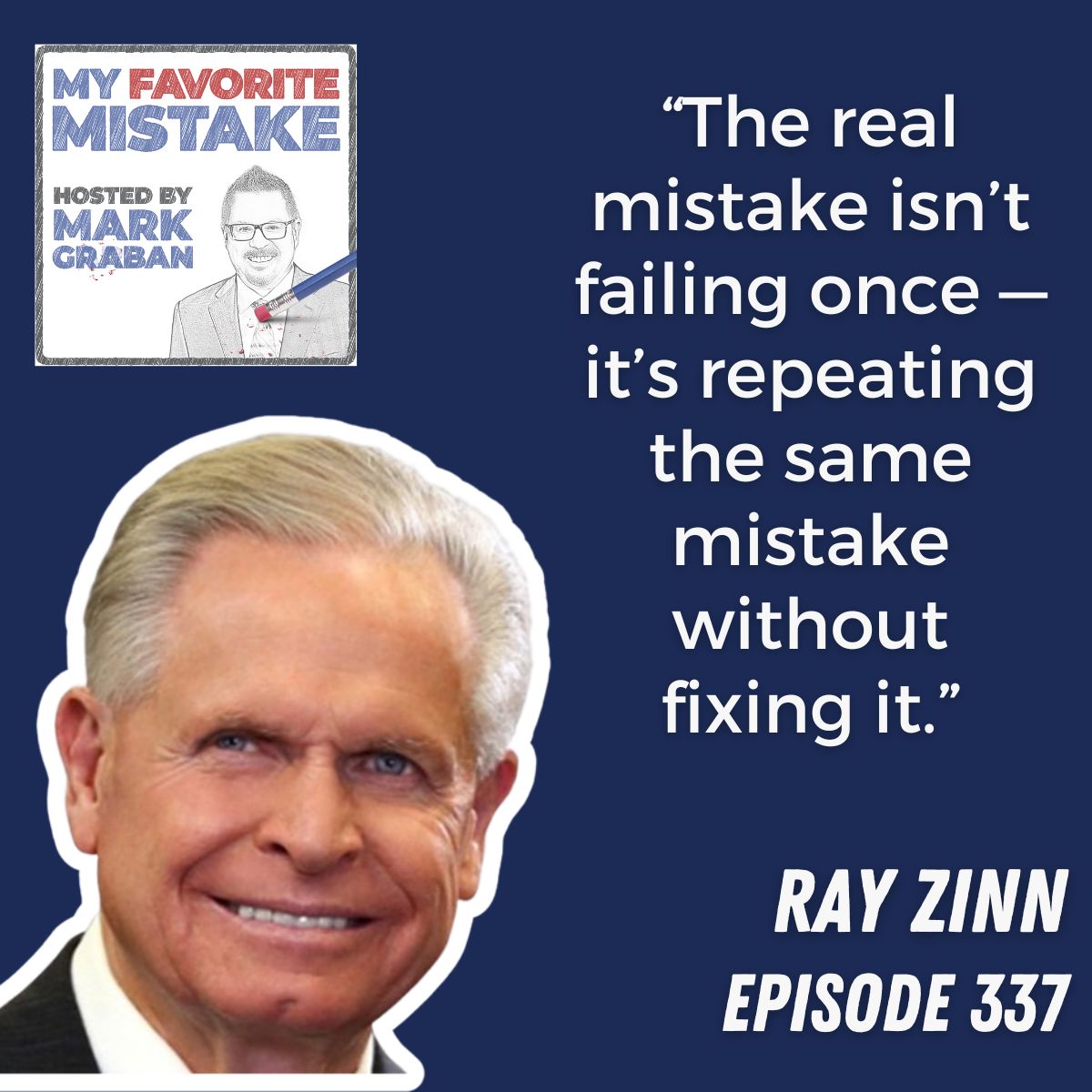
In our conversation, Ray explains why his “favorite mistake” isn’t a single event, but the act of repeating the same mistake without fixing it. He shares a practical framework for learning from mistakes—recognizing them, acknowledging them openly, correcting them quickly, and not repeating them. Along the way, he challenges popular mantras like “fail fast, fail often,” arguing that unchecked repetition is closer to organizational insanity than innovation.
Ray also reflects on how losing his eyesight in his late 50s fundamentally changed the way he led. Forced to rely more on listening and trust, he became more empathetic—and, by his own assessment, a better CEO. These experiences shaped the ideas in his latest book, The Essential Leader, where he contrasts “administering” people with truly “ministering” to them through respect, kindness, and accountability.
In addition to his books and speaking, Ray hosts the “Tough Things First” podcast, where he shares short, direct lessons on leadership, accountability, and doing what matters most—especially when it’s uncomfortable.
Themes and Questions:
Learning from Mistakes Without Repeating Them
Ray argues that the real failure isn’t making a mistake—it’s repeating the same one without fixing it. We explore why quick correction matters more than blame, and how leaders unintentionally normalize repeated mistakes through excuses, delays, or inaction.
Why “Fail Fast, Fail Often” Can Be Misleading
Popular Silicon Valley slogans sound bold, but Ray challenges whether they actually promote learning. When does experimentation become productive learning—and when does it cross into avoidable, repeated failure?
Creating a Culture Where Mistakes Are Admitted, Not Hidden
Ray outlines why honesty must come before improvement, and how fear, ego, and punishment drive mistakes underground. What does it take for leaders to make it genuinely safe to say, “I messed up”?
Ministering vs. Administering as a Leader
Ray draws a sharp contrast between directing people and truly serving them. We discuss why leaders who “minister” to their teams—through empathy, presence, and support—get better results than those who rely on authority and pressure.
Listening as a Leadership Skill
After losing his eyesight, Ray became a deeper listener—and a better leader. How does listening change power dynamics, decision-making, and trust inside an organization?
Hiring, Coaching, and Preventing Leadership Mistakes
Ray shares unconventional interview questions and coaching approaches designed to surface weaknesses early. How can leaders prevent mistakes instead of reacting to them after the damage is done?
Work, Energy, and Sustainable Performance
Ray challenges the idea that long hours equal commitment. What do leaders misunderstand about productivity, focus, and human limits—and how do those misunderstandings become systemic mistakes?
Scroll down to find:
- Video version of the episode
- How to subscribe
- Quotes
- Full transcript
Find Ray on social media:
Watch the Episode:
Memorable Moments from the Conversation:
Click on an image for a larger view


Subscribe, Follow, Support, Rate, and Review!
Please follow, rate, and review via Apple Podcasts, Podchaser, or your favorite app—that helps others find this content, and you'll be sure to get future episodes as they are released.
Don't miss an episode! You can sign up to receive new episodes via email.
This podcast is part of the Lean Communicators network.

Other Ways to Subscribe or Follow — Apps & Email
Meet Ray Zinn, the Longest-Serving Silicon Valley CEO
Mark Graban: Hi, welcome to My Favorite Mistake. I'm your host, Mark Graban. Our guest today is Ray Zinn, an inventor, entrepreneur, and the longest-serving CEO of a publicly traded company in Silicon Valley. Ray co-founded Micrel Semiconductor, which he led for 37 years, keeping it profitable for 36 of those years before the company was acquired by Microchip in 2015. He is also credited with inventing the wafer stepper, a foundational innovation in semiconductor manufacturing. After losing his eyesight early in his CEO tenure, Ray had to learn to lead in a new way by listening more deeply, trusting more intentionally, and empowering others.
So I'm excited to talk about all of that today. His experience helped shape the insights in his latest book—as the author of six books—this one is called The Essential Leader: A Concise but Powerful Masterclass on How to Lead with Empathy, Clarity, and Conviction. So, Ray, welcome to the show. How are you?
Ray Zinn: Thanks, Mark. I'm doing great. Wonderful. Thank you.
Mark Graban: Well, I'm really excited to have you here. I've been enjoying the book. It sounds like you've had a great career and are still doing wonderful things. One other thing I was happy to learn about you is, like me, you have a bachelor's in industrial engineering.
Ray Zinn: Yep.
Mark Graban: Just as a quick question. How was that a foundation for the other things you studied and then did in your career?
Ray Zinn: When I first went to school, my neighbor was a civil engineer and I thought that's what I wanted to do. But as it turned out, civil engineering just wasn't my cup of tea. So I asked my advisor, “What is a more general engineering as opposed to a specific like electrical or chemical or civil?” He suggested industrial as more of a general one because it involved more business-type studies. So that's what happened is I just went in, decided to do a more general engineering.
Mark Graban: Yeah. That was similar to my pathway going from chemical engineering to industrial engineering. I think that's a great way to think through business problems and problem-solving and systems. I'm sure that it sets you up for a great career. So let's go ahead and talk about the main question as we always do before we dive into your other leadership lessons and messages from your book. What's your favorite mistake, Ray?
The Mistake of Repeating Mistakes
Ray Zinn: I know you're looking for a story, but I'd like to do more of a teaching type on that subject. My favorite mistake is repeating the same mistake over and over. You know, it's that old saying: if you keep repeating the same mistake expecting a different conclusion, that's insanity. So, my favorite mistake is repeating the same one or similar one over and over, which leads me into my concept of being a good listener and having no regrets. So, if you have no regrets, who cares, right? It's no harm, no foul.
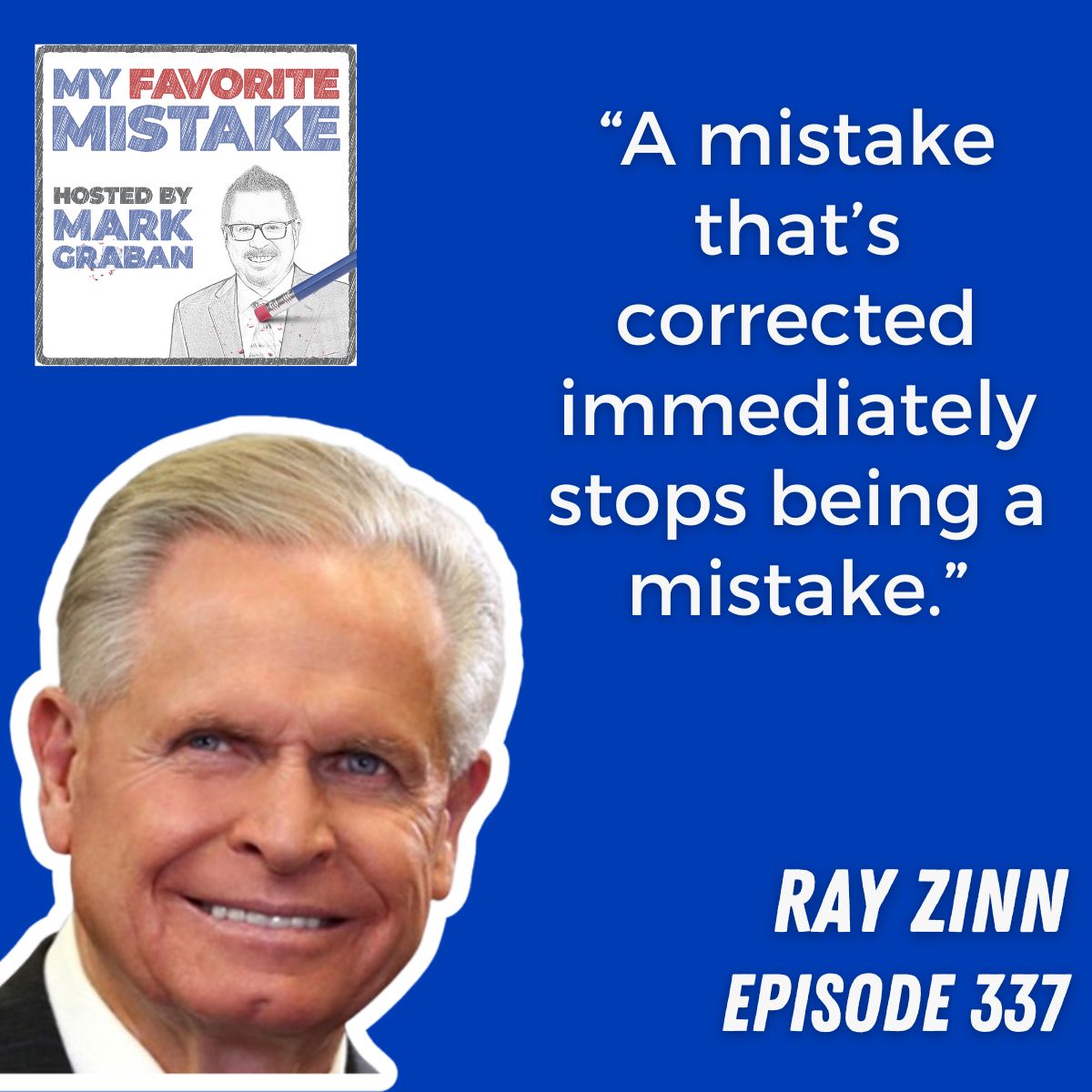
My mantra is don't keep repeating the same mistake, and if you do, fix it immediately. I've always had the goal of just never letting a mistake last very long. I try to fix it immediately. If you fix a mistake, then it's not a mistake in my mind. So that's why I have no regrets. We all make mistakes. The problem is not making a mistake. The problem is correcting it.
Mark Graban: Mm-hmm.
Ray Zinn: And that's been my mantra throughout my career: I do not like to leave a mistake uncorrected. In fact, the culture at Micrel was honesty was number one. Integrity is number two. Dignity of every individual—we didn't allow any swearing, any vulgar language. And the fourth is what we're going to talk about: doing whatever it takes. No excuses. Meaning an excuse is a reason wrapped in a bag of poop. So we don't like to deal with mistakes that way. We just solve them and we'll do whatever we have to do to correct the mistake.
Mark Graban: When did you discover that pattern? You said that you were repeating mistakes. Was the repeating coming from not having the right fixes or from not fixing it quickly enough?
The Four Steps to Handling Mistakes
Ray Zinn: Not understanding what it took to fix a problem. First, you have to acknowledge it. Means you have to recognize it. The second is you have to confess it. Meaning you don't just keep it to yourself. It means you have to go and whoever you've made the mistake with—your spouse, your partner, or whoever you're working with—you have to say, “I'm really sorry. I really didn't mean to do that. But I'm human and I make mistakes.”
That's the second. The third is then you have to make amends and you have to correct it. You have to solve it. You have to come up with a solution. That's why I said no excuses. It means you gotta make it harmless to that person that you offended. And the last is, don't repeat it.
I found that the biggest problem with mistakes is just not acknowledging it. We don't want to recognize it because if you recognize you've made a mistake, Mark, then you have to correct it. And none of us like to think we make mistakes. Very few people will admit that they make mistakes. I don't know what your experience has been on your show, but I think very few people would admit they make a mistake.
Mark Graban: The people who come on this show have been willing to do so. And I'm always grateful for that. But yeah, some people would rather only talk about their victories. I think you raised two good points here. When I hear you say acknowledge the mistake, that starts with acknowledging it to ourselves. The ability to say, “I made a mistake. That didn't turn out the way I thought it would.”
Ray Zinn: That's number one, actually. Number one is recognizing you have to recognize you made a mistake. People don't like to recognize they made a mistake because they offer excuses. If you offer an excuse, you're not recognizing it.
Mark Graban: What would be the difference between an excuse and an explanation? Let's say for an example, somebody talks about a hiring mistake. They hired a VP of sales, they thought they were making a great hire, of course. And then days, weeks, months later, they start thinking, “Oh, this isn't working out.” What would be the difference between an excuse and an explanation?
Ray Zinn: Okay, so now we're going to the third. So the first was recognizing. The second was acknowledging it openly. And the third then is making amends or fixing it. That's the explanation. In other words, the way you explain something is by fixing it. You don't offer a reason. You don't offer an excuse. Your explanation is, “Here's what I gotta do not to repeat it. Here's what I have to do to fix it.”
So you go to the person, whoever it is you're acknowledging your mistake to, and you say, “Here's what I'm going to do to not have this problem happen in the future.” That keeps you from repeating it, which is number four. So it's really number three is the way you explain it. You explain it by saying, “Here's how I'm going to fix it.” So the explanation includes the fix. Does that make sense?
Mark Graban: I'm sure in your long career as a CEO, hopefully you didn't see too many examples of a hiring mistake. But as a leader, what are your thoughts on acknowledging the mistake and fixing it by coaching that person up? If there are bad behaviors, coaching them to fix those behaviors. If there's a performance issue, trying to fix the performance issue as opposed to fix it by firing that person and trying again.
Hiring: Helping Employees Become Better People
Ray Zinn: Well, Mark, you know, you can't fix it. If it's a problem with the employee, you cannot fix it. Only they can fix it. What you have to do is by coaching them about what they could do or should do to overcome whatever the deficiency they have, then they have to change.
One of the things I tell people when I'm interviewing is I say, “I'm not here to make you rich. That's your job. You have to make yourself rich. I can't do that. But what I will do is I will help you become a better person.” So in the interview, if you let that interviewee know that you're willing to help them become a better person when they join the company, then they will open up and say, “Well, here's where you can help me.”
We don't answer the telephone by saying, “Hello.” We say, “How can I help?” So when you're doing the interview, ask how you can help. “How can I help you become a better person?” They will then explain to you—mostly they're negatives—where their faults are. And so during the interview you say, “Now I'm gonna help you become better, but for me to help you become better, I gotta know how I can help you become better.” And then they will tell you. “Well, you know, I have a problem getting up in the morning,” or “I have a problem with swearing,” or whatever. Now you have a way to help 'em. This starts the vetting process right in the early part of the interview.
Mark Graban: And that helps avoid or prevent a mistake.
Ray Zinn: Exactly. If you prevent the mistake, you don't make a mistake. So that's that preventing process that I call during the interview. I do ask them, “How can I help you become better?” That's a positive side.
Mark Graban: If somebody says or implies that they're perfect and they're the best and they don't need any help, that might be a red flag.
Ray Zinn: Well, I would say probably I've never heard anybody really say that, but I heard 'em say how much they've accomplished. And I thank 'em for that. I say, “I can see all that. You've covered that very well during your resume. But let's talk about where we can strengthen your skills.” I keep circling back to that. You can see everything they've done by looking at the resume. But what they're not gonna put on the resume is where they need help.
Mark Graban: Ray, I wanted to ask about connections between company culture and values and this mistake process. You talk about honesty and integrity as core values. You talk about confessing mistakes. That word “confession” might make some listeners think of church. But people are afraid to confess a mistake in the workplace because they fear punishment. Can you share a little bit more about helping people feel safe to confess a mistake?
Ray Zinn: Well, it starts out by the environment. If you come across smiling, if you come across in a loving kind way, then they're more receptive to opening up. So the key is to set the stage first. Don't lean forward, kind of lean back a little bit and be less intimidating. Maybe tell a little joke. First of all, you want to ease the situation. Because in an interview, it's very tense—they're stressed out already.
You have to recognize that you're not there to intimidate them. You're there to help vet them to understand if they fit in with your team. And if they tend to talk about silos, if they don't really like working with people, you're gonna have a problem. So you wanna find out really what their social environment is. Do you like parties? Do you like getting around people? Are you a person that readily goes up to people? Like when you're in the line at the cash register at the store, do you chat with the people in front of you or behind you? Do you help people take their stuff out of their cart and put it on the conveyor?
There's several ways you can do by just finding out how they are in the social environment because they're gonna be the same way at work. They're not gonna change it because they come to work.
Mark Graban: Are they gonna be sociable and kind and helpful and considerate?
Ray Zinn: Another thing I try to do is I find out how often they express gratitude. How often do you thank 'em for their meal? How often do you thank 'em for helping you around the house? Or how often do you thank your children? Tell me how many times you say thank you in the day. If they say, “I do it almost on everything that I interface with people, I thank them,” then they're grateful people.
Ask them, “Hey, if you're driving in your car and somebody cuts you off, do you sit there and swear at 'em inside your car? Or do you smile and back off and let it go?” Do they put themselves first or do they put others first? That's the key. You wanna find out where they stand in the social environment.
Mark Graban: So, our guest again, Ray, in his most recent book, The Essential Leader, in chapter six you talk a lot about leadership and learning from mistakes. The title of that chapter is worth talking about: Ministering versus Administering.
Ministering vs. Administering: Leading with Love
Ray Zinn: Can I talk about that?
Mark Graban: Yeah, please.
Ray Zinn: So when we think of supervising or managing, we think of directing. And when you minister, you're thinking of more following. For example, a shepherd leading sheep. If the shepherd is behind the sheep driving in with the staff, that's more of a dictator. That's a driver. He's administering. If he's in front and leading and the sheep are following, that's ministering. Because there's love. If you're behind the sheep, that's not love. That's driving. If you're in front of the sheep that's leading, that's showing love. That's ministering.
If you feel comfortable confessing, you'll confess it to a minister. You won't confess it to an administrator. If somebody is dictatorial, if they're driving you, you're not likely to confess. And if you don't confess, you're unlikely to change. But if they feel that you love them, if they feel you're understanding and empathetic, they're gonna confess. They're gonna say, “Hey boss, I need your help.” Oh, that's music to my ears. I love to hear my employees come in and say, “Boss, I need your help.”
Mark Graban: I am sure the reason they were willing to do that more than once is that you provided help. It reinforced that it's okay to come and ask for help. ‘Cause in some environments that gets punished, unfortunately.
Ray Zinn: Well, I call it managing by walking around. If you just sit in your office, you don't come across as a minister. You wanna be out with your flock. You wanna be out there letting 'em feel your love. Ask 'em how their family is, ask 'em, “How do you like your job? Is there anything at the company we can do to help?”
Now you're expressing love and kindness. You're not saying, “Hey, how come you didn't get this thing done on time? What's your problem? You're not helping the team. You're a laggard.” If you leave un-promoting words, you're not a minister.
There's a scripture that says “that which does not uplift is of darkness.” And so everything you say to an employee should be uplifting, even when you're chewing them out, even when you're talking about their negatives. You wanna be uplifting, spin it in a positive way. So come across as a minister, not as an administrator. Let them be willing to confess. Let them want to come and say, “I need your help.” If your employees come and say, “I need your help,” you're on the right track.
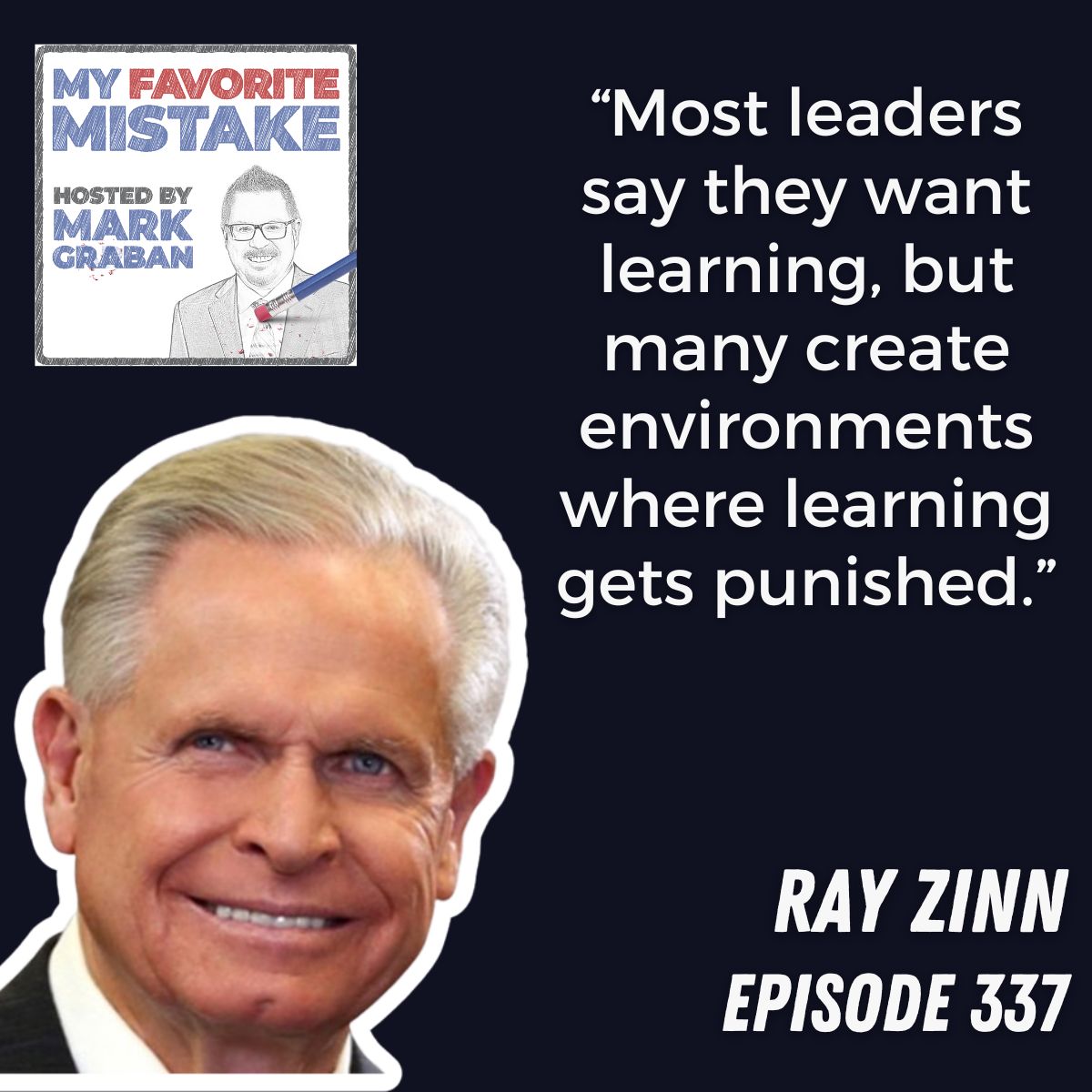
Mark Graban: As you said in that chapter, most leaders claim they want learning, but many simultaneously design environments where learning is punished. That's gotta include learning from mistakes. Why do you think that happens? Why don't other CEOs share the same view that you have about learning and helping people?
Reducing Turnover by Being a Better Boss
Ray Zinn: Well, that's the purpose of your podcast is to strengthen that area. The challenge when you're managing is don't come across stiff. Don't come across as a dictator. Let me tell you, I've got 37 years of experience, so I think probably more than most people you'll meet. We do an exit interview when a person wants to leave the company, and we found statistically that 75% of the people leave because they don't like their boss. Can you imagine that? 75%. Not the pay or anything else. It's they didn't like the supervisor.
So there's the key. That's what this program's about, Mark. It's about strengthening leaders. And the way you do that is you don't have them leaving because they didn't like their boss. We had the lowest turnover in the entire industry. Our industry averaged about 15% turnover. We were less than 7%. And 50% of our employees that left the company wanted to come back because they found out that the company that they went to was not the environment that we had at our company.
Mark Graban: Yeah, and they missed it. And you save money, you save training, you save all that expensive retraining if you can keep them at your company.
Ray Zinn: So the key is to lower your turnover. Find out why they're leaving. We always, in an exit interview, we say, “Why are you leaving? What can we do to get you to stay?” as opposed to “See you later, alligator.” We really are positive in the way we do exit interviews and that promotes love and kindness. And I'm not kidding, half the people that leave, come back.
Mark Graban: That is a sign of having a uniquely positive culture.
Ray Zinn: That's what I told my board. They said, “I don't know why you're not harder on your people. Don't you wanna get rid of some of those older guys and get more younger people?” And I said, “Why? That's where experience comes from—from age.” And I had a constant problem with my board over not doing more turnover of older people. And I said, “Well, you know, look how old I am. I'm the oldest person in the company.”
I love older people—I love younger people too—but I love older people because they have wisdom, they have experience. I'm not here picking the flowers, I'm picking the weeds. So I'll get rid of the people that need to be gotten rid of in a kind way, but I don't weed people just because they're older. And my employees appreciated that culture.
Mark Graban: Yeah. There's a mistake of firing people in a way that draws lawsuits for age discrimination. But I like your positive framing of valuing people who have experience.
Ray Zinn: It's easier to keep an old employee than it is to train a new one. Now if they have problems because they're older, like dementia or some other problem, sure, you have to deal with that. But we also promoted good health: exercising, eating right, getting good sleep. We did not promote working more than 40 hours a week. We discouraged that. We said, “You need time to relax. You need time with your family.” If we saw employees that were working long hours, we discouraged that. We don't think that's a healthy way to run a company, working your employees around the clock.
Mark Graban: That flies in the face of the modern Silicon Valley where a lot of CEOs demand 120 hours a week.
Ray Zinn: Well, let me explain that. We found through studies that employees put in roughly four to six hours of work in an eight-hour workday. So why work them 10 hours when they're only doing four to six? You're not getting anything by putting 'em 10 to 12 hours. Because they're only working four to six anyway. It's just like you can't sleep more than eight to 10 hours a night, you're gonna wake up anyway. You can't eat more than three or four meals a day. We get our fill of work. Our fill is somewhere between four and six hours.
If you ask an employee to work 10, 12 hours a day, I guarantee you they're on their computer messing around. They're on the phone with their wife or kids. They're just making a show out of it. It's appearance.
The Power of Presence and Professionalism
Mark Graban: So there's another thing that you write about that again flies in the face of what's popularized with Silicon Valley, and that is what you call the power of presence. Tell us why some of these Silicon Valley leaders might be missing out with their hoodies and shorts, especially if they're a CEO.
Ray Zinn: Okay. So I went to a class at Draper University in San Mateo. When I showed up around 8:30, these kids had pajamas on. They were lying on bean bags. And I felt uncomfortable. I was dressed in a suit and tie and I felt uncomfortable in that environment. And they didn't appear to be listening. They were rolling around, looking at each other, kind of laying back.
If you get in a relaxed atmosphere, you can't concentrate. Trust me, your mind's gonna drift. If you're not sitting up vertically, I guarantee you you're not gonna listen. Because you know, when you go to bed at night, you lay down and you begin to doze off. If you're sitting upright, you're gonna listen. Because your body is used to being vertical when you're awake. It's not used to being horizontal.
And the same thing with the way we dress. You're not gonna come to a wedding dressed in a bathing suit, or a funeral. You're gonna dress the part. And I always say, dress one level better than you have to dress.
Mark Graban: I want to ask a couple of other questions before we wrap up. One, because it's part of your bio, it's part of your story. Can you tell us at what age you started having vision problems? Was it sudden? And how did that affect the way you led?
Losing Sight but Gaining Vision
Ray Zinn: I lost my vision in November or December of '94. I think I was 57. What changed my view was… when you lose one sense, you develop another. The sense that I developed was my listening sense. I could hear, but I wasn't listening. I became more empathetic because I was depending upon other people. And having the need to depend on others really caused me to change the way I viewed other people. I viewed them in a more loving, kind way than I did when I had my eyesight.
I wasn't bad when I had my eyesight. I was a good person. It's just that I didn't listen really well. I didn't hear what they were trying to tell me. Because, you know, “My mind's made up. Don't confuse me with the facts.” So if you have an adversity or a deficiency, your body naturally overcomes it. And that's what happened with me.
I'd have to ask my people, but I think I became better after I lost my eyesight because I became kinder and more understanding. When you think of Helen Keller, you think of her as being a very loving, kind person. And yet she was blind, deaf, and dumb. She lost all of it. And yet she was able to do really well.
Just because you have a deficiency—and we all have deficiencies—if we strengthen our other senses to overcome that deficiency, we become a much better person. So rather than let my vision make me worse, I let it make me better.
Mark Graban: It sounds like there's a connection between needing to ask for more help yourself, reinforcing how important it was to be kind when people asked you for help.
Ray Zinn: So there's a saying I have: You can only give as much love as you're willing to receive. If you're willing to receive love, you're more likely to give love. Being willing to receive love and kindness from others is what will give you the incentive to show love in return.
And so if you're listening to this broadcast, try to give more than you receive. See what you can do to give more. See what you can do to become a more kind, loving, caring, empathetic person.
Mark Graban: Ray, I wanna ask just a couple last questions here. One thing you shared with me when we talked previously was your glue analogy about mistakes. I thought this is a great way of looking at things.
Mistakes Are Like Glue
Ray Zinn: A mistake is like glue. If you remove the glue early before it sets, it's easy to clean up. But if you let it harden, I tell you, it's a bummer to get off. So mistakes are like glue. If it spills, do it early. That way it won't harden and make it so hard to get it off.
Mark Graban: When we recognize that spilled glue and we acknowledge it, confess it, ask for help, fix it. That sounds like a version of the classic Silicon Valley language of “fail early, fail often.” What do you think about that phrase though?
Ray Zinn: That's ridiculous.
Mark Graban: Why is that?
Ray Zinn: Fail early and fail often sounds like you're repeating the mistake. Egos get in our way. Egos keep us from improving. I don't know of a single ego that makes you better. And so if you fight that feeling of “I'm the man,” if we keep patting ourselves on the back, we're gonna lose. You wanna pat others on the back, not yourself. Quit patting yourself on the back. ‘Cause you're gonna fail often because you're patting yourself on the back. Pat others on the back, Mark.
If we repeat the same mistake over and over expecting a different result, that's called insanity. If you fail—and you will fail—learn from it. Fix it, and don't repeat it. That's the goal.
Mark Graban: There was one other story that you told in chapter six. You wrote, “There is no such thing as tough love. It's being brutal and unhelpful.” A lot of leaders metaphorically kick people in the ankles.
Ray Zinn: That's not a good leader. You know the Timex slogan, “Take a licking and keep on ticking.” You wanna be able to do that. Don't let your ego get in the way.
When you're relating to your employees, try to find something positive to say about them when they come in to talk to you. Say, “Oh man, you're dressed nice today,” or “I like your hair,” or “Ben, you've been doing a great job here at the company.” And then you can start talking about the deficiencies.
Mark Graban: I hear the influence of another era, John F. Kennedy. “Ask not what your company can do for you, but what you can do for your company.”
Ray Zinn: Exactly. Ask not what your employee can do for you. Ask what you can do for your employee.
Mark Graban: So, Ray, thanks again so much for taking time to be with us today.
Ray Zinn: Thank you, Mark. You have a wonderful show. And thank your audience.
Ray Zinn’s Leadership Philosophy & Key Takeaways from The Essential Leader
Core Philosophy: Ministering vs. Administering
Ray Zinn distinguishes between “administering,” which he likens to a shepherd driving sheep from behind with a staff, and “ministering,” which is leading from the front with love. He argues that administering is dictatorial, while ministering builds trust and encourages employees to confess mistakes and ask for help. He believes that if employees feel loved and understood, they are more likely to improve and succeed.
The “Glue” Analogy for Mistakes
Zinn views mistakes as “glue”: if you clean them up early, before they set, it is easy, but if you let them harden, they are difficult to remove. His approach to mistakes involves four strict steps:
- Recognize it: Admit the error to yourself.
- Confess it: Openly apologize to those affected without offering excuses.
- Fix it: Make amends and solve the problem immediately.
- Don't Repeat it: Ensure the mistake does not happen again.
Hiring and Company Culture
- The Interview Approach: Instead of asking standard questions, Zinn asks candidates, “How can I help you become a better person?” to vet their willingness to improve and to accept help.
- Values: His company, Micrel, operated on four pillars: Honesty, Integrity, Dignity of every individual, and “No Excuses”.
- Social Vetting: He assesses candidates based on their social interactions and gratitude, such as whether they thank people frequently or how they behave in line at a store, believing these social traits transfer directly to the workplace.
Work-Life Balance and Productivity
Contrary to the “hustle culture” often associated with Silicon Valley, Zinn discouraged working more than 40 hours a week. His internal studies found that employees are only productive for about four to six hours within an eight-hour day, so keeping them longer only results in “appearance” work rather than actual output .
The Power of Professionalism
Zinn advocates for the “power of presence,” arguing that a relaxed physical posture (like lying on bean bags) leads to a relaxed mind that cannot concentrate . He believes in dressing one level better than necessary to show respect and maintain a professional mindset .
Leading with Love and Humility
- Receiving Love: Zinn’s mantra is, “You can only give as much love as you're willing to receive”.
- Patting Others on the Back: He advises leaders to stop patting themselves on the back and focus on praising others to avoid the ego that leads to repeated failures.
- Service: He flips the traditional script, urging leaders to ask, “Ask not what your employee can do for you. Ask what you can do for your employee”.