
Debra Clary’s favorite mistake started with missing a train stop—and led to a lifelong insight about why curiosity, not certainty, is the real engine of great leadership.
Listen:
Check out all episodes on the My Favorite Mistake main page.
My guest for Episode #330 of the My Favorite Mistake podcast is Debra Clary, a leadership strategist, researcher, and executive coach with more than four decades of experience at organizations including Frito-Lay, Coca-Cola, Jack Daniel’s, and Humana. She’s also a TEDx speaker, former off-Broadway performer, and the author of the new book The Curiosity Curve: A Leader’s Guide to Growth and Transformation Through Bold Questions.
In this episode, Debra shares one of her favorite mistakes—an unexpected wrong train stop in Italy that turned into a memorable discovery—and how that happy accident helped shape her approach to curiosity, flexibility, and exploring the unexpected. That theme carries through the conversation as Debra and I discuss how curiosity shows up in leadership, why assumptions can derail teams, and why “having the answers” is often the wrong place to start.
Debra walks us through the research behind The Curiosity Curve, including how her team developed a validated diagnostic for measuring curiosity and what they learned about its connection to engagement, retention, innovation, and decision speed. She shares practical examples of how leaders unintentionally shut down curiosity and how small shifts in inquiry can unlock better thinking and stronger team performance.
We also explore how curiosity interacts with psychological safety, how leaders can avoid the trap of reflexive certainty, and why curiosity becomes even more important in high-pressure or high-uncertainty situations. Debra closes by discussing the role curiosity plays in an AI-driven world—why it remains uniquely human, and how tools like AI can actually help people deepen their inquiry rather than replace it.
If you’re interested in how leaders can cultivate better questions, better conversations, and better outcomes, this episode will spark ideas you can put to use right away.
Questions and Topics:
- What’s your favorite mistake?
- Were there similar moments in your career where a “missed stop” led to an unexpected opportunity?
- Was starting as a Frito-Lay route driver a deliberate development path, or was that unusual?
- Where did your passion for curiosity begin?
- Is there a way to gauge curiosity in a team or organization?
- How do you measure something like curiosity in a meaningful way?
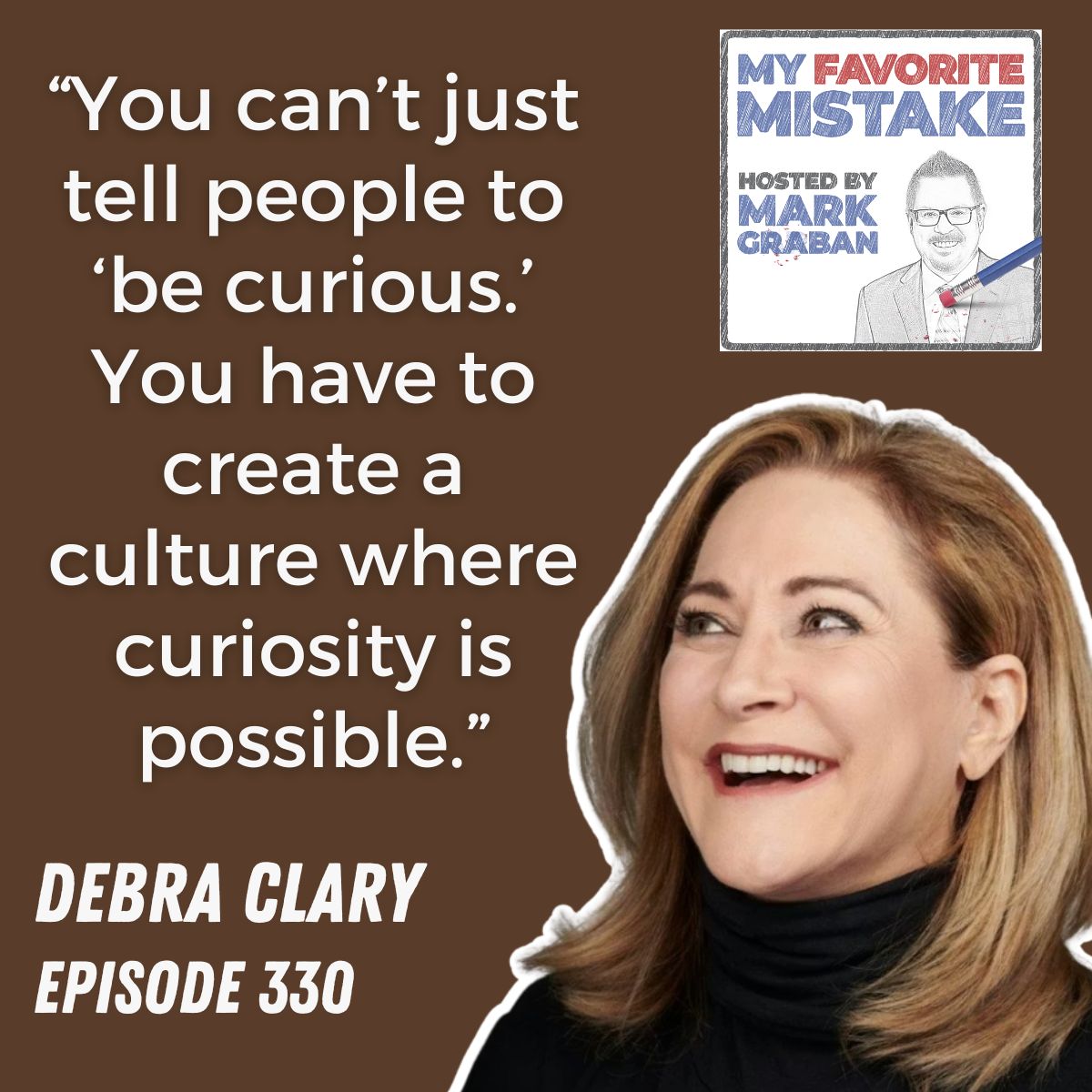
- How do you help leaders learn to be more curious instead of just telling people to “be curious”?
- When hiring, is it better to select already-curious people or rely on the culture to develop curiosity?
- Is there such a thing as too much curiosity—can it slow execution or decision-making?
- From your research or coaching, what’s an example of curiosity being missing and causing problems?
- How do you help leaders understand that curiosity and psychological safety are building blocks for innovation—not optional extras?
- Do you see leaders struggle with the difference between knowing, assuming, and figuring things out?
- In urgent or high-pressure situations, does stress make it harder for people to stay curious?
- Do you have examples where curiosity helped prevent a small mistake from turning into a big one?
- Have you seen situations where people used questions in unhelpful or critical ways while claiming they were being “curious”?
- How do you think about Ed Schein’s idea of humble inquiry?
- Can AI replace curiosity—or does curiosity still give humans a unique advantage?
- Can interacting with AI actually help people strengthen their curiosity?
Scroll down to find:
- Video version of the episode
- How to subscribe
- Quotes
- Full transcript
Find Deb on social media:
Video of the Episode:
Quotes:
Click on an image for a larger view
Subscribe, Follow, Support, Rate, and Review!
Please follow, rate, and review via Apple Podcasts, Podchaser, or your favorite app—that helps others find this content, and you'll be sure to get future episodes as they are released.
Don't miss an episode! You can sign up to receive new episodes via email.
This podcast is part of the Lean Communicators network.

Other Ways to Subscribe or Follow — Apps & Email
Automated Transcript (May Contain Mistakes)
Mark Graban: Hi, welcome to My Favorite Mistake. I'm your host, Mark Graban. Today is an opportunity to get curious about curiosity because our guest is Debra Clary, leadership strategist, researcher, and executive coach. With more than 40 years of experience working with organizations, including Frito-Lay, Coca-Cola, Jack Daniels, and Humana, Debra has earned a reputation as a leading expert on curiosity, drawing on her doctorate in leadership and organization development, and her work with hundreds of executives and teams. She's a coach, she's a TEDx speaker, former off-Broadway performer, and her new book available now is called The Curiosity Curve, which brings together her research and real-world coaching experience to help leaders navigate change and growth.
So we all need that. Debra, welcome to the podcast. How are you?
Debra Clary: Thank you. Thank you so much for having me. It's a pleasure to be here.
Mark Graban: Well, it's great to have you here. Before we get into the main question, I'm curious, I saw on your bio you had a one-woman show. Tell us about that first, if you would.
Debra Clary: Yes. So how that came about was during COVID. There were some executive women around the country that we were a mastermind group and what are you struggling with? How can we help each other? What are your hopes and dreams? And August of 2022, they came to Louisville where I live and said they had something to celebrate. And so we were clinking champagne glasses. And they said, “Oh, we're celebrating Debra”. And I'm, “What are you talking about? I didn't do anything yet. I didn't do anything yet”. And they go, “Oh, we forgot to tell you. We pitched your idea for a one-woman show and you're booked off Broadway”. Wow. And it was, “No, I don't want to do that”. I was just dreaming about it. And they go, “It's time to make the dream happen”. And so that's how that one-woman show off Broadway happened and it was called A Curious Woman.
Debra Clary: And it was about being a woman in the eighties and nineties, working at big major corporations and some of the just comedic things that happened to me there.
Mark Graban: So it doesn't sound like that was a mistake, doing the show.
Debra Clary: It could have been. It was close, but we pulled it off.
Mark Graban: Good.
Debra Clary's Favorite Mistake
Mark Graban: So, I don't know, maybe I just hijacked or interrupted the answer to the story. No, not at all. The main question I'm going to ask you is, as we always do, because you've done so many things, what's your favorite mistake?
Debra Clary: One of my favorite mistakes was I was with a friend in Italy and we were taking a train up from Milan to Lake Como, and we missed our stop and kept going and we ended up in this amazing little village that we explored and ended up staying there. And had we not missed that stop, we wouldn't have ever seen this really beautiful village, and we just enjoyed every moment of it.
Mark Graban: Wow. So there's an example, I guess, of a happy accident, if you will. Yes. So, walk us through a little more of that. It sounds like then, thankfully, it was a fairly loosely planned vacation where missing a stop didn't mean missing a flight or a cruise ship or something.
Debra Clary: Yes. And of course, you've been to Europe, so you know that it's pretty easy to get around by train or public transportation. So, we had been very planful about our visit in Milan, but then we said, “Hey, let's go do something else”. And so Lake Como was on the list and we were busy chatting and just went right by it. Now we did stay at that little village and then we circled back and went back to Lake Como and we're glad that we did. But it was just being flexible and kind of laughing at ourselves, but still enjoying ourselves when we're on this trip.
Mark Graban: What was the name of the village that you ended up exploring then?
Debra Clary: De Luca.
Mark Graban: De Luca. Now, did the people traveling with you share apparently your sense of curiosity of, here we are. Let's explore it. It seems.
Debra Clary: Yes. Yes, they did. And that's probably one reason we traveled so well together is because we're both—we like to be planful, but we also like to have spontaneity if something else occurs or someone tells us about something that we hadn't thought about. We just look at each other and say, “Let's go”.
Mark Graban: What I hear you saying is having a balance between the plan, but leaving some room for serendipity. I'm with you on that.
Debra Clary: Yeah, absolutely. And it's just one of what unfolds.
Career Trajectory and Learning from the Front Line
Mark Graban: Maybe we'll come back and connect to the story. Were there similar, anything, thinking of your career where there was a missed stop, a missed opportunity that also led to something positive?
Debra Clary: Yeah. So when I was just right out of grad school, I was out of business school. I went to my first job interview at Frito-Lay. I was going to be a manager, my first professional job. And they didn't offer me the manager role. They offered me a Frito-Lay route driver. So I would be a Teamsters Local 336. And I said, “I need to think about it”. I was expecting to be wearing a suit every day and a company car. And so I went home and I said to my mother, “This is what they offered me”. And she said in her sweetest Tennessee accent, “Well, how hard could it be”? And it was the mailman, sleet, hail, heat, bugs, all of those kind of things. But in the end, that truck became my classroom. And whatever I had learned in business school, it compared to nothing when it was to actually manage your own P&L, to build relationships. And to be able to measure your results day in and day out by what you did. Exactly. So at the time I thought it was a huge mistake because my girlfriends were working at Procter & Gamble and Colgate, and they looked really pretty and their nails weren't chipped up. But now I look back and think about that really was the start of the trajectory of my career.
Mark Graban: Well, and that's an interesting progression of times we feel like we're making a mistake, but it's only in hindsight where you can have the reflection to say, “Well, it would've been a mistake to not do it.” I've had similar twists in some of my, especially early career decisions where I felt like, “Oh, this was a mistake,” but it turned out to be a great learning experience.
Debra Clary: Absolutely. And I suspect your whole philosophy as well is there's probably no mistakes, right? That aren't upon reflection, you're learning something and you're growing.
Mark Graban: I've had some guests who were, or are still Buddhist monks. They'll take that fairly, far to the one side of the spectrum view of no mistakes, only things that were meant to happen. I try to, I try to embrace that. I try to look for the positive at least when there's a seemingly a mistake. But I'm curious back to Frito-Lay. Was that an intentional career development, learn the business from the ground up opportunity? I have friends who, or people I've interviewed even on this podcast, you joined Toyota with degrees and they get sent to go work on the assembly line for a period of time. Was your situation kind of typical for Frito-Lay?
Debra Clary: I thought so, but I later learned that that's not always the case. They, what was shared with me is that everyone starts on the route because we want you to learn it from the bottom up. Okay. And Frito-Lay was also Teamsters. So if you were Teamsters and then you came out of that, you had some empathy. Empathy and you understood how to do that. But when I got promoted a couple of times, and then I went to headquarters and people were saying, “Yeah, I came into this marketing role”. And I'm, “What? You didn't have to drive a truck”.
Mark Graban: And you're…
Debra Clary: “What are you talking about?” I'm, “Well, hmm. Maybe it doesn't apply to everybody, but I wouldn't take anything back because I learned so much. And it's also about the fortitude. I mean, did I have the physical strength and the endurance to do that day in and day out”?
Mark Graban: And then as you moved up through the ranks, I think that ability to empathize, to understand, to connect with people at the front line is really important. It's a mistake if you can't do that.
Debra Clary: Absolutely. Absolutely. And I suspect there are ways to not have to run a route or not work the line, but it'd be one of deeply trying to understand what people are experiencing.
The Foundation of Curiosity
Mark Graban: Where did, I'm curious, where did your passion for curiosity come from then? Because that was a focus of your one-woman show, a focus of your book, and how did you decide to really dive into that?
Debra Clary: Yeah, so it started with a joke, a question, and a puzzle. Puzzle and all within a matter of weeks. So I was just talking about this trip that I took and I was on a train from Rome to Florence, and I was sitting next to this really handsome Italian man, and he says to me, “Hey, are you American”? And I said, “Yes, I am.” And he goes, “Oh, I have the best American joke for you”. He goes, “What do you get when you ask an American a question?” I don't know. He goes, “This is so funny. You get an answer”. Now, I didn't get the joke and I just politely smiled, but that joke kind of lingered with me throughout my stay in Italy. As I began to notice other Italians and Europeans in conversation, their conversations were different. It wasn't like a ping-pong match. Yes, no. Maybe it was. There was this deep dialogue about trying to really understand, “Why'd you ask that question”? In America, someone said, “Why'd you ask that question?” It's like those are kind of fighting words. And so that was the joke, that was anything but funny. When I came back to work, I'm sitting next to my CEO in the boardroom and somebody was presenting and he quietly asked me, “Hey, do you think curiosity can be learned? Or is it innate?” And said, “I don't know, but I'm going to go do some research”. In that same week, Gallup released their engagement studies. So in the history of studying engagement, they had never seen engagement so low. So that was the puzzle. So I got a joke, a question, and a puzzle, and I began to wonder, could curiosity be the missing link?
Measuring and Cultivating Curiosity
Mark Graban: Is there a way of gauging the level of curiosity in a team or in an organization? If you're looking for, I would believe the connections, correlations or causations, that being more highly curious and allowing that to flourish would lead to, let's say, more innovation, better problem solving, better results. How would you gauge that?
Debra Clary: Yeah, so as we started on our journey to do primary research on curiosity, because what I learned there, there was some research out there, but there wasn't enough to satisfy my understanding of how curiosity could shift. So we did some primary research and it took them about three months to do it. They came back and said, “Your hypothesis is correct. There is a direct correlation between leadership performance and curiosity”. And I said, “Tell me more”. They said in the study that if there is a leader that has a high level of curiosity, five things happen within a team: higher engagement, higher retention, higher job satisfaction, innovation, and speed to decision making. Hmm. And so it was fantastic. And then we said, “All right, we're sitting on this amazing data. The next question is how do we measure curiosity”?
Mark Graban: Right?
Debra Clary: So they went back for another three or four months, came back and said, “We've created a validated diagnostic tool”. Where we can measure people's level of curiosity at the individual level, the team, at the org level. So, if you know, how would we measure that? Somebody would take a six or seven-minute assessment online, and then we have data that indicates that. Now, because curiosity can be learned and it's contagious, then we knew we can create a framework where we teach people how to be more curious for the sake of the culture that leads to performance.
Mark Graban: So it's interesting to me, as an engineer, “process” is a great word for me. So, diving into how this happens, you don't just tell people simply, “Well, be more curious”. That's right. No. Can you tell us a little bit more about that process?
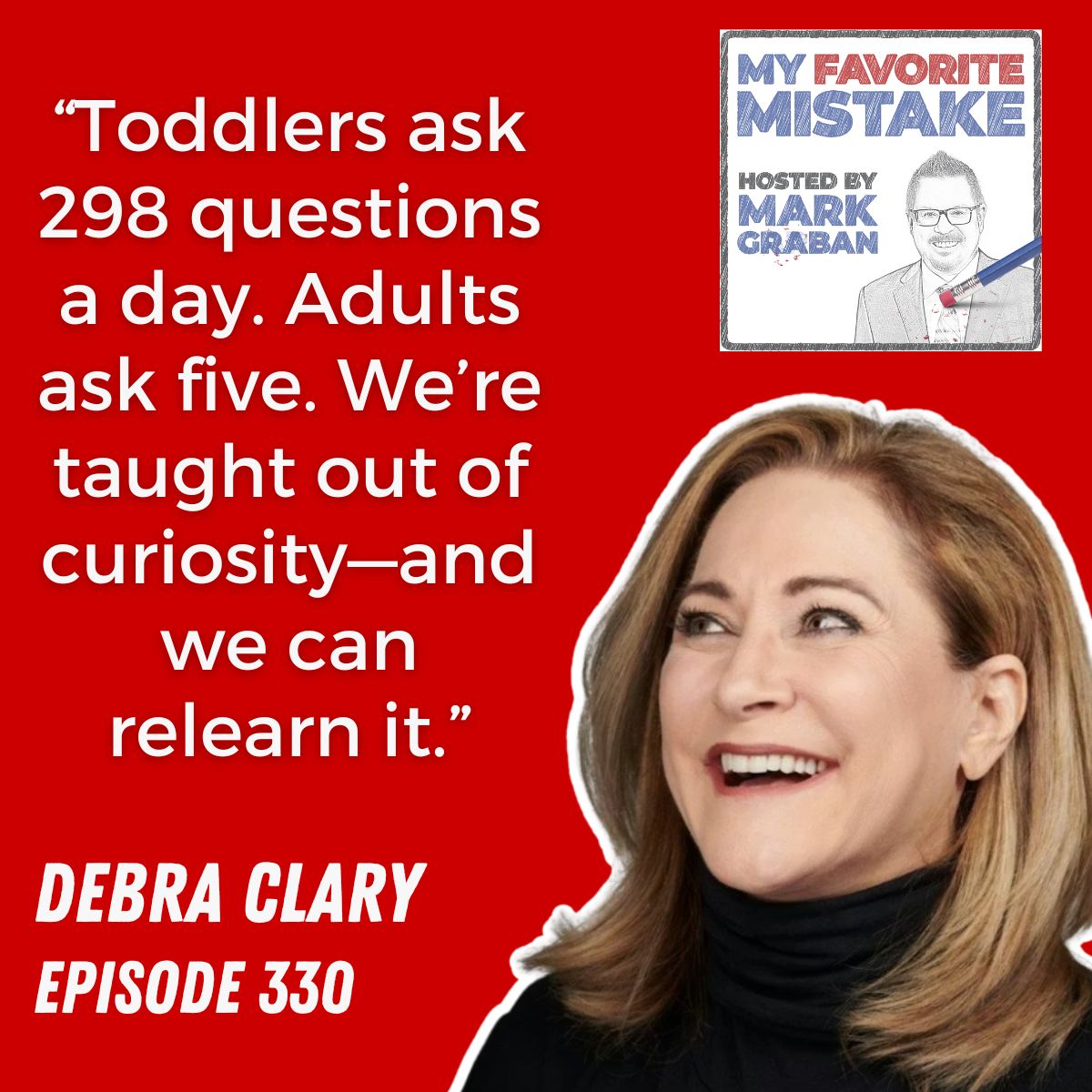
Debra Clary: Well, the first thing I let people know is that it's not your fault you're incurious. We know through our research that toddlers ask 298 questions a day. As adults, we ask about five. And so what happened between childhood and our adult years? Well, we're taught to be incurious. One, we go to school and we're told to sit in our chairs. Don't speak until you're spoken to. Children are to be seen and not heard. There are a lot of reasons we need children to be listening while they're teaching. But there are other little subtle things too, “Curiosity killed the cat”. “Don't open Pandora's box”. You know the story about Adam and Eve. She got curious and then mayhem fell over the world. So we slowly are taught to be incurious, and then we go on to the university, we go on to grad school. Maybe we're a medical doctor, maybe we're a lawyer, and we are paid for that expertise.
Debra Clary: We're paid for that. And by the way, we don't have a whole lot of time. So when somebody comes in and asks us a question, we give them the answer and we send them along their way. Now, when we do that, we've solved one problem. But what if leaders were playing the long game in the sense of someone asking them a question, or, “Here's the problem,” and as opposed to answering it, saying, “What have you thought about? Have you solved something that's similar to that?” Taking them through that inquiry so that they build their own confidence that, “Hey, I can solve this as well”.
Mark Graban: So you answered the question I was going to press you for an answer around, “Can curiosity be learned?” You said yes. So, if that's true, we talk about these assessments. I was starting to wonder, would you do an assessment during the hiring process to find out, all things being equal, are you better off hiring people who are already more curious, or would you look at all the other skills and experiences and feel confident that, well, maybe if they were maybe a little bit lacking in curiosity, if they come into a culture that's highly curious, we can teach them to be more curious themselves. Is that fair? Or what do you think?
Debra Clary: That's absolutely fair. So curiosity is contagious. So we found that if a leader has a high level of curiosity, the majority of their team are also going to have a high level of curiosity. And the reverse is true, right? So if you were to bring someone in that's incurious to a highly curious team, their curiosity would rise. And the same is true. You put a curious person on a team where others are not, they're going to lower that as well. And so to answer your question about, “Do you hire somebody already curious or you can teach them?” The most important thing for me is, what's the current state of the culture, right? Do you have a culture that's curious and now you're looking for people to match that? But if you don't have a curious culture and you're trying to bring somebody in, they're probably going to get disappointed when others aren't following that kind of line of questioning.
Mark Graban: And I can certainly understand, if somebody knows they are a highly curious person. That's a good thing to be aware of. But then trying to think, if you're on the employee, the potential employee side, how do you interview the organization to see how you're going to fit. From your perspective or research, it seems that that fit or lack of fit when it comes to curiosity would be a very, impactful misfit as opposed to other, other factors. Curiosity. I don't know if “value” is the right word, but it seems that that would be hard to look past and say, “Well, everything else is a fit, but not this”.
Debra Clary: Yes and no. Because I think if the culture is going to support the, if the culture is already curious and then you bring in someone that's not quite that, they too, when they begin to see that questions are welcomed, or challenging, the status quo is welcome, most likely they're going to say, “Oh, this is a cool place to work because they value my opinion”.
The Curiosity Curve and Optimal Curiosity
Mark Graban: The title, again, kind of reset, Debra Clary, the book is The Curiosity Curve. So I've done enough math and I think about charts and curves. Is there—you brought up the phrase I was thinking of. Does, to a point, does curiosity kill the cat? Are there diminishing returns where curiosity leads a team down a rabbit hole where it might actually slow decision-making?
Debra Clary: Yes, absolutely. There is a, there is a set point. There's an optimal amount of curiosity. So, in the Curiosity Curve, there are four factors that we measure. One is exploration, inspirational creativity, openness to new ideas, and focused engagement. So along your line of questions is around exploration. So if you have someone that lives in exploration day in and day out, but they never move to execution, that's not a good scenario. And on the other hand, if you have someone that lives in execution, is not exploring, then you're probably not innovating. And I'll give you an example. When I was at the Coca-Cola company, I had this awesome opportunity to be the chief of staff for the president of the Coca-Cola Company. Wow. I was junior in my career and I was going to be able to see how all the pieces fit together. And every Monday morning I would meet with Tom and he would be going on and on and on, and I was writing as fast as I could. And I would leave there and start to try to put a plan around what I heard him say. The next Monday I go back, I'm ready to present out how we could execute it. He's, “Oh, no, no, no.” And then he would start all over again. And this went on for about three weeks.
Debra Clary: And I'm, “Man, I'm failing”. And so I called the chief of staff that was in the role before and I said, “I'm really struggling. I'm not meeting Tom's needs”. And he says, “Well, what's happening?” And so I share the story and he goes, “Oh, I should have told you. Unless he asks three times, take no action”.
Mark Graban: Oh. So…
Debra Clary: He was in explore mode.
Mark Graban:
Debra Clary: When I was hearing, “I'm junior, I need to go help execute against this”. And so now I've learned, when I'm dealing with someone that's exploring and ideating, at the end of the conversation, I'll say, “What actions do you want me to take”? In this case, Tom would've said, “Oh, nothing. I'm just, I'm brainstorming”.
Mark Graban:
Debra Clary: Right now, focused engagement is one that actually can. You're in a conversation and now you can actually get it done. So you move from exploring and then you go into taking action. Now all of us have some elements of those four factors. It's on a continuum and we know that we can continuously improve on all four of those factors. But most people are high on one and a little bit lower on another. And that's the beauty of doing the Curiosity Curve assessment on the team. because then you have language to say, “Ah, I see where he's at right now. I'm going to, I'm going to stay with him.” But then I'm going to say, “All right, who's going to do what to get this done”?
The Cost of Incuriosity
Mark Graban: From your research or from your coaching or other experiences, is there a story that comes to mind that illustrates how the lack of curiosity causes a problem for a team or a business?
Debra Clary: Yeah, so I had a CEO come to me earlier this year and they wanted me to come in and lead a two-day strategy session. And in that I said, “Could we also do the Curiosity Curve assessment”? And he placated me, “Okay, that's fine.” But he wasn't completely sold on it. So here's what they were facing. Their revenue had slowed. Their competitive edge had declined. They weren't launching new products as fast as others, and they had high turnover. So it's not a good situation to be in. They recognized that. And so we needed to get to an offsite, really understand this. So when we did this section on curiosity, and they had taken the assessment in advance. When it came to openness to new ideas, I'm showing them their data. And all I'm showing them is data points, no names. And under openness to new ideas, eight executives scored off the chart openness to new ideas. And one was low. And I'm, “Well, why are they not going out with new products”? And so I opened that up to the group and I waited and the CEO raised his hand and said, “That low score is me”. And we had built up enough psychological safety. I said, “Team, how do you feel about that”? And they go, ” we come to him with data, SWOT analysis, and we get turned down”. And the CEO said, “I'm the founder. This is my baby, and I think I have all the answers”.
Mark Graban:
Debra Clary: And I said, “How's it working for you?” And he goes, “I need to change”. And so then in a moment when you see the CEO, the person with the most power, was just weighting the rest of the team.
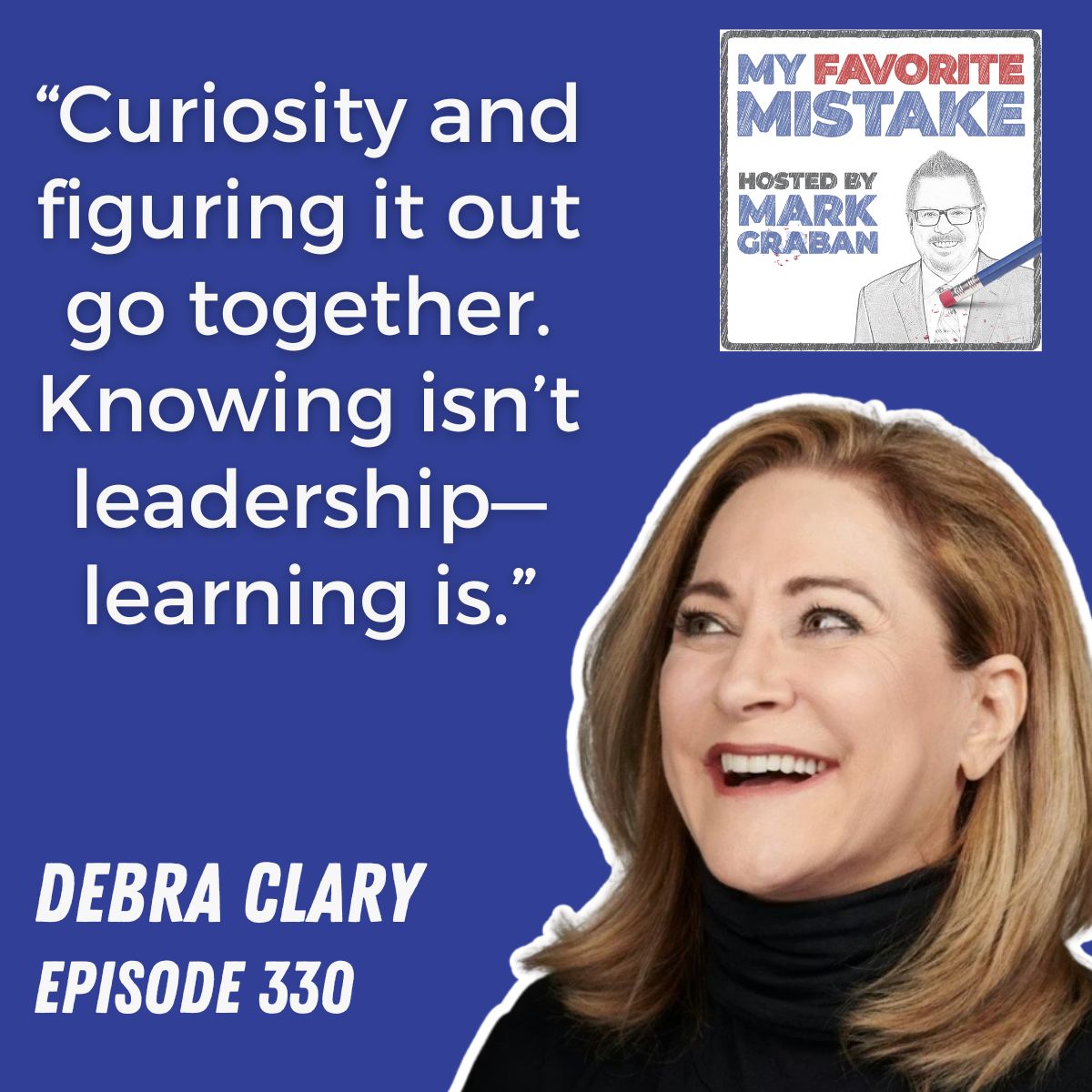
Mark Graban: That's a trap. I see a lot of feeling that you need to have all the answers or feeling that you do. Have all the answers. The difference between knowing all day long versus figuring it out. I think curiosity and figuring it out go together. There are connections, it seems, these building blocks. You mentioned psychological safety. These things that lead to innovation. That CEO might have a team of curious people that are being shut down because he's telling them no or not listening.
Debra Clary: Yes. Yes. Absolutely.
Creativity Craves Constraints
Mark Graban: And it's interesting. Maybe I could invite you to explore this a little bit more of leaders. Often, they want the end result. They want innovation or they want success, and maybe innovation leads to success, but I think it's interesting to step back and try to encourage them to look at building blocks, like curiosity, that you don't just snap your fingers and get innovation. How do you, how do you kind of coach people through that understanding that working on these foundations is important?
Debra Clary: Yeah. So, yesterday I was doing an executive team for a university, and specifically they were the athletic department. And so I'd never done anything. I'm mostly in large organizations, or nonprofits or corporations. So this was totally new for me. And so I was running to keep up with them in terms of it's crossover season. But the thing was this, the person that runs the media. So media is really important because the news show calls and says, “We need a 45-minute clip, and it needs to have these kind of elements in it”. And he goes, “It's so frustrating because I don't have, I have all these constraints, I have to have it in 30 minutes and it has to be 45 seconds.” And so I'd listened to him and I said, “Have you heard the saying that creativity craves constraints?” Where you only have, and this happens all the time, corporations. “I want you to increase sales by 5%, but I'm not giving you any more budget”. We have this continuous constraints on us and so then it goes to curiosity. So he and I walked through, I said, “What are some questions you could ask the media channel?”
Debra Clary: “All right. It's got to be 45 seconds. Got it. What are some of the things that your audience are going to want to see in this?” And then you're partnering with them on that. And he just, he saw it all as a negative and I said, “I get it. Constraints, but how could you turn it around and be curious”?
Mark Graban: And then how, what was the reception to that?
Debra Clary: Well, you could just see his shoulder softened and he was, “Oh, I'd never thought of that before. They're not out to get me, they're just, this is what they're up against”. “And can I, if we want our reel on TV, this is what I have to do”. And so he even saw it as a challenge and an opportunity.
Curiosity vs. Assumption
Mark Graban: I want to, I mean, it sounds there, on their part, an assumption being made. This is something you explore, even the gap between knowing and figuring it out, the gap between knowing and assuming. We know, it sounds like curiosity would be a really important trait. I think of mentors and coaches I've had of being clear. Do we know, or are we assuming? Being curious enough to explore that question, curious enough to explore what would we need to learn to turn an assumption into a fact? Is that something you see leaders struggling with?
Debra Clary: Yeah, and what I find them struggling with mostly is that they think it is going to take a long time if I have to ask people questions. Right? So they're playing the short game versus the long game. And the reality is asking an additional three or four more questions doesn't take that much time. But your return on that time is going to be extraordinary. Versus making an assumption and heading in a direction. Now, there are times when it's a crisis or you don't have that luxury that you have to get something. We've all been in those. You're called up to the CEO's office, “it's got to be done today,” and you… I always, when I was called in, I said, “All right, here's the upside of doing that. We're going to hit your timeline. The downside is I might be missing a lot of data”. “Are you okay with that? I'm going to give you my best work in the next three hours. Are you okay with that?” And it's just taking another step or two to ask follow-up questions. There's a great return on your time. I guess, should we say a great return on your question? I don't have to come up with an acronym for that.
Mark Graban: I mean, you talk about the time and the place for urgency and action. You think about, let's say, professional firefighters, not the proverbial firefighting in a workplace, but literally. It seems to be the first step is put the fire out and make sure it's not going to reignite and then be curious about the cause, right?
Debra Clary: Absolutely. It's about that. take care of the situation. And then when everyone's heart is not beating so fastly, just say, “What do we think happened here”? The Army does an amazing job. It's called after-action reviews.
Mark Graban: Right. So…
Debra Clary: So this happened and I do that with myself when I do something and I'm, “All right, I just have to think about it myself, or, what now that I've had that experience, what would I do differently?” And I go into reflection and say, “Okay, now move on.” My grandmother always said, “Look back, but don't stare”. So I'll look back for a minute and then I'll say, “Okay, keep moving”.
Mark Graban: That, that's a great phrase to think about. Again, the balance between reflecting but not dwelling on something, reflecting and moving ahead.
Debra Clary: Yes. Yes.
Curiosity in Crisis
Mark Graban: So when you think about these pressure situations, whether it's a fire or a business emergency. I would imagine the fight-or-flight response really hurts our ability to be curious. Would highly curious people in a stressful situation have trouble using that part of our brain?
Debra Clary: Well, especially if they've never been in that situation before. Right? I think about a pilot or an ER doctor. They're probably seeing it over and over. They've trained for it. They've trained for it. But particularly when something happens that we've not, we don't have experience on that, or even anything close to it. I think that's when we go into directing and close it down. “Let's get moving on this”. But if you've had a little bit of an experience, maybe you open up. And one thing that occurred to me is during COVID, I had a dear friend. She was the Chief Operating Officer for NYU Medical. Then she went to Yale and Chief Patient Officer, and now COVID hits.
Mark Graban:
Debra Clary: And she had this deep expertise in terms of how to run a hospital and how to keep people safe until COVID. And so she was sitting there thinking, “I've got to protect my staff, I've got to protect the patients.” There are so many unknowns. And what she did is she got some executives from the airlines on a call. And said, “How do you keep people safe in the air with air filtration”?
Mark Graban:
Debra Clary: And they went through their whole process and then they ended up installing the same thing that the airlines had on those. And so the point is, “All right, I know, I don't know, but who might know?” And then it's finding that, and we call it inspirational creativity. You take what you know to the unknown, but you find out from others.
Mark Graban: That's a great example where, curiosity doesn't have to translate into, “I've got to figure it out myself”. I can be curious about what others have done.
Debra Clary: Absolutely. Absolutely.
Small Mistakes and Psychological Safety
Mark Graban: One other thing I wanted to ask Debra. Something it's important to me, and we talk about, sometimes with guests and I've written about, is using a small mistake as an opportunity to learn and to prevent a big mistake. It seems like curiosity as opposed to being dismissive would put us down that more constructive path where I know of situations where there's a small mistake, someone's dismissive, maybe partly because it's a small mistake, and then the problem festers and gets worse. Do you have an example where curiosity helped someone lean into a small mistake in a way that prevented a big catastrophe, or what would your thoughts be about that in general?
Debra Clary: someone made a small mistake and then they reflected on it?
Mark Graban: The curiosity to explore, “Well, why did that small mistake happen? And could that same situation lead to a big mistake?” Like one example an ER doctor friend uses would be, let's say somebody in the emergency department almost gives the wrong dose of ibuprofen to a patient. That wouldn't have been a fatal error. The leader might dismiss it and say, “Well, look, no harm, no foul. You caught it. That wouldn't be a big deal.” But the same distraction or failure could lead to a fatal dose of a different medication being given. So I would think leaders that are curious would be more curious to explore the small mistake, even if it didn't cause harm.
Debra Clary: Absolutely. And this might be tangentially related to this, but I remember being in an executive meeting. We have someone that runs the clinical side of it, and then we had someone that runs the operational side of it. They're completely different groups, but they support one another. And we were moving into an area we had never done before. This was a new business that we were taking on and they were arguing with one another. And I stopped them for a moment and I said, “Could you please give a definition of that word”?
Mark Graban: And…
Debra Clary: He gave it. And then I said to the other person, “What is your definition?” They were talking about two completely different things. Now they were getting ready to spend hundreds of millions of dollars in their departments to support something that they weren't even talking about the same thing.
Mark Graban:
Debra Clary: And it was just this look on their face of, “We're arguing about something because we have different definitions”.
Mark Graban: And being curious about exploring that, that sounds like could have headed off or did head off a really potentially expensive mistake.
Debra Clary: And the learning was we're going into an area that we don't know anything about.
Mark Graban:
Debra Clary: Right. And so we're, we're taking on something, a huge initiative. We need to understand what are their acronyms, what do the words mean? And we're not making assumptions.
Mark Graban: What, this may be a bit of a tangent, but one of those words I find asking, I get hung up on words and sometimes I take things very literally, to a fault. But people start throwing around the word “accountability” and I have to call timeout. “What does that word mean to you?” Are you talking about letting people be accountable or are you talking about blaming and punishing them and calling it accountability? That's not. There are disconnects around words like that.
Debra Clary: Absolutely. I had a leader once, and I was an executive. She was an executive, and you meet people, you just know they're not going to you, and now they're your boss. And she would give me feedback and she would say, “I'm just being authentic”. And in my head I would be, “No, you're just being mean. You're talking, you're mean”. But I didn't ever challenge her on it because it was, “Hey, she's my boss and she doesn't me”.
Mark Graban: I think about, and sometimes people misuse, I think the phrase “psychological safety.” “I feel safe to speak up and I'm being my authentic self.” But I had a previous guest here, Steven Lesky, who said, “Feeling safe to speak up isn't license to be a jerk. You have to think about the way your speaking up affects others.” Now, I imagine somebody, have you ever run across somebody misusing the word “curious” where let's say they're just constantly. Maybe they're asking questions, but they're more of the, “What's wrong with you” type, or “What's wrong?” They're being really critical. I wonder if they might say, “Well, I'm just being curious.” “Have you really thought that through?” Those aren't the most curious questions, are they?
Debra Clary: I call that an insult disguised as a question.
Mark Graban: Not helpful.
Debra Clary: Not helpful. Or it's when you ask a teenager, when they ding up the car, “What were you thinking?” That's not helpful.
Mark Graban: Right.
Debra Clary: Their brains are not fully developed yet. That's what's happening.
Mark Graban: There's, and there's a difference in tone between, “Well, why did that, what allowed that problem to occur? Why did that happen?” versus, “Why did you do that”?
Debra Clary: And it's also, if you're in a discussion with someone and it's going to be a difficult conversation. It's one of saying, “This is going to be a difficult conversation, but it's important for me to understand your behavior and why this happened.” so you could, if you telegraph, “This isn't going to be easy, but it's important for us to get through this.” “Because this relationship's important to me and this project's important to me”.
Humble Inquiry and AI
Mark Graban: One random thing that popped in my head based on what you're saying there, when you think about asking questions. Are you familiar with Ed Schein and his book? Humble Inquiry.
Debra Clary: Yes. Yes, yes.
Mark Graban: I saw you smiling, so I knew the answer before you said it. But I remember of that book is, and tell me if this is true with curiosity, that the most helpful questions in a lot of situations could be the questions you don't already know the answer to. Fair to say about curiosity, if we should be asking questions we don't know the answer to as opposed to guiding people to the solution we think is right by asking questions or manipulating them or steering them?
Debra Clary: Absolutely. So two comments on that. One was, I went to one semester of law school and they said, “A lawyer never asks a question they don't know the answer to”. And I'm, “I don't think this is for me”. And then secondly, I went to an event at MIT and I met Ed Schein. Oh, wow. And I asked my colleagues, “You've got to take my photo”. And they just thought, “He's a rock star?” I go, “Oh, he's a rock star”. I still have that photo of me and Ed Schein.
Mark Graban: Great work and encourage people to check out Ed's books. He has passed away, but his legacy of his research and his books are still there. So Debra, maybe one other question, because it almost feels like we always have to bring up and explore something related to AI, but I'm curious about that. With everything going on now, you talk about curiosity as being a differentiator. Can you tell us about that, of AI can't replace our curiosity? Or can it? I hope not.
Debra Clary: think about AI doesn't start until you ask it a question. And at the root of a question is curiosity. So I lean into AI with, I have an idea. I give a little bit of thought and they help me create the middle, and then I do the ending of that. Now, I'm so grateful that I've had over three decades of corporate experience, and I can look at that and say, “That's not quite right”. I can make adjustments or, “That doesn't really get what I'm going for,” which helps my critical thinking. But I think that at the root of AI is curiosity.
Mark Graban: And is that a way people could explore and strengthen their own curiosity by? Absolutely. By interacting with their favorite AI tool.
Debra Clary: Absolutely. And either the advantage or the disadvantage is, back in the day we would go to the library, right? We would go through the files and try to find stuff. Now it's just, you can just move so quickly and have such agility sitting at your desktop that you can get questions answered. But you do have to scrub and interrogate the data. It's not always correct.
Mark Graban: As it always says at the bottom of these AI tools that, “This tool could be wrong”.
Debra Clary: I remember typing after I got this long response back, I'm, “Did you bump your head”? “No. Why?” I'm, “Because this is totally off”.
Mark Graban: you have to be curious sometimes about the answer that it gives. because one way I utilize AI in the overall podcast process is to take the transcript and try to pull out, “Hey, what were some of the best quotes from the guest”? And I've learned, I've had to ask, “Is that really a verbatim quote?”
Debra Clary: Oh, yes, yes. I, and I've had where I would say, give me a case study where this happened, and it comes up with a beautiful case study. And then I'll go, what's the reference? Oh, no reference. That's illustrative. I'm, “No, I need facts”.
Mark Graban: Or it'll make up plausible sounding journal articles that also don't exist written by professors who don't exist.
Debra Clary: I always say, “Is this true? Is this true”?
Mark Graban: Don't turn off the curiosity after the first answer.
Debra Clary: Yes.
Mark Graban: So, our guest again today, Debra Clary. The book, the full title is The Curiosity Curve. A Leader's Guide to Growth and Transformation Through Bold Questions. Take a look in the show notes for where you can get the book. It's available now. The reviews and the ratings on Amazon are great. So Debra, congratulations on the launch and thanks so much for having a conversation allowed me to explore some curiosity on this topic.
Debra Clary: It's my pleasure. Thank you for having me.
Mark Graban: Sure thing.