

Jesse Jackson, contact center leader and host of Set Lusting Bruce, on the mistake of going gun-shy as a new leader when veterans push back with “we tried that, it didn't work.” He explains why deferring to that resistance costs you your best ideas – and how a Harry Chapin story about “two kinds of tired” reshaped how he leads.
Listen:
Check out all episodes on the My Favorite Mistake main page.
My guest for Episode #350 of the My Favorite Mistake podcast is Jesse Jackson – and yes, a Jesse Jackson, not the late Reverend. Jesse is a contact center leader who has built and led teams across industries from insurance sales to RV roadside assistance, and he is also one of the most prolific podcasters you will meet. He is the creator and host of “Set Lusting Bruce,” exploring the global Bruce Springsteen community for over a decade and more than 1,500 episodes. He also co-hosts “Perfectly Good Podcast” (on the songwriting of John Hiatt), “Next Stop Everywhere” (the Doctor Who podcast), and is a founding member of JKL Media.
Jesse's favorite mistake is one that most leaders will recognize: going gun-shy when you are new. Walking into a new role with fresh ideas and immediately running into “we tried that, it didn't work” or “that won't work here,” and quietly deciding to step back instead of stepping up. He shares the story of how that deference cost him – and how a Harry Chapin anecdote about “two kinds of tired” reshaped how he leads. We talk about the difference between listening to your team and being silenced by them, the Aaron Sorkin line about surrounding yourself with smart people who disagree with you, and why “I didn't take your advice” should not mean “I didn't hear you.”
The conversation also gets into a cautionary tale about volunteering for a role he wasn't ready for, what psychological safety actually looks like in practice, and how to treat new ideas as honest experiments rather than ego defense. We close with a stretch of podcasting craft – forgetting to hit record, scheduling buffers, mispronouncing names, and Jesse's signature “Mary Question” – plus some Bruce Springsteen and Spinal Tap tangents that I'd argue earn their place.
What You'll Learn in This Episode
- Why new leaders go gun-shy and defer to “we tried that, it didn't work” – and what it costs them
- Harry Chapin's “two kinds of tired” and how it reshapes the case for backing your own judgment
- The risk of volunteering for a role you don't actually know how to do
- How default cultures shoot down newcomers versus cultures that invite fresh eyes
- Aaron Sorkin's rule: smart leaders surround themselves with people who disagree
- Why “I didn't take your advice” should never mean “I didn't listen to you”
- What psychological safety looks like in practice when ideas get treated as honest experiments
- The difference between testing an idea and using “trying it” as ego defense
- Managing your career deliberately so it doesn't manage you (lessons from Bruce, Michael Jackson, and Elvis)
- Why “Born in the U.S.A.” is misunderstood and what the song is actually about
- Podcasting craft: buffers, scheduling, embracing tangents, and never stopping the recording too soon
- How music, movies, and podcasts build the communities that keep listeners coming back
Scroll down to find:
- Video version of the episode
- How to subscribe
- Quotes
- Full transcript
Find Bruce on social media:
Watch the Episode:
Memorable Moments from the Conversation:
Click on an image for a larger view


Subscribe, Follow, Support, Rate, and Review!
Please follow, rate, and review via Apple Podcasts, Podchaser, or your favorite app—that helps others find this content, and you'll be sure to get future episodes as they are released.
Don't miss an episode! You can sign up to receive new episodes via email.
This podcast is part of the Lean Communicators network.

Other Ways to Subscribe or Follow — Apps & Email
Why New Leaders Hold Back Good Ideas – with Jesse Jackson
Two Jesse Jacksons
Mark Graban: Hi, welcome to My Favorite Mistake. I'm your host, Mark Graban. Our guest today has a famous name: Jesse Jackson. It's, of course, not that Jesse Jackson, but the Jesse Jackson I'm happy to have joining us today is a veteran podcast host and interviewer whose work spans music journalism, genre television, and fan-driven storytelling.
He's the creator and host of Set Lusting Bruce, a long-running series exploring the global Bruce Springsteen community. He's the co-host of Perfectly Good Podcast, an in-depth look at the songwriting and legacy of John Hiatt. And he's co-host of Next Stop Everywhere, the Doctor Who podcast. He's also a founding member of the JKL Media Podcast, discussing a wide range of genre and pop culture topics. Jesse, thank you so much for being here today. How are you?
Jesse Jackson: I am fine. As Sylvan, who is my co-host on the John Hiatt podcast, said, we will address Jesse's addiction to podcasting after we get to song Z in our John Hiatt from A to Z series.
Thank you for mentioning the Reverend Jackson. I wrote a blog piece for LinkedIn and Facebook about the blessings and the curse of having someone famous share your name. No one forgets your name. If you're a short, fat, white guy from the South named Jesse Jackson, people are like, “Hey, that doesn't look right.” So mostly it was a blessing.
I did get to meet him for one minute once in Vegas, and there was a picture of Jesse meeting Jesse. The only downside is when someone makes a joke and they act like they're the first person who came up with it. That's the only minor concern, but overall, it was very good.
Mark Graban: Reverend Jackson passed away very recently, of course, and has a huge legacy. You're in that club of – well, not that one club. I interviewed a Stephen King.
Jesse Jackson: Yes.
Mark Graban: Not that Stephen King. And then there's one other I'm blanking on. So this happens more often than you'd think. There's an ESPN commercial – I don't know if you've seen it – where someone, a white guy like you or me, walks up to the hostess of a restaurant and says, “Yeah, reservation for Michael Jordan.” And the person at the restaurant looks deflated, like, “Oh.” A series of kind of famous sports names. Have you ever sensed that disappointment of like, “Oh, it's not the Reverend”?
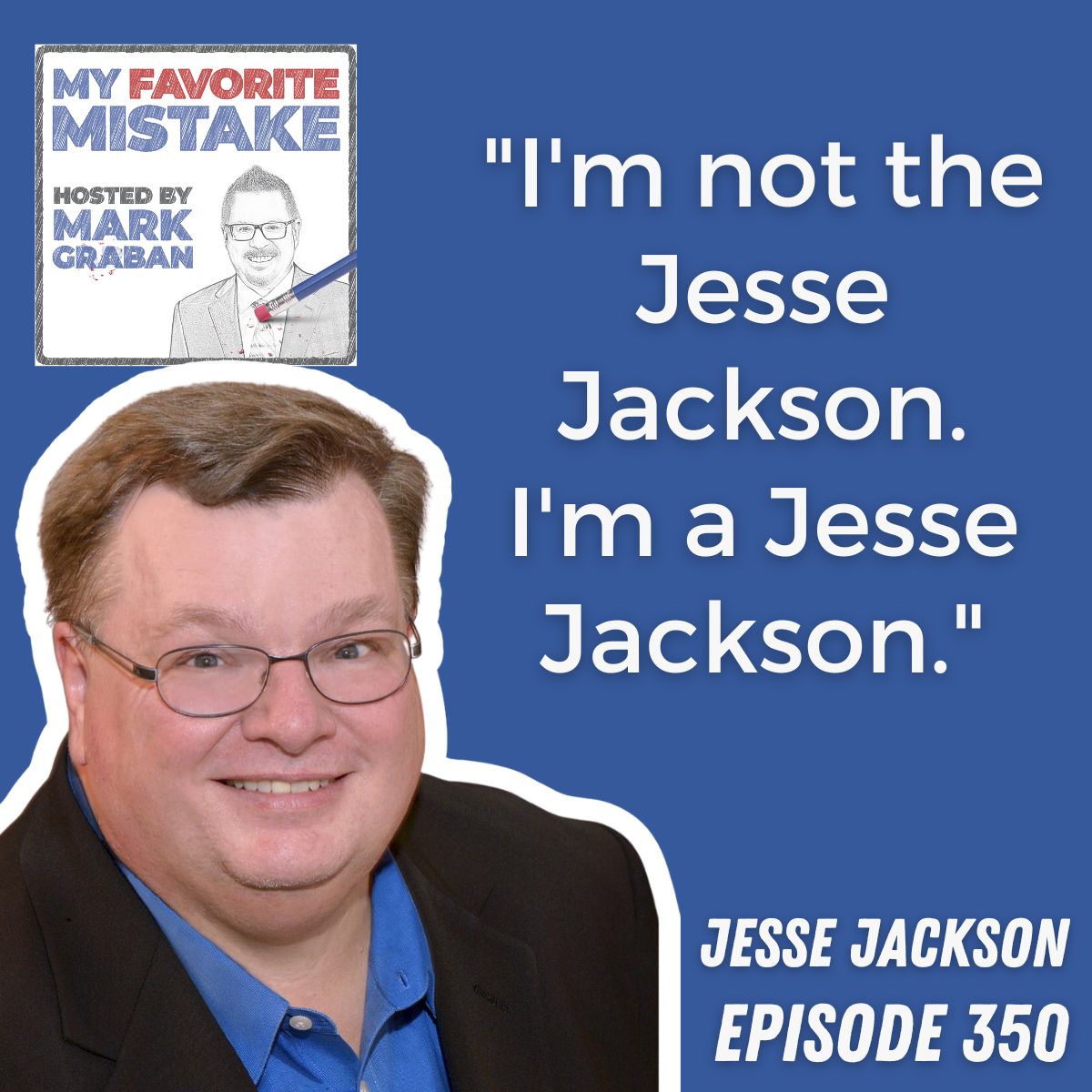
Jesse Jackson: When my wife and I were engaged, she showed up at the tuck shop where we were going to meet, and they were saying, “Oh, Jesse Jackson's coming here. Jesse Jackson's coming here.” Linda's like, “Yeah, not that Jesse Jackson.” So I often say I'm not the Jesse Jackson, I'm a Jesse Jackson. It is kind of fun.
Mark Graban: That's going to continue, given his legacy. But I'm glad we could at least acknowledge him for a moment. I'll mention first that I've been a guest on Jesse's podcast, Set Lusting Bruce, not to talk about Bruce Springsteen, who I like, but we talked about a band I love, Spinal Tap. We'll come back to that later.
Jesse Jackson: One of the misconceptions – I love the name of the podcast, Set Lusting Bruce, though someone said afterwards I should have named it Jackson Cage after another Bruce song. From the beginning, I've been doing this a little over 10 years, I've always done what I call B-side episodes. Episodes where someone joins me who isn't necessarily passionate about Bruce or the E Street Band, but about a different musician or a different genre of music, so we can share and talk about that. Music is universal in so many different ways. It's how we celebrate, how we tell our stories, how we mourn. I just love capturing these stories from people sharing their experiences.
Mark Graban: We'll come back and talk more about the podcast, and I'll put a link in the show notes. So, Jesse, what's your favorite mistake?
The Favorite Mistake: Going Gun-Shy as a New Leader
Jesse Jackson: One of the mistakes I go to often is the resistance to make changes. What I mean by that is you start a new role – and I've done a lot of that. I'm a contact center leader. I've gone to different call centers, everything from insurance sales, to Christmas tree lighting and decorations, to RV roadside assistance.
Anytime you start a new company, you have ideas, and immediately the people who have been there before push back and say, “Oh, we tried that, but it didn't work.” Or, “No, that won't ever work here.” Or, “I'm not sure if that's a good idea.”
The first time, I had been with a company for a long time, and so I started with a new company and I was really gun-shy. Maybe they're right. I'm new to this environment, I'm new to this culture. Maybe I shouldn't step out of line. I think that's a big mistake. You are going to make mistakes regardless.
Two Kinds of Tired
Jesse Jackson: I love a story Harry Chapin told – the late great Harry Chapin, “Cat's in the Cradle,” his biggest song, but a lot of other great music too. He said he was talking to his grandfather one day, and his grandfather said, “There are two kinds of tired. There's tired when you fought someone else's fight, you did someone else's dream, you worked on somebody else's goals, and at the end of the day, you are tired.”
“And then there's the other kind, when you fought your fight, you worked your goals, you worked your ideas, and you might have even failed, but you at least have this sense of tired that says, ‘At least I'm working for what I believe in.'”
Since then, when I've moved to a new role, I've listened to the team and I will hear why they think perhaps an idea isn't a good one. But if I still feel like it's a good idea, I go, “Well, it may not have worked in the past, it may not work now, but we're sure going to give it a try.” Sometimes it's successful and sometimes it isn't.
So that's definitely a mistake I recommend people not make. I am by nature a collaborative leader, but sometimes you've got to listen to your gut and make the decision you think is best, then see what happens.
The QA Director Role: Volunteering Into a Layoff
Mark Graban: You think of that question of, do I speak up or do I hold it back, whether you're a new employee or you've been somewhere for a while. There's often this balance: what would be the benefit of speaking up to the company or to me? If I have a good idea, that's good for my reputation, I'm proving my value. What's the benefit?
Then you think, what's the potential risk? I might get shot down, and that might be embarrassing or sting. You're probably not going to get fired from speaking up. But I'm curious to hear more about your thought process. When do you decide to go ahead and speak up versus keep quiet, especially that first time, before you really know how that organization's culture and people respond?
Jesse Jackson: I was working for a company and a new VP came in, and he was needing some help. He needed a director of QA. I really liked this guy, and I told him, “Well, I don't know if I'd be any good at it, but if you need the help, I'm willing to take that role on.”
Three months later, I was laid off. It really bothered me, because I had said right from the start, “I'm not sure if I can do this.” And he had said, “Oh, we'll figure it out together.” But obviously we didn't, and I didn't understand him.
Mark Graban: Just to clarify – do you think you got laid off because of performance, or was it a broader company thing you got caught up in?
Jesse Jackson: He said it was performance. I think part of it was that I had done a really good job of getting the managers who worked for me ready to step up, and I think they said, “Well, we can lose this level of management” and give those other people a chance.
I do think I didn't understand what he wanted, and even though I kept trying to do it, it is one of the lessons I learned. I am very careful about volunteering for something I don't know how to do. I will take a task if someone assigns me, but as far as taking a whole new role, I'm very careful about that now.
Mark Graban: I hate to hear a story where somebody does, in my judgment, the right thing – whether that's speaking up in a well-intended way, or being a team player and taking a role – and it turns out to be a mistake. The way that plays out depends so much on culture.
When Speaking Up Gets Shut Down
Mark Graban: You were making me think of this idea of speaking up. I've been in a lot of different hospital settings over the last 20 years as a consultant, and unfortunately the default culture, unless proven otherwise, tends to shoot down new people who speak up. They say things like, “Hey, you're new here. What do you know? You don't know how we do things.”
I remember one conversation in a hospital laboratory. People have learned a lot more about traveling nurses in recent years – you're on contract gigs, you move from city to city, hospital to hospital. One of these traveler lab people kind of lamented, “I've worked in a lot of different places, and some places do things better than others. No one's perfect, but there's things to learn.” Because I was in there engaging people on continuous improvement, he shared with me, “I wish they would listen to me. I think I bring some perspectives.” He had similarly been shot down and learned not to share those things.
On the flip side, there are organizations that very specifically invite new people to say, “Hey, you are new here. You've got fresh eyes. We might not agree with it, but we want to hear what you say.”
Surround Yourself with Smart People Who Disagree
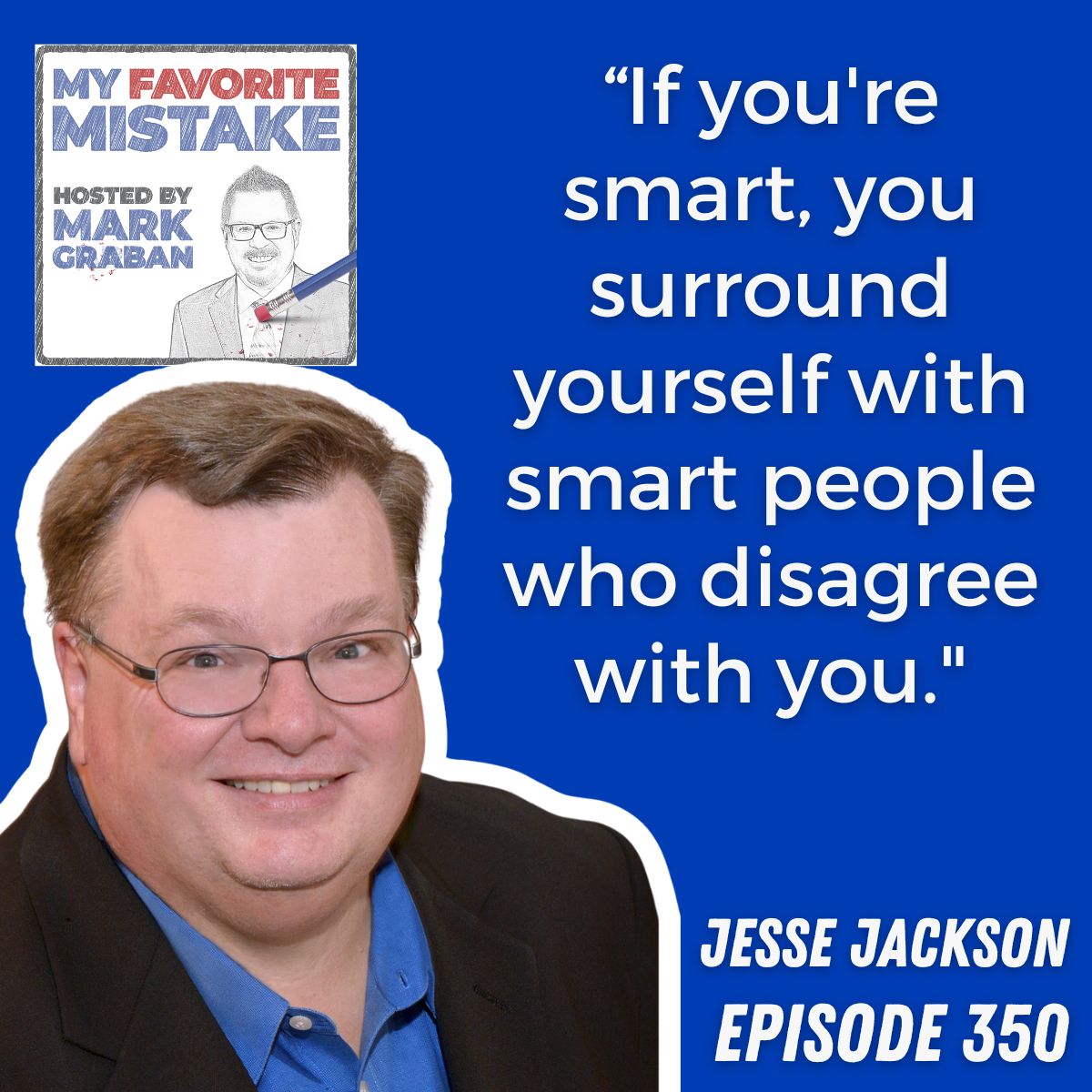
Jesse Jackson: One of my go-to statements – I'm a huge Aaron Sorkin fan. On Sports Night, Robert Guillaume was playing the leader, and he was talking to an employee who was afraid that standing out, not fitting in, was how you lose your job. And he said, “If you're dumb, you surround yourself with smart people. If you're smart, you surround yourself with smart people who disagree with you.”
I bring that up anytime I start a new role. I tell folks, “I want you to push back. But I'm not going to be afraid of trying something just because you guys don't agree with it.” You have to sell the team on, “Here's my idea, here's what we're going to do, here's why I'm trying to do it, here's what I think is going to happen, and let's give it a try.” Then you have to figure out how to measure if you're successful or not – and not be afraid to say, “Okay, we tried something, and it didn't work. Let's go back to home base and try to figure out where to go next.”
Mark Graban: That's so aligned with what I've learned and experienced as good leadership and good culture. I'll plug my book for a minute – in The Mistakes That Make Us, a lot of these themes come up: leaders who encourage this and invite dissent, who invite new ideas. The effect of that is what we often call psychological safety, where people feel safe to speak up. It doesn't mean you always get your way, but you can have your say without being considered out of line.
When you said that earlier, it jolted me, and I jotted it down. Speaking up to disagree shouldn't be seen as insubordinate or disloyal, the way some weak leaders react and frame it.
“I Listened” Doesn't Mean “I Agreed”
Jesse Jackson: Too many people are afraid. I want to give people an open avenue, a platform to say, “Here's what I'm thinking, here's what I'm doing.” Some of the best ideas have come from a team member, and we try it, we work through it.
The other thing you have to build a culture of is: just because I don't take your advice doesn't mean I didn't listen to you.
Mark Graban: And it doesn't mean you don't respect me.
Jesse Jackson: Sometimes a person will feel that way. They're like, “Oh, you don't care what I think.” No – it isn't mandatory or automatic that if you say, “I think we should do A, B, C,” that we're going to do A, B, C.
Mark Graban: Psychological safety doesn't mean you never get pushback. In an environment where we can have honest debate and discussion about different ideas, then – as you stated it so well – we don't really know until we go and try.
Jesse Jackson: Exactly.
Mark Graban: Really think of it as an honest experiment, as opposed to “Oh, we're going to quote-unquote try it, but my intent is to prove that my idea was a good one.” That's driven more by ego than by what's good for the organization.
Jesse Jackson: Absolutely.
The Origin of Set Lusting Bruce
Mark Graban: I appreciate you sharing both sides of that – being the new person to a team and some of the things you've done as a leader to encourage that. I'd love to talk about podcasts now. We may talk about podcasting mistakes; I've made a bunch. But first, I want to ask about Set Lusting Bruce. Why Bruce, why that podcast? For those just listening, I get the reference on the T-shirt, “Tramps Like Us.” Maybe we were born to run, right?
Jesse Jackson: Absolutely. This is a fan film that Dave Barry just put out that talked about people and their relationship with Bruce and his music, and how much it has affected their lives.
A couple of things happened. Lynette Carolla, who was at the time married to Adam Carolla, was doing an episode or two discussing Springsteen fandom with friends of hers and Adam's, and I really enjoyed those podcasts. Then she stopped doing them.
Then “Springsteen and I” came out, which is a film talking about Springsteen's music. The “Tramps Like Us” film is much more professionally made – not that “Springsteen and I” was a bad film, but “Tramps Like Us” is made by a documentarian. I love that.
So I got to thinking, I want more stories. I checked, and there was not a Springsteen podcast at the time. So, in the spirit of lighting a candle versus cursing the darkness, I decided to start one.
Mark Graban: When did you start?
Jesse Jackson: September 2015.
I knew from the beginning what I wanted: to get people who are passionate about music and have them share why – to share how his music and other musicians' music has helped them in their lives.
Bruce as a Connector: Stories from Listeners
Jesse Jackson: I've been lucky enough to have people who have had cancer talk about Bruce helping them get through chemo. People talking about getting through deaths of spouses, siblings, parents – and joy, having Springsteen played at their wedding, raising second generations, third generations. I grew up listening to Bruce Springsteen's music; I can't remember a time when I didn't hear that music. Over the years, I've talked to people from around the world, all over the United States, and shared those stories.
There are some funny ones, some touching ones. I had a dad talk about his daughter, who was born premature. He would play Bruce Springsteen music and read Harry Potter to her. Years later, at a book signing, they asked the young lady – she was about eight or nine – “Were you disappointed you didn't get to talk to Bruce?” She said, “No. He knows me. He wrote me all these songs.”
There was a young man, Adam, in New Zealand whose mother was hit by a car when he was in her womb. He didn't speak for the first three or four years of his life. His mother was listening to Bruce Springsteen in the car, and he started nodding his head to the music. So she took him home and started playing Bruce music, and he learned to speak by watching Bruce Springsteen videos with captions. Those were his sight words. So Bruce literally gave him his voice.
Those are the kinds of stories that make you go, “Wow.” We just had someone – a friend had gone to England to go to a tour and ended up passing during the trip. There were six or seven of them, fans, all on a WhatsApp chain, and they asked me if I would host a roundtable to talk about their friend Kim. We were able to talk about that.
Then there are other ones. A guy was at a Bruce taping for some show, and he ended up catching Bruce and saying, “Hey, we're debating on having a second child. What do you think?” And Bruce kind of said, “Well, that's – it's always a joy, but it's also for the rest of your life.” So the guy went back and told his wife, “We can have another kid. Bruce says it's okay.”
Mark Graban: You hear what you want to hear sometimes.
Jesse Jackson: Exactly.
Trying to Land Bruce as a Guest – and the Shatner Lesson
Mark Graban: Have you tried to arrange an opportunity to meet Bruce?
Jesse Jackson: I was able to go to a book signing in Austin, and I got my 30 seconds with him. I have reached out to friends of friends, but I have not been able to get to that inner circle to say, “Hey, I've been doing this over 1,500 episodes, over 10 years – can Bruce give me 30 minutes?” I'm hanging in there anyway.
Mark Graban: It's a mistake not to ask. I'm thinking of a time, a couple of years ago, William Shatner went up in The Blue Origin spacecraft. He was up in space, and it was incredibly impactful on him, of course. I forget the exact comment, but in his reflections on that short voyage, he said something about mistakes and learning. I thought, “Oh wow.” It really resonated and was in the theme of this podcast.
I went to his website and put in a request – there was a form on William Shatner's website. It didn't work out, but I got a kind response from somebody on his team saying, “Well, thank you. Mr. Shatner really appreciates the invitation, but just because of time, he only does a podcast if it's for a friend, or” – this was funny – “if it's contractually obligated in some project.”
I thought, okay, fair enough. That was much nicer than them just hitting delete on the request. There's a lot of requests, but in that spirit of “you miss all the shots you don't take,” it didn't take me that long to try to craft a pitch.
Jesse Jackson: If anyone has a connection to Bruce Springsteen's inner circle, help a brother out.
Mark Graban: I don't know if this will help exactly, but I am going to connect you. I had already told Jesse, another recent guest here. I'm going to hold up Andy Freed's book, “Lead Like the Boss.” If you haven't heard that episode, go check it out. I'll link to it in the show notes. He's not personal friends with Bruce, but he got permission to write a book about leadership lessons from Bruce's approach. I'll connect you to Andy. I think he'd be a great guest on your podcast.
Jesse Jackson: That sounds beautiful. I am going to buy that book. Management, the boss – what's not to love?
Born in the U.S.A., Tunnel of Love, and Managing a Career
Mark Graban: I asked Andy, and I'd be curious to get some of the rundown about your favorite Bruce album.
Jesse Jackson: That's always an interesting question. I love Tunnel of Love. I'm a big fan of “Letter to You,” which was his latest studio album. Too many Bruce fans tend to be snobby about Born in the U.S.A., but I think that was the gateway album for a lot of fans in the world.
Mark Graban: That's what I learned about him – when that came out in 1984.
Jesse Jackson: “The Rising” certainly has a place in its heart, about 9/11, and “Wrecking Ball,” a song he wrote a lot about with the banking crisis that happened. “Land of Hope and Dreams” is my favorite song. The new tour he's starting this spring – I already have two tickets. I have a ticket for Atlanta and a ticket for Austin. The Land of Hope and Dreams No Kings Tour is this latest little tour.
I love the song “Better Days.” I strongly recommend “Better Days” – it's all about living your life now. Too many people wait. “Well, when I get the kid out of diapers, then I'll be okay. When I get the promotion, then I'll be okay” – versus enjoying the journey. And then my third song is whatever's playing at the time.
Mark Graban: Just happy to have any Bruce going on. I'm looking at the discography on Wikipedia, and you see this arc. “Born to Run” was huge. I think that's what Andy said was his favorite album, because that's what made him a fan. But you go through and see, well, “Born in the U.S.A.” was 17 times Platinum. Then “Tunnel of Love” came out three years later – I remember the song “Tunnel of Love” – and that was three times Platinum. Some people might look at that and say, “Oh, that was a letdown, it bombed compared to the previous album.” But I imagine, even at that point, Bruce was at a point where he could make the music he wanted to make and not worry about the sales numbers.
Deliver Me From Nowhere and Managing Fame
Jesse Jackson: There was a film that just came out this last fall, “Deliver Me From Nowhere.”
Mark Graban: I was going to ask about it.
Jesse Jackson: I was lucky enough to get Warren Zanes, on whose book the movie was based – “Deliver Me From Nowhere: The Making of Nebraska.” The book basically asks the question: why, after “The River,” which was his first true commercial success – “Hungry Heart” got on the radio – he then did “Nebraska,” and then “Born in the U.S.A.” Why did he have to do this small intimate album for “Nebraska”?
It's an interesting thought. There are some who believe that after “Born in the U.S.A.,” Bruce felt like it was going out of control. He had certainly seen how fame had hurt Elvis. So maybe that was a specific kind of wanting to do something. I know when they went to tour “Tunnel of Love,” they changed where everyone stood on stage to kind of send a message: “This isn't the same E Street Band.”
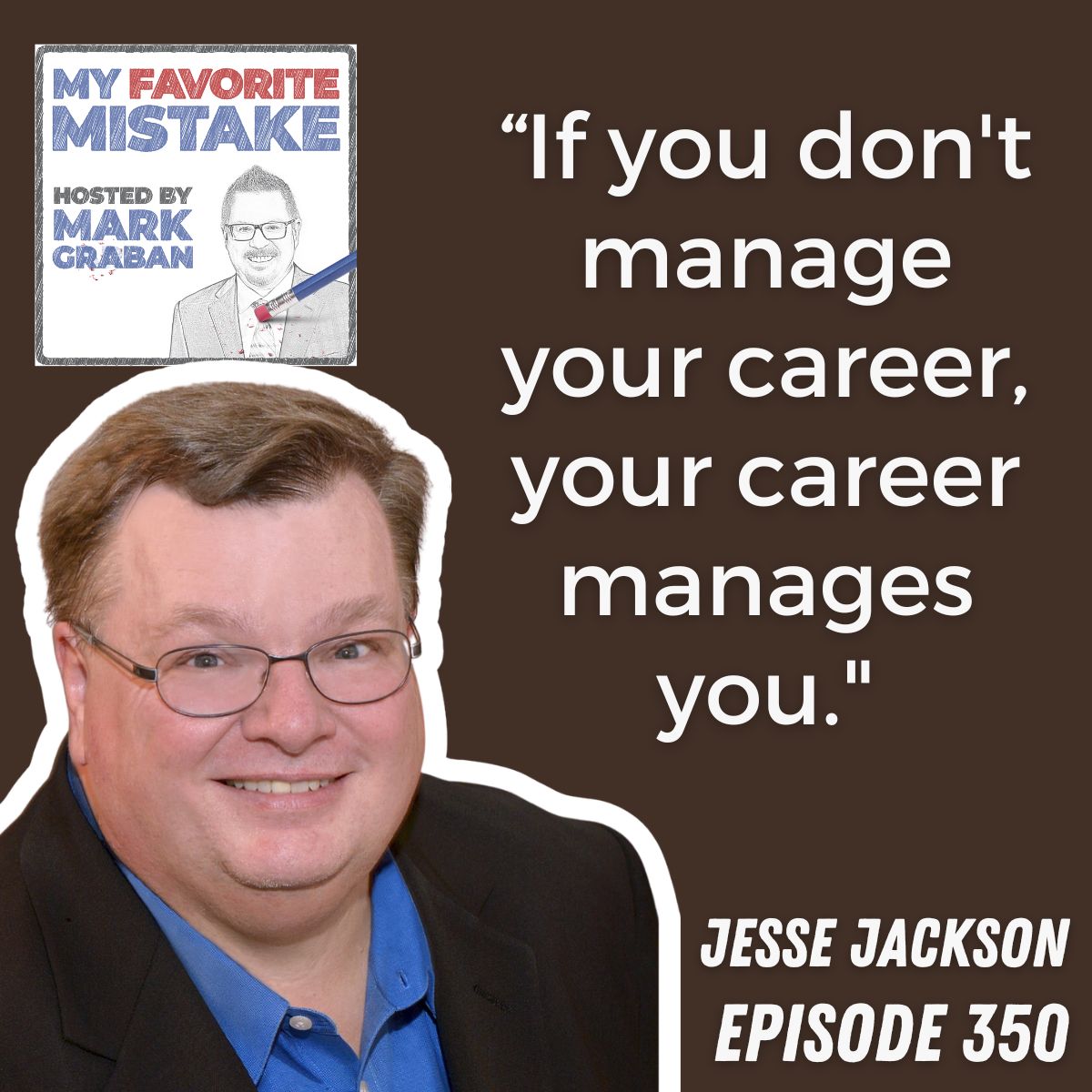
One of the things I've been really bad at is – if you don't manage your career, your career manages you. I think Bruce has managed his career a certain way. One of my favorite questions is about Michael Jackson. “Off the Wall” was an incredibly successful album, filled with great songs, critically acclaimed. I can imagine the studios going, “Well, we can't beat this. If we can just get close, we're going to be happy.” And he does “Thriller,” which brought it to a different level.
Bruce has reached the point where he does what he wants to do and makes the music he feels like making. The late-night hosts had a great time with this – he put out a song recently and posted, “I wrote it this weekend, I recorded it yesterday, I'm putting it out today.” And one of the hosts said, “Well, hey, I had a pretty productive weekend too. I washed a load of clothes, I put them in the dryer. So basically, the same thing, Bruce.”
The Misunderstood Patriotism of “Born in the U.S.A.”
Mark Graban: Between the place he's at in life – not having to answer to anybody other than himself and his own conscience and what he wants to do, in his early 70s – sometimes people say, “Look, I don't have any more Fs to give.” He can put that song out there. I think it's funny when some people say, “Oh, I wish Bruce Springsteen would suddenly get all political.” Like, what? You don't know Bruce Springsteen's career.
Jesse Jackson: We always laugh at the people who play “Born in the U.S.A.” It is a patriotic song, but it is not the kind of patriotic song that many people think it is.
Mark Graban: It's not all rah-rah-rah, everything's awesome. Tell everyone about the song.
Jesse Jackson: He was asked to do a song for a film, and he read the script, and he ended up writing “Born in the U.S.A.” That song wasn't used in the movie. It's all about a Vietnam vet trying to figure out what to do after Vietnam, and how to fit in. The idea is, but at least he has that – “I was born in the U.S.A.” – to hang onto. It's an absolutely beautiful song.
A few years ago, Bruce wrote “The Wall,” which is all about a veteran talking about the Vietnam Memorial Wall. If you've ever gone to D.C., it is just so moving to see how many people died in that war. I was lucky enough at one show, he did “Born in the U.S.A.” and then “The Wall” – or maybe the other order. That was really beautiful to see.
He has worked very hard with the Vietnam Veterans Associations. If you ever get a chance to watch Bruce Springsteen on Broadway, which is available on Netflix, he tells the story of going to the draft board and them not picking him because he had had an accident. Before he played a blues version of “Born in the U.S.A.,” he says, “I do often wonder who went in my place.”
Mark Graban: And what happens.
Jesse Jackson: Yeah, exactly.
Mark Graban: I'll have to check that out for sure. Thank you for the recommendation.
Podcasting Mistakes: Forgetting to Hit Record
Mark Graban: Let's cover a few other topics before we wrap up. When it comes to podcasting mistakes, I'll go first – I think it's a good opportunity to lead by example. I've probably done a thousand interviews across different podcast series. Guess how many times I forgot to hit record?
Jesse Jackson: Raising my hand – we've all done that.
Mark Graban: I've done it twice.
Jesse Jackson: I just did it last year. I've been doing this for over nine years, and I forgot to hit record.
The other mistake I make – I am so paranoid, Mark, of running out of episodes. I will record plenty in the bank, and I'll find myself thinking, “Oh my goodness, I have two dozen episodes in the bank, and I only put out one a week. This year, I'm only doing one a week. I talked to you in March, I'm not going to release it until June.” So you have to find that fine line where you always want a little buffer, but also not too much.
Buffers, Scheduling, and Pronouncing Names Right
Mark Graban: I've made that same mistake. Earlier in this series, sometimes it would be many, many months. One thing I'll share is that in my podcast scheduling tool, it doesn't allow me to record more than two in a week. That helps limit it. There are some weeks where my schedule doesn't allow me to record, and my scheduling tool doesn't let me do more than one a day. Back in pandemic times, when I was home more and had more free time, I was sometimes doing three recordings a day.
It's almost better to have someone wait a little bit for the recording date, and then have a quicker turnaround. If someone has a book coming out next month, I'll make things run a little quicker to help with that.
Jesse Jackson: I'll make that change too. I get so eager. I don't want to make this difficult, because they're doing me a favor. Joining me on the podcast is a favor. I feel guilty, like, “Well, gosh, the first time you have open is May, Jesse.” And I'm like, “Yeah, well, okay, let me see if I can fit you in before that.”
So what I try to do is, I set the same thing – I'm taking a vacation in March, I'm doing this, so let's try to spread things out. And if there's something specific going on – for example, if you have a book being published on April 6th, let's get you in so the episode comes out with that.
Mark Graban: We can have a system and work around the system if need be.
I'm thinking of mistakes during an episode. I try really hard not to mispronounce anyone's name. I didn't have to check for you, and I talked to you before. Jesse Jackson is easy. But to not take for granted that I know how to say a name – to always ask. There are some names I've stumbled over.
“What Should I Have Asked You?”
Mark Graban: I'm thinking of one episode. I've been really fortunate to have two active members of Congress on the show. Will Hurd, who's no longer in the House, was the guest in episode two. He told a really great, vulnerable story about how he lost his first primary runoff because he didn't listen to the consultants he had hired. He got the most votes in the first round, but in Texas, he didn't have 50%, and he lost the runoff. He learned from that, ran again four years later, listened to his consultants, and won, and won re-election a couple of times.
A couple of years later, I had Adam Smith, who's still in the House from the state of Washington. I was a little nervous – I'm talking to a Congressman, he's got the same home office background that he has when he's on a news channel. I was a little amped up, not wanting to make a mistake with a Congressman. He was telling a story about a campaign and something that went wrong. I don't know if I misunderstood – I'd like to think I was listening well – but I said something like, “Oh, so then when you lost,” and he was like, “No, no, no – I won.” I was like, “Oh, whoops.” At least he corrected me. He wasn't mean about it. I'm like, “Oh, that was a bit of a stumble.” But hey, maybe it was unclear to the listener as well. I did go back and review it, and I'm like, “He didn't tell it in the clearest way.”
Jesse Jackson: One of the things I've started doing is I end every podcast with the same question. It's called the Mary Question. I had found that sometimes the guests, especially a non-Springsteen guest, are not familiar with the song “Thunder Road.” So I've now started, when I send the reminder, “Oh, by the way, please remember to listen to Bruce Springsteen's ‘Thunder Road' and be ready to give your opinion on whether you think Mary gets in the car.” I still had one a couple of weeks ago, someone said, “Oh, crap, I didn't see that email. I don't know that song.” I'm like, “Okay, we're going to mark you incomplete on the assignment, and we move on.”
Mark Graban: I remember when I was a guest on your show, you did send that in advance. I knew the song, but I don't really know it. So I went back and listened to it. I wanted to draw my own conclusion – because if you Google the song, it starts bringing up this debate. I wanted to draw my own conclusion from the art. Do you do that check-in before you start recording now to make sure?
Jesse Jackson: No, and that's a really good example. I should say, “Hey, by the way, did you listen to ‘Thunder Road'?” That's a good idea. The other thing I do is I try to do different things. I'll come up with new themes and new ideas just to keep it fresh. New segments, new approaches.
Don't Stop Recording Until They Hang Up
Jesse Jackson: I've told this story so many times, but I had someone on very early in the podcast. It was a decent interview – it wasn't great, but it was good. I thanked them and quit the recording, and I said, “Hey, I appreciate it.” And the person said, “Oh, I had such a great time. Next time I'm on, I'll tell you about when I got drunk with the E Street Band.”
Mark Graban: What? Why didn't you bring that up now?
Jesse Jackson: Yes – you're kind of burying the lede. So I do a couple of things. One, I don't stop recording until they hang up.
Mark Graban: That's great, because sometimes I've had a guest say something that was just gold – that would have made a great clip to promote the episode.
Jesse Jackson: The other thing is, I often ask, “Okay, so Mark, is there anything I should have asked you that I haven't?” That way they can say, “Oh, yeah, there is a story I wanted to tell,” or, “There's something we could do.”
Mark Graban: This is a “me” problem, but I've had guests or hosts ask that, and there are times I have just frozen. I can't think of anything.
Jesse Jackson: That's a perfectly fine answer. But sometimes they'll come up and say, “Oh, well, yeah, you didn't ask me this,” and then we'll go off on another thing.
Embracing Tangents Without Losing the Thread
Jesse Jackson: I don't think I make the mistake very often of not embracing tangents. I respect people who have a tight podcast – they get it in 25, 30 minutes, it's in, it's out, it's a streamlined podcast. I tend to not be afraid of going on tangents – like today, we end up talking about the Springsteen movie. I just enjoy that.
I will sometimes cut things out. I got a complaint very early – somebody gave me an iTunes review saying they gave me one star because I told too many of the same stories, and I should do a FAQ. That bothered me – of course, we all take that personally. So sometimes I will say, “I may cut this out, but the person I'm having a conversation with doesn't know that story.”
Mark Graban: It's hard. Somebody hasn't listened actively to every single episode versus you. You can't assume that's the case. I've told a couple of stories many times – the conversations and the show tend to trigger certain memories and examples. I aim for 40 minutes. We're recording, I've got a hard stop in five or six minutes, schedule-wise. The beauty of the podcast format is that if someone's listening, they can listen as long as they want. I don't know how many people listen to the favorite mistake story and then stop the episode, or there's people who are still listening now – and thank you for doing so.
Jesse Jackson: Absolutely. The other thing is – we kind of joke with the drinking-game style. On John Hiatt's “Perfectly Good Podcast,” we now say anytime I tell a Bruce story, Sylvan goes, “Take a drink.”
Spinal Tap and Mistakes That Become Comedy
Mark Graban: Maybe one other question here before we wrap up. I'll encourage people – we did an episode where I was a guest talking about Spinal Tap, the band, the movie – now movies, with the sequel. You kindly invited me to come back and sort of be a third wheel.
Jesse Jackson: That was a fun episode.
Mark Graban: That was about the guy doing the cover, the charity project, of bands doing cover versions of Spinal Tap songs. A great project.
One thing I love about Spinal Tap, the original movie, is that a lot of the humor is mistakes the characters are making. Not filmmaking mistakes – like getting lost backstage, or showing up to the record signing at the record store where there are no fans. Different people make different mistakes or bad assumptions, and there's humor in it. What are some of your favorite things about Spinal Tap?
Jesse Jackson: I love “Everything 11” – that has been part of our culture. The whole idea of their journey of getting smaller and smaller venues. The scale – the little Stonehenge coming out.
Mark Graban: That would be a famous mistake.
Jesse Jackson: I love that these actors embraced the character and enjoyed it. There's the famous story that Mark Knopfler said he would do the soundtrack to “The Princess Bride” if they would have the cap that Rob Reiner wore – the filmmaker – and you'll see it in Fred Savage's bedroom, that little Easter egg.
It is just so beautiful. And the music is actually pretty decent.
Mark Graban: They all play their instruments. Michael McKean and Harry Shearer and Christopher Guest – one thing I think is really amazing is that they're not lip-syncing. They are writing and performing the music.
Jesse Jackson: Absolutely.
Music, Movies, and the Communities They Build
Mark Graban: This is a less funny note to end on – the sadness of Rob Reiner and his wife Michele being murdered. That was only about two months after I was on your show. I had an opportunity to go to L.A. and attend the public premiere of the Spinal Tap sequel. I didn't get to meet Rob Reiner or anybody from the band, but they did a live Q&A session in Grauman's Chinese Theatre in L.A. that was livestreamed to theaters around the country and probably other countries.
People have a strong sense of connection – whether it's to Bruce or to Spinal Tap. One of my best friends through life is the guy who introduced me to a bootleg VHS copy of “This Is Spinal Tap” – probably recorded off of HBO. We watched that in high school, and he went with me to L.A. for that show. So, hi, Don. He's actually the artist who did the artwork for the podcast cover and for the cover of my book, “The Mistakes That Make Us.”
Maybe there's a happier note to end on. Whether it's a musician like Bruce or a movie, it really does create special bonding opportunities. I'll give you the last word on that.
Jesse Jackson: One of the things podcasts do is create communities. You get listeners, they understand the private inside jokes and the thoughts. Following a band creates a community. I really do want to ask anyone who's listening: if you're passionate about any musician, band, or music genre, send me an email at setlustingbruce@gmail.com. We'll set up a time, and we'll just let you talk about your fandom. You don't have to have done anything crazy, you don't have to have seen 30 or more shows. In fact, one of the statements I make often is, the amount of times you've seen a band perform live is not a fair barometer of how big a fan you are. I'm always looking for guests to join me and share their story.
Mark Graban: Thank you so much, Jesse. There are links in the show notes to Set Lusting Bruce and your other podcasts. I hope people will check those out. Great to talk to you again. Glad we could do it here on my show.
Jesse Jackson: I absolutely loved you joining me. We're going to do it again sometime. Thank you – it's always fun when you're a guest on a podcast, because you don't have to do any pre-show work. You just show up.
Mark Graban: Or post-show.
Jesse Jackson: Yes, exactly. Thank you, my friend. Have a great spring, and hopefully we'll meet in person soon.
Mark Graban: Hope so. Thanks.