

Kendall Berg was so good at her job that she thought she didn't have to be nice — until a VP told her, “Nobody likes working with you.” That feedback became the catalyst for five promotions in six years, a coaching business, and a completely different understanding of what it actually takes to advance.
Listen:
Check out all episodes on the My Favorite Mistake main page.
My guest for Episode #343 of the My Favorite Mistake podcast is Kendall Berg, an internationally published author, TEDx speaker, and career coach dedicated to helping professionals master what she calls “the career game.” After spending over five years stuck at the manager level, Kendall earned five promotions in six years — a transformation that started with one piece of brutally honest feedback. Her book is “Secrets of the Career Game: 36 Strategies to Get Ahead In Your Career,” and she hosts a podcast of the same name.
Kendall's favorite mistake was believing that technical excellence was all she needed to advance. She was so focused on efficiency and execution that she neglected relationships, small talk, and the interpersonal side of work. She thought being the most productive person in the room meant she didn't have to be the most personable. That changed when a VP she respected — someone outside her direct chain of command — pulled her aside and told her, “Everybody loves having you on their team. Nobody likes working with you.”
Rather than getting defensive, Kendall asked for specifics, sought out a mentor who had overcome the same reputation, and spent a year building structured templates for the soft skills nobody had taught her — how to disagree effectively, how to acknowledge feedback before responding, how to advocate for her own work. The results were dramatic. Within a year she was promoted, and the trajectory kept accelerating from there. She eventually became the go-to leader for turning around underperforming teams, taking on 17 employees rated as not meeting expectations and coaching most of them to high performance.
We also discuss why “playing politics” deserves a reframe, why no one actually wants to work in a true meritocracy, and what every generation gets wrong about the one after it.
Themes and Questions:
- Leadership presence matters as much as technical skill — why being the smartest person in the room can actually hold you back from promotion
- What “corporate politics” really means when you strip away the negative connotation — and why reframing it as building relationships changes everything
- How to receive tough feedback without getting defensive, and why asking for specifics is the move most people skip
- The “acknowledge and respond” technique — why people need to feel heard before they'll accept your disagreement
- Why your work doesn't speak for itself, and how to advocate for your contributions without feeling like you're bragging
- Creating structure and templates for soft skills — a tactical approach for people who thrive on systems
- What it looks like to turn around a team of 17 underperformers by giving them a system in which they can succeed
- Why no one actually wants to work in a true meritocracy — and what we really mean when we say we do
- Generational conflict as a communication problem, not a character flaw — and why every generation says the same things about the next one
Scroll down to find:
- Video version of the episode
- How to subscribe
- Quotes
- Full transcript
Find Kendall on social media:
Watch the Episode:
Memorable Moments from the Conversation:
Click on an image for a larger view



Subscribe, Follow, Support, Rate, and Review!
Please follow, rate, and review via Apple Podcasts, Podchaser, or your favorite app—that helps others find this content, and you'll be sure to get future episodes as they are released.
Don't miss an episode! You can sign up to receive new episodes via email.
This podcast is part of the Lean Communicators network.

Other Ways to Subscribe or Follow — Apps & Email
Kendall Berg's Favorite Mistake: Thinking Technical Excellence Was Enough
Mark Graban: Hi, welcome to My Favorite Mistake. I'm your host, Mark Graban. Our guest today is Kendall Berg. She is an internationally published author, TEDx speaker, and career coach dedicated to helping professionals master the career game and accelerate their success. After experiencing her own transformation — from being stuck at the manager level for over five years to earning five promotions in six years — Kendall became passionate about empowering others to navigate corporate politics. Something I never enjoyed doing. Building their leadership presence. She has a recent book titled Secrets of the Career Game: 36 Strategies to Get Ahead In Your Career, and she has a podcast of the same title. Kendall, thank you for being here today. How are you?
Kendall Berg: Thank you so much for having me. I'm really looking forward to our chat.
Mark Graban: Well, I'm excited to hear your story. We will talk about other ideas and lessons learned from the book, but let's jump right in. From the different aspects and stages of your career, what would you say is your favorite mistake?
Kendall Berg: I've talked about this often. A lot of the time, when we look back on our lives, we think that mistakes are the setback. We feel like the mistake is the piece that made us slower to the target we wanted to be at, or it held us back from achieving the things that we wanted. But for me, my mistake was the catalyst that created the entire life that I live now.
In my career, I was very tactically focused, and I think many people are. We get really good at our niche and our job, and we think strongly about executing that niche well. The mistake that I made is I was so technically proficient that I thought I didn't have to be nice. That's the simplest way to put it.
Mark Graban: Yeah.
Kendall Berg: Not because I didn't like people, and not because I didn't get along with people on a personal level, but because I didn't want to waste time. I wanted to be efficient. I wanted to get the work done. And as a result, I got stuck — and not only got stuck but got incredibly frustrated. I was being peeled off of really big projects that I had been leading. I was not able to step into the type of roles that I knew I was capable of.
I was offered a director position at one point, but without the title or the pay. So I was still a manager, but I took over this director's job and led their whole team for them. And the mistake of not learning people, of not learning corporate politics, of not learning how to build relationships would have gone completely missed by me forever if I had not had a VP at the time who I thought really highly of. He was a really good guy, I had a lot of respect for him, and he wasn't even in my direct leadership chain. But he pulled me aside during a performance review into a separate conference room, sat me down, and said, “Kendall, everybody loves having you on their team. You're so productive. Nobody likes working with you.”
Mark Graban: Wow.
Kendall Berg: Yeah. I was like, this seems a little harsh. I'm nice.
Mark Graban: Yeah.
Kendall Berg: He wasn't wrong. I look back, the delivery could have been a little bit nicer.
Mark Graban: But it got your attention.
Kendall Berg: It did. It got my attention. This was somebody I really respected who I knew understood my technical acumen, who I knew valued the work that I did. And yet even with all this positive I was delivering, he said, “Nobody likes to work with you and you're never going to get where you want to go until you fix that.”
For me, that was the big mistake — investing so heavily in doing my job right. I hear people all the time say, “I just kept my head down. Did my job.” This is really common in military personnel especially. But the people who find a lot of success, whether it's corporate, entrepreneurial, building their own thing, or working for somebody else — it's people who understand people. And I had totally missed that.
Mark Graban: What was the industry or the type of setting you were working in at the time?
Kendall Berg: I worked in financial services. I was in banking.
Why “Playing Politics” Isn't What You Think
Mark Graban: What you're describing is a common engineer trap, and I say that as an engineer. Early in my career working for large publicly traded corporations, I would bemoan playing politics. At some point you have to accept that as a reality.
Kendall Berg: I think that all of us play politics in every area of our lives. We just don't like to admit it. The difference is in your personal life, the politics we choose to play most often is we eliminate the pieces we don't like. I don't get along with John — I never see John again in my personal life because I don't have to. So I don't have to play politics as much in that situation. But at work, we don't get to choose the people we interact with. We don't get to pick the workforce. It's like school. I would argue the education system has just as many politics, if not more, than the corporate world.
We all play these politics. We just don't like to call them that. There are a couple of bad eggs who are very artificial, very inauthentic, very fake when they play politics, and that gives it a bad reputation. But if you think of any project you ever led where you had to work with somebody you didn't like, you probably played politics. Odds are you didn't sit that person down and say, “John, you're an idiot. I don't want to work with you.” You said, “Oh, thank you so much for this. I'll have to go double check it.” We play these politics whether we want to or not.
What I often tell people is you have the choice of not learning the game, and that's going to hold you back. That's going to make it harder to get the things you want. Or you learn how the game works, and then you choose how you want to play. There have definitely been times in my career where I could have played politics a different way and it would have been better for me, but it would have gone contrary to my values or my morals, or contrary to how I like to show up. But that's an intentional choice. Not learning how to do it is ignorance.
We were just talking about pickleball before we started recording. The first time you play pickleball, you don't know how to play. And if I said I want you to bet your salary on this game, you're probably going to say no. You're going to practice a few times first. That's how it really works in the corporate world as well.
The Pickleball and Dating Analogies
Mark Graban: There's skills and there's technical proficiency, but there's also what you could call etiquette or social norms. I show up to what they call open play and you rotate through with different people. Most people introduce themselves and at least say hi. Some people don't. Maybe they're shy, they're not there to make friends. But there's the politics of it — I'd rather play with somebody who is encouraging when you miss a shot or says good job when you do well, as opposed to just not interacting with you.
Kendall Berg: It's absolutely true. I use dating a lot as an example. If you went on a date with somebody, and tactically they said all the right things — they have the job, they have the house, they have the 2.5 pets, they're well spoken — but they never make eye contact with you, they never ask you anything about yourself, they don't seem interested in you as a person at all. They're just tactically correct. You're probably going to leave that date thinking they were boring, or they didn't seem interested, or they were self-absorbed. Even though tactically they had the skills to date, socially they didn't.
This is true everywhere. I think it just gets a bad reputation in corporate because it determines so much of our livelihood. We say, “Well, I like Mark. Mark goes to the happy hours. Mark got promoted. I didn't go to the happy hour and I didn't get promoted. That's not fair.” But if Mark spent that happy hour building relationships with the executive team, understanding what's important to them, getting to know them, and also talking about his own work and advocating for himself, then he gets promoted. People see that as unfair, but that's just how people work.
We have to be intentional with the things we choose to do or choose not to do. You could say, “I'm willing to have my career go a little slower so that I don't have to go to that happy hour.” Totally a choice. But we have to do it on purpose. Otherwise you just blame everybody around you instead of making intentional decisions.
Why Nobody Actually Wants a True Meritocracy
Mark Graban: The things you're talking about, the social aspects of work, could be framed in a negative way. Somebody might say they're schmoozing or bragging. Or it could be framed in a more positive way — like you said, building relationships. Nothing wrong with doing that.
Kendall Berg: Here's a helpful reframe. If you're listening to this and you're thinking this is all well and good but you don't want to do it, that's fine. Think of the most technically proficient person you ever worked with. They were super smart, got their code done the fastest, got their work done the fastest, it was always perfect. They probably worked nights and weekends because that's what those people tend to do.
Now imagine you have to work for them. They don't want to teach you how to do it. They just want to do it because they're the smartest in the room. So they don't delegate well. They don't understand the mistakes you're making because they wouldn't make them, so they don't give good feedback. They don't give good coaching. They don't know how to train you.
Mark Graban: They can't relate.
Kendall Berg: Exactly. And then they go into a meeting to present the work that your team did, but presentation is not their skill. Storytelling is not their skill. That doesn't help you get promoted. That doesn't help you become a better employee or manager.
People think the social aspect is unfair, but nobody wants to work in a real meritocracy. In a real meritocracy, the smartest engineer is managing all the other engineers. That does not make that engineer a good boss. It doesn't make them a good leader. It doesn't make them a visionary, a strategist, a good communicator, a coach, or a trainer. It just makes them really good at their job.
I say all of this because I was this person. I was like, “It should be a meritocracy. Who cares if I was rude in the meeting? I was right. I saved us all time.” But nobody wants to work for that person because that person's not a good boss. They don't have the soft skills and the coaching and the trainability you need to lead others.
We kind of want it both ways. We think everybody else should have to be nice and a good coach and good at communicating and storytelling. But I should be able to be rude and just do my job. When I ask clients, “This really technical person working for you that you think is great — would you work for them?” They say, “Oh no, absolutely not. They'd be a horrible boss.” Then you can't promote them.
On the opposite side, maybe somebody's not as technically proficient, but they're always willing to train their team members, they always give good feedback, they're a great communicator, they advocate for people. You'd rather have that person sitting at the happy hour advocating for you than a boss who's sitting there writing more code.
Mark Graban: When you think of meritocracy, there are different aspects of merit. There's technical ability, but these other things matter. I've done a lot of work in healthcare, and sometimes the person who is the best nurse makes a terrible nurse manager, for the reasons you've brought up.
Kendall Berg: Absolutely. School is incredibly isolating for people who are incredibly book smart but lack street smarts. I have two kids. I have one of each. I have a book-smart genius and I have my street-smart daughter. One of them has a much easier time at school. They're both great kids, but they have different strengths that play out in different ways.
Three Things You Can Do Today to Build Influence
Kendall Berg: When I talk about my biggest mistake being that I didn't learn politics early on, the way I define politics is your ability to communicate and build rapport with the people around you. You have to build influence. The problem is that a lot of these soft skills, these “playing the game” pieces, nobody teaches us how to do them. It's monkey see, monkey do — you're supposed to see Mark being social, copy it, and do it in an authentic way. But most people can't, because the way one person approaches a situation is different than another.
If you're listening to this and thinking, “Okay, this is all well and good, but what do I do?” — my first coach ever is the reason I'm now a coach. She was a VP at the same company where I got that feedback. The individual who told me, “Everybody loves having you on their team, nobody likes working with you” — I said, “Great, how do I fix that?” And he said, “Oh, I have no idea, but you're going to go talk to Allison. Allison had the same reputation and she fixed it.”
So I sat down with Allison and said, “I got this feedback and I don't know how to fix it.” She said, “Oh, you really don't like small talk, do you?” And I said, “No, it's a waste of time.” She said, “We're going to start there. I don't even know you and you sat down and went, ‘I got this feedback, help me fix it.' No intro, no ‘here's my background,' no ‘it's great to meet you.' Nothing. You just jumped in.” I said, “Yeah.” She said, “Do you do that all the time?” I said, “Yes.”
So small talk is the easiest win. I'm not saying “Hey, how's the weather?” I'm saying take a genuine interest in something that's interesting about somebody else. We talked before we joined — “Where are you? Great, that's similar to where I grew up. Are you familiar with these areas? What did you do before the call?” It's not just because I want small talk. I genuinely care. I've referenced that entire conversation over the course of this podcast.
You have to be interested. Small talk is an easy win. Second, you have to care about other people. That sounds obvious, but especially at work we get such tunnel vision. We think, “I need to deliver A, I have a deadline of B, I have to get X, Y, Z done.” We're so focused that we lose sight of the fact that the person we're asking to do something for us has their own list.
If you take a genuine interest in them — “Hey, I know you're super busy. I hate to come to you with this, but I'm being asked to do this. Do you have something similar you've already built that I can use? Or is there somebody else I could go to? I know how much you have on your plate.” When you make this small shift of considering what's important to that person before you go into the conversation, it's going to go smoother a hundred percent of the time.
This is the How to Win Friends and Influence People idea, right? Dale Carnegie.
Mark Graban: That book's probably a hundred years old or close.
Kendall Berg: Doesn't matter. Still works. And that's the thing people miss — we don't care enough about others to show care.
So: small talk, showing genuine interest in other people, and then not being afraid to brag about yourself. People, myself included, think the work speaks for itself.
Mark Graban: We think it should.
Kendall Berg: We think it should. I even give this example in my book: I've never had an Excel spreadsheet walk into my performance review and tell my boss I need to get promoted. The work doesn't speak. It does deliver. It has impact. But if you can't articulate why it was important, the impact it added, the value it delivered, and why you did it — the work's not going to do it for you.
Being able to have these conversations in a constructive way matters. “Hey, I just finished this. It was really important because it's going to help the company do these things. I got to work with these great people. I'd love to present it to the leadership team. What's a great opportunity for me to do that?” Starting to think about these opportunities rather than just, “Hey, here's that thing you asked for.”
There's a time and place for quick turnaround. Your boss messages you a fire drill and needs something in 20 minutes — cool, it's in their inbox. But there are plenty of times where you can go back two days later and say, “Hey, about that request, is this something you're going to ask for more often? Should I build it in a repeatable way? Should I be presenting it to the broader group?” But we don't always do that because we're so focused on delivery.
Those would be the three easiest things you can do. If you're listening to this and thinking you need to get better at playing politics, start with those, and it's going to build momentum.
Reframing Politics, Promotion, and Self-Advocacy
Mark Graban: It's funny though — people, myself included, will cringe a little bit about the phrase “playing politics.” I think it's very similar to where people might say, “I don't want to be salesy.” It's all in how you frame it. Or authors who say, “I don't want to be self-promotional.” Promote your book. You're not bragging about yourself. You think your book is worth reading. And if you want, frame that as helping others, because you wrote a book with 36 strategies to help others.
I think you just have to reframe politics, reframe promotion or sales. Who doesn't want to communicate better and build rapport with people? Like you said, some people might say, “That's not me.” Okay, you're going to stay in technical roles. And that's okay.
Kendall Berg: That's the big piece — self-awareness. You can say, “I don't want to build rapport with other people. I just want to sit at my desk, write my code, go home at the end of the day.” Great. You will be capped. And if you're comfortable with where that cap is, then that's a choice you make. I have clients all the time who come to me and say, “I don't want to be a boss.” Great, let's find out how to make you the most money without making you in charge of other people, because that's not going to work.
The Bold Interview and Learning Self-Awareness
Kendall Berg: We have to have that self-awareness. Most people just think, “I want to be a CEO.” The first interview I had after college — I did my last two years of high school and my first two years of college at the same time. So when I graduated college, I was very young. I went into this interview, met somebody at a job fair who was hiring for a job I was not qualified for, and I begged them. “Just interview me. I'm telling you, I would be so great at this. I know I don't have the checklist you're looking for, but I can do it.” He put me in a room with the CFO. Horrible mistakes were made by everybody involved in this.
His second question in the interview was, “What do you want to do when you grow up?” I said, “I want to be in your office in six years.” He was like, “Ballsy.” Coming out of the gate swinging.
But in that same interview, he asked me and three other candidates what we thought of a marketing strategy they had — basically they were changing their core customer. The two other people said, “Oh, it's great. I'm so excited to be a part of it.” And I said, “I don't think you understand your core customer at all. And I think if you did, you'd never try to make this change, because you're going to have a really rocky road.”
Mark Graban: Were you being rude, but right?
Kendall Berg: I was rude, but right. And he hired me. Then, fast forward — “Nobody likes working with you. You've got to fix that.”
It was one of those moments in my career where I knew I didn't want to be the person who placated everybody. That was part of my self-identity. I had that self-awareness. But I also knew it was going to limit me. I walked out of that interview thinking, “He's not going to hire me now.” As soon as those words were out of my mouth, I knew it wasn't going to go the way I wanted. The fact that he did hire me was great, but it wasn't because I was contrary in the interview. He needed that opinion. He agreed with my opinion, which is the only reason it was palatable. But he needed the other skills we talked about.
Self-awareness becomes really important. If you walk out of every situation thinking you're always in the right, you never grow. If you think you can do every job, you'll never get promoted because you can't do every job. You have to be specific with your skills and how you develop.
When I got that feedback from a VP, I could have been defensive. Inside, I felt defensive. I felt like, “But I do so much. Isn't that worth more?” But you have a choice in that moment. I thought, “There's some amount of truth here, or he would have never said this to me. I need to figure out what that truth is.”
Why Leaders Avoid Giving Honest Feedback
Mark Graban: You talk about caring about other people. The VP who gave you that advice clearly cared and wanted better for you. And he was willing to take action. It's one thing to care and sit and think, “Oh, poor Kendall, so much potential but she's not getting there.” Or to complain about it to somebody else. But to step up — there was positional authority there, but it's still a risk to give pointed feedback like that.
Kendall Berg: He was not my boss or my boss's boss. He was not in my vertical chain of command at all. He sat in a totally different division. He had no responsibility for giving me feedback, and he could have said, “She's not in my org anyway. Hopefully her boss gives her this feedback.” He could have left it to somebody else and he didn't.
It's been almost 12 years since that conversation took place, and I still keep in touch with him. He's mentioned on the first page of my book. “Thank you so much for giving me the feedback that I didn't know I needed.” He changed the trajectory of my career by taking action because he cared.
I think a lot of the time we don't do that. I gave a TED talk recently about how different generations do not communicate well. A lot of it comes down to the fact that we're afraid to overstep, and then when we do overstep, we do it in a really bad way. We come out guns blazing. Instead, most people just avoid it. It's uncomfortable, we don't want to talk about it.
We do this to our own employees. In my professional career, I've taken over so many teams where the manager I'm replacing said, “Don't give any work to so-and-so. They're really terrible.” So many times I've taken over teams where they say, “We know this person's awful. We just didn't want to put in the effort to manage them or give them feedback. We just left them there. Good luck.” That's horrible for that employee and for you.
We don't give feedback as managers. We don't give feedback as employees. Going back to the “I was rude, but right” idea — we don't want to do it that way. We want to come at it from the perspective of the other person. I love to know something about the other person's goals before I give feedback. “Mark, I know you want to get promoted. I want to help you get there. What I've noticed is we need to grow your executive presence for you to get to the place you want to go.” That's a much more palatable way for Mark to receive the feedback. It's much easier for me to give. It's much more likely that both of us take action. As opposed to me just saying, “Mark, you don't seem very confident.” Mark's going to think, “Cool. You seem really rude.”
Putting things in terms of the other person's goals is really important.
The “Acknowledge and Respond” Technique
Mark Graban: It sounds like that VP gave you either unprompted or specifically detailed feedback beyond just “people don't like working with you.” Tell us the rest of that redemption arc story — that feedback as a catalyst for getting promoted so many times so quickly.
Kendall Berg: I did ask for specifics. This is something I think most people don't do. We either get defensive, or to get out of an uncomfortable conversation we just say, “Okay,” go back to work, and nothing changes.
I said, “What can I do about this?” He said, “I don't know, but you're going to go talk to Allison. She knows.” I said, “Can you give me some examples?” He did. He said, “In this meeting, you didn't seem like you wanted our feedback.” I said, “But I did.” He said, “It doesn't seem like it, because when we offer feedback, you get defensive.” I thought, “Oh, I definitely do that. That's good to know.”
He said, “You get along with everybody at every happy hour. Everybody likes you. But then you get into a work situation, you don't talk to anybody, you don't make small talk, you don't ask everybody how their day's going. You just go straight to the work. We need more of that.”
So he gave me some examples. I went and sat with Allison, and she was great. We ended up being friends for a long time. She taught me something I mention in the book called “acknowledge and respond.” Most people, when we get asked something, get pushback, or get feedback, we go straight into our response. But what most people want is an acknowledgement first. “Hey, that's really fair.” Or, “That's a great question.” Or, “I'm glad you brought that up because I was thinking about this — it's exactly where my head went.” They want some type of acknowledgement before you agree or disagree. They want to know that you heard them. Most people don't do that naturally.
Five Promotions in Six Years: Building Templates for Soft Skills
Kendall Berg: That was one of the things I learned. I learned to make small talk, build more relationships, and advocate for myself in the right situations — not a meeting where I'm telling everybody that I'm right, but in one-on-ones with my boss and in performance review calibrations.
I spent basically a year creating templates. I'm a tactical person. I started as a data scientist, so very similar to an engineer. I like things in order. I made templates for everything. What do you say when somebody brings up something contrary to what you think? How do you disagree effectively? How do you write an email? How do you respond in a meeting? How do you structure a meeting? I wrote all these templates out and started implementing them over the course of about a year.
At the end of the year, my actual VP in my reporting chain pulled me into his office and said, “I've never had somebody get so much better so quickly.” They offered me a promotion, which I took. Then very shortly after, I was recruited to another company that offered me basically two levels higher. I was there about six months and got promoted again. Then I was recruited by an executive recruiter who offered me a CFO role.
I had gone from a manager who couldn't manage people, couldn't carry a conversation, didn't know how to communicate, to presenting a pitch for what I thought the financial situation of a company should be to their board. “This is how I would run the company as the CFO.” I was offered that job.
Mark Graban: Are you thinking that was a mistake, turning it down, or you're not sure?
Kendall Berg: No, it was definitely the right move. It was not the right culture fit. I had just had my first kid, and in the interview the CEO made a side comment about how I was young. When I received my written offer, the recruiter said, “I know this is below what we had talked about, but you are really young.”
I said, “If you think I'm capable of doing this job, then my age doesn't matter. You either think I can do the job and do it well, or you don't.”
Mark Graban: You could frame that as a positive. She's got so much runway in her career.
Kendall Berg: Exactly. I would have been so loyal. It would have been my whole life. That's the stage of my career I was at. But they made those comments, and then the board called me at 11 at night on a Thursday during the interview process and asked me to come into the office. I thought, “I don't think this is going to be the right place for me.” I had a five-month-old baby.
So I turned that role down. I was offered a VP role at a different financial services company, which I took, and then later an executive directorship. It ended up being the right move. But I went from feeling frustrated, unclear on what I needed to do, feeling like I was delivering all this work and it didn't matter — to everybody saying, “You want to be a CFO? A VP? A managing director? You want to head this division?” It was wild how my technical skills didn't improve very much during those six years, but because my soft skills had, I became very recruitable.
Turning Around a Team of 17 Underperformers
Kendall Berg: I kind of became the dumping ground for poor performers. Everywhere I worked, they'd say, “You have all these templates, all these structures. We'll give you all the people who don't know how to communicate, who don't know how to talk to executives, and you'll fix them.”
At one company, I had 17 people moved into my area who had all gotten essentially ones on their former performance reviews — rated as not meeting performance. They said, “Fix them.”
Mark Graban: But what you're saying is something really important to me — the idea of giving people a system in which they can be successful. That doesn't just benefit the so-called poor performers. That benefits everybody. And it doesn't mean turning people into robots. It's about structure.
Kendall Berg: There's very little structure for soft skills. That's where people struggle. They go, “What, so I just have to be nicer? Talk more? Smile more?” Smile more is my least favorite. When a boss says, “You need to smile more” — no. That's horrible advice.
Of those 17 people, I did fire four. They just didn't get where they needed to go. But five of them got promoted within a year. We went from “about to get fired” to “got promoted” in 12 months. The remainder all moved into upper-high-performer status. None of them had any issues.
How Kendall's Coaching Business Was Born
Kendall Berg: That was kind of the turning point. I read a book called Every Good Endeavor by Timothy Keller about finding your purpose in life. I was talking about it with my husband and said, “Is my purpose making slides for old bankers? Was I created to make PowerPoint presentations?”
He said, “You coach all these people to get better at their careers. Why don't you do that for a living?” I said, “That's not a job. That's like being a good boss. It's not a thing.”
He kept encouraging me, and in 2020 he said, “I think you should just start posting on the internet. Post some advice. Maybe nobody likes it and I'm wrong, but maybe it's great.” My third video got 4 million views.
I went from no business, still working my corporate job — I still work my corporate job today as a director overseeing a division — to this video blowing up and a thousand people on a wait list wanting to work with me.
My whole business was born out of this immense need I see. There are so many people just like me who are good at their jobs, but nobody's teaching them the systems, the structure, how to do it. They just keep working hard, and a lot of bosses don't know how to give that feedback. So they say, “You're doing great. Keep it up. Eventually you'll get promoted.” And then they never do, and they get frustrated.
It was this huge arc from feeling at my lowest — I left that day early, went to the mall, ate in the food court, and called my husband saying, “I think I'm going to get fired” — to building my business, writing my books, starting my podcast, doing all these things where I get letters every day saying, “This video really helped me,” or “I just had a great conversation with my boss for the first time in three years.” We think we can't be taught these things, but you can. It requires structure. Most people need structure to be successful.
Generational Conflict or Just Bad Communication?
Mark Graban: Our guest today, Kendall Berg. The book is Secrets of the Career Game: 36 Strategies to Get Ahead In Your Career. Podcast: Secrets of the Career Game. Is there another book in you about helping leaders — and you and I might not agree on the framing — but helping fix, let's say, struggling employees? People do need help with that.
Kendall Berg: I've talked a lot about the younger generations having a very different way of working. They take feedback very differently, they deliver work very differently. I've talked about doing something like “managing up from the bottom” — how do you take people who are really struggling and make them high performers? I've also kicked around the idea of writing a book about how to take action, because I think so often what holds us back in our careers and businesses is we want everything to be so perfect that we never do it. Instead of just doing it and then figuring out how to perfect it. Maybe more to come.
Mark Graban: I'll put a link in the show notes to the TEDx talk, The Clash of the Generations. One question for you about that, Kendall. How much do you think generational conflict in styles — or what we label or generalize about different generations — is really a cover story for people just not being good communicators across any audience or generation?
Kendall Berg: A ton of it comes down to communication. The reason Gen Z gets such a bad reputation right now is they're the truly digital generation. They grew up on Zoom calls, took school virtually, had much less people-to-people interaction. The type of communication they're used to is much more fluid, much more fast-paced, and lacks emotional connection generally.
When you put that into a workplace that is historically built on — to use Gen Z terms — vibes. “I like working with John, he's easy to chat with.” “I like working with Mark, he's really nice.” When you put a digital generation that's less emotional and more like, “I just want to do my job, get my paycheck, go home,” into an environment like that, you get a lot more friction.
The same was said when millennials joined the workforce. “Oh, millennials are lazy, they don't want to work, they don't want to be here.” Some rose to the top and said, “No, I really do.” Others said, “Yeah, I really don't, and I'm going to be comfortable at the lower levels forever.” That's fine. That happens every generation.
Your high performers rise to the top. Your medium performers find a place where they're comfortable and stagnate. But so much of what's happening generationally right now is lack of communication. We have older generations who don't know how or don't want to communicate in a digital way. We have a digital generation that doesn't want to connect and do happy hours. They just want to send you the file and never hear from you again. That's where we find the friction.
At some point, that's going to have to come to a head. We're going to have massive retirements. A new managerial workforce. A lot of shifts in the next 10 years.
“The Worst Managers Forgot How They Got There”
Mark Graban: I'm squarely in the middle of Gen X. For years it was, “Oh, Gen X, they don't care, they're slackers.” I don't like that generalization. The other thing that strikes me is, whatever the youngest generation in the workforce is, you hear, “All they want is meaning in their jobs.” Is that because of the generation, or is it just that young people come in idealistic? Those of us a generation or two above maybe forget what it's like to be younger and more idealistic.
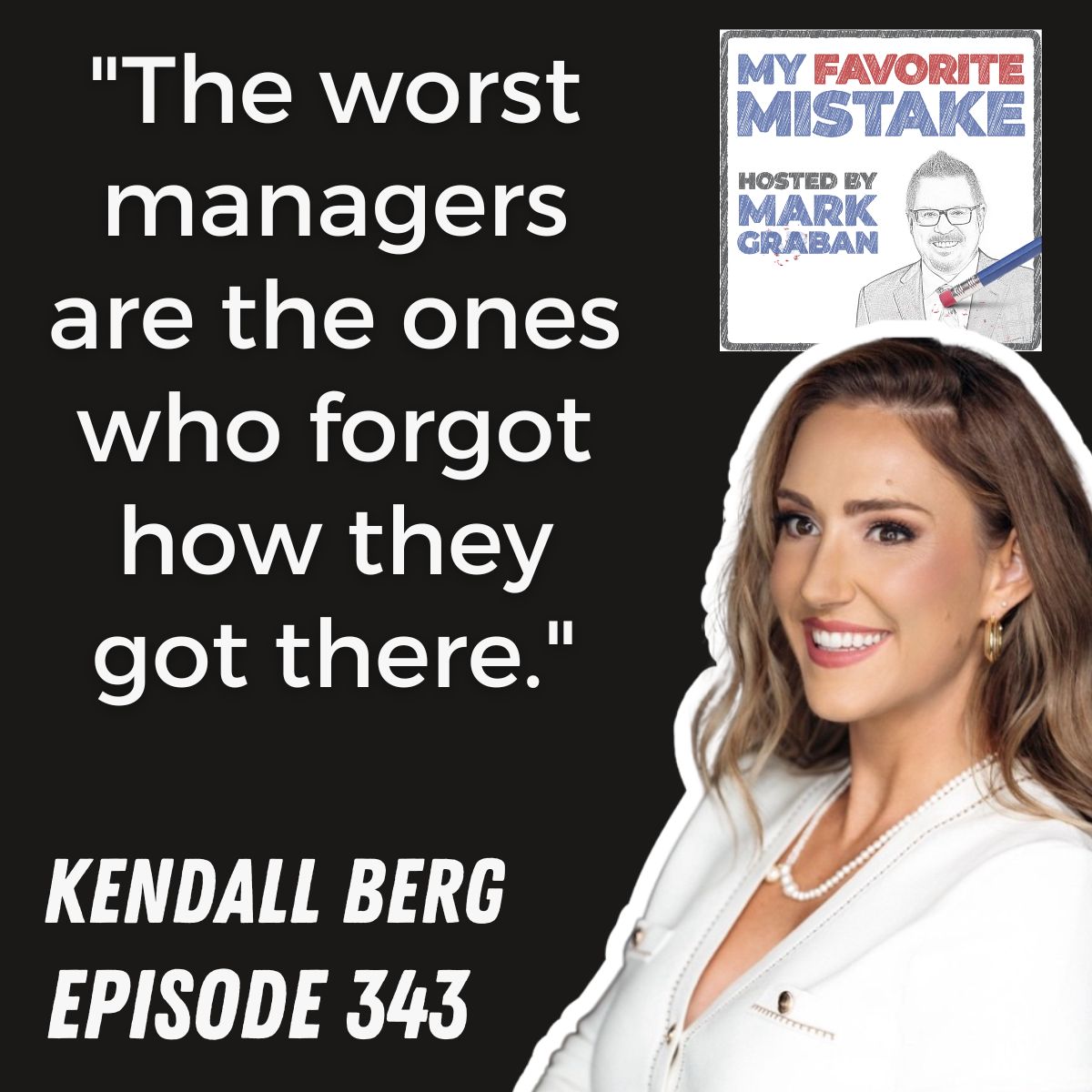
Kendall Berg: I tell people all the time, the worst managers are the ones who forgot how they got there. The intern knows nothing, but they're not supposed to. That's their job — not to know everything. Their job is to learn from you.
We had interns on my team this summer, and one of my managers said, “It takes so much time to explain what seems like really simple concepts.” I said, “Yeah, but they know nothing. They've never worked in a corporate office. They've never had meetings. They've never had to present to a leader. All of this is brand new.” You forget, and it makes you harder on them. More judgmental.
It's true of me as well. I've had younger employees where I think, “I feel like I shouldn't have to tell you to check people's calendars before you book a meeting.” But it is what it is.
I think Gen Z gets a bad reputation partly because they're coming in at a difficult time where costs are really high. Even Gen X, even millennials, when they came in, things were more affordable — not cheap, but more affordable. At least we were working and getting things for that work. A lot of Gen Zs are really discouraged because even if they work hard and get promoted to a manager, they still can't afford a house. Even if they deliver a huge project, they're going to get a 2% raise that doesn't beat inflation.
I understand their perspective. “What's the point in climbing the ladder and getting better if I'm not going to see any reward?” But I think all of this is going to normalize over time. Gen X and millennials will become executive leadership. Gen Zs will move into middle management. Suddenly they'll be talking about Gen Alphas: “They don't know anything. They don't know how to communicate. They don't know how to schedule a meeting. They're lazy.” We'll have this whole cycle repeat.
In the moment, it becomes really stressful. I have two Gen Zs who work for me. One of my executives says all the time, “They're the exception. They work so hard.” I say, “No, they're not an exception. They're just good people with a good boss who cares about them. My employee who manages them really wants them to be successful.” It's not a generational thing. It's an environmental thing. It's a systems thing.
I hear it all the time: “I don't want to hire Gen Z employees. They're lazy, they don't show up, they don't work hard. They just do their job and go home.” And I'm like, “You do kind of pay them to do their job and go home.” We've got to find a balance somewhere. It's going to be interesting how this plays out, because Gen Alphas are going to swing one way or the other.
Mark Graban: Let's influence them. Let's coach them and lead them. Let's help them be successful. Let's tap into their talents and drive and learn from each other.
Kendall Berg: Absolutely. We're headed in the right direction. We've got good dialogue happening. HR is introducing new policies that favor what Gen Z cares about. There's more dialogue from upper leadership. We're starting to have flatter organizations where the CEO sits a little closer to the intern, allowing for more two-way communication. There are good shifts happening.
But like with anything, headlines are catchy. “So-and-so is lazy. So-and-so doesn't want to work. So-and-so's a bad communicator.” Those are the catchy things that get us talking. In reality, I think the biggest game switch is going to be AI, more so than Gen Z. We'll find where all of this coalesces in the next few years.
Mark Graban: Well, Kendall, thank you so much for sharing your story. That whole arc of being in the position to receive the feedback, even if it stung at the time, making the best of that and using those lessons to help others — I think that's really inspiring. Kendall Berg, her website is ThatCareerCoach.net. The book and the podcast are Secrets of the Career Game. And the TEDx Talk, The Clash of the Generations, is on YouTube. So much for people to check out. Thank you so much for being here today.
Kendall Berg: Thanks, Mark, for having me. I loved our chat. We'll definitely have to chat again soon.