What if leaving your own business to “join a team” turns out to be the wrong move—more than once? Cathy Fyock shares how a series of career transitions and book-related lessons helped her clarify who she is, how she works best, and why mistakes are sometimes the only way forward.
Listen:
Check out all episodes on the My Favorite Mistake main page.
My guest for Episode #216 of the My Favorite Mistake podcast is Cathy Fyock, The Biz Book Strategist.
She leads her own consulting/coaching/speaking practice and has been a member of the National Speakers Association for more than 20 years. Cathy has been a Certified Speaking Professional (CSP) since 1993. Since starting her coaching business in 2014, she’s helped more nearly 200 professionals become published authors — including me!
She coached me through the writing and publication of my 2018 book, Measures of Success, and she has been coaching me on the book I’m currently finishing up, The Mistakes That Make Us. The Kindle version is available tomorrow!
Cathy has written books including On Your Mark: From First Word to First Draft in Six Weeks, Blog2Book: Repurposing Content to Discover the Book You’ve Already Written, The Speaker Author: Sell More Books and Book More Speeches, and the WSJ, USA Today, and Amazon best-seller, Authority. Her new book, which I've endorsed, is Writer Crisis Hotline — available now!
In this episode, Cathy shares her favorite mistake story about leaving a business she had started to take a job where she could be “part of a team.” Was it a mistake to take a job with that particular team or to take a regular job anywhere? Did it become easier to move on from jobs over time? What led Cathy to start her latest business based on what she had learned, including what she learned about herself?
We discuss that, along with common mistakes that book authors make when writing and/or publishing their books. We also discuss the choice between traditional publishers, “self” publishing, and “hybrid publishers.”
Questions and Topics:
- Tell us about starting your current business…
- Writing – following a passion?
- Understanding the business model around your book?
- A book is like a startup?
- The learning that happens while writing a book
- Ethical situation when it comes to ghostwriting (by a human) or new AI tools?
- Common book writing mistakes?
- Mistakes related to the publishing phase?
- Mistake titles? Mistake covers?
- The connection between writing and speaking
- Book pricing – finding the sweet spot?“Self publishing” vs. traditional publishing? How to choose?
- Hybrid publishing? – hire a general contractor
Scroll down to find:
- Video of the episode
- Quotes
- How to subscribe
- Full transcript
Find Cathy on social media:
Video:
Quotes:
Click on an image for a larger view
Subscribe, Follow, Support, Rate, and Review!
Please follow, rate, and review via Apple Podcasts, Podchaser, or your favorite app — that helps others find this content, and you'll be sure to get future episodes as they are released weekly. You can also financially support the show through Spotify.
You can now sign up to get new episodes via email, to make sure you don't miss an episode.
This podcast is part of the Lean Communicators network.

Other Ways to Subscribe or Follow — Apps & Email
Automated Transcript (Likely Contains Mistakes)
Here is the cleaned-up transcript with timestamps removed and relevant diagram triggers inserted.
Mark Graban: Episode 216, Cathy Fyock, the Business Book Strategist.
Cathy Fyock: Well, it's interesting how this cause is a cause for great contemplation and introspection.
Mark Graban: I'm Mark Graban. This is My Favorite Mistake. In this podcast, you'll hear business leaders and other really interesting people talking about their favorite mistakes because we all make mistakes. But what matters is learning from our mistakes instead of repeating them over and over again. So, this is the place for honest reflection and conversation, personal growth, and professional success. Visit our website at MyFavoriteMistakePodcast.com. To learn more about Cathy, her work, her books, and more, look for links in the show notes or go to markgraban.com/mistake216. As always, thanks for listening.
Hi, everybody. Welcome back to the podcast. My guest today is Cathy Fyock, the Business Book Strategist. Cathy leads her own consulting, coaching, and speaking practice. She's been a member of the National Speakers Association for more than 30 years, and she's a Certified Speaking Professional. She started a coaching business in 2014. She's helped nearly, or maybe it's over, 200 professionals become published authors, including me. So Cathy coached me through the writing and publication of my most recent book, Measures of Success. And Cathy has again been coaching me on the book I'm trying to get finished up here, The Mistakes That Make Us.
So, before I tell you all about Cathy's own books—Cathy, thank you for being here. How are you?
Cathy Fyock: Great to be here. Thanks so much, Mark.
Mark Graban: Well, I'm excited to hear your story. There's a lot we can talk about here today, but I will tell everyone first—and correct me if we might be missing something—you've written so many books here: On Your Mark: From First Word to First Draft in Six Weeks, Blog to Book: Repurposing Content to Discover the Book You've Already Written, The Speaker Author: Sell More Books and Book More Speeches, and the Wall Street Journal, USA Today, and Amazon Bestseller Authority. Anything I… I feel like there, gosh, there's the one that you co-wrote with Everett. Remind me the title of that one.
Cathy Fyock: Right, right. My New Book, which is a workbook for authors who are wanting to kind of pull together all their thoughts and the strategic direction for their book. So that's the newest book, My New Book.
Mark Graban: So I'll put links in the show notes to Cathy's website. You can find her, of course, on Amazon, find her books there. So, you know, Cathy, as we always do here, I'm curious to hear what your story is going to be. What would you say is your favorite mistake?
Cathy Fyock: Well, it's interesting how this cause is a cause for great contemplation and introspection, but as I'm thinking back, it was at a time when I was working in my own business and things were sort of falling apart in my personal life. My mom passed away; she had worked with me in the business and things just weren't as easy or coming to me as easily as they were before. And I thought that I needed to leave my own business and be a part of a team.
And that really has been my biggest mistake. Although, as I'm thinking back on it, I'm not sure that there's any way I could have learned the lesson other than having gone through it. Because what happened was I did join a team, and it was, as many teams are, very dysfunctional. And what I found was that while, yes, I do love working with other people, I love collaborating with others, what I found was that it didn't allow me the opportunity to set my own vision, set my own course, make my decisions, make my own mistakes.
Actually, I felt like I was being held back by the vision or the thinking of someone else, which is fine when you join an organization—you can't be the one in charge all the time. But I guess after so many years of being an entrepreneur, making my decisions, really loving the aspects of making my decisions, going into a team environment was really wrong. So I had to make the mistake several more times. I went from that organization to another organization that was equally but differently dysfunctional, and then another team.
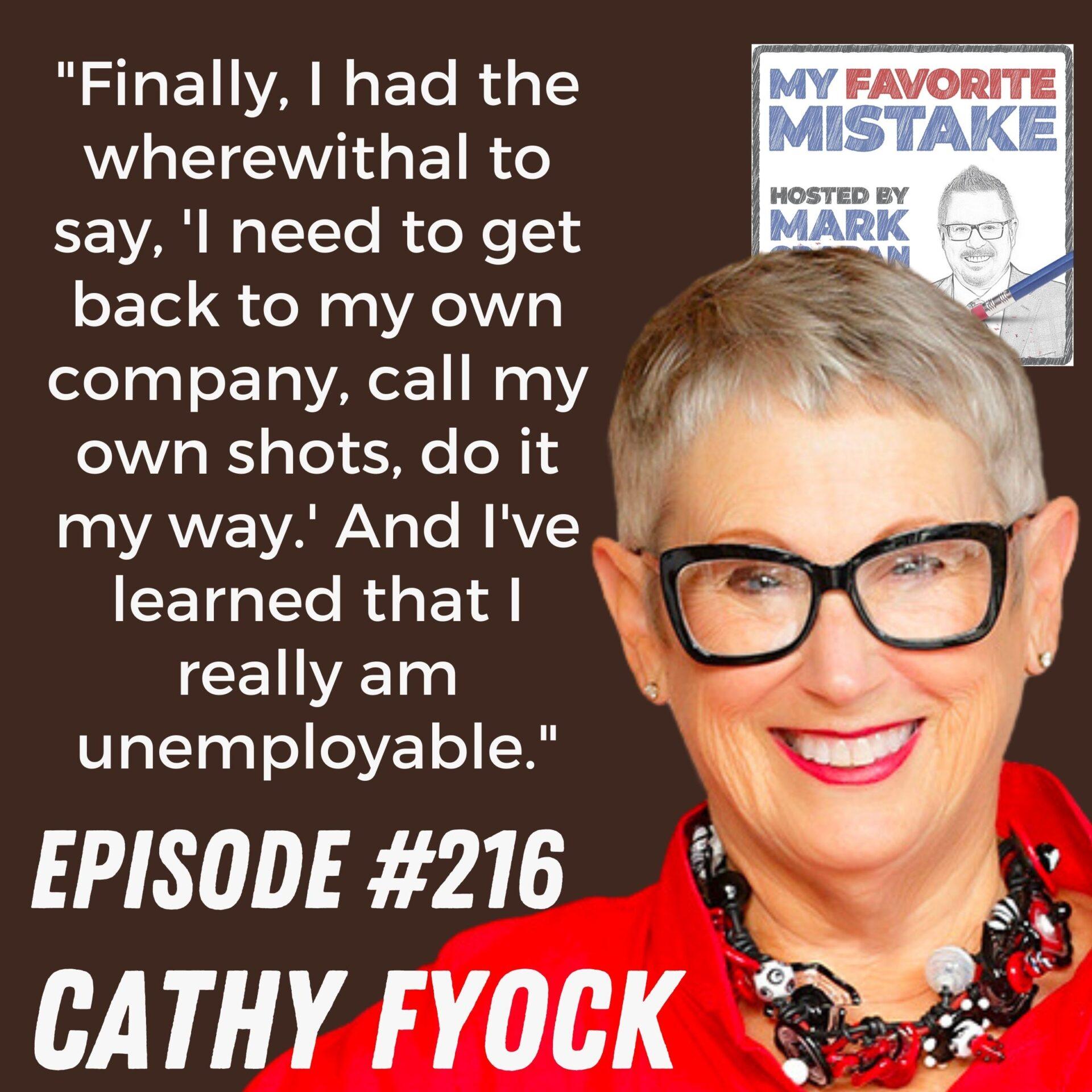
And then finally I had the wherewithal to say, I need to get back to my own company, call my own shots, do it my way. And I've learned that I really am unemployable.
Mark Graban: Yeah. Well, thank you for sharing all that. I think there's a little more we can unpack from all that. Was your previous business similar to what you're doing now, or was it different?
Cathy Fyock: It was. I was a Human Resources consultant. I did speaking and training primarily, more than consulting. I was on faculty with the Society for Human Resource Management. It was really a great business. I'd written books as a strategy to differentiate myself and grow myself in the marketplace. So in many ways, I was very, very successful. I was just starting to feel very lonely. And I think that was really precipitated more by the death of my mom, who had been my work partner, than anything. In fact, we even authored a book together, so that's how close we were.
Mark Graban: Gosh. When you were in that first organization, how long did you stay? Was it difficult to admit the mistake?
Cathy Fyock: Yes, it was. I didn't really even admit it at first. I just thought I'd picked the wrong team.
Mark Graban: So the question was, yeah, wrong team or being on any team?
Cathy Fyock: I thought at first it was just being on the wrong team. I found that not everyone had the same work ethic that I did. I like to work hard and be rewarded for that hard work and then play hard. So I don't mind working hard, and I don't mind people having a good time, but let's get our work done and let's move forward with the order of the business.
Mark Graban: So how long was it before you left that first company to try again?
Cathy Fyock: Oh, it was four years. I gave it a good four years. And really, finally, they asked me to leave. It was a company that was doing primarily financial consulting and I was their recruiter and I also managed their human capital projects. And I was actually one of the best salespeople in the whole country for human capital projects. But my boss came to me and said, “You know, we're really not a human capital company. We are a financial company. We wanna stay in our lane and we want to do that. So you can continue with this company, but if you get any human capital work, you will not get credit for it. You will not be encouraged to do any of the human capital things that you have been doing in the past.”
And you know, my whole career up to that point had been in building my reputation, building thought leadership within the human capital community. At first, my reaction when he came to me was like, “Oh, I can do it,” because I know I can do it. But did I want to do it? And was it worth it for me to do it? And was I offering my best self to the organization if I was going to be in this space that I really am not qualified for, and have no interest or passion for?
So after much contemplation, I said, no, I'm gonna go in another direction. And so I left the organization and joined another human capital organization and then another human capital organization. I was at the second organization for about a year and a half and the third one for a year. And then I finally found my direction, my calling to go forward as a book coach.
Mark Graban: So you touch on so many interesting points here and challenges a lot of us face: recognizing a problem. Have we framed it properly? Being stuck in that situation of, “It feels like a mistake, but I feel like I can make it better,” versus cutting bait and moving on. After the first time, you talked about how it was four years, year and a half, one year. Did it become easier to come to the realization of, “Gosh, I need to move on”?
Cathy Fyock: Yes. It did, because I was thinking at first, I just had found the wrong team. And after the first experience, I'm not sure that hypothesis was untrue or true. So I thought I just need to be on a different team. So I was on a different team with no better results. And then the third team, I'm like, “Okay, Cathy, let's learn from this. And perhaps you don't need to be on a team. Perhaps you are a solopreneur who just needs collaboration and to find lots of opportunities for community and for connection with others.” And that's really where I ended up.
Mark Graban: So then I'd love to hear a little bit more of the story of you having that spark of saying you're gonna form the business that you're doing now, working with the authors. Tell us a little bit more of the origin story of the current business.
Cathy Fyock: Okay, I stumbled into it. Basically, I was working for this company, I was not happy. I didn't know what to do next. I was working as an HR consultant and thinking, “I'm not even sure I wanna be an HR consultant anymore. I'm just not sure that that's the right space for me.”
And I got a call out of the blue, as sometimes these things happen, from my chapter of the National Speakers Association. The president of the local chapter said, “Cathy, I heard a rumor that you wrote one of your books in less than six weeks.” And I said, “Well, actually I wrote four of my five books at the time in less than six weeks.” And he said, “That is amazing. Do you have a process?” And I thought about it, I thought that was a really great question. I thought, “Yeah, I guess I do have a process.” He said, “Would you be willing to give a program for a chapter about your process?”
And I said, “Yes, absolutely.” He said, “But before you say yes… we have a couple of our chapter members who are working on their books. Would you be willing to coach them using your process and then give your presentation to the chapter?” And I said, “Oh, you had me at give a presentation.” So I started coaching these two women who were friends of mine, and pretty quickly they said, “Have you ever thought about being a book coach?” And my response was, “I don't even know, is that a thing? Is there a need?” And they said, “Oh, yes, yes.”
So fast forward to my presentation to the chapter—my friends, of course, I've been a member for more than 30 years—my friends came up to me and said, “Cathy, have you ever thought about being a book coach?” And I thought, “Okay, this is the sign. This is what I need to be doing next.” So that was in the spring of 2013, and by January 2014, I launched my new business. And of course, what I needed to do in order to position and pivot—because I really didn't have any credentials as a book coach, except that I had authored books—is that I now needed to author a book about how to write books. And that was my credential, and that's what I tell people about the power of a book.
Mark Graban: Yeah, for sure. And as you were thinking about this business and you brand yourself Business Book Coach, tell me… I mean you were writing business books. So was that kind of a natural fit? I'm curious, did you worry it was a mistake to narrow the focus or a mistake not to?
Cathy Fyock: Well, in fact, my husband really tried to talk me out of it. He said, “Why don't you just help people start businesses? You know, start businesses as consultants or as coaches or whatever.” And I said, “You know, I don't think that's specific enough. I think that being niched is the way to go.” So against his advice, I just thought this just feels right. This feels like the right niche. It feels like the right area. It feels like the right use of my expertise. It's also where my passion is. I'm really passionate about the power of books. I really believe that they are magical in what they can do for your career. And I've seen that now, not just once, but at least twice with my initial career direction and now this huge pivot into book coaching.
Mark Graban: Well, it's been proof powerful for you. I can certainly speak to how that has been powerful. Going back to the first book I wrote in 2008, so going back 15 years ago, that's certainly opened a lot of doors. And maybe in the second part of the conversation here, I think maybe there's three categories that we can talk about. This is something you do really well: thinking about the business model around a book, the concept of a book, writing, and then publishing.
So maybe we can talk about that first part. And, you know, we talk about following a passion. That's been I think one of the drivers for me. When an idea finally hits a point where I want to write again, I figure I'll write again, but I don't know… and then something hits and something builds and becomes a passion. My Favorite Mistake, this podcast, has been a passion. And the book is an extension of that. I'm sure the answer might be “it depends,” but I'll ask the question anyway: Where do we find the balance between following a passion of what you want to write about versus trying to understand a market for a book or the business model around a book?
Cathy Fyock: I think it's the intersection of those two things. I think your passion will take you where you have interest and where you have just a curiosity and a desire. And I think anytime you start a business or write a book, it's a big project, it's a big deal. And it will take a lot of energy, resources, and time. So you better be really excited about it and passionate about it. If I'm just super excited about something that no one in the rest of the world is interested in, then so what? So there has to be that intersection of finding the sweet spot of those two.
But oftentimes what I do is talk with authors about the importance of seeing where the market is going, sort of anticipating. And I think if you've been in business for a little while, you have a sense of that. You have a sense of what is becoming hot and what is becoming trending. And then thinking about ways to align your passion with that direction.
Mark Graban: And that business model around a book… You talked about your husband's question of should you help people start businesses. A book is like a startup. It is in a lot of ways; you're creating something new. It's probably innovative. There is the dilemma of, can you rely on focus groups or feedback or how much do you follow your gut? To your point, Cathy, you think you have a sense of where things are headed, sometimes you have to get out in front of others. That might be true with a book sometimes.
Cathy Fyock: Absolutely. Well, I saw it with my first book. My first book was written back in 1989. It was published in '90 and it was on the aging of the workforce. And I was way ahead of my time. It was certainly an issue then, and employers were dealing with the issues of an aging workforce and older workers and so forth. But I was far ahead of the curve.
But what has been interesting about that, even though I have been ahead of the curve there, writing the book about that topic has served me even all these years later. Almost all of my work is around book coaching, but I did take on a project several years ago with someone who needed a generational expert on a topic. And I've been able to realize many dollars in revenue from that project that was from this book that I had established my thought leadership around all these years ago. So I think that's the power of a book. It doesn't mean that you're only a thought leader for a short period of time. If you've written a significant book on an important issue, you'll always own that.
Mark Graban: Well there's the credibility that comes from that. And one thing that I've discovered in the process of writing is if you feel like you know enough about a topic to write a book, you end up learning so much more about that topic, hopefully as you're writing, right?
Cathy Fyock: Yes. In fact, I'm working on some things right now on the transformational power of authorship. And actually, it's interesting, it's the intersection of AI. Because you can have your book written by AI now. So what does writing do for the author? What does me writing something do for my readers? And I do think that there is something that happens when you are collating the information, you're curating all of this knowledge, you're putting it all together, coupling it with your own experience, telling your stories… then it creates something that's completely different and you own your thought leadership like you've never done before.
Mark Graban: Yeah, it is. You mentioned AI. I've played around with Open GPT—you can tell it's a technology person, not a marketer, with that name—asking it to outline a blog post or even to write a blog post. Whenever I've used any of that content, I've been pretty transparent, like, “Hey, I've been playing with this AI tool and with some back and forth, here's what we ended up with.” What are your thoughts on navigating that? Whether it's human assistance that might go as far as ghostwriting, or AI? And if somebody uses a ghostwriter, do they need to disclose that?
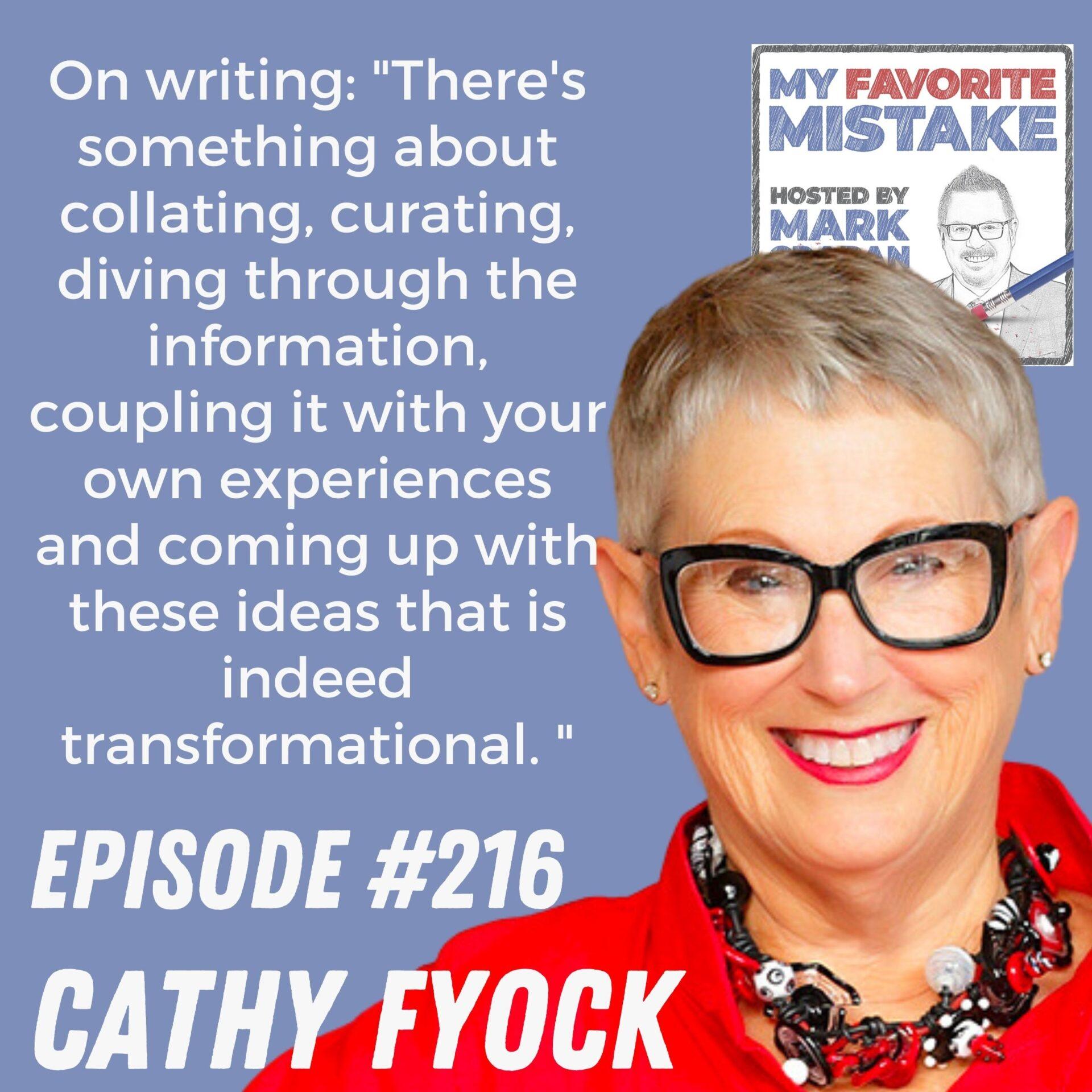
Cathy Fyock: Well, it's interesting when it comes to ghostwriting, I do not do ghostwriting. I really discourage my authors because they're losing out on, like I say, this transformational power of authorship. There's something about collating, curating, diving through the information, coupling it with your own experiences and coming up with these ideas that is indeed transformational. So you're missing that if you're using a ghostwriter. You're missing that if you're relying exclusively on AI.
So I believe that if we're really gonna be true to our craft as thought leaders, then we need to use it. I think AI can be a powerful tool when used to just explore: Did I get everything that I wanted to in that discussion of those topics? Did I cover everything? In fact, I wrote an article last night. I went to ChatGPT and I put in my question about how authors can use AI, and it came up with a little article, a little post. And so I took it and edited it, added my own stories, added my own personality. And what I'm planning to do is some kind of learning event, maybe where I take authors through that experience of coming up with the raw data, editing, adding your own layer of experience, changing the things you don't agree with or that you don't like, and coming up with something new. And I think that's probably the ethical way to deal with the AI.
Mark Graban: I think there's one other interesting use. You can take text, paste it in and ask it, “Summarize this for me.” That might be a way of checking that the main point is clear. It's always in the eye of the reader or the brain of the computer reader.
I wanna talk also a little bit about the writing process. As I mentioned upfront, you've been a helpful coach for me. It's taken me longer than six weeks to write my books. And that's not your fault.
Cathy Fyock: No. The world today is so crazy and we're all so crazy busy that nobody really writes their book in six weeks anymore. But it can happen if you're truly focused and deliberate and intentional.
Mark Graban: One way you've helped me is recommending not just that I block time, but that I block time with a specific purpose and to try to bite off a smaller bite of this big task called “Write the Book” and to break it down into smaller tasks.
Cathy Fyock: Yeah. It really doesn't help to put “write book” on your calendar or on your to-do list. It's just too big. It's too unwieldy. And we need to have specific tasks and specific timeframes. So the more specific we can get on those, the better we will be.
Mark Graban: And then there's the trap of thinking about the book as opposed to putting fingers on keyboard. How do you help coach people?
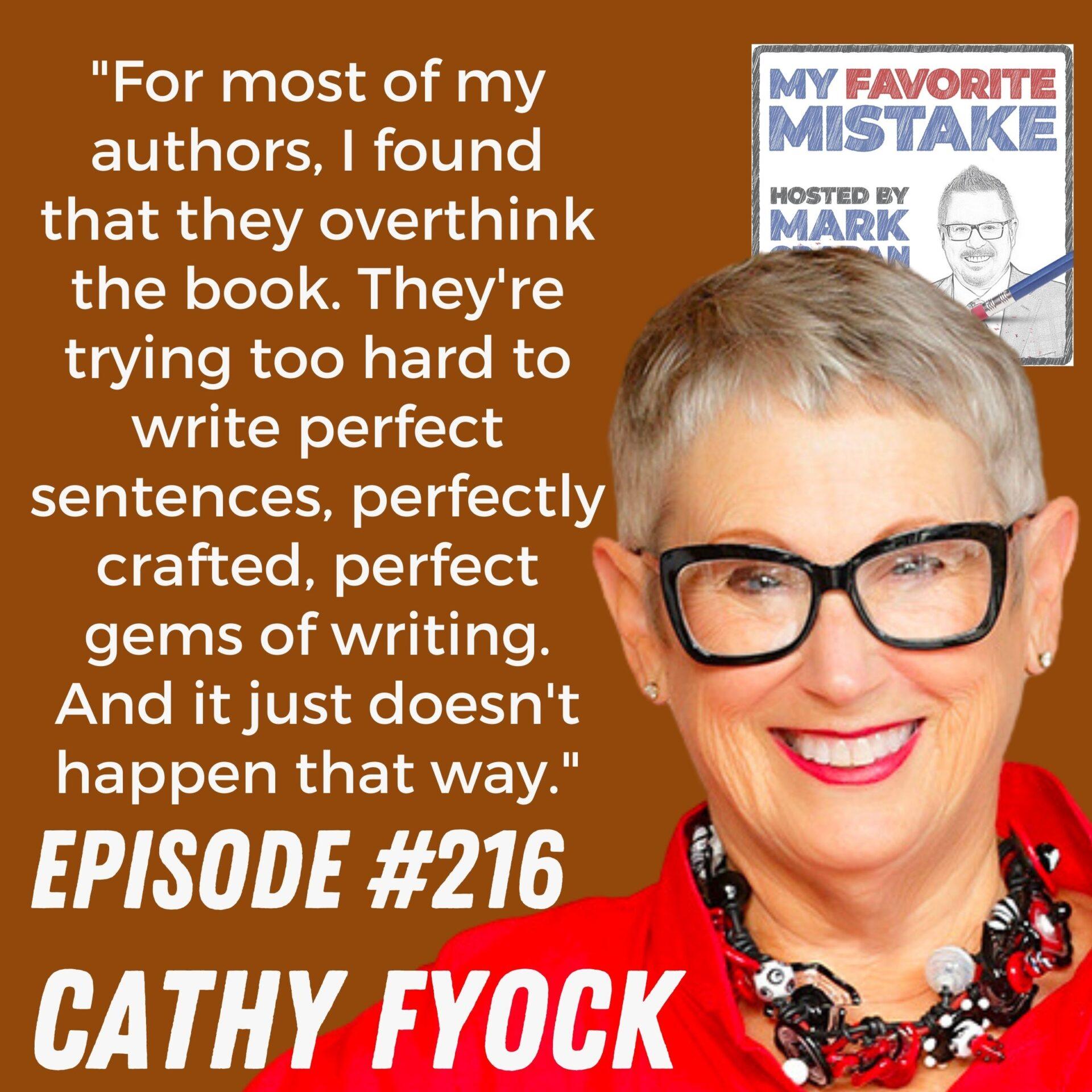
Cathy Fyock: Yeah. It takes a lot to get it from your head to the page. And the hard work is to sit down and actually crank it out. For most of my authors, I found that they overthink the book. They're trying too hard to write perfect sentences, perfectly crafted. And it just doesn't happen that way. You need to “throw up on the page,” to get it all out and then go back through it and edit it. And that's a completely separate function from the writing of the book.
Mark Graban: So there's the writing, and I found it can be a very iterative process. You outline what you think the book is going to be, and then you're writing and then you realize you can always rearrange. Do you see anyone fall into a trap of being a little too stubbornly stuck to “this was my plan, I need to execute it”? How do you help someone navigate through that challenge of: do I change or do I keep moving forward?
Cathy Fyock: It's really interesting. Usually, if someone's brain is saying “this is not working,” they will get stuck. And that's usually a reason for being stuck—that it's just sort of not working, it's not flowing. So that's when I usually know when someone is stuck and they say, “Oh, we need to skip a meeting.” I say, “No, that's when we need to meet most of all. And to talk through what's really going on. Have you not defined your thesis correctly? Have you not defined your targeted reader? Is the structure for discussing your topic not laid out properly?” So let's figure out what's getting in the way of you moving forward. Because if you had a clear vision and if it was all working, you would have it done.
Mark Graban: So, I wanna talk also a little bit before we wrap up, thinking about the publishing side and the decisions that an author has to make. There's the manuscript, there's the book description, the old cliche of “don't judge a book by its cover.” There are these really important decisions around a title and cover design. How do you help people navigate the question of what's the right title or what's a title that's good enough?
Cathy Fyock: Oh yeah. So there's two parts to a book title. There's the main title and there's the subtitle. And what I've found to be most helpful is that one of those pieces needs to be compelling, needs to be intriguing, needs to be sexy, if you will. The other part needs to be definitive. It needs to tell the reader what they're getting.
Now you can rearrange those, it doesn't matter which is which. Sometimes authors have a really catchy name for their title, but it doesn't really tell the whole story. But the subtitle does. Sometimes the title tells what it is, but the subtitle is sort of what gets you intrigued about reading that. So it has to have both pieces. I also think it has to appeal to your reader. It can't be just something that you like.
So many of my authors, in working with a publisher—I'm not a publisher, but in working with a publisher—will do a cover contest. It's about what readers and potential readers think about the cover. I'll give you an example. One of my authors, a couple, wrote a book and they had this gorgeous picture taken of the two of them. And of course, I know them and love them, so I thought that is the picture for the cover of the book. But people who didn't know them said, “You know, I don't get it. I don't know their story. I don't know what this is about. Yes, they look like lovely people, but would I pick up this book? Probably not.” So they went with a cover that was very different. Now on the back cover, there is a picture of the two of them, but the front cover is something a little more curious and invites more introspection about what their book is really all about. So I love the notion of having it reader tested.
Mark Graban: Back to your advice around title and subtitle… I think The Mistakes That Make Us is sort of an intriguing phrase. But right now, the working subtitle is more of that definitive: Building a Workplace Culture of Learning and Innovation. I think that's fairly straightforward as opposed to another fun phrase we kicked around, like “How getting things wrong can make it right.” But then that would be intriguing and intriguing, and maybe wouldn't work together.
Cathy Fyock: But you can certainly use that copy as you're promoting the book and talking about the book.
Mark Graban: The other thing when thinking about the business model is setting the price of the book. Now, when I've gone through traditional publishers, my perception has been that they want to set the price too high because they're only making money off the book. Whereas for me, I can accept a lower margin on the book, assuming that means more copies get out there and that's more exposure to things like speaking, consulting, training. So at least for me, that's one of the many compelling reasons to do quote-unquote self-publishing. But let me turn it back to you regarding book pricing and finding the sweet spot.
Cathy Fyock: Well, my advice typically is don't overthink this. If it's a traditional book, people expect to pay about 20 bucks for that book. So why not make it easy on your customer? Especially if you're speaking at an event, you wanna sell books. Let's make it easy for folks to give you a $20 bill and walk away with their book. But also, think about how you might make it easy to discount books. By having your book self-published, knowing that your cost per book is fairly low, you can offer discounts to organizations who wanna bring you in to speak and they wanna get a book for everybody in the crowd. And that's several hundred books. You can afford then to discount it and everybody wins.
Mark Graban: Yeah, the price per book for a quote-unquote self-publisher is far lower. You're getting them at cost, probably three and a half, $4 a copy. Whereas if I went through a traditional publisher in the past and they wanted to charge $30 and they would give me a 40% discount… that's $18 for an author copy versus four. Or like you said, for bulk sales, that's a huge difference right there.
So maybe final question, Cathy. I think people still reach out to me and they frame the question in terms of, “I'm trying to choose a publisher,” or “I'm trying to get selected by a publisher.” And I'm like, well, wait a minute. Are you considering yourself in that list of possibilities? I think it's a misnomer to say self-publishing because I work with many different talented business partners to help bring a book to market. But let me ask your thoughts on someone trying to navigate the pros and cons of: Do I need a publisher? Should I go with a publisher? Or can I work with people to do it quote-unquote myself?
Cathy Fyock: Yes, I'm a big believer in hybrid publishing or self-publishing, whatever you wanna call it, but having a fee-for-service model where you pay and then the publisher is sort of out of it. They don't get any residuals, they don't get any royalties. And for most speakers, consultants, coaches, people who are using their book to leverage their expertise in the marketplace, it doesn't make sense for many authors to go traditional publishing because your hands are tied on so many levels: the cost of the book, your creative input. You have say when it's a hybrid publisher or your own publishing; you have total creative control. Also, residual products or workbooks… It doesn't make sense to have that all tied up, copyright tied up with a publisher.
Mark Graban: And what do you mean by hybrid publishing for people who don't know that term?
Cathy Fyock: Okay, so I always say that publishing a book… saying that you're self-publishing is sort of like saying “I'm building my own home.” You have lots of different varieties. You can actually go out and buy the lumber and develop the plans and hammer the nails and you can do all that. Or you can do some of that. You can hire a subcontractor or have some of that done. Or you can hire a contractor who will then have subcontractors and that's still building your own house. So that's very similar to the options that are available to you as an author to have your book published.
You can do it all yourself. I don't recommend it for busy professionals when you have to learn all the rules of the road and you don't wanna look like you're self-published or you're homemade. So you wanna be sure that you're having it done well. So you can hire a lot of subcontractors or you can hire, in this case, a hybrid publisher who can get all of that done for you. And I like that for my busy professionals because they can turn it over to one person, they have one point of contact, and it's really a lovely, clean, and productive way for them to move their book forward.
Mark Graban: Okay. So that's helpful. The difference between having a general contractor versus doing it yourself. But I think your point is a good one, Cathy. When I've worked with people to do, let's say, interior design of the book, like you said, it's fee for service. I am paying them to do certain work, and that's mine. And whether they help me or not, I have the direct connection to Amazon, which is where most books are sold. Payments flow directly to me as opposed to going through a third party who's taking a cut of each book.
Cathy Fyock: Well, and the hybrid publisher that I like to work with does not take a cut, which I think is really the right way to work. And for authors who want to establish their thought leadership and speak and train and consult and coach, it really makes more sense to have that publisher out of the way and not taking any monies from the author.
Mark Graban: And then there's one other tip that I had gotten, even going back to 2008 going through a publisher: Make sure the copyright is in your name, not the publisher's name. Because the warning I was given was if the publisher were to go out of business, then you could take the book and get it printed yourself or find another publisher. I found the publisher initially proposed copyright in their name. I didn't have to push back very hard, but sometimes you have to know what to ask if you're going that route.
Cathy Fyock: Absolutely.
Mark Graban: Well, Cathy, thank you for sharing not just your story and your reflections from your career path, but a lot of really good tips here about conceptualizing, writing, and publishing a book. I would certainly encourage people to check out Cathy's website, CathyFyock.com, and there'll be a link there in the show notes.
Cathy Fyock, she's been a really, really great coach and advisor for me through these different projects. And you know, Cathy, thank you again for working with me and thank you for being here on the podcast.
Cathy Fyock: Well, thank you, Mark.
Mark Graban: Well thanks again to Cathy for being my coach. Thanks to her for being a guest today. To learn more about Cathy, everything she does, her books and more, look in the show notes or go to markgraban.com/mistake216. As always, I want to thank you for listening. I hope this podcast inspires you to reflect on your own mistakes, how you can learn from them or turn them into a positive. I've had listeners tell me they started being more open and honest about mistakes in their work, and they're trying to create a workplace culture where it's safe to speak up about problems because that leads to more improvement and better business results. If you have feedback or a story to share, you can email me MyFavoriteMistakePodcast@gmail.com. And again, our website is MyFavoriteMistakePodcast.com.
This episode explores business transition mistakes and the lessons learned from career pivots and entrepreneurship. Cathy Fyock also shares practical insights on book writing mistakes, publishing choices, and learning through experience.