
Deborah Coviello, known as The Drop-In CEO, shares the leadership presentation that fell flat with her boss but resonated with her peers – and the deeper lesson about change management when introducing new ideas. We also dig into her three Cs framework, why “you shouldn't have said that” is the wrong feedback, and the argument behind her new book: stop chasing results and start pursuing peace of mind.
Listen:
Check out all episodes on the My Favorite Mistake main page.
My guest for Episode #351 of the My Favorite Mistake podcast is Deborah Coviello, known as The Drop-In CEO. She joins us to share a turning point in her corporate career: a global leadership meeting where she pitched a different way to turn around her struggling region by leading differently rather than firefighting harder. Her peers loved the talk. Her boss told her she had spent too much time on her leadership style and not enough on tactical detail. Deb left the room deflated.
The mistake, she reflects, wasn't the substance of her thinking. It was skipping the change management step of running a new idea past her leader before going public with it. Eighteen months later, her region moved from fourth out of four to second – by focusing on her people's confidence, capability, and capacity rather than working them harder. The conversation moves into her lift-light-lead framework, what coaching CEOs actually looks like when it's lonely at the top, why “you shouldn't have said that” is the wrong response to an employee who speaks up, and the argument behind her new book: peace of mind is a state worth more than the next quarter's results.
What you'll learn
- Why introducing new leadership thinking requires its own change management plan
- How to recognize when you've stayed in a role too long, and the cost of tying your worth to a title
- The three Cs leaders should diagnose in their teams: confidence, capability, capacity
- Why command-and-control playbooks stop working, and what replaces them
- How perfectly-mapped processes still miss the unplanned interactions that cause failures
- The shift from being a talker who presents well to being a leader who speaks last
- What peace of mind actually feels like in practice, and why it's a state, not a result
Guest bio
Deborah Coviello is known as The Drop-In CEO. She helps C-suite leaders create calm amid chaos through her lift, light, and lead approach, working with companies as a fractional operations or quality leader while coaching the leadership team. She is the author of The CEO's Compass: Your Guide to Get Back on Track and the forthcoming The New CEO Playbook: Stop Chasing Results & Start Pursuing Peace of Mind. She also hosts The Drop-In CEO podcast, ranked in the top 1.5 percent globally on Apple Podcasts.
Scroll down to find:
- Video version of the episode
- How to subscribe
- Quotes
- Full transcript
Find Deborah on social media:
Watch the Episode:
Memorable Moments from the Conversation:
Click on an image for a larger view

Subscribe, Follow, Support, Rate, and Review!
Please follow, rate, and review via Apple Podcasts, Podchaser, or your favorite app—that helps others find this content, and you'll be sure to get future episodes as they are released.
Don't miss an episode! You can sign up to receive new episodes via email.
This podcast is part of the Lean Communicators network.

Other Ways to Subscribe or Follow — Apps & Email
Stop Chasing Results, Start Pursuing Peace of Mind – with Deborah Coviello
Episode Transcript – My Favorite Mistake with Mark Graban
Welcome and Introductions
Mark Graban: Hi, welcome to My Favorite Mistake. I'm your host, Mark Graban. Our guest today is Deborah Coviello. She's known as The Drop-In CEO. Deb's superpower is lowering the temperature and elevating conversations with empathy and patience. She is a speaker, an author, and a consultant. She teaches C-suite leaders how to establish what she calls a lift, light, and lead environment, and create calm amidst chaos or crisis.
She is the author of The CEO's Compass: Your Guide to Get Back on Track, and the new CEO Playbook: Stop Chasing Results & Start Pursuing Peace of Mind. She's also host of a long-running podcast, also called The Drop-In CEO, which is in the top 1.5 percent globally among Apple podcasts. So Deb, welcome to the podcast. How are you?
Deborah Coviello: Oh, Mark, I'm doing just fine, and I want to say thank you again for having me on your platform, having the opportunity to share insights with your audience, and grateful for our common network through ASQ and other professional means. Thank you again, and looking forward to having a great conversation with you.
Mark Graban: Yeah, I'm sure we will. For those who don't know, ASQ is the American Society for Quality, and I think we're going to have a quality conversation here.
Deborah Coviello: Awesome. Looking forward to it.
Mark Graban: There's a lot we'll talk about later regarding your book and coaching CEOs, a lot to dig into. But as we normally do here, first off, Deb, the different things you've done in your career, what's your favorite mistake?
A Presentation That Fell Flat
Deborah Coviello: I was thinking about this, Mark, before coming on here, and quite frankly, I'm an optimist. I look at the bright side of things. I look at things as, well, that was a lesson learned, or how did I become better for it?
But I will reflect back to when I was in one of my last roles in corporate America, and my region was number four out of four in terms of quality issues. I had to find a way out of that. It took a lot of soul-searching. I had maxed out my technical capability. My team was getting burnt out, and I realized I needed to be a different kind of leader.
With that, I went to the global meeting to share with my colleagues in leadership what I was going to do differently that year in order to effect an improvement in performance. I remember on the treadmill, not yet having written that presentation, with tons of Post-it notes, finally coming up with a presentation that I was so passionate about, and I delivered it with such passion and conviction about what I was going to do differently in my leadership style as a path forward, versus tactically what we were going to do.
Long story short, I felt so wonderful after giving that presentation, and later my boss says, “Well, that was really nice, Deb, but you didn't spend enough time talking about the tactical details. You spent a little bit too much time on your leadership style.” And quite frankly, I was deflated from that.
I sat at lunch and I was just devastated. I had poured my heart into something that I truly thought was the key to doing something different. And my team members said, “We love what you said. We need to hire more leaders like you that think differently, otherwise we're going to get the same results.”
What was the lesson learned? What was the mistake? I did something different, and I probably should have run it by my leader to let them know I was going to do something different. I didn't effect change management when introducing a new way of thinking and expressing my thought leadership. I didn't ask for permission or at least consensus. I've since learned when floating a new idea, best to get feedback from others. Get an advocate. Maybe your boss would further support and evolve it. That was a big mistake.
On the other hand, my glass is half full, and I realize that was the beginning of me starting to stand out and really lead with my own thoughts. But by golly, it felt terrible at that time.
Bouncing Back and Earning the Results
Mark Graban: I appreciate you sharing that story. How long did it take you to bounce back from being deflated before you realized that even if the boss disagreed, you had done the right thing?
Deborah Coviello: I had to rework what I had presented and get back to my boss about, okay, here are the tactical projects, with my tail between my legs. But I knew I was onto something when I realized some of my colleagues and peers saw something in me that made me feel better about myself.
Now, I still had to do the work, and over 18 months, I moved my region from number four out of four to number two by unleashing the potential of my people, so they didn't have to work 10, 12, 14-hour days. That was the key and the beginning of me starting to think differently about what should C-suite leaders do when it comes to breaking through that crisis and being able to get to sustainable performance. It probably took me a couple of months to lick my wounds, but I'm so glad I took that chance. I got a few bruises along the way, but I'm grateful that I have the opportunity to share this with your audience so that maybe they don't make the same mistake and they can learn from this.
Mark Graban: I'm sure that leader you were working for appreciated the results even if he wasn't happy in that moment with the focus of your presentation. Some organizations are so results-driven, they almost don't care how you get the results.
Deborah Coviello: Yeah, so I don't know if I ever completely repaired that relationship. I was not the cookie cutter regional leader that they had in all the other regions. Yes, I eventually got the results, but I don't think I fit in anymore, and that was the beginning of me realizing that my next role was not within the same large corporate structure.
It was a chance. I may have eroded a relationship even though I got the results, but I feel good because I took a chance on myself, putting forth my thought leadership. While it may not have been celebrated in that environment, I got the results. That's what corporate wants, and I get it. On the other hand, it was the beginning of me being able to realize what was my greatest value and gift, and what was the right ecosystem to be able to play that tune and help leaders that understand unleashing performance was maybe more important, or a leading indicator, of eventually getting those results.
The Deeper Mistake: Staying Too Long
Mark Graban: There are the mistakes we know about that are based on the action you took. You took a different approach with your talk at that company event. You weren't being the cookie cutter leader. It's harder to think about the mistakes we would have made. It would have been a mistake maybe for you to not take that different approach. It might have been a mistake to stay with that company longer than really made sense. And at least you avoided those mistakes, and I think that's worth celebrating. But only hindsight really makes that clear, right?
Deborah Coviello: Thank you for bringing up that additional point about maybe having stayed in a company longer than I should have. I did realize afterwards that I was no longer thriving. I didn't fit in. There was the corporate handcuffs of making a respectable salary with a prestigious title that I think had me stay on too long. There's great security and there's lack of uncertainty, but any person can lose their job, the role can go away. There's a lot of security in that.
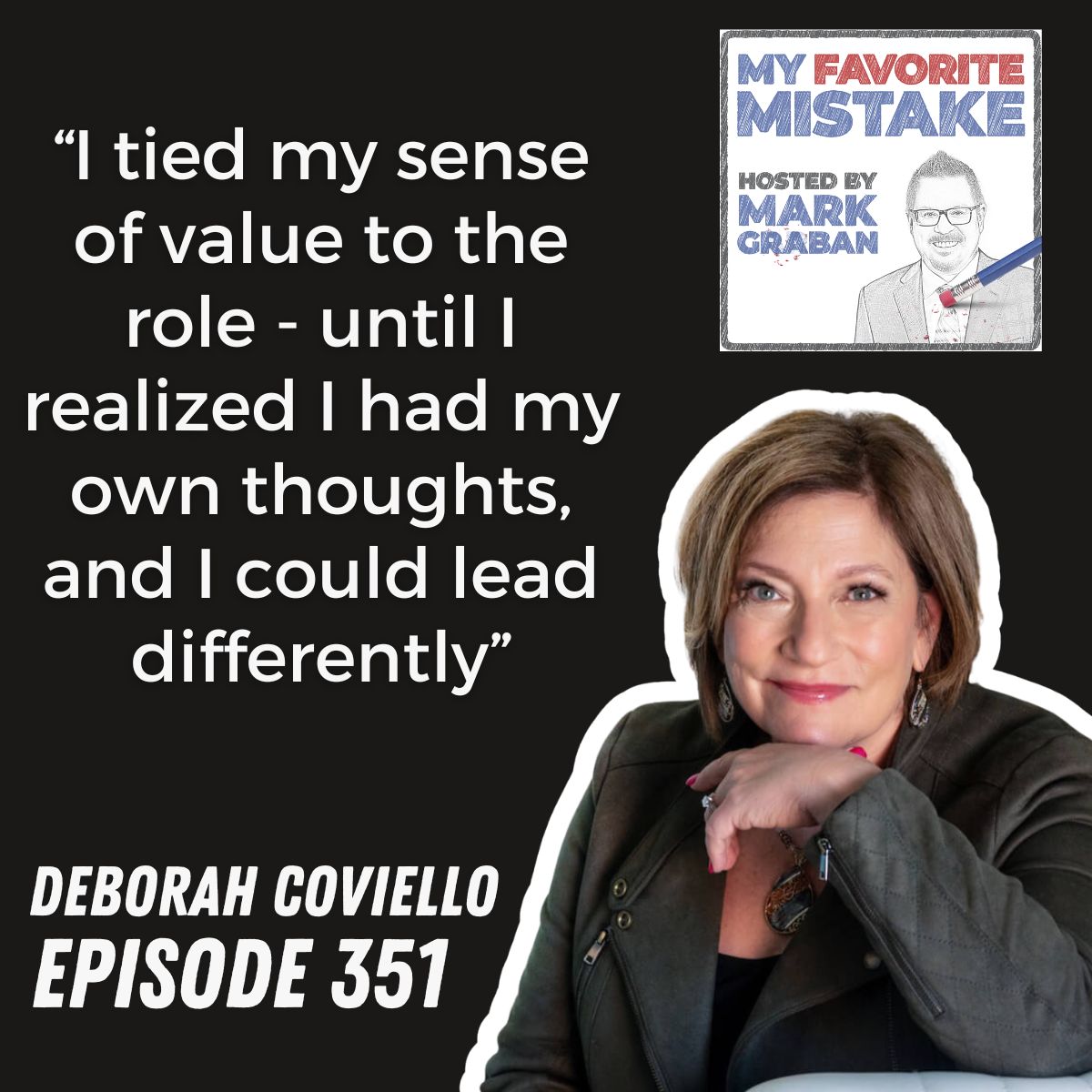
But I did find, and this is a mistake I had to learn the hard way: I was seeking external validation for doing good work. When I was exited from the business eventually, or I now say kicked out of the nest, I really felt like I lost a sense of value. The mistake I learned was I tied my sense of value to the role versus knowing I've got my own thoughts and I can lead differently and create my own ecosystem. I just want people out there: don't make the mistake of staying in a role too long. Think about lateral moves, think about moving to a different ecosystem. It's not being disloyal. Don't make the mistake of losing time on this earth.
Mark Graban: Leaving the nest gave you an opportunity to fly.
Deborah Coviello: Yeah. And quite frankly, Mark, I'm also going through another rough patch right now. I have a portfolio career – business coach, advisor, fractional leader – as well as a full-time gig. But I know now that it's kind of run its course. The biggest mistake is just staying too long, because then you start losing yourself and you kind of lose your reputation of being a high performer. Living through uncertainty is okay. Don't feel like you have no value. You can make a mistake and go down that spiral. But usually career transitions are really a time to come out on top, versus making more mistakes and going after the same old roles versus taking a small sabbatical and figuring out what you're really meant to do.
Two Leadership Styles, Two Sets of Results
Mark Graban: One thing I'd like to go back and dig into a little bit, Deb. I love talking about different leadership styles and how that can engage people or unleash them in participating in quality improvement and business performance improvement. How would you summarize the difference in leadership approaches? Is that a matter of mindsets, or what you were doing or not doing? How would you compare the before that maybe was contributing to being fourth out of four to the after that led to that improvement?
Deborah Coviello: One of the things I realized, and this goes to my second book that is in the writing stage about stop chasing results and start pursuing peace of mind: there is significant pressure in a corporate role, or one that is accountable to stakeholders, to get results. With time, I had acquired a business unit that got to that level. It was in crisis. The previous leadership, though I absolutely respect the person, we still stay in touch, led from a position of firefighting because at any day, any time of day, you can be a firefighter, resolve the issue, and high-five and make people feel good for a Herculean effort.
But did you really address the foundational issues of people maybe not having the right platforms or the right competency, or people not pulling their weight? One quarter you may get the results, but then the next quarter when you don't get the results, you go through that same hamster wheel of burning the people out.
The Three Cs: Confidence, Capability, Capacity
What I realized, and it came through when I put together the framework of The CEO's Compass, is that you really have to focus on people's skills from a three Cs perspective. One is, do they have the right confidence? Do they have the right capability? And do they have the capacity to do the work?
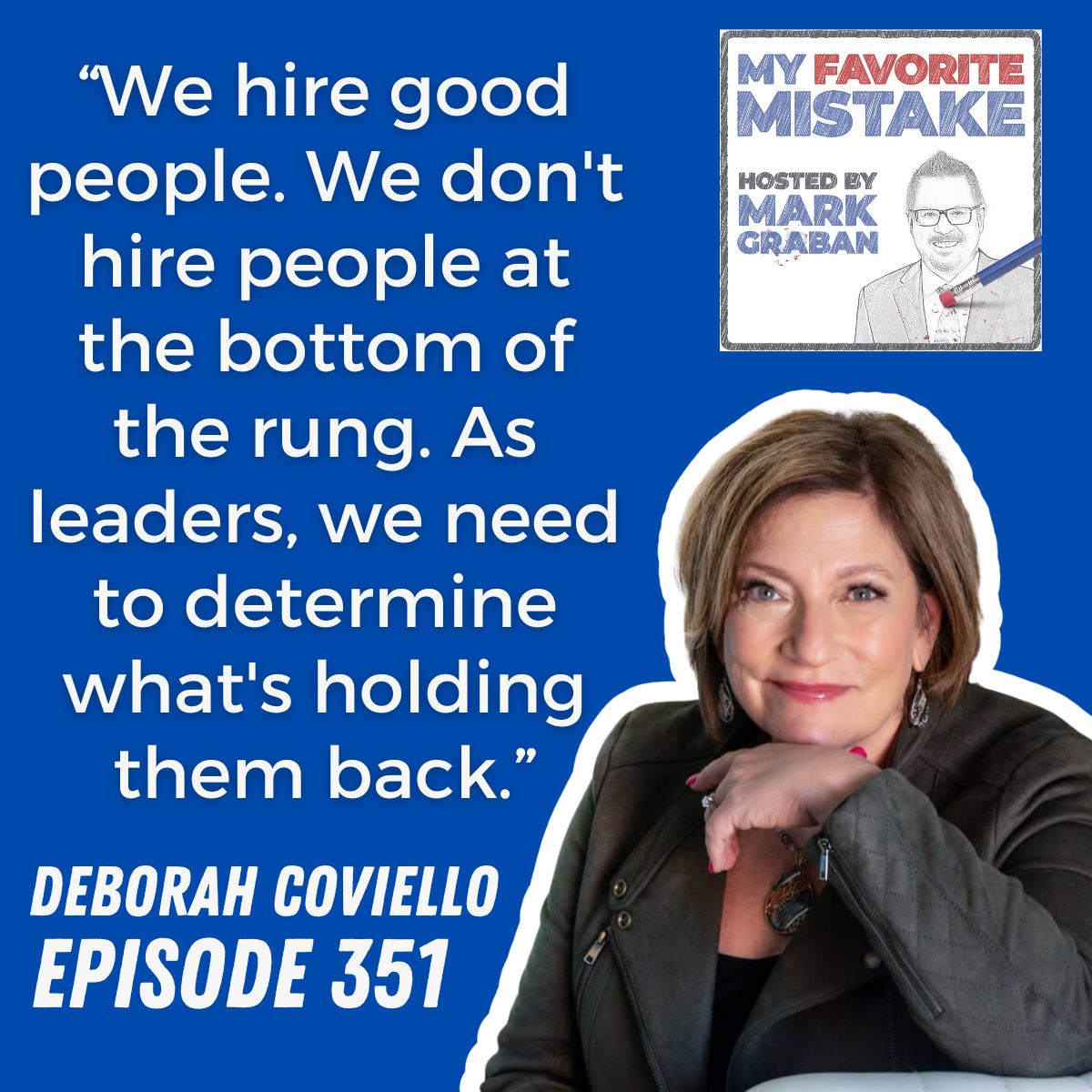
We as leaders have to go deeply into what holds them back, because we hire good people. We don't hire people at the bottom of the rung. We as leaders need to determine what is holding them back to unleash their potential. When leaders focus on sustainable capability of their resources, they start performing not just one quarter, but sustainably. That's what eventually got me to that second-place role and sustained it, because I focused on eliminating the barriers of the people in my care. I can give numerous examples there. But that's the aha moment that I had in the different leadership styles – one that just fought to get results as a firefighter, and one that, yes, you need to get quick wins in order to satisfy your stakeholders, but you also have to have the patience to unleash the potential and see the long game. That's the difference I've seen.
Lift, Light, Lead – and Legacy
Mark Graban: What do you mean by – you talked about three Cs. There's three Ls here too. Lift, light, and lead.
Deborah Coviello: Where did that come from? When I started my consulting business, I had the great pleasure of being a junior consultant under a senior person while doing value stream mapping in a computer company. I was starting to figure out what was my brand, what did I stand for. They talk about when you build a brand, have something that's kind of pithy, everything that starts with the same letter. The words lift, light, and lead came to me, and I still have that napkin that I wrote that on.
Over time, what I realized was that any time I see somebody, like you, or anybody that I'm networking with, or a CEO of a company, I just automatically see the gifts and the good. So during the conversation I'd say, “Do you realize that you are so articulate? You should be a public speaker.” I jolt them a little bit and get their attention. Anybody I see, I try to lift them up because that's one way of building trust. In that process, it was because I saw a gift, or shining a light on that gift that maybe they say, “Aw, shucks, I just do that.” But no, that's unique. That's what sets you apart. We need to leverage that.
Ultimately it's not just my leadership in an organization, but how could I lift somebody up, shine a light on their gifts, such that they can lead in a different way? I might add a fourth L to that: legacy. Because while you may be moving up in your career, and I just have to get the results, when we think about what we're really here to do – by shining a light and lifting people up so they can lead differently and be proud of what they're doing, you're ultimately leaving your legacy on that individual that's now running with their gifts. They're also leaving a legacy of evolving their own people.
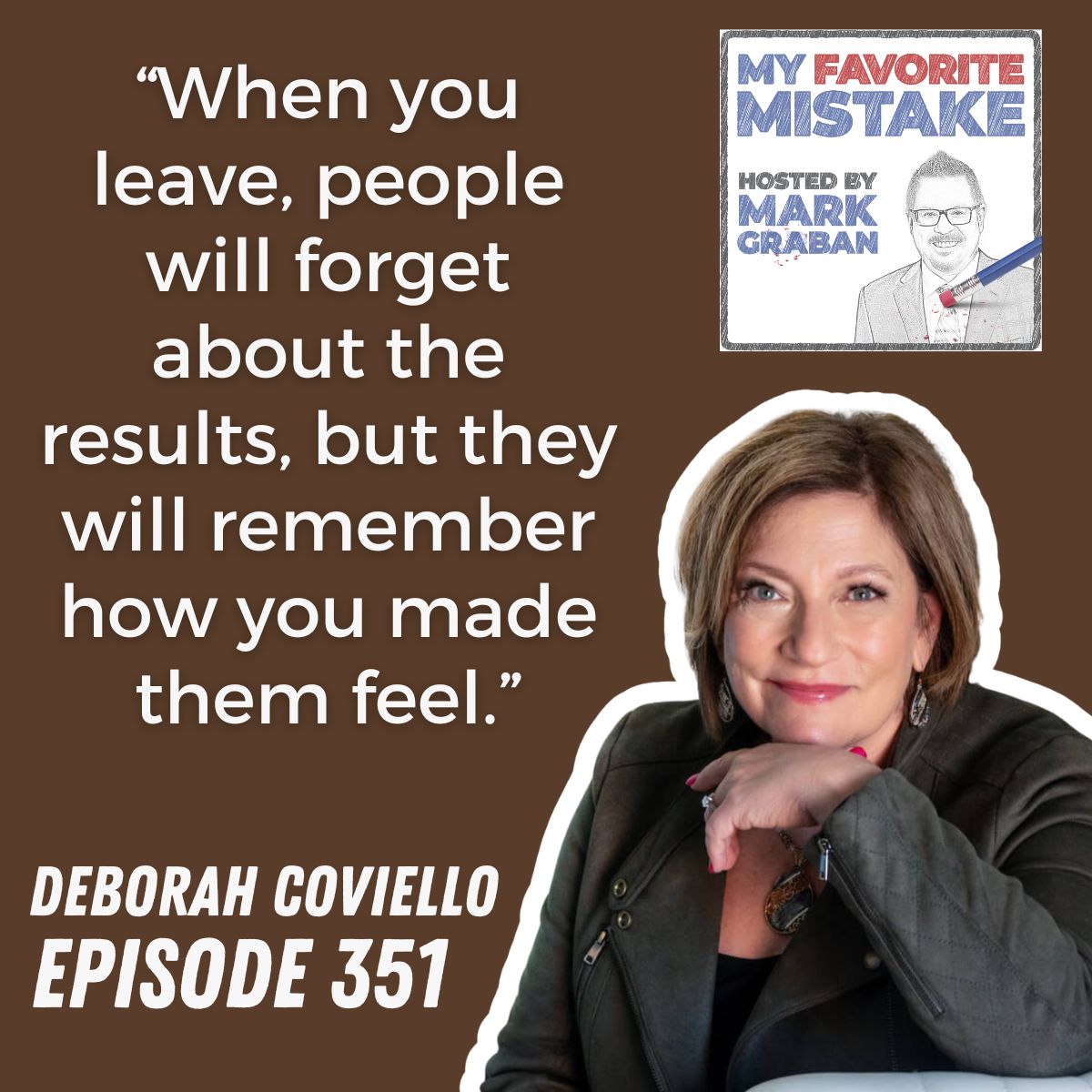
When you leave, people will forget about the results, but they will remember how you made them feel. So lift, light, lead is what I do any time I drop into any organization, because that's how I establish connection, and I can move forward with individuals and help develop them.
When Leaders Say They Develop People – But Don't
Mark Graban: When you talk about that framework, or an environment where leaders lift, light, and lead, I've worked with or for some leaders that might push back even on the lift. They might say, “Well, we hire good people. They know they're good people. We compensate them well. Why do I need to lift them up?” Have you had leaders push back, or where you've had to convince them that, look, you might think it's assumed that people know you value them, but it's better to actually say it out loud?
Deborah Coviello: The problem with that is no C-suite leader is going to say, “Oh, that's hogwash,” or push back on me. They're not going to overtly do it. Of course they're going to agree.
Mark Graban: Not overtly.
Deborah Coviello: Right. But covertly, a lot of these small and medium-sized companies that I've dropped into will say, “Yeah, that's what we're supposed to do,” but do they really change their ways? A lot of these CEOs that I've worked with are very good at strategy, very good on the vision and sales in their business, but they don't have the skills necessary to spend time developing the people.
I'm grateful for these companies that I've worked for, but one recent company person had a great vision, but they didn't really take the time to understand what it is that the people need to unleash their potential to achieve these new business development opportunities. Ultimately, because I think they lacked that connectivity, and to hear them and hear their concerns, that type of leadership basically led them to not having a sustainable business and ultimately having to sell out to somebody else to get the business back on track.
The point being is that some leaders may not say that, but they think: my job is not to develop the people. I hire good people, and that's HR's problem. In the long term, you're probably not going to be with that company that long, or you're going to burn the people out and they're going to leave, and you have a fragile foundation again. Don't make that mistake. Spend a little bit of time, or have somebody on your team that really focuses on elevating human performance.
What “Drop-In CEO” Actually Means
Mark Graban: Tell us more about what it means to be a drop-in CEO. Does that mean fractional? Does that mean interim? Does that mean both of those things?
Deborah Coviello: The drop-in CEO, quite frankly, was something that just came out of my mouth during a podcast interview a long time ago. When somebody says, “Well, tell us what you do,” I'm describing it: “Well, I'm a drop-in CEO. I'll drop into businesses, work with the C-suite leader. We solve the business issue, and we elevate the people for a lasting impact. And then when you don't need me, you'll pull me out.” They said, “That was brilliant what you said. Where'd you come up with that?” I said, “Just fell out of my mouth.”
But it was because a C-suite leader in my past dropped into an organization where we were doing poorly, and rolled up his sleeves, helped resolve the business issue, but also made us feel good and gave us new skills. So what differentiates me – while we like to profile me as a business consultant or advisor, fractional leader, yes, I fulfill those personas, but it's not just doing the tactical work to solve a business issue that's not sustainable.
I deal with the messy middle. The messy middle of not just solving the issue, but quite frankly, the C-suite leader probably needs some coaching because they need to perform a little differently when we get to the end game of what we're doing. And then the people are pulling their hair out. They're being asked to do more. They've got nobody to go to. Maybe they've never had to develop new skills – communication, negotiation, conflict resolution – and sometimes those C-suite leaders just kind of turn the other cheek, and they erode.
Not only do I solve business issues like a fractional leader, being an interim quality or operations leader, I'm also coaching as part of that, because I'm lifting the organization at the same time. That's the drop-in CEO, which I try to differentiate from being profiled like everybody else.
Coaching the Lonely Leader
Mark Graban: I'd love to hear more about the approach you take coaching CEOs. There's an expression – it's probably popular because it's true: “It's lonely at the top.” I've talked to executives who say, you rise through the ranks and now suddenly you don't have peers to connect with. Maybe you do outside the company at that point. Imagine you're talking to people that have already crossed past that barrier. How much of – if a CEO is at least suspecting that they might be part of the barrier, that is the opening to coaching, or to being coachable?
Deborah Coviello: There are two stories I want to quickly share. One is similar to what I just shared with you. I was a fractional chief operations officer for a public relations company. The CEO of the company was very good at strategy, her craft, and working with customers. But she started having problems with the operations and was starting to say, “Well, that person's just passive-aggressive. They consulted with somebody and didn't copy me on that email.”
I got in there, and I soon realized that they may have, in the past, always had a well-oiled operations machine for which they never needed any coaching or how to manage conflict. When she invited me to listen in on a conversation where each party expressed their concerns, just having a third party there, I soon realized they didn't know how to deal with conflict or differences of opinion. They just formed opinions, and that person is just that way. So I had to do a little coaching there.
This other example is real: yes, it's lonely at the top. This new CEO had just acquired the company, and I was in the middle of a business issue I was dealing with. The team made a bad decision on something, and they had to pay for it, and we lost money. She said to me one day, “I would have thought they shouldn't have made that wrong decision. What were they thinking?”
Seeking to understand: where did she come from? She has run many companies before, and they may have been at a level of maturity for which the decision logic was clearly understood. By acquiring this company and only knowing these people for two months, she did not understand the level of maturity that they were at. Maybe there was a command and control process, or maybe they were left to flounder, given no guardrails for making decisions. That's when I realized what the gap was: we need to clarify, maybe have an SOP defining the levels of decision-making and when to stop and elevate it. That was the aha moment.
It's lonely because they have this perspective. They've got this playbook that's worked for them in the past, but in a new environment, they might have to learn new things. So I had to coach her, and we developed a process for which we better define decision logic in the face of non-conformances or deviations. It's lonely at the top, but they only know what they know.
Mark Graban: A coach can help them know what they don't know – or at least bring it into “now they know” territory.
Deborah Coviello: Through a lot of questions, helping me to understand: what are you used to in the past, to find those gaps. It's not that they're doing anything wrong. They simply may not have been in an environment such as the one they've come into, and they need to learn new things. The interesting thing is, since then, I see so much support. I'm getting feedback from the people in her care. She jumps in, “What can I do to help? What can I do to help?” She's constantly in service to the people, and so she's getting greater understanding of where the gaps are or helping them to think differently. It's a beautiful evolution when you have a leader that then realizes they have that awareness to understand where the people are in their journey.
From Engineer to Leader
Mark Graban: You've mentioned some core operational excellence concepts, value stream mapping for example. For the listener, Deborah and I share a lot in common, at least in terms of early career experiences. I wanted to ask you to reflect a little bit on lessons you've learned progressing from an engineer to working in quality, to working in operational excellence, to working in leadership roles, because not everybody makes that transition. I'll admit to having struggled with that transition from being an individual contributor and the person who is expected to come up with answers, as opposed to being more of a coach who is helping others and developing others. What are your thoughts on that progression?
Deborah Coviello: Let me ask the first question. Do we want to talk about specific individual contributor tools that people use that are tried and true, but I have some insights I don't necessarily trust yet? And then I can get into the leadership part.
Mark Graban: Sure, that sounds good.
When Process Maps Lie
Deborah Coviello: For many of your technical listeners – we started talking about value stream mapping, but any process that maps the process so you say you have an understanding, whether you're looking to reduce quality issues or improve operational efficiency. In the realm of food safety, we create what's called a HACCP – a hazard analysis and critical control plan – and it starts by putting together a flowchart of the entire process.
Mind you, this company that I work with had a perfect flowchart. It's been audited, and everybody gave them a thumbs up. The problem is that we had a major food safety issue. Everybody's shaking their head, “How did we ever get to this point?”
One of the things in leadership is not necessarily to make an assessment on what's in front of you, but stand in one place and look around. Because what those kinds of process maps don't capture is necessarily unplanned interactions with the process. In this particular case, did we ever stand on the floor on third shift and watch the janitorial staff go from one area to the other because they couldn't find their cleaning tools? In the process of crossing from one area to another to find their cleaning tools, they actually introduced a cross-contamination that nobody knew about, and we said, “How could this happen?”
As a leader, one of the things we can do is sit back and watch the process and also listen. Because if we take things at face value, data and charts can actually lie to you. You've got good data in, you create a process, and you expect a particular output. Same thing with data. Don't trust the data. See how the data was created, and you might find flaws there.
Speaking Last and Listening First
As far as transitioning into leadership, I naturally – maybe this goes back to my childhood – I've always asked a lot of questions. I always raised my hand. I was the talker all the time. “Debbie, shut up. Just wait for the teacher to…” It was always, “Ooh, ooh, ooh,” or had questions. Over time, because I asked questions and I took the time to articulate what I was thinking of the question, my voice carried. Naturally, because I had an ability to communicate or express information, people saw that as a leadership quality.
What transitioned along the way is being able to do all the presentations and make management feel good – that was one thing. But actually being a leader and saying less, and listening and watching the situations, especially in root cause analysis, to be able to properly help the team formulate a problem statement. When you speak last and then you hear what other people are saying and reframe it, you come off as a wise person, and people say, “Yes, that's exactly the problem we're trying to solve.” Going from being a talker and a person presenting information to being a deep listener and hearing and seeing what has actually happened is additional data that as an engineer it might not teach you. But as a leader, being able to take the broader picture and see where we're going naturally elevates you to those leadership roles, and you're usually elevated and pulled up.
Mark Graban: Are you an extroverted engineer?
Deborah Coviello: I take offense to that. Don't label me. Don't tell me how to act. Here's the thing –
Mark Graban: No, no, I'm not telling – I'm not trying to tell you.
Deborah Coviello: Here's the thing. I'm profiled, yes. I need to think about things. I talk to myself in my head. Ask my mother. I just talk to myself, but then I need to externalize sometimes. My poor husband listens to everything happening in my life that's in my brain. I do externalize things because that's part of my processing and de-stressing, and kind of make sense of the world.
But there is an element of, okay, I need to decompress. I need a little bit of quiet time. Any time we entertain in my home, I need to sneak away for five minutes every hour just to get a little bit of that energy. I can't operate at a high level all the time and expect to perform. So in a leadership role, knowing when to take a time out before coming back is great. So am I an extroverted introvert? I actually wrote an article saying I was a mislabeled introvert, meaning I was actually an extrovert. Who cares who I am? This is me and how I show up.
“Debbie, Shut Up”: Feedback Without Coaching
Mark Graban: More important than the labels are some of these behaviors. Being young, being inquisitive, asking these questions. I cringed when I heard “Oh, Debbie, shut up.” Workplaces say, “Debbie, shut up,” when people are being inquisitive, sharing ideas, saying, “Hey, things could be better.” Sometimes it's overt and sometimes it's more subtle, but in my experience, that's such a barrier to people's happiness, let alone organizational performance, when people are well-intended and they're being told “shut up.”
Deborah Coviello: Mark, you hit a sore point with me, because over the years that's happened to me. The unfortunate thing is then you take it personally and you get small and quiet and don't raise your hand. It holds you back for a while.
There was a situation – I was a mid- early mid-career quality engineer. Corporate quality was working with myself and the plant manager to hire my replacement, because they were moving into another role. They were qualifying the characteristics of that new person, and I just blurted out at the last minute. I felt like corporate quality was having too much of a say versus what we needed, and I said, “Isn't this a plant management position?” Immediately the room was kind of silent, and after an awkward moment, the conversation continued.
But later I was asked to go to my plant manager's office and they said, “Deb, you shouldn't have said that. You shouldn't have said that.” With that, I don't know what happened afterwards. All I know is I kind of blanked out at that point. Never being given the coaching about, “Deb, if you had a different thinking, maybe you should have run it by me ahead of time before positioning it in front of corporate quality, because they're trusted partners. Might you have rephrased it in a different way?”
What happens is when we say things that are maybe different and contrary, there's no coaching sometimes to help people position things. So unfortunately you lose people's passion because they're told to shut up without coaching.
Mark Graban: I heard you use language that would be much more helpful feedback. Just being told, “You shouldn't have said that,” that's not real helpful, and that'll just make somebody doubt themselves the next time they want to speak up. Am I going to be told, “You shouldn't have said that”? Being given much more specific feedback about, “You should have run it past me first” – that's so much more actionable. A leader saying, “Here's what I want or need from you,” instead of just being kind of second-guessed and slapped down.
Deborah Coviello: It's unfortunate. I've risen up again and found my voice, only to be either celebrated in the right environment, maybe I was supported, or ignored, not listened to or not acknowledged. That too is essentially: we don't care about what you have to say.
We started this show about biggest mistakes. Maybe it's not necessarily mistakes, but things that I learned later of being in the wrong environment. I was in a startup company and I was celebrated. I was getting stock options, we were going to go IPO, and I was going to retire at maybe 35. What happened is we got to a point before going IPO, they put in different leadership, and I was still performing the same way as a quality director. But either they weren't responding to me when I asked for feedback, or people said, “You're sending too many emails.”
I didn't have any proper coaching about, in my one-on-ones – in fact, we weren't even having one-on-ones. Then ultimately I was exited from that business, and it felt really bad. But there is an organization that was highly focused on the results and IPO and couldn't spend time on mentoring and coaching a mid-level manager. Was that a mistake? I could have seen that coming. Yes, I made lots of mistakes, but I'll tell you, having made all those mistakes, I now know what it means to be a leader. When giving feedback and having your one-on-one sessions, I could talk about a couple of different frameworks for which, if you make the person feel better or have candid feedback about what they could do differently, you're going to get somebody that's going to perform really well, and you can sleep at night. Isn't that what we as all leaders and CEOs want, is to be able to sleep at night and not worry about stuff?
Stop Chasing Results, Start Pursuing Peace of Mind
Mark Graban: That brings us, I think really well, into talking about the subtitle of your book, The New CEO Playbook. The subtitle: Stop Chasing Results and Start Pursuing Peace of Mind. That's a provocative prescription. A lot of leaders might say, “Well, my job is to chase results. What do you mean stop chasing results?”
Deborah Coviello: Because we need a different playbook. Command and control, the industrial revolution, the stock market, et cetera – we get bonuses and praised for getting the results. That's how we're conditioned. That's how we're conditioned as engineers or technical people. Get the result and we will pay you. So at some point in one's career, even these C-suite leaders, you get to a place where you can't get the result. Something's changed. Bought by private equity, all they want is results. New customer requirements. You lost a significant leader. Your old playbook doesn't work.
What I'm telling leaders is: throw that away. What I'm asking you to do, and it is based on The CEO's Compass, is all you need to do is look at the compass – past, pride, purpose, performance, platforms – and see where you're just off track. More often than not, it really is, dig down into where you, as a leader, if you still want to lead, lead differently. You can't be the command and control results-oriented leader anymore. You might have to be this person that takes a second step and leans in and is a little bit vulnerable, and ask your staff what they need. What can I help you with?
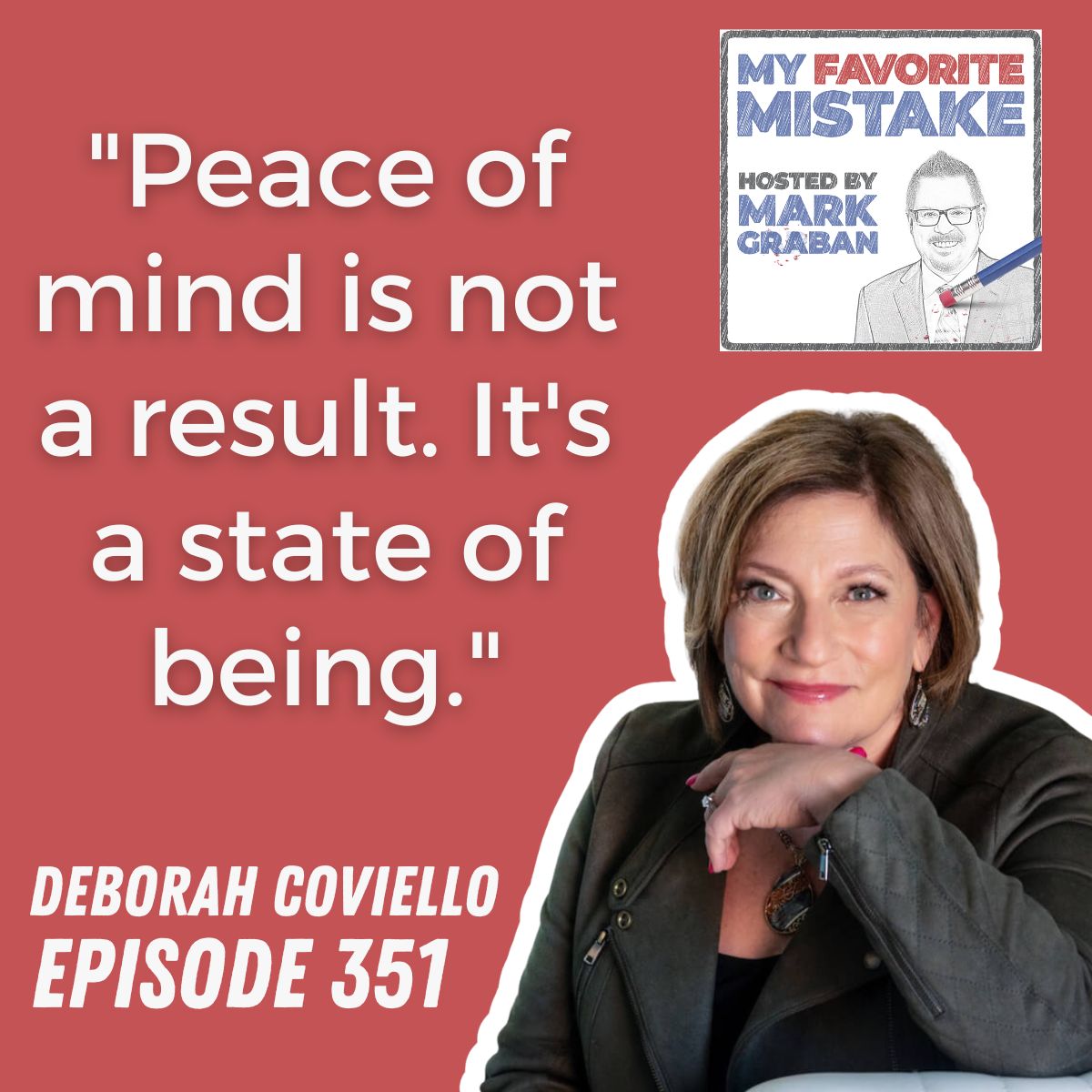
When we measure leading indicators – okay, I had two people on my staff that just weren't confident, three people that were overworked and exceeding their capacity, and a couple of people just didn't have the skills they needed to be able to deal with that department over there that wasn't delivering to them. Those are the things the leader should work on, because they need to get to peace of mind. Peace of mind is not a result, it's a state of being.
Peace of Mind in Practice
I tell this story when I was, again, a quality engineer. We had to deal with a terrible customer complaint, and while creating training content, I was filming a supervisor, but an operator was kind of creeping into the frame. When we filmed that operator, he said, “This is what I do in order to avoid the cross-contamination. I do A, B, and C. The importance of this is X, so I don't cross-contaminate and send a bad product to my customer, which might actually cause a health problem.”
I started getting shivers up my spine, because I said, in this moment, this person that was closest to your customer knew exactly what they were supposed to do and why, and was training others. Meaning we had gone full circle and connected with the person's mind and their heart. That was peace of mind, knowing that, okay, I think we've nipped this in the bud. We can put all the error proofing in place, but this person truly understands and had the customer in their heart and their mind. That's peace of mind, and a leader needs to be able to have those moments. Or maybe when a niece or a nephew or a child that's had problems walks across the stage and gets their diploma, knowing they're going to become a productive citizen to society. Those are moments of peace of mind.
A leader has to get that in their head and know what that looks like, and little by little unleash the potential so the people can help you get to peace of mind. That's the different playbook.
Mark Graban: In my experience, just the chasing itself does not guarantee results. I bet you would agree with this state – well, before I share the next statement – that hit you. You sighed. We have to face the right way. What's your reaction?
Deborah Coviello: Yeah, getting very smart about what you do. Looking at activity, being busy is not going to get you the desired result. It may look like it, and you may have to work hard, but I've learned even in my own business: I networked in the beginning, and I was taking a call which would lead me to three more calls, and on the hope and whim that I might get some consulting business. I just got so worn out.
So then I got very focused on: who should I be talking to? What is my ideal client persona? I am now very cautious about where I spend my time. Our time, Mark. I respect you and the work that you do, and I think we are in service to the same kind of demographic. I pick and choose who I spend time with, if nothing else, just to share insights, ideate together, and feel good at the end of the day, because I know this person who's got these talents and maybe I can refer them.
This morning I read, I cleaned up, I went to the gym, spent some time with myself, and this afternoon I am spending time with people I care about, having real conversations that I think might lead to future opportunities one, two, three, four years from now. Not instantaneous results. So I, too, have gone from running in that hamster wheel over and over again. Just when I think I got it fixed, I go back to excessive activity. We as leaders have to constantly remind ourselves to not be constantly chasing results, be in the long game, and celebrate the short-term wins.
Mark Graban: That's how you're pursuing or finding peace of mind.
Deborah Coviello: When we're done with this interview, I will share with you what's going on, but I do have peace of mind because my husband and I have our health. I've got a grandchild on the way. My three adult kids are in a good place. There's still money in the bank. When I reflect, not that I've lowered the bar, but I've come to a place where I have peace of mind because most everybody is happy. Yes, you're going to have lumps and bumps along the way, and you need to continually secure your peace of mind. But it's hard. We have to know based on the past, if we've done good work, we've made somebody smile, we've talked to somebody who may be going through a rough patch, you're going to go through the uncertainty, but also land on your feet. I may have digressed a little bit, but I think that's also important for leaders to know. You may be chasing results or trying to get to peace of mind. Just give yourself a little bit of time, and you'll get there and sustainably stay there as well.
Closing
Mark Graban: That's well said, and I think that gives us a great note to end on. Our guest today, again, Deborah Coviello. Check out the podcast, The Drop-In CEO. The books are The CEO's Compass and the new CEO Playbook. Deb, thank you so much for sharing your stories and the lessons learned and the bounce back. I think that sets a great example for leaders at all levels, and I appreciate you for doing that.
Deborah Coviello: Mark, it's been a great experience. Loved the conversation, and look forward to continuing the conversation. Thank you again.
Mark Graban: Thank you.