
Listen:
Check out all episodes on the My Favorite Mistake main page.
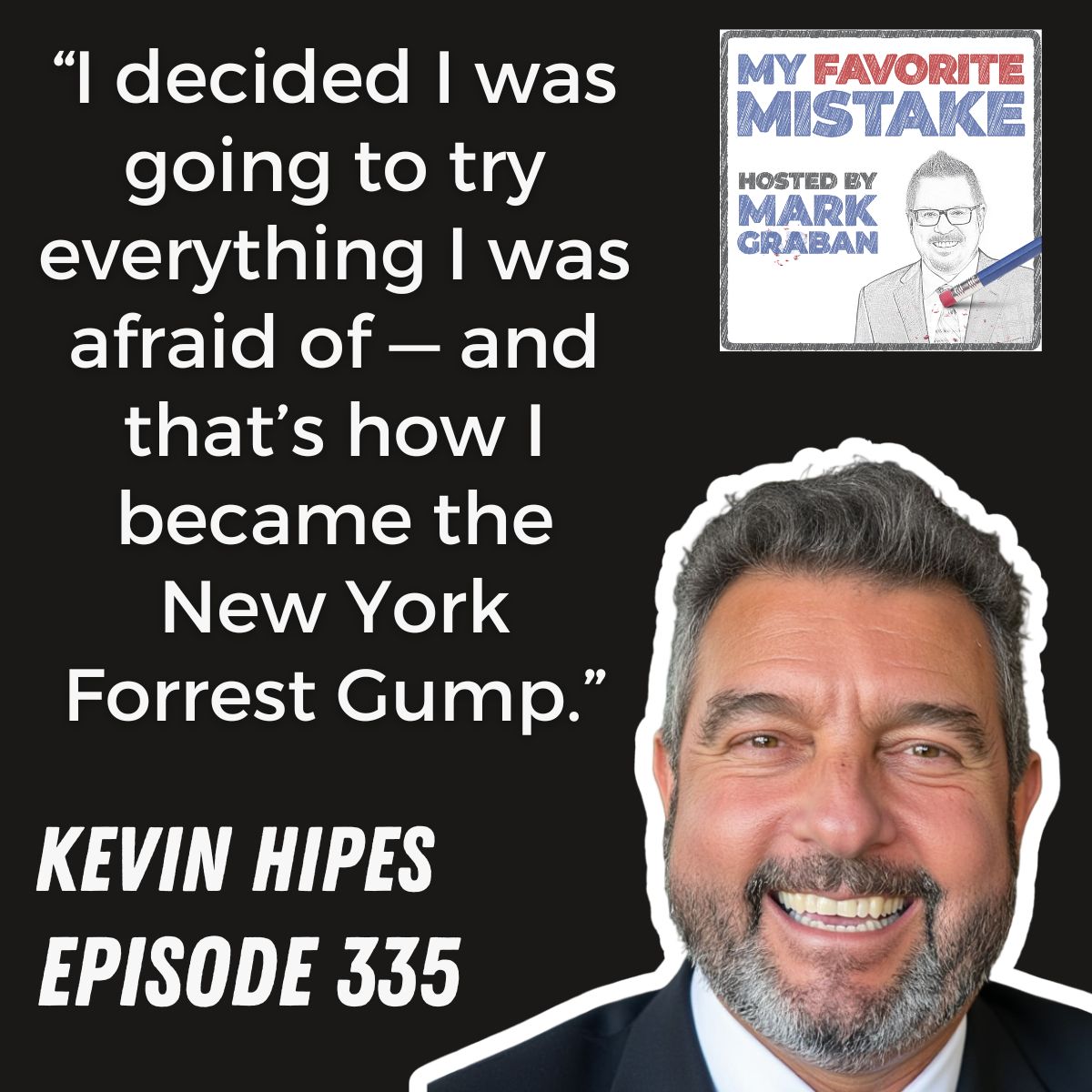
My guest for Episode #335 of the My Favorite Mistake podcast is Kevin Hipes, a real estate entrepreneur, former city commissioner, and author who’s been called the “New York Forrest Gump” because of the sheer range of lives he’s lived — and stories he’s collected along the way. His memoir, available now, is The Book of Me.
In this episode, Kevin shares one of his most unforgettable business mistakes: buying an oil tanker in the Caribbean. What started as a deal that looked rock-solid on paper — complete with a strong pro forma and seemingly guaranteed profits — unraveled due to changing regulations, geopolitical risk, ethical dilemmas, and events far beyond anyone’s control. It’s a story that’s dramatic, sometimes humorous, and ultimately full of hard-earned lessons about risk, humility, and the limits of even the best-laid plans.
Kevin also speaks candidly about resilience, reinvention, and mental health, including navigating depression and a later-in-life bipolar diagnosis. His reflections reinforce a core theme of the podcast: mistakes are not something to hide from or be ashamed of — they’re opportunities to learn, grow, and sometimes even create the best chapter of your story.
Themes and Questions:
When a “can’t-miss” deal goes wrong
- What can leaders learn when a business plan looks solid on paper but collapses due to external forces?
Risk, uncertainty, and forces beyond our control
- How do politics, regulation, and geopolitics turn a smart investment into a costly mistake?
Learning from entrepreneurial mistakes
- How can leaders reframe failure as learning rather than personal defeat?
Ethics and decision-making under pressure
- What do you do when the only way forward feels legally or morally questionable?
Resilience after financial and emotional loss
- How do you recover when a mistake affects not just you, but family, partners, and relationships?
Turning mistakes into meaning
- How can a painful business failure become the most valuable chapter of your story?
Mental health and leadership
- Why is it so important for entrepreneurs and leaders to take depression and bipolar disorder seriously?
Asking for help and seeking professional support
- What happens when high performers finally admit something is wrong and go to a doctor?
Humility versus fear of embarrassment
- How does fear of humiliation stop people from trying new things, and how does humility change that?
Trying anyway
- What does it really mean to do the things you’re afraid of—and what’s the cost of not doing them?
Storytelling as reflection and learning
- Why does telling our mistake stories help us and others learn more deeply?
Scroll down to find:
- Video version of the episode
- How to subscribe
- Quotes
- Full transcript
Find Kevin on social media:
Watch the Episode:
Memorable Moments from the Conversation:
Click on an image for a larger view

Subscribe, Follow, Support, Rate, and Review!
Please follow, rate, and review via Apple Podcasts, Podchaser, or your favorite app—that helps others find this content, and you'll be sure to get future episodes as they are released.
Don't miss an episode! You can sign up to receive new episodes via email.
This podcast is part of the Lean Communicators network.

Other Ways to Subscribe or Follow — Apps & Email
Introduction: Meet Kevin Hipes, The New York Forrest Gump
Mark Graban: Hi. Welcome to My Favorite Mistake. I'm your host, Mark Graban. Today's guest has been called the “New York Forrest Gump” for good reasons. He is Kevin Hipes. Kevin has lived an almost unbelievable range of lives: a street kid in Queens, a garage rock musician, a hippie factory worker, entrepreneur, city commissioner, commercial real estate leader, and even owner of an oil tanker in the Caribbean. That's a long list. Before I tell you a little bit more about Kevin, welcome to the show. How are you?
Kevin Hipes: Thank you. I'm doing great and I appreciate you having me on. There are about five more categories, but I think what you said were the good ones.
Mark Graban: All right. Those may be woven into your story. We'll see. Kevin is a perfect fit for the show here because he's built companies, he's lost them, and he is rebuilt them. He speaks candidly about all of this. In addition, he talks about navigating depression and a later-in-life bipolar diagnosis. Kevin's book, his memoir, is called Book of Me. It distills all of these adventures into stories that are funny, raw, and packed with lessons about resilience, reinvention, and leadership. I'm going to leave the Forrest Gump nickname as a teaser until later, but maybe it's part of your story. Let's dive right into the question at hand. What's your favorite mistake?
My Favorite Mistake: Buying an Oil Tanker in the Caribbean
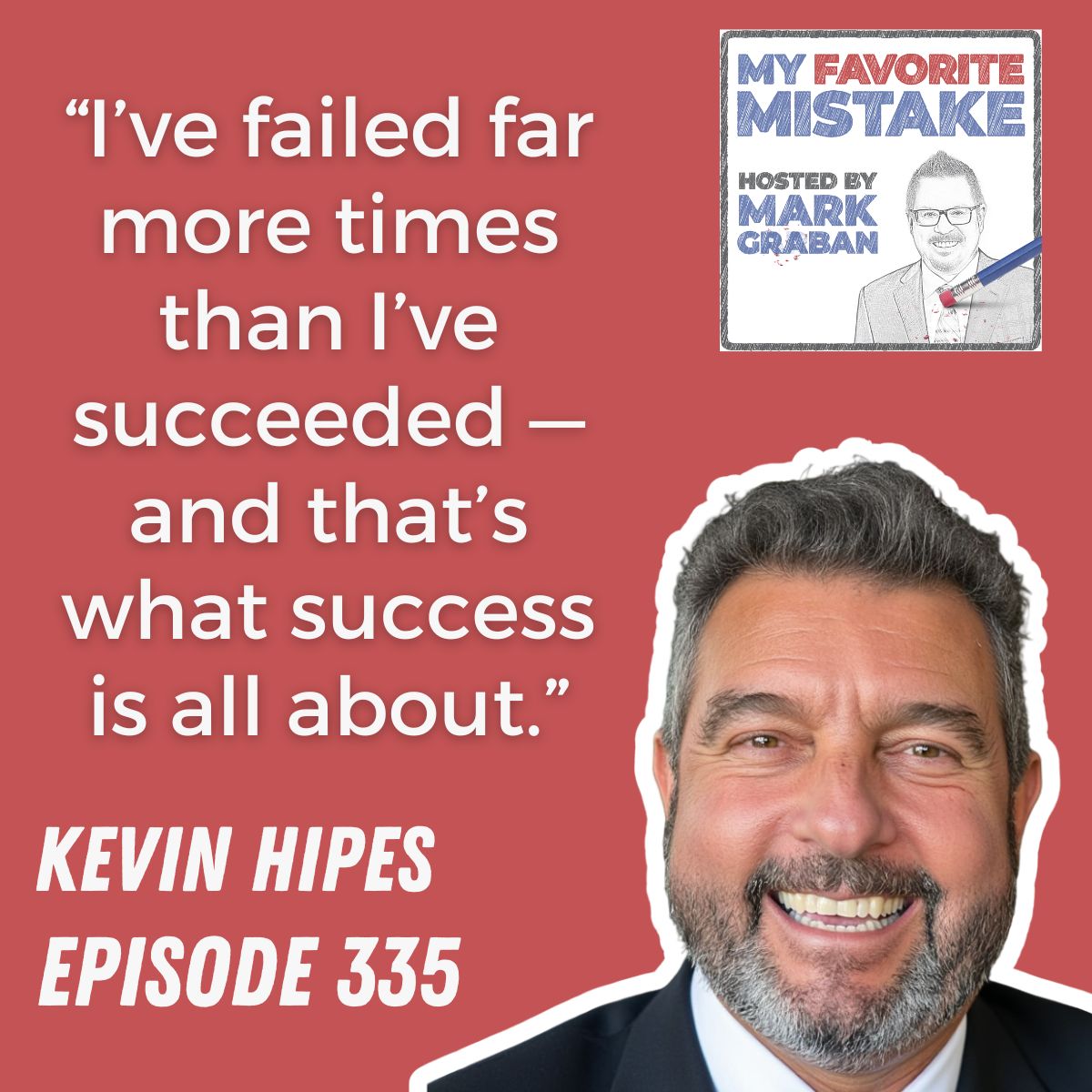
Kevin Hipes: Okay, well, I've made many mistakes. I've failed far more times than I've succeeded, but that's what I think success is all about: trying things, failing, learning, and growing. I loved the title, My Favorite Mistake. I was attracted to that. My favorite mistake is buying the oil tanker in the Caribbean.
Mark Graban: What led to that?
Kevin Hipes: There's a long story and a shorter story. I'm a real estate broker by trade. That's how I make my living; I'm a developer, I lease space, and I do stuff like that. I had a fellow broker who came up with a plan. He said, “Listen, I'm putting together a group of folks, investors, we're gonna buy an oil tanker in the Caribbean”. I said, “Really? Why?” He said, “Because we're gonna be rich”.
It was a very reasonable plan. The pro forma was strong. He said, “Listen, I have a fellow that is a good friend of mine. He used to be a mayor of an island off of Honduras, Roatán”. He knows a fish packing plant owner who has a fleet of fishing boats that go out and find crabs and lobster. He packs them and ships them to Miami. The problem is because they're on an island, they have no way to get diesel fuel. They've been getting diesel fuel from these little ships delivering maybe 20,000 or 30,000 gallons at a time, and they're overpaying for it and it's not enough.
The Business Plan: Diesel Fuel Arbitrage in Trinidad
I said, “Okay, so what's the plan?” He goes, “We're gonna buy an oil tanker. It's gonna hold 300,000 gallons. And we're gonna flag it in Trinidad”. I asked, “Why are we gonna flag it in Trinidad?” He said, “Well, Trinidad happens to have the biggest oil refinery in the whole Caribbean”. The way it stands in Trinidad, because they want to promote commerce, is if you flag your boat in Trinidad and you use Trinidadian guys on board as a crew, and you know you're gonna use it for commerce, you're allowed to buy the diesel fuel at half price.
Mark Graban: Yeah, that helps.
Kevin Hipes: So we can buy it for $1.50 a gallon, and we can sell it for $3.00 to $3.50 a gallon. He goes, “Between paying the crew and the cost to move the ship back to Honduras and back—about a 12-hour ride in the boat—it might cost us another 50 cents in fees”. He said, “Kevin, we deliver 300,000 gallons and we can make a dollar fifty profit. That's $450,000 profit per trip”. And we might be able to make two trips a month. I'm like, “Holy cow. That's almost a million dollars a month. Unbelievable”.
How could I resist? Of course, I had to buy it. I chipped in quite a bit of money and some of my family members chipped in. I'm still getting dirty looks at Thanksgiving dinners over this one. We had about 10 guys that went in and raised almost $2 million. We bought an old oil tanker, a single-hull ship in Mobile, Alabama. It's just such a great story. It's the best story of my book, actually. As a matter of fact, I'm now working with a group out in LA who wants to do a TV series and maybe even a movie with that particular chapter. That's how good it was.
Mark Graban: I know there's more story ahead and we have time for the long version, but it sounds like at a $2 million investment and $450,000 profit per trip, that would pay for itself very quickly. It sounds too good to be true, but I think you're foreshadowing that it was not all it was meant to be.
Kevin Hipes: It was a solid pro forma. And you own an asset. We bought the ship, a 30-year-old vessel, for half a million dollars. We spent about $200,000 fixing it up. But it was a single-hull ship. To buy a double-hull ship, it would cost $5 million or more, even a used one. You can't take a single-hull ship into an American port.
Mark Graban: Yeah.
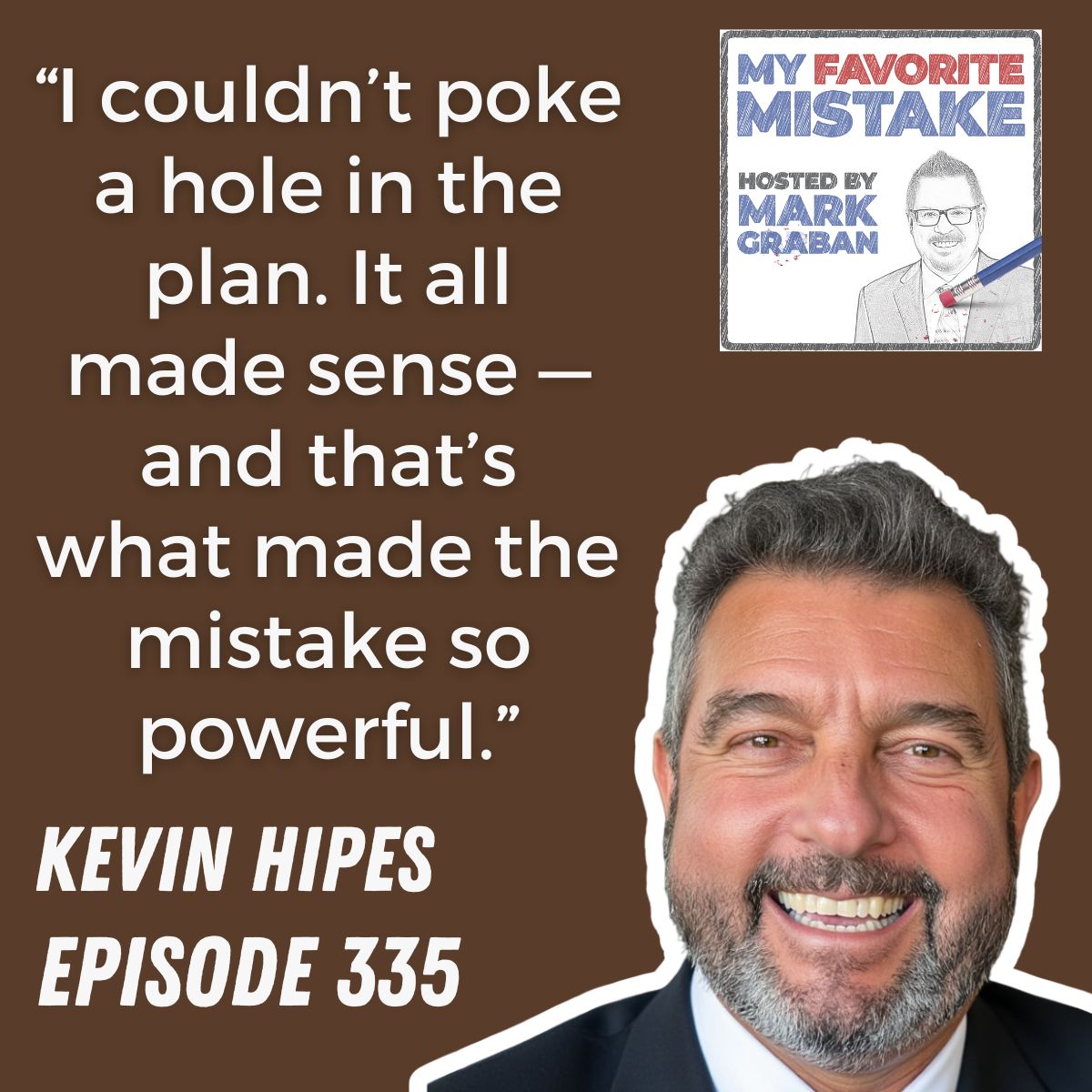
Kevin Hipes: You can in the Caribbean because that's like the Wild West down there. So we got it cheap, we fixed it up. It all made sense because we have this asset that by the time we fixed it up, it was probably worth $700,000 or $800,000, maybe more. So we had an asset to protect the majority of the money. You needed over a million and a half because you had to spend $450,000 to buy 300,000 gallons just to get it going. I could not poke a hole in this thing. It just seemed like if it blows up, we sell the ship and we lost a little money. But that's life.
Mark Graban: With the single-hull ship, I guess that sounds riskier. You talk about poking a hole in something. I hope that's not what happened.
Kevin Hipes: No, but it's a usable ship anywhere else, just not the United States. In the Caribbean, they all have them. At the end of the day, it seemed like a very strong deal. Like you just said, it would only take probably six months to get all your money back, and now you're playing with their money. It seemed like it made sense. Listen, I'm a business guy and I've done a lot of crazy things. This was a crazy one. But the pro forma looked very solid. It wasn't bad at all.
Mark Graban: Let's hear more because I don't hear a mistake yet, but I feel like it's coming.
Kevin Hipes: I'll give you the bit of a long one because it's a lot of fun. We go to Mobile and we see the ship. Our captain, his name was Percy. Great guy. He picks the ship, we look at it. Me, my buddy Jim—who's the genius who came up with this plan—and one of our major investors, Mr. Horry, an Indian guy. It's a mix for the perfect movie. We see the ship and this guy's sanding and painting, and I'm like, “This is great. We should buy five of these things, right? We could be like Onassis”.
Mr. Horry says to me, “Kevin, slow down. It's like drinking a cup of hot tea. You bring it up to your mouth very slowly so when you pour it in your mouth, it all goes in. If you rush, it pours all over you and you lose the tea”. I laughed and I said, “Mr. Horry, what is that, like Confucius or somebody? But me? I'll be drinking that tea with a straw, pal. Let's buy five of these things”. Thank God we didn't. The other guys outvoted me. We bought one.
High Seas Misadventures: Mechanical Failures and Legal Hurdles
We fixed it up. It took us about six months and we had to hurry up. It was taking too long. The guys in Honduras on Roatán Island were saying, “Hey, hurry up. We need fuel”. So they bought some fuel in Mexico someplace. They wanted us to just go pick it up and bring it over, like a half a load just to make a quick run.
We hire the crew and then we are sailing away. Now I'm not on the ship. I'm watching the ship on a Google Earth thing. You can see it moving through the Caribbean. It's hilarious. We get about 10 minutes out into the Gulf and we blow an engine. This thing had two 2,400 horsepower engines. It could go 15, 20 knots maybe. Well, we blew an engine off the bat. Now we're down to one engine. We're going five knots. We're crawling along.
So we call Boston, we find an engine, and the guy gets it in the truck. He brings it down. We detour to Brownsville, Texas. We dry-dock it and we put the new engine in. This is just the beginning of the chaos. We make the first delivery. We made money. We didn't make $300,000, but we probably made $150,000. It was a half a load.
Mark Graban: What does an engine like that cost?
Kevin Hipes: It was only four grand. It was a used one, but we had to pay a mechanic to put it in. We had to transport it. Because we were new at this game, we didn't know we were supposed to keep a backup engine on the boat in a container. That's what these guys do. So we took the old engine, put it in the container for parts, and then we had a semi-backup engine.
Here's what really killed the deal. We finally got to Honduras. We did take a full load, spent $450,000. We brought it to Honduras and it was a little complicated because we had to offload it right to the small boats. So it took like a week. This guy took 8,000 gallons, this guy took 20,000 gallons, and we were collecting the money at $3.50 a gallon because they were paying $4.50. It took us a week or two, but you know what? We made like $300,000 on that trip. And we were like, “That's it. We're gonna be millionaires. One trip, 300 grand”.
Mark Graban: Unbelievable. Yeah.
Kevin Hipes: On the way back to Honduras—this took like six months by the time we got it all together—there was a presidential election. A new president came in and saw that people were buying the fuel to resell it. He said, “You know, that really wasn't what this was for. This was for local commerce to help you give you a discount because you're hiring our people and you're moving around”.
Mark Graban: You mean Trinidad where you were buying the fuel.
Kevin Hipes: Right, Trinidad. So the new president says, “I'm changing the law. You can't do that anymore”. We're like, “Uh oh, what do we do now?” We're stuck. So we decided, we did some research. Keep in mind we're like the only gringos down there, so we stood out like a sore thumb. We got taken advantage of a little bit here and there. So we decided to buy the fuel from what they say is the “gray market”. I didn't like the sound of that from day one.
Now we're pulling into these back, dark ports at midnight and there's a row of about 40 trucks that have 8,000 gallons each. And we're loading it up at two in the morning looking around for cops and stuff. We had to pay $2.10 a gallon, so we didn't make as much. The next time after that, we said, “You know what? We don't wanna do anything illegal”. Even though they said it's not illegal, we had a feeling it might be. The last thing you want to do is end up in a jail in Trinidad.
Mark Graban: When you say gray market, is that a legal gray area? It's probably not stolen fuel, but there's somebody else who has access…
Kevin Hipes: Somebody who's connected to the government, who maybe is allowed to buy it illegally cheap. Maybe he's not supposed to resell it, I don't know. But I'm a Christian guy and I said, “You know, this sounds like maybe we shouldn't be doing this guys”. So we decided not to do that.
Now we're like, what do we do? We could use it for commerce, but we didn't know how to do commerce down there. We could fit 80 containers on the top of this boat. And it's very hard to sell an old boat like that with a single hull, even though it had value. We hooked up with another Indian guy—there are a lot of Indian folks in Trinidad. He did this kind of thing for a living, boating and transporting, whether it be fuel or whatever. So we leased him the vessel. He was gonna pay us like $30,000 a month. We're like, “Okay, at least we'll make some money. That's enough money for a return on our money”.
The Venezuela Incident: A Navy Chase and International Politics
I'm shortening the story because there's a lot more to it. He decides that he's gonna buy the fuel from Venezuela because that's run by the communist dictator Chávez. Of course, they just want to make money. They get it for nothing and they're selling it for whatever they can get to anybody that'll buy it. So he had a client in Chicago who wanted to buy fuel and resell it and make money. Our ship, our captain, our crew went to Venezuela to pick up 300,000 gallons.
Well, the guy from Chicago didn't really know what he was doing, and he wired the money to Venezuela before we got there. Down there it's like the Wild West. You don't pay for stuff until you get it.
Mark Graban: I was gonna say, I bet that money was just gone.
Kevin Hipes: We were like, “You shouldn't have done that, pal”. So the captain gets there. The captain loads up the ship with 300,000 gallons worth of oil. And of course, the Venezuelan military guy says, “Where's the money?” And he says, “Well, we wired it two days ago”. He says, “We never got it”. He said, “Well, we got the proof”. He said, “We never got it”.
So the captain calls us—we are watching it on Google Earth—and he says, “What do I do?” And we said, “Get out of there”. So he nonchalantly walks to the boat. He gets on, he starts up the engines, and he takes off.
Mark Graban: Is there a chase scene in this movie?
Kevin Hipes: Oh yeah. So all of a sudden, about half an hour later, he calls us back and he says, “Okay, I'm in international waters. I think we're okay”. And then he goes, “Oh, I gotta go”. And he hangs up. The Venezuelan Navy followed him out.
Mark Graban: Oh, God.
Kevin Hipes: They surrounded him. 50-caliber machine guns on my crew. He's got them on their knees with their hands up. They're like, “Turn off the engines”. So he shuts the engine off and they waited until he drifted back into Venezuelan waters. It's funny we're talking about Venezuela in today's news. They tow him in. It took six months and about eight bags of money in small bills to bribe everybody up the ladder to get our ship out of there.
Mark Graban: What about the people? Were they being held prisoners?
Kevin Hipes: Yeah, they held them all. They held the ship and the crew until we paid, and it cost us about $80,000 to get the ship out. After we got it out, we said we're done. And we sold it to the guy that leased it from us. We didn't want the lease anymore. We sold it to him for $1.4 million because it was a pretty valuable ship. We fixed it up really nice.
He made about three payments. And then the ship disappeared. How do you track that?
Mark Graban: But it moves. I guess they turn off the tracking that allows you to see it on the map.
Turning a Financial Disaster into a Memoir and Movie
Kevin Hipes: We found it about two years later in Guyana docked in some port on a river someplace. The docking fees, it was behind about $300,000. It's $500 a day to dock a ship like that anywhere. And about $200,000 in back crew wages. We just said, “You know what, keep it, we're done”. We got a judgment against him, which we'll never collect on, for $1.4 million.
And here's what I told my buddy Jim, who came up with the plan and is still a good friend of mine. I said, “You know what? We lost a lot of money on this, but this is gonna be the best chapter in my book, and I'm gonna make the money back on the movie”.
Mark Graban: There's turning a disaster into something positive. I mean, this is a comedy of errors caper. You get the right actors in some of these roles, wow.
Kevin Hipes: It's classic. I mean, Mr. Horry, the big Indian guy, Kevin the New York guy, Jim the Southern guy. It's just perfect. It is the longest chapter in my book. When you look on the book cover—I'll show you the book cover, there it is, you see the oil tanker—the tagline is Book of Me: The Life and Times of Kevin Hipes, the New York Forrest Gump. And the tagline on the bottom says, “Forrest owned a shrimp boat, but I owned an oil tanker and all my stories are true”.
So it really ought to be… listen, if Paramount had a brain they would try to sue me for using that name. I had some real authors call me—you know, the kind that are authors so they're just a little bit [stuffy]—and they said, “You can't use that name”.
Mark Graban: Well, there's a risk of trademark or copyright issue.
Kevin Hipes: They said, “You can't use that”. And I said, “I know I can't use it. I'm hoping they sue me. That's how I'm gonna get 'em to the table to do the movie”. And they all said, “That's actually a pretty good idea”.
Mark Graban: I hope that doesn't turn out to be another mistake we could talk about in another episode.
Kevin Hipes: Hey baby, listen, I've already got it figured out. I've done a lot of research on this. They've tried to do a sequel for Forrest Gump. It can't be done. It's such a good movie, such a unique movie. It's not even a true story. You can't do a sequel. Yes you can, if you make it about a New York guy, a kid. I can see a pigeon flies over the street in Queens and drops a feather. I mean, think about it. It just makes sense. You can't do it any other way.
So I guarantee they should do it and they should take my book and use my stories because I got 70 stories in this book. From five years old to 70, and I'm actually gonna be 71 next week.
Mark Graban: I don't think you look 71.
Kevin Hipes: They usually guess in the low fifties. I'm getting nervous. They used to guess in the forties, but whatcha gonna do. It's the gray hair, I guess.
Mark Graban: But I think I've got more gray hair than you do, and I'm 20 years younger.
Kevin Hipes: Well, I've lived a very interesting life and listen, I'm a very positive guy. You have to be. I've been through a lot, but you know what? It's real life experiences that really kind of makes you an interesting guy.
Rock and Roll Stories: From Jimi Hendrix to Beatlemania
Mark Graban: So where does the “New York Forrest Gump” nickname come from? I'm picturing at all your stages in life that you've got a long list of interesting or famous people who you've crossed paths with?
Kevin Hipes: Well, there are some. I can't say there's a long list, but there's enough that I felt it worked. First of all, I just thought a New York Forrest Gump sequel just made sense, because that's the best way to redo that movie is to make it so different, but so the same. Because I've done so many different things.
I'm a seventies guy because I'm older. I had hair down to my backside. I was a hippie. I went to all the rock concerts. I saw Jimi Hendrix play in 1970. I was 14 years old. I hitchhiked into New York City from Long Island. I was sleeping out in my buddy's backyard. We went into the city, saw Hendrix, and then hitchhiked back and got in a tent before nine o'clock in the morning when my mother came out and said, “You guys get breakfast”.
I used to go to The Fillmore East all the time, but I wasn't allowed to go to the city. I was only 16, so I told my dad, “Dad, I want to go to Madison Square Garden and see the Knicks”. He said, “Well, you can't go to the city”. I said, “Well, if I take the train, it goes to the Garden and you stay inside the Garden. You go upstairs. I won't be going in the city”. He goes, “Well, as long as you're gonna stay in the Garden, I guess you can go”.
Of course, the minute we got to the city, we hopped on a subway, went to a liquor store, bought booze and cigars, and then hopped on a subway to The Fillmore East. So there I am at 16, smoking cigars, drinking. I'm not proud of this. I'm a Christian guy, but this was before I was a Christian, so it's real life. We're waiting on line and I can hear… I was going to see Black Sabbath, 1970. I could hear them inside doing their warmup. And I'm like, “Holy cow, we're gonna see Black Sabbath. This is great”.
But you know, you're on line and you're drinking beer and booze, and it's been an hour. I'm like, “I gotta take a leak”. Well, next to The Fillmore was an alley. So me and my buddy—this is all true—we walked down the alley, there's a brick wall, we're taking a leak, and it's right next to these exit doors. There are like five rows of exit doors. The doors open, out walks the band. True story. Ozzy Osbourne and everybody—you know, the big crosses, the whole deal. And they looked at us and they stood right next to us and took a leak.
I had this box of cigars. I was smoking Tijuana Smalls, the little plastic tip cigars. I took that box of cigars outta my pocket. Pulled the cigars out. I threw 'em away. I ripped the box open. It was white on the inside. We got their autographs on the inside of a cigar box.
I jammed with Brian Setzer, the guy with the Stray Cats. My first wife lived in Massapequa, and this was when I was about 18, 19, 20, and I was a rock and roll guy, played guitar, long hair, all that. We used to have jam sessions every Saturday, me and about 10 guys, and we'd all get up and trade our best licks. Brian Setzer is from Massapequa. A lot of great musicians in Massapequa. This is like 1975 maybe. He was 14. Had a mouthful of braces, but I gotta tell you, he was a great, schooled, jazz chord melody kind of guy. We were just guys that learned off the record.
So we're all jamming, me and the other long-haired guys, and Brian walks in with his guitar. He would show up every once in a while, 14 years old, mouthful of braces. Brian shows up, all the other guys are like, “Well, you know what? I need to get a beer. I gotta take a break”. And they're all sitting down. Nobody wanted to jam with Brian. Brian gets his guitar out. I said, “Well, I'll jam with Brian”. I don't know who this kid is, but I'm pretty good, right? I get up there, this kid blows me away. I was humiliated. And they all laughed because they knew what was gonna happen.
So I jammed with Brian Setzer when he was a 14-year-old kid with a mouthful of braces, and I watched him grow as a guitar player and then became this chord melody guy.
Mark Graban: Yeah, because he went from the Stray Cats, which was kind of an old-time rock and roll/rockabilly, but then the Brian Setzer Orchestra. Was that more big band style?
Kevin Hipes: Big band. But he was always a killer guitar player. I was in a rock band myself. We tried to get a recording contract; we had original music. This was late 70s, '79, and this band was great. I was working at a bank. My parents finally begged me to cut my hair. And I said, “I'm not cutting my hair”. I was a hippie. And they had this friend of theirs, Mrs. Lynch, and she worked in a bank and she said, “Your son is just so smart. I can get him a job, he can have a career”. I'm like, “I'll take the job and I'm not cutting my hair”.
Mark Graban: You'll wear a suit and tie, but not cut the hair.
Kevin Hipes: They were like, “No, no, no. He's gotta cut his hair”. I said I'm not cutting it. Finally, I said, “You know what? I need to get out of the factory”. I cut my hair, I took the job. I'm wearing a suit and tie. My parents were so proud of me. Within about six months, they promoted me fast to be the manager, but because I didn't have a college degree, I couldn't go really any further. When you're a manager of a savings bank, it's not banking, it's babysitting. You're babysitting tellers. They got boyfriend problems, they don't show up. That's what you're doing.
Well, I ran into this guy who was managing a band and they were looking for a guitar player. So I ended up jamming with these guys and then they were doing some recording. All originals. These guys were amazing. The lead singer-songwriter sang just like Paul McCartney and he wrote great music. So they're like, “We'd like you to join the band”. I'm like, “I'm gonna do it”. I quit the job at the bank. My poor parents. And I went on the road with a rock band. And then we turned it into a Beatlemania.
Mark Graban: Then you had to grow your hair long again for the band.
Kevin Hipes: Well, actually, by this time it was late seventies, so I didn't grow it too long. But we were so good at doing Beatle cover music. People didn't really want to hear your original stuff. We were trying to get a recording contract; it wasn't easy. Our manager said, “You guys should do a Beatlemania show”.
I was the business guy. I said, “Well, we don't wanna do cover music, we wanna do our own stuff”. And he said, “Get off your high horse. You need money for recordings. You're getting 300 bucks a night right now, and in New York you gotta play four sets and you go on stage at 10:30, you don't get off till four in the morning”. He said, “You do a Beatlemania show and you buy the suits and Sergeant Pepper suit. You do two shows, so now you're doing two sets. You hire an opening band. Your prices will go from $300 a night to $3,000 a night”.
I said, “Guys, we're doing it”. We did it. And we were great. We traveled all over the Northeast, had a big following, and it was a lot of fun.
Mark Graban: Now, with that, was that officially licensed through the Beatles or their record company?
Kevin Hipes: No, we used the name “The Mystery Tour”. We did get a letter from somebody which we ignored. But we didn't use the Beatlemania name, we used The Mystery Tour. We still got the letter. We must have hired a lawyer or something like that, but we kind of got away with it.
But the most interesting thing about that story—and that's probably the second-best story in the book—is that I was the money guy and the numbers guy. I ran the crew and paid the bills and we were always broke. We used to have to hire an opening band. And when you're traveling around the whole Northeast—6, 7, 8 states—we don't know any opening bands up in Hartford or Maine. So we would depend on the bar owner. We would show up and set up our stuff and these bands either wouldn't show, or if they did show, they showed up drunk or they would mess up our stage. It was just a hassle.
So I was like, how am I gonna fix this opening act issue? I couldn't figure it out. And this is all true. I'm watching TV one night with my wife, and it was a Lily Tomlin special. She had this one character where she was this 50s Vegas guy called Tommy Velour. She glued hair on her chest and glued on a mustache and she was kind of a crooner 50s guy. And I looked at that and I said, “That's it. I got it”.
I called a band meeting the next day. I said, “Guys, I got the solution to our opening band problem. We're gonna be our own opening band”. They went, “What? We can't do that. We're the Beatlemania show. People will know”.
See, we had two guys that played behind curtains. Two of the guys in the band didn't fit the image. The keyboard player could do strings, horns, all for that later Beatles stuff. He was great. But he was a rock and roll guy, hair down to here. Couldn't keep him on stage. And there was another guy who was a rock and roll guitar guy, but he didn't look the part. So we kept him and he would double up on the guitar parts for us. These guys had great hearts. They played behind curtains for years doing this.
I said, “Mike and Steve are gonna be the front men. Mike's gonna be Johnny Valor. And we're gonna be the RPMs and we're gonna stand back. Leather jackets, sunglasses. We're just gonna play and let Mike be the front man”.
And I gotta tell you, we had so much fun. We played a 50s song opening before our 60s Ed Sullivan Show. And we were just so good and had so much fun. We would change instruments and do all sorts of things. There was this magazine called The Good Times Magazine up on Long Island. They always had the top 20 bands. Mystery Tour: third-best band in the region. Fourth-best band: Johnny Valor and the RPMs. Nobody knew it was us. People used to come to the front of the stage, girls, saying, “We really wanna meet those guys. They're really cool”. We'd say, “Well, you know, they're kind of dangerous. We keep 'em in the back”. These are all true stories. So you gotta get the book, Book of Me, it's on Amazon.
Writing “Book of Me” and the “Planet Hipes” YouTube Channel
Mark Graban: And you've got a YouTube channel where we can hear you telling these stories?
Kevin Hipes: Yeah, “Planet Hipes”. And I have a webpage called Planet Hipes too. What's interesting is I've been a storyteller all my life. People have been telling me for years, “You gotta write a book. You got so many stories”. But I'm high energy, I can't sit still.
I ran for mayor. This was a couple of years ago right here in Oviedo, Florida. I was a commissioner in Sanford, Florida. I moved to Florida in '91. I was on the planning and zoning board, being a real estate guy that made sense for the city, and then I eventually became an elected official, a city commissioner. 20 years later, I moved to Oviedo, which is about half an hour south, and I'm now redeveloping an old mall and I became pretty popular doing that because I'm a big mouth on Facebook. So someone said, “You should run for mayor”. And I said, “Yeah, I'll run for mayor”. Why? Because I've never done that. I'm one of these guys that just does it.
I ran for mayor. I lost, but you know what? It was a lot of fun running a campaign. The girl that did my commercials for my campaign—you gotta see the commercials, they're hilarious—said to me, “You don't have to write a book. Let's open a YouTube channel. You can just tell your story to the camera, sitting like I am right here in your office. And then we download it to a manuscript”.
I said, “Holy cow”. That's what I did. I told 70 stories into the camera. Anywhere from five minutes to 35 minutes, depending on the chapter. I have political policies, I have all sorts of crazy things. I'm a preacher. I preach at a retirement center every Sunday. And I gotta tell you, it's probably the most encouraging hour of my week.
So that's how I wrote the book. I rattled off all these stories off the top of my head, one take. The only time the girl interrupted the tape is when I said something politically incorrect. I'm a seventies guy. I would say, “You know, I hurt my knees. The doctor wouldn't let me join football. He wanted me to ride the ‘retard' bus to school”. I said, “There's no way I'm doing that”. I watched the video and she said, “You can't say that”. I said, “It's 1962. That's what we said. And I didn't call anybody a retard. I called the bus a retard”. So she took it out anyway.
Mark Graban: Yeah. Good. That's a mistake to avoid.
Mental Health and Entrepreneurship: Navigating Bipolar Disorder
Kevin Hipes: I get it. Read the book. It's got more details. And like you said, I'm bipolar. Of course, I didn't know that for most of my life. Now it made sense once I found out. Because I'm high on energy constantly, but I would get deep depressions about every year. And it almost killed me. I ended up getting Baker Acted and put in the hospital, and that's when I got diagnosed. And I'm glad because that's when I went to the doctor and got on the right medication.
Mark Graban: I appreciate your candor about that. What general lessons do you wish others in entrepreneurship or in the business community understood better about mental health and resilience?
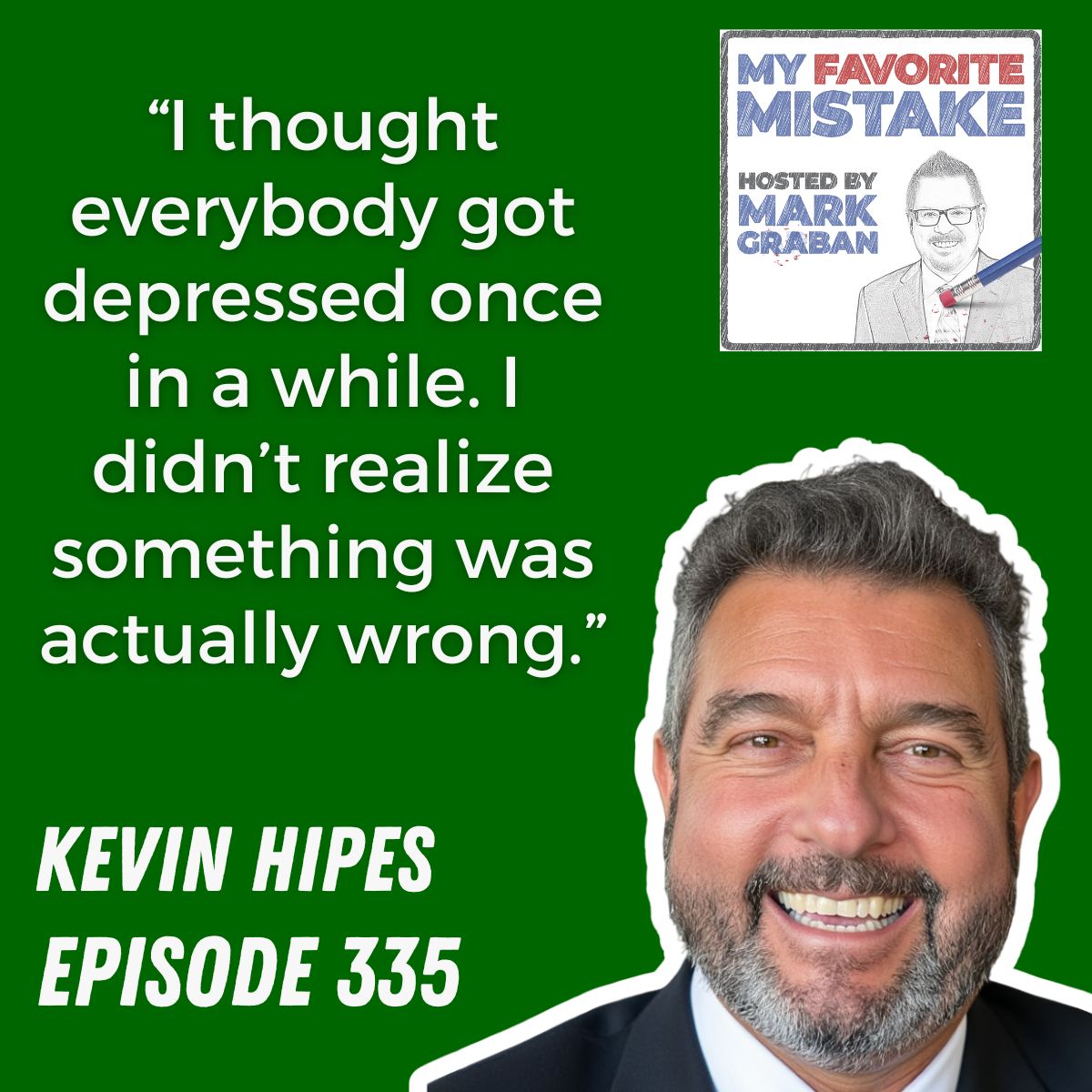
Kevin Hipes: Well, first of all, go to a doctor. Back in the seventies, you didn't go to a psychiatrist. You thought that was for wimps. You didn't go on medication. I just thought everybody got depressed once in a while. I didn't realize… no, I was seriously depressed. I mean, I can remember the black cloud coming over my head and I remember saying, “Uh oh, here it comes again”. And the voices: “You're a loser. You're a good talker. You can convince everybody you're a great guy, but you're not. You're a loser. You should take yourself out. It'd be better if you died and your wife married a real man to raise your kids”. I mean, these are the voices that you hear.
After a while, you start to believe that stuff, even though I'm a very positive guy. And I just knew from the first time it happened to me… I didn't know what was going on, but I hunkered down and I lasted long enough till it passed.
But one day I had too many balls in the air. I was a little older. It didn't pass and I collapsed and I actually took a whole bottle of pills, tried to kill myself. Fortunately, my wife found me. They took me to the hospital, pumped my stomach, and they Baker Acted me for three days. And it was horrible. But you know what I realized at that point? “You know what, something's wrong with me”.
I went to a psychiatrist, I got diagnosed, and he said, “You're not that person. You're bipolar”. I said, “That makes perfect sense because I'm usually high on life. And you're manic, you're productive. I could outwork anybody when I was manic. When you're depressed, it's suicidal”.
So I got on the medication. But I didn't get on the right medication initially. The first medication I got on dumbed me down so much that I was not the same. I suffered with that for 10 years. And finally, I went to my psychiatrist and I said, “Listen, I feel dumb. I'm forgetting things. I'm dropping my keys, my hair's falling out”.
He said, “Well, if you really want to give it a shot, I can probably get you off”. It was this stuff called Depakote that was dumbing me down. He goes, “I could maybe reduce the Depakote, take you off it, put you more on Wellbutrin, and see if that works”. I said, “Let's do it”. He said, “Not so fast. If you do it, we gotta do it over time”. I said, “Not a problem”.
He said, “Well, there are some potential risks. If we take you off it and you get depressed again, we gotta put you back on. But if I put you back on, it's gonna take a lot more Depakote to take you back to where you were”. He said, “You're gonna be dumber”. And I said, “Just do it. I'm tired of feeling like this”.
Well, he never asked me to talk to my wife, so I didn't. So over about six weeks, he weaned me off the Depakote and weaned me up on this Wellbutrin. And I gotta tell you, you ever see the movie A Beautiful Mind? When he was on drugs, he was a dummy and he hated it. When they took him off the medication… I wasn't a schizophrenic, I was just bipolar. But when I made the change, my wife was used to me being a lot calmer and a lot steadier.
So after about three or four weeks she says, “Are you taking your medication?” I said, “Of course I'm taking my medication. I would never not take my meds”. She goes, “Are you sure? You're starting to talk real fast again and you're having a lot of ideas”. I said, “Well, I kind of adjusted it. I talked to the doctor… my hair was falling out and I didn't like feeling dumb”. And she goes, “You don't think you should have talked to me first?”
She would've said no way. But I was already off it. And I gotta tell you, it was like that movie. It was like my eyes opened and I was back. I lost 10 years of my life. And all of a sudden I was back. So I had a lot of catching up to do. That's why I'm this guy.
Mark Graban: Well, our guest today is Kevin Hipes, the New York Forrest Gump. From your stories and all the things you've done, you seem like a real problem solver. You got the heart of an entrepreneur figuring things out, whether it was a band or misadventures with an oil tanker. I guess you learned that that wasn't simply floating real estate. There were other dynamics. But boy, a lot of fun to hear your stories.
Closing Lessons: Humility and Overcoming the Fear of Failure
Kevin Hipes: I have a closing comment if we have time. I was a very worldly guy till I was almost 30 years old. Rock and roll, drinking, I was the guy that bought the shooters at the bar, the whole deal. My brother's a preacher. He sat me down. He finally said, “You gotta get right with God”. I did. And I read a passage of scripture. Now I'm a Christian guy, I'm an elder at my church. The scripture said that God opposes the proud and gives grace to the humble.
I thought about that and I said, “You know what, most people are afraid to do things. Why? Because they're afraid to fail. They don't want to be humiliated. They don't wanna fail. They don't wanna be embarrassed in front of their friends. That's why most people stop themselves from trying things, from exceeding”.
But when I heard that scripture, I said, “Well, wait a minute, if I'm humble, I can't be humiliated. Only if I'm prideful can I be humiliated”. That day I said to myself, “I'm going to heaven. I'm gonna try everything I'm afraid of and I'm gonna keep doing it until I get past the fear”. That's been my mantra. Life's about the journey, and I tried everything I was afraid of, and that's how I turned into the New York Forrest Gump. Do everything you're afraid of.
Mark Graban: I appreciate you sharing those reflections, and that's inspiring. So again, Kevin Hipes, our guest today. Check out his website https://www.google.com/search?q=planethipes.com. Look for links in the show notes. The book is Book of Me. I'm going to sign up, I assume you have an email list, I want to hear the updates over time of what happens with the book project.
Kevin Hipes: Working off the screenplay right now. I just got the first episode in last week.
Mark Graban: Oh wow. Kevin, this has been great fun. Thank you for sharing your stories and your lessons learned. Like I said at the beginning, I knew you were the right guy in the right place for this show. So thanks again.
Kevin Hipes: Thank you very much. And if you want me on again, I've got about 40 mistakes that are all great mistakes, let me know.
Mark Graban: We want everyone to read about them in the book too, so please check it out. But again, Kevin Hipes, thanks a lot.
Kevin Hipes: Thanks.