
Joel Steele built a healthy fast food chain in his early 20s and watched it collapse into roughly $800,000 of debt – the result, he now says, of confusing growth with success. In this conversation, he unpacks the warning signs he refused to see, the catatonic stretch that followed, and how that failure became the fuel for his next business and his new book, Life Switch.
Listen:
Check out all episodes on the My Favorite Mistake main page.
My guest for Episode #348 of the My Favorite Mistake podcast is Joel Steele, an entrepreneur, financial expert, and author of the new book Life Switch: How to Experience the Power of Living On. Joel co-owns a financial services firm, is part of the ownership group of the Grand Rapids Gold (the G League affiliate of the Denver Nuggets), and has committed to donate $1 million to charity when Life Switch reaches its one-millionth copy sold.
Joel's favorite mistake is the one that shaped everything after it. Straight out of college, he built a healthy fast food chain in Philadelphia – three locations, strong media coverage, a fourth lease in hand. By age 24, he was also buried in roughly $800,000 of debt in today's dollars. The concept was good, but he was measuring growth instead of profit, doing every job himself without mentors, and filtering out warning signs – including sewage backing up four feet high in his flagship, three separate times.
We talk about what pulled him out of the catatonic stretch that followed, how the failure became fuel for his next business, and what he means by “living on” versus “living off.” A candid conversation about founder blinders, the cost of confusing growth with success, and the patient work of rebuilding after a public failure.
Themes and Questions:
- Confusing growth with profit, founder blinders, and the solo-founder trap
- You opened a healthy fast food concept in Philadelphia straight out of college. What were you trying to build, and what made you so sure it would work?
- You measured growth, not profit. When did that choice get made, and what did it feel like inside it?
- No restaurant experience, no mentors, no team. What did that cost you that you couldn't see at the time?
- Three sewage backups, four feet high, in your flagship. Why did it take the third one to break through?
- Describe the moment you put down the fourth lease. What was the first hour after that decision like?
- You've talked about being catatonic, ready for “God to come take me.” What actually moved you back into motion?
- How much of the comeback was vision, how much was your wife's belief in you, and how much was needing $7,000 a month?
- You chose financial services out of arithmetic, not passion. How do you think about “follow your passion” advice now?
- What's the behavioral difference between someone “living on” and someone “living off”? How would a leader spot it in themselves?
- Why build a $1 million charitable commitment directly into the economics of the book?
- For a leader who suspects they're filtering out warning signs right now, what's the first move?
Scroll down to find:
- Video version of the episode
- How to subscribe
- Quotes
- Full transcript
Find Joel on social media:
Watch the Episode:
Memorable Moments from the Conversation:
Click on an image for a larger view

Subscribe, Follow, Support, Rate, and Review!
Please follow, rate, and review via Apple Podcasts, Podchaser, or your favorite app—that helps others find this content, and you'll be sure to get future episodes as they are released.
Don't miss an episode! You can sign up to receive new episodes via email.
This podcast is part of the Lean Communicators network.

Other Ways to Subscribe or Follow — Apps & Email
Meet Joel Steele: Entrepreneur, Author, and Part-Owner of the Grand Rapids Gold
Mark Graban: Hi, welcome to My Favorite Mistake. I'm your host, Mark Graban. Our guest today is Joel Steele. He is an entrepreneur, financial expert, and author of the new book titled Life Switch: How to Experience the Power of Living On. Joel co-owns a successful financial firm with more than 20 years of experience helping people build wealth and wellbeing. He's also part of the ownership group of the Grand Rapids Gold, the G League affiliate of the Denver Nuggets.
What makes Joel's story especially relevant for the show, and this might be the favorite mistake story, so I won't say too much, but he came into success, had some setbacks, and learned from them. Joel, welcome to the show. How are you?
Joel Steele: I'm great. Thanks for having me. This is going to be fun. I appreciated getting to know you over the past month or so, and I'm excited for this conversation.
Mark Graban: Thanks. It's great to have you here. I was starting to read the bio and there might be some spoilers in there about what might be the favorite mistake story, so we'll let you tell it.
Just in terms of connecting dots, a previous guest on the show, Spencer Jones from episode 293, had been until recently on a two-way contract between Grand Rapids and the Denver Nuggets. Now I think he's signed to a full-time NBA deal. That's an interesting connection.
Joel Steele: Yeah, it's been amazing for Spencer and for both teams, the Nuggets and the Gold. This year the G League really showed even more than over the past couple of years the value it has in supporting its parent club. Spencer was a glue guy and a guy I saw up close and personal last year in Grand Rapids. You could see a lot of these intangibles, but he could also shoot the ball really well. The Nuggets saw that too, and they needed it. The fact that he's been on the main stage has been awesome.
My only complaint to Spencer is that at Van Andel Arena in Grand Rapids, we had this massive decal of Spencer on the arena, and he never played this season in Grand Rapids. So it's a little bit of false advertising on our part. But we're thrilled for him, because this is what it's all about – guys working hard, working their butts off, getting an opportunity, and seizing it. That's exactly what he did this year.
Mark Graban: That's great. The season continues, so I know we're both wishing Spencer and the Nuggets well as the season wraps up and heads into the playoffs.
The Mission Behind Life Switch: A $1 Million Charitable Commitment
Mark Graban: Joel, I wanted to ask about the book first, before we get into the mistake story. I think you've got a really interesting mission with the book Life Switch, beyond the mission of selling copies and helping the reader. Tell us about that mission.
Joel Steele: The bigger mission of Life Switch, other than entertaining and inspiring people, is trying to make a real difference in the world and helping people who maybe want to make a difference but don't know how. It's having them automatically be part of something bigger than themselves.
When Life Switch sells its one-millionth copy, I'm going to personally sit down and write out checks totaling $1 million to charity. I'm super excited about that, because every single person who buys the book – audiobook, ebook, or hardcover – no matter how much money I make or don't make, it doesn't matter. It just matters how many books are out there. People are part of this seven-figure mission. I don't think this has ever been done before. That's what's exciting to me: doing something, recruiting people, getting them inspired to be the best version of themselves, and helping people they otherwise would not have been able to help.
Mark Graban: I think that is very unique and noteworthy, and that's why I wanted to highlight it up front before we get into the book and the message. It sounds like a movement you're building.
Joel's Favorite Mistake: Building a Healthy Fast Food Chain at 24
Mark Graban: I'm not going to let you off the hook. The main question – Joel, with the different things you've done in your career, what's your favorite mistake?
Joel Steele: Well, it's the obvious one mentioned in the book: my restaurant business. I started it out of passion and love for trying to be a healthy person, physically fit, putting quality foods in everyone's mouth. So I created this healthy fast food restaurant chain.
I 1,000 percent envisioned that this chain was going to become a nationwide success. I studied it. I immersed myself and empathized with the Ray Krocs and the Glen Bells and the Colonel Sanders of the world. I felt I was going to be the next one to do it. You had to start with one store, and that's what I did. Then one became two, two became three, and almost became four.
Ultimately, it didn't work out. To my shock, it actually didn't work out. It was the first time in years that I had set my mind to something and couldn't do it. It was a massive failure beyond belief. I could not wrap my brain around how much of a failure it was.
The mistake was basically pouring everything I had – my blood, sweat, tears, my money, and also leveraged money from others – into this. When the dust settled, I was a 24-year-old kid. A young adult, but still felt like a kid. I was buried in what in today's dollars would be close to $800,000 of debt, thinking, oh my gosh, what have I done and what am I going to do now? That was my favorite mistake by far.
Mark Graban: I appreciate you sharing that and being willing to talk about it. You've written about it. What were the years?
Joel Steele: I started this business as my senior project in college, so this was 2001. I closed it – from conception to the last piece of used restaurant equipment being liquidated – by 2004. In the scheme of things, it was a short period of time. But at the time, it was everything. It was my life up to that point, everything that mattered. My friends were living their best life. I was living my worst life. People were getting jobs, seeing a bright future on an upward trajectory. I was dropping out of space like a part of a rocket ship that had been jettisoned.
What Actually Went Wrong: Chasing Growth Over Profit
Mark Graban: What didn't go right? Was the concept – healthy fast food – ahead of its time? Was it execution, or other factors?
Joel Steele: There was a lot to it, and at the time I really didn't know. Now, having had about a quarter of a century to think about it, and realizing that for me there's a lot of this I put a lid on – I sealed the lid and didn't want to go back there – only when I revisited the book did I really tear off that cover and dig in and get myself back there to remember the emotions and the desperation.
When I did the book, I originally just typed it all up and it was 67 pages in a Word document. When I went back and added the color and the detail, and got myself back into my own shoes 20 plus years ago, those 67 pages swelled to 310 pages. About two pages were devoted to the restaurant failure in the original draft. That's how much I wasn't really interested in going back there and getting dirty again.
Looking back, the main problems were severalfold. Number one, the concept was fantastic and still is. Healthy fast food was ahead of its time, but that was not why it wasn't successful.
I wanted to open the business in California, where people are naturally more fit and more concerned about what they put into their body. But I had a wife – my future wife at the time – who was still in college. I said, I can't leave her here. So I'll just start my business in Philly, which is the closest city to where I was. Philly is always ranked as one of the least fit cities in the country, probably even the world. Being a positive guy, I figured, more people, more challenge, let's dig in and help these people eat healthier.
But the main problem, to get back on track, was that I overspent. I wanted this first one – the flagship – to be the main story. I wanted it to be perfect. I wanted people to come in and be blown away and think this is a national chain because it's going to be. That was the reaction we got. We had a ton of media, a ton of repeat customers. But I spent so much money that it was really hard to pay that debt, in addition to the 16-plus staff members and a lease in downtown Philly. Even though we were making decent money, we were struggling just to stay afloat pretty much from day one.
Mark Graban: I've already eaten lunch, so I would have gone to this earlier if I was hungry. Give us an idea of what was on the menu. What was the healthy food?
Joel Steele: I'm glad you asked, because these are things I wish I could find today and can't. I'll tell you the menu, but before I do – I strove to have people come in because it was a place where they could get really good quality food that was reasonably priced. The third part was, oh, and it's healthy. It was never designed to lead with, it's healthy.
Yes, we had salads and grilled chicken sandwiches, the obvious healthy things. But we also had turkey meatball subs. We had grilled salmon burgers made on the same broiler Burger King uses for their BK Broilers. The exact same machine. So we had good quality, healthier meats coming through. I had convection ovens to make thick steak fries as baked french fries. We were giving people really good fries with about two grams of fat per serving versus 20-something in a small McDonald's fry.
The last thing was a smoothie bar with cold smoothies, which were great. I also created something called hot smoothies – oatmeal-based smoothies people would come in for in the morning as a breakfast alternative. That got a lot of media attention. So we did a lot of things right. But we obviously did a lot of things wrong.
The Warning Signs He Refused to See
Mark Graban: Was there a specific moment when you realized there was serious trouble, or was it a slow realization? There was a growth phase to this – I'd be curious to hear about some of the decision making to do a second location, and a third, and you said almost a fourth.
Joel Steele: I didn't view the red or green – profit or loss – as the goal. I viewed it as growth was the goal. For me to tread water and survive long enough and grow, I needed to build the brand, the presence, the footprint. So I said, I'm not going to focus on the money or the profit or lack thereof. I'm going to just keep on keeping on, keep putting money in, keep getting the word out. I did so much free sampling, so much couponing, to spread the word.
The only thing that got me to think this isn't going to work happened one time. We kept having this other problem. We were in the street-level basement of a building on Fourth and Market Street in Philadelphia. A great location, I thought. The building's plumbing was tied into mine. Every now and then we had these sewage backups. All our floor drains would shoot up about four feet high of pure sewage. In a restaurant. It could have been a clothing store and it would have been bad, but it was a restaurant.
We closed down, sanitized, told customers they had to go. They were, I'm sure, pretty grossed out. This happened three times. It was only that third time that I took off the blinders I had on, looked around, and said, this might be a sign to stop. Because I had refused to acknowledge or listen to anything – any challenge that this wasn't going to work. I was steadfast. This is going to work. It wasn't a question, it was going to happen.
But at that point, it finally was like, you need to pay attention to this. I had a fourth lease in my hand. I thought, even if I sign this, a fourth store isn't going to make us blow up. Maybe the 10th or 20th store, but the fourth store wasn't going to be enough. I was going to have to go even deeper into debt. I was about out of money on the two loans I had.
I always remembered that saying in business: if you have an idea that's good enough or great enough, don't worry about the money, you'll find the money. I subscribed to that. But I knew how bad things had gotten, how bad the situation was, that I had no control over what was going to happen a fourth or fifth time with the sewage. That's when I just said, I don't know if this is going to work.
For a very short moment, I had a sense of relief. Okay, this isn't going to work. But then that short moment turned into utter and pure chaos. It put me into a catatonic state. How am I, as a 24-year-old, going to dig out of this debt without a business, without a sandwich to sell? If I liquidate equipment, chairs, tables, lights – $50 here, $500 there – how do I get out of this?
From Catatonic to Comeback
Joel Steele: That was the hardest part of my life, the lowest point I've ever had. I felt like I was just basically going to die and be taken away. I was sitting in my chair catatonic, staring straight ahead, ready for God to come take me. Eventually it was like – you're still here, you're not old enough or unhealthy enough to have a heart attack, you've got to figure out how to move forward.
That was so difficult to do, but thank God I did. That failure, Mark, is what ultimately became the fuel for the success I had in my next business, which is the business I still run today.
A Team of One: No Mentors, No Experience
Mark Graban: I'd love to dig more into the bounce back and taking what you learned into that other business. One question that came to mind: about mentors. I'm guessing – correct me if I'm wrong – that you didn't have a mentor or somebody on the team with restaurant experience.
Joel Steele: You're looking at the team. I'm a big team guy and I always say “we,” but with the restaurant it was all me. It's funny, because I didn't have restaurant experience or business experience. I did everything – picking out the light fixtures, the door frames, the color of the grout between the tiles. I did the standardized recipes. I did all of it from scratch.
The only job I ever had in a restaurant was when I graduated college and applied to one job and one job only: Burger King, as a manager trainee. I needed to get not just restaurant experience but fast food experience. I worked there for two and a half months, and that was my track record for business and restaurateur.
When you think about it, just opening this business was a massive success. But it was the relatively short-lived success and failure that really defined that chapter of my life.
As I tell people in my keynotes: there's opportunity in failure. Losses in life are not losses. They're part of the process of winning. Without this loss, I would have been content to just get a relatively basic job and consider success nowhere near what I consider success today.
Mark Graban: That's a good point. It's something we try to emphasize in these discussions – not wallowing in the mistake, but celebrating the bounce back and the inspiration that comes from it.
Before the Restaurant: Guns, Crime, and Being Scared Straight
Mark Graban: One other thing I felt I had to ask about because it's in the bio. The bio mentions you faced not just bankruptcy but jail time and a near-death experience. Were those all interconnected at that time?
Joel Steele: They weren't. The jail and the brushes with death were prior to this. Go back further. I was a kid who was in part left alone quite a bit, and I ended up being a follower, not so much a leader. I got caught up in the wrong crowd and started to do some petty crimes. Nobody was physically hurt, but we were stealing things, and ultimately the things added up in value so much that it was considered a felony.
I wasn't quite 18 when I finally got caught. I had just decided to stop doing it – and of course I got caught that night, which I fully deserved. I had to fight to not go to a juvenile detention center, to not lose my license, to not have to deal with a life that would have been totally different from what it turned out to be. I had to do a ton of community service, pay back all the money, which I was happy to do. But it scared me straight.
I remember a cop, after I got caught, taking me down to the local police station. There were a couple of jail cells, and he asked me very slowly, deliberately: which jail cell do you want? And then he paused. I assumed he was serious. I thought, there's no good answer here. It's not like, this one's got a king bed, this one's got the toilet closer. This was not a good decision.
Then he said, look, you're not going to go to jail. But if you don't change, this is where you're going to end up and spend your life. That just ran right through me. Turned me bright white, pale white. I was like, I'm done. I'm done with these kids. I'm done with this crime.
That also helped, Mark, because it created this sense of: okay, you've hurt people for a couple of years and you've been a relatively worthless person during this bad phase of your life. So I craved to be helpful. I wanted to help people to make up for having hurt people. Ultimately, I wanted to help people eat healthier, and I wanted to help people with their finances in my next business.
That urge – that need, like a need to breathe – became a big part of my success, because I was only going to do well and be successful if I was helping other people be successful. That became a core part of who I am and what I do. It continues to this day with the charity component. How many people are out there who were like me, living a parallel life they didn't really want to be living? There could have been another life that could have been brighter, a beautiful future. They just sometimes don't know, or don't know how to transition from one to the other.
Mark Graban: Was there a health scare?
Joel Steele: It wasn't a health scare. It was the fact that I had guns pointed in my face on multiple occasions. Part of this stemmed from the crew I was hanging out with. We ended up in Camden, New Jersey one night – this is just one example. There was a guy, he came over to the car. My friends were out buying something they shouldn't have been buying at that time of night. I was in the front seat, my friend was in the back, and this guy came up on us with a gun. The gun was in my face and my friend's face, back and forth. He said, which one should I put a hole in first?
I really thought he was going to shoot us. This was not a good area. It was not going to be front page news. Then someone came along and scared him off. That was one of those moments where it was like, I am playing with my life. I am giving myself a 50-50 chance. This was the fourth or fifth time I had a gun in my face. Once or twice, okay. But I was being so stupid to not wake up.
I was having moments where I was almost in jail, almost shot in the face. Enough of this scraping the bottom of the barrel. That also led to me wanting to be above average in everything I do – because I had been barely scraping by for so long. It's like, why are you doing that?
Living On vs. Living Off
Mark Graban: The book is titled Life Switch: How to Experience the Power of Living On. It sounds like you had some “flip the switch” moments. Tell us more about this idea of flipping the switch and what you mean by “living on.” In the book, it's capitalized.
Joel Steele: The word “on” is what it's all about. Ultimately it comes down to something really simple. You're either living on or you're living off. Flipping that life switch – we all have it. It's not a physical switch, it's a switch in your brain. When it's on, you can see clearly. You have a sense of urgency and you have energy to go out and do something specific.
If we turn off the light right now, it would be dark. It would be hard to see me, hard to see you. You'd be trying to make out what's in the background. A lot of people are kind of fumbling through life, feeling their way around, trying to figure out where they're going.
People who are living on can see clearly. They have a purpose. They have passion behind it. They feel electricity running through their veins. Every day they're working toward a specific destination, a specific goal, making progress every day. Living on is clear. You feel it. You don't just think about living on. You feel it. Most people are living off. They're just getting by. They're wondering what happens, or seeing what happens. People who are living on are making things happen.
A guy like Spencer is doing everything he can to make it in the NBA. He's on, and he's also online all the time. He's doing it in his own way, promoting other things besides just playing basketball. That's the guy who's living on. But for every guy I show you living on, I'll show you 10 who are living off.
Mark Graban: One thing that's amazing about Spencer is he's also doing the work it'll take to be successful post-NBA. NBA careers are short, even at their best. He's spending his time, as he described in the episode, not sitting in his hotel room playing video games, but going out and visiting startup companies to learn, partner with, and invest in. Think of what Magic Johnson has done in his post-NBA career. Michael Jordan has had a lot of business success.
He's taking a long-term view – not just, how do I become a starter on a playoff team. That's a huge challenge, and he's doing that. But what can we learn from Spencer, from what you know of him, to try to go from “off” to “on”? How many people don't even recognize they're in the “off” position?
Joel Steele: Most people don't think about that. That's why I titled the book this – I want people thinking about this. When you're aware of something, you have much more traction, a much better chance of something positive happening. If you're looking for something and you know what you're looking for – like, where are my car keys, they're black with a silver key – you'll find it. If you're not looking for opportunities, it's not on your mind. You're less likely to find it, or at best it'll take you longer.
A guy like Spencer, and a lot of athletes and high achievers and successful people – everybody has these inner assets, these traits, these winning abilities. Steph Curry, LeBron, Michael Jordan – they have fundamental assets within them that make them great when you put a ball in their hand, because they love it, they work on it relentlessly, and they love the feeling of making progress. Making progress is addicting. When you start to get that first taste of success…
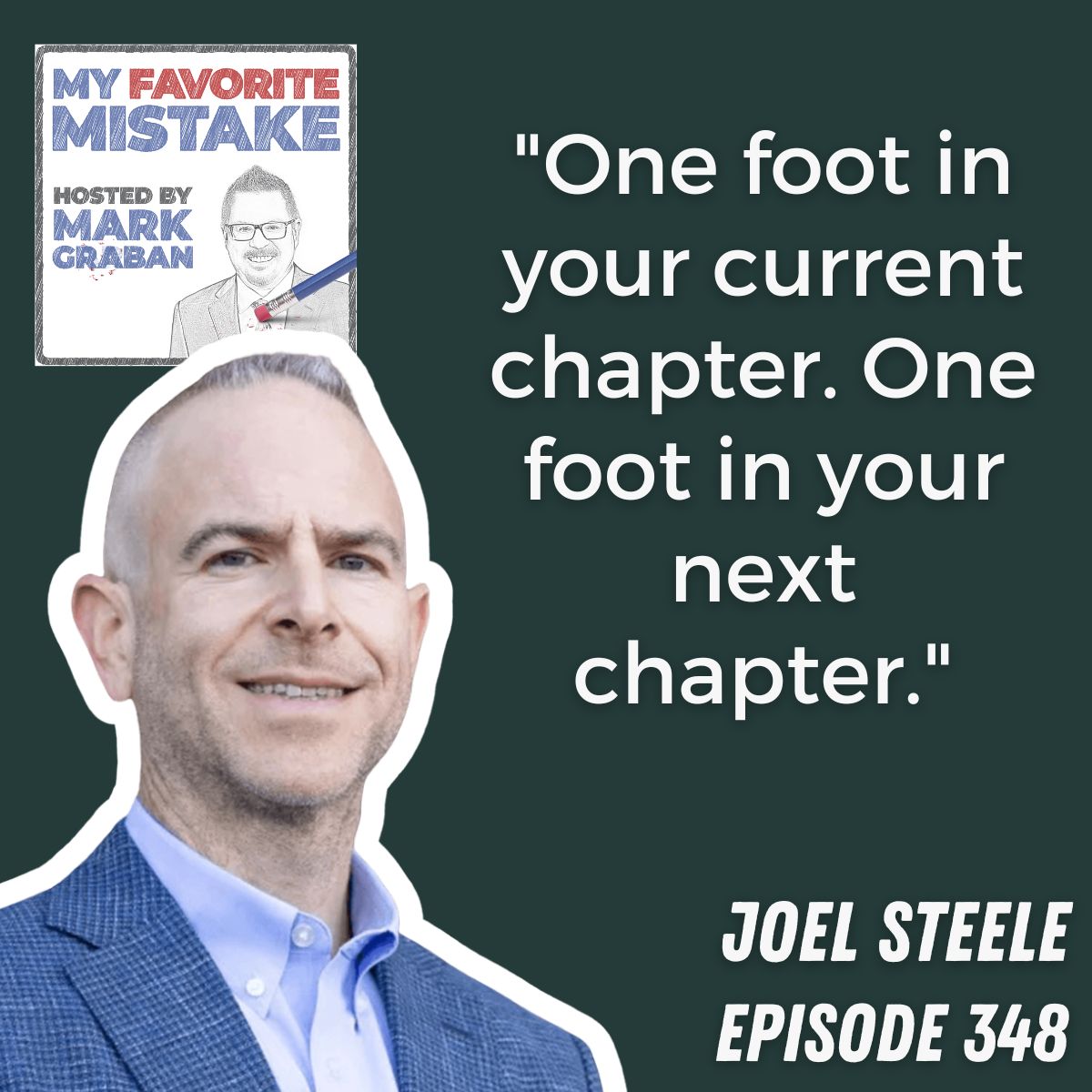
It's those traits and assets within guys like Spencer that they realize they can apply to other things – a startup, getting involved with a business, vetting new companies themselves. They have an eye for it. It's great to see someone like Spencer with one foot in his current chapter and one foot in his next chapter. This could be 10, 12, 15 years from now, but it's a great model. You don't have to retire and then do it.
The cool parallel I'm going through: I'm a co-founder in the financial world. I've got one foot there, and I also put my foot into becoming an author and speaker. I'm straddled in two worlds. It's funny, because the world Spencer was in – in the G League, he was making maybe $50,000 a year. On a two-way, you do make more than that, I don't want to get too deep into it. You're not making crazy money. He obviously wanted to go to the NBA, where you make substantial money, millions of dollars.
In my business, it's the opposite. I've got the ability to have seven-figure revenue in my business, but I'm trying to get into an industry – author and speaker – where I'd be happy to make $40,000 or $50,000 a year. I don't need to do it for the money. I just enjoy doing it.
The simple connection here is passion. Spencer has a passion for business and a passion for basketball. I have a passion for helping people with their finances, and a passion for helping people live their best life in and out of their professional life, whatever their day job is. The more people out there showing you can do it, you can do it in your own way – it's powerful.
Who the Book Is For, and What Pulled Him Out
Mark Graban: Tell us more about the target audience for the book and the speaking. It seems like you do a lot of speaking at professional conferences, other financial services firms. It doesn't seem like it's targeted for people at rock bottom, but for people doing good things. To borrow the phrase from another book, is it about going from good to great? From getting by, to really excelling?
Joel Steele: I actually mention good to great at the end of the book. But it's really about going from lost to found. From surviving to finding a track to run on and thrive. The goal isn't to be walking and wandering around. It's to feel wonderful about the path you're on, to wake up excited about being yourself, and to have the ability to enjoy each day – which is why it's called the present – to affect your future and other people.
The goal is to get people to realize they have the current version of their life they're living. If you're happy and fulfilled, congratulations, that's the goal. A lot of people aren't, or they're not sure. Who am I? What am I doing? Why am I here? They are at a loss. They don't know what to do. They are a bit hopeless. They go through the motions. They do what they think they're supposed to do. They go to happy hour, because it's a bunch of unhappy people getting together to forget about reality.
I don't want people to mask what's bothering them. I want them to utilize their emotions to tell them – are you getting hotter or colder in pursuing your passion and living out your purpose? I tell people all the time in my workshops: you have to have a vision of what you want your life to look like, because that becomes the destination. Without that, you are just going round and round. When you get in your car, you set a destination so you know if you're getting closer or further. How do you live life without knowing where you're going? It's really hard. That's why people are not thrilled to be themselves – because they don't even know who they are.
To answer your question more directly: the focus is people who are launching or relaunching. They're coming out of college and are supposed to get a job, buy a house, get married, all this American dream type of stuff, but they're not really sure what to do, or who they are. They've been told by parents, teachers, friends – and it's like watching a horse race when the first horse falls on its face and everyone else trips over it. That's what it feels like. A couple of times a year, people are being launched by the millions into the world. Now you have all these kids who can't get jobs because of changes in technology. People are confused: what do I do now? I guess I'll get my master's, pile on more debt, have more of a degree, and still have no idea what makes me happy, what my passions are, what I want to do with my life.
It's for people launching or relaunching. Maybe you had a business fail. Maybe you got divorced. Maybe you lost your job. Somebody who is trying to figure it out. Another great market is athletes and high performers. They have all these great assets. Their playing days are over, and now they're depressed, lost. What do I do? What they do is take those assets that got them to the top of their game and transfer them somewhere else.
Mark Graban: What helped you? I'd like to go back to that transition from the failed restaurant business. I can only imagine facing failure and trying to think, what next. What flipped the switch for you to have the energy and drive to say, I'm going to try, do something new, do something different. I want to help people. Get into financial services. It's easy to stay in the “off” position, I guess.
Joel Steele: I'll answer this two ways. I'll start with the really honest way. I wasn't passionate about finances at all. I just did the math. I knew it was commission-based, and there was no ceiling on how much money I could make if I poured myself into the financial business. I had nothing but time and debt to devote toward getting myself out of that hole. It was like an arranged marriage. Any other job I got – even if I was making $50,000 or $60,000, which none of my friends were making even with a good job back in 2003-2004 – I would have still had to claim bankruptcy. I needed $7,000 a month to pay my loans, afford an apartment, and eat. I needed to make more money than any standard job.
The other part was that my fire was put out. My switch went from on to off when the restaurant failed. I was just doused in water. The fire was totally put out. As I sat there catatonic, I thought there was nothing I could do. There wasn't one phone call, one step I could make. There was nothing that would fix this.
But over time I had this pilot light that was lit, deep down within me. It was saying: you're not done. You're 24 years old, you're not done. I would go work out periodically. I'd drag myself to the gym, and that would create these positive chemical reactions – serotonin, things like that. I would forget about the failure for a short period of time. I would feel strong and tough, and feel like I was building myself back up.
I started to think about the fact that I did have a woman who was going to be my fiancee and eventually my wife. She had complete confidence in me. I didn't have any confidence in myself for a short period. But part of it was I saw her looking at me and I was like, I don't want to let her down. I don't know what she sees, but she sees me figuring out a way out of this mess, and I don't want to let her down.
I had this vision from when I was a young kid – an old picture buried in the back of my mind. It was a successful, fulfilled, happy life. I remember picturing sitting in a kitchen with the sun coming in the windows, a wife there, kids in the background. The faces were blurred, but it was a vision of being in that kind of situation – happy, fulfilled, successful. I just loved the feeling of achievement. I was so far from it that it started to bubble up in me. I wanted to get so far away from this failure, from being a complete loser, to launching out of the ashes.
Those things coming together over several days and several weeks is what launched me from the absolute bottom of my misery to saying, I am going to get out of this, and I'm going to get to that vision. I could still make it reality. That's what I focused on – bringing that vision to life, in spite of the detour I had to take.
How Readers Are Responding to Life Switch
Mark Graban: That's really powerful, Joel. The book, Life Switch: How to Experience the Power of Living On – bestselling on Amazon – has a lot of practical tools to help you break free from stagnation. To think about the light switch analogy: it might not be the darkest of days, like today where I am. It's a gray, rainy, gloomy day. Sometimes people feel like that in their life or career – stuck or stagnant. We could all use something that helps boost energy. It sounds like the book, your message, and the work you're doing are doing that.
Joel Steele: For sure.
Mark Graban: Maybe as a final question – stories as you're reaching people about that switch turning on from reading the book or hearing you speak. What's that impacted? I'm sure you've heard some great stories.
Joel Steele: That's been the best part – people I don't know. Not friends or family, but complete strangers who have read the book or listened to the audiobook and said it's already made an impact in their life. When I talk to people in the crowd at sales conferences, other financial advisors, or successful business owners who may be neglecting something personally in their life – the response is that people get it. They understand it. They need to work on a couple of things. These are basic things, if you just devote at least a little bit of time on a consistent basis.
The book is not complicated. There are no charts, graphs, or a bunch of studies. It's not designed to be “do this, do this.” It's a book that's entertaining through the story of my life, and the idea is to hold up a mirror to your own life. Are you happy with how it's going? If there's something that can be improved, now's the time to change it. It's completely up to you to draw up the winning play and have your life be what you want it to be. You have to have a vision of what that is. You have to have passion to fuel you to get there. You have to have a purpose. If you don't have a purpose, you can't answer why you're doing one thing or another.
The response has been great. What's going to happen down the road is a lot of these seeds that are planted are going to sprout in three years, in 10 years. People will say, I had this success because of something you said, or when I read that, it helped me. That's the idea. It's extracting value out of moments of my life and applying it to other people's lives.
Mark Graban: Joel, thank you for sharing not only your story and what you went through, but more importantly, thoughts and stories about bouncing back, flipping the switch back on, and learning from failure to turn that into drive and success. I'll put links in the show notes to Joel's website, the book, and how you can learn more and buy it in different formats. Joel Steele, thank you so much. Really appreciate you being here.
Joel Steele: Thank you. I appreciate it.
Mark Graban: Thanks.