Joe Hennes built a career around what he loves most — first as editor-in-chief of the Muppet fan site Tough Pigs, then as an employee at Sesame Workshop itself. In this episode he opens up about what it actually costs to get that close to your fandom, and what changed after the layoff.
Listen:
Check out all episodes on the My Favorite Mistake main page.
My guest for Episode #352 of the My Favorite Mistake podcast is Joe Hennes, co-owner and editor-in-chief of toughpigs.com, the premier Muppet fan website since 2006. Tough Pigs has published more than 7,000 articles and produced over a dozen podcast series, and Joe has interviewed Henson visionaries including Frank Oz and Carroll Spinney, along with celebrities like Bobby Moynihan and Lisa Loeb. His writing has appeared on the Sesame Street blog, Mental Floss, and Cracked, and he has been featured in The New York Times, Wall Street Journal, NPR, BBC, GQ, and Al Jazeera.
Joe's favorite mistake is one he says he made on purpose and would make again: getting too close to the thing he loved. In 2012 he landed a job at Sesame Workshop, the dream destination for a lifelong Muppet fan. He worked there for years, eventually moving into the production department, before being laid off during a round of downsizing. What he describes is not regret exactly, but the complicated reality of watching your fandom become a paycheck — seeing how the sausage is made, losing the freedom to talk about the work the way a fan does, and then suddenly being shown the door by the place you always wanted to be.
The conversation widens out from there into the broader question of how fans and creators relate to the companies behind the things they love. Joe talks candidly about running a site that is both a fan community and a journalistic outlet, how Tough Pigs broke the Steve Whitmire/Kermit performer change in 2017, why the rah-rah instinct is the wrong service to a beloved brand, and what made the new Muppet Show special work where so many recent attempts have not.
For leaders, the through-line is about the cost of merging identity with employer, and how to keep enough distance from the things you love to think clearly about them. Joe is thoughtful, funny, and disarmingly honest about a tension a lot of us carry quietly.
Themes and Questions:
- Why getting hired at your dream company changes your relationship with the thing you love
- What “seeing how the sausage is made” actually costs an outside fan
- How layoffs from a beloved employer land differently than layoffs from a normal job
- The discipline of keeping personal voice separate from employer voice
- Why running a fan site responsibly means writing the negative review, not just the positive one
- How Tough Pigs handled the Steve Whitmire story and what that taught Joe about working with corporate communications during a crisis
- Why the new Muppet Show special worked when the mockumentary series, Muppets Now, and other reinventions did not
- The case for Muppet specials over full series as a sustainable creative model
- What Muppets Most Wanted got right and what its marketing got catastrophically wrong
- How to celebrate a brand honestly without becoming an unpaid advocate for it
Scroll down to find:
- Video version of the episode
- How to subscribe
- Quotes
- Full transcript
Find Joe on social media:
Watch the Episode:
Memorable Moments from the Conversation:
Click on an image for a larger view

Subscribe, Follow, Support, Rate, and Review!
Please follow, rate, and review via Apple Podcasts, Podchaser, or your favorite app—that helps others find this content, and you'll be sure to get future episodes as they are released.
Don't miss an episode! You can sign up to receive new episodes via email.
This podcast is part of the Lean Communicators network.

Other Ways to Subscribe or Follow — Apps & Email
Meeting a Muppet Insider
Mark Graban: Hi, welcome to My Favorite Mistake. I'm your host, Mark Graban. Our guest today is Joe Hennes. He is a self-proclaimed professional Muppet fan. He's been co-owner and editor-in-chief of the premier Muppet fan website, toughpigs.com, since 2006. Great website, I encourage you to check it out if you're a Muppets fan like me.
Tough Pigs has published over 7,000 articles and produced over a dozen different podcast series. Joe's conducted dozens of interviews with Henson visionaries, including Frank Oz and Carroll — is it Spiney or Spinney?
Joe Hennes: It's Spinney. Carroll Spinney.
Mark Graban: Who played Big Bird.
Joe Hennes: Yes. He played Big Bird, he played Oscar the Grouch, since day one of Sesame Street.
Mark Graban: So that's the expertise we have from a professional Muppet fan, as opposed to a semi-serious one like myself. He's introduced Hollywood celebrities including Bobby Moynihan and Lisa Loeb, and Muppet characters Kermit the Frog and Miss Piggy. Joe's writing can be seen on the Sesame Street blog, websites including Mental Floss and Cracked, and he's been featured in publications including The New York Times, Wall Street Journal, NPR, BBC, GQ, and Al Jazeera. Joe, welcome to the show. How are you?
Joe Hennes: I'm doing great. Thanks so much for having me, Mark.
Mark Graban: It's wonderful to see you here. You're one of a handful of guests who I've met in person. Had a chance to hang out with you one day in New York. That was a special opportunity to talk Muppets, and I'm glad you're able to be here on the show.
Joe Hennes: It's a pleasure to be here. It was great to meet you back when we got to hang out here in New York, and I'm glad we get to continue this Muppet fan relationship. That's what Muppet fandom's all about. We're making friends, joining the community. You're one of us now.
Mark Graban: Being one of you means you'll correct me gently on any mistakes I make about Muppet lore, right?
Joe Hennes: I'll do my very best to not be an “um, actually” kind of guy.
Mark Graban: Before we get into favorite mistake, I'm going to hold up my wife's beloved Miss Piggy from the late 1970s. My wife has had this Miss Piggy since her childhood, and you met her in New York as well.
Joe Hennes: I did. We're old friends now. I love seeing when people's favorite Muppet things are obviously well-loved. There's value in having something that's still in pristine condition, kept in the box, or that you kept the tags on. But that Miss Piggy has seen a lot, and I can see the love in how much has been done to keep her in the family. It feels good.
Mark Graban: Don't imply she looks old.
Joe Hennes: Never.
Mark Graban: If you reach through the screen and Body Shop you, she might. I'm going to set her down gently, because she is part of the family, and really important to my wife especially. So I'm glad she can make an appearance. We're going to talk Muppets later on. But as we always do here, with your career and all the different things you've done, what's your favorite mistake?
The Mistake: Getting Hired at Sesame Workshop
Joe Hennes: I don't know if I've ever made one. I'm pretty perfect, Mark.
That's a great question. It's difficult to actually think of something. I wanted to give you something that felt like a mistake that led to something bigger and better. I think the mistake I'd like to talk about is getting too close. It's hard to say it's even a mistake because I did it on purpose, and I'm going to continue to do it. But as someone who's in this fandom, someone who has such a love of Muppets and the Muppet brands in my heart, I've put that into my website. It's become a part of my life in every which way.
I was lucky enough back in 2012 to actually get hired at Sesame Workshop. I don't talk about this publicly very much. I really kept it under my hat during my time at Sesame, mainly because I didn't want to represent Sesame Workshop when I'm out there representing myself or the Tough Pigs brand. But getting in the door was always the goal. I got into Sesame Street. I got to work there. I got to do a lot of really cool things while I was there.
A lot of that was also seeing how the sausage is made. I got to see that it's not quite so easy to just make Sesame Street. When you get into Sesame Street, you don't just get to do whatever you want with the characters. There are a lot of rules. It's also still a business. It's a corporation. They have rules about that, not even having to do with the characters. So getting in, getting to be a part of it, was a thrill.
Now that I'm no longer at Sesame, there's this part of me that I got in and then I got out, and what does that mean for me as a fan? Do I even want to talk about Sesame Street anymore? Because I still have this website where we were talking about Sesame Street all the time. It's given me a lot to talk about with my therapist.
It's hard. I think we all, as fans, whatever you're a fan of, want to play a part, whether it's working for that company or that organization or not. You want to be close to those things. I got real close. I got real close to them, and I had a lot of joy that came out of it. But it wasn't all joy. It was still a job. There were things that I wanted to accomplish that I couldn't.
I'm no longer working there. I was part of the downsizing of Sesame Workshop a few years ago, and so that was really difficult to deal with. Being suddenly at this place where I've always wanted to be, and now they're asking me to leave. How dare you. It was a tough thing to do, to choose to actually make the thing that I love my career.
From Office Assistant to Production
Mark Graban: What was the foot-in-the-door job? What kind of roles did you play there?
Joe Hennes: To go way back, when I was in college, my degree was in media studies. I like to describe it as getting a philosophy degree in TV and film. It was so interesting, the things that I studied and wrote about. I loved it, but it was all theory-based. It didn't actually lead to “now that you've graduated, here's where you should go get a job.” No one was going to hire some guy who wrote theory papers about, you know, why teen movies are creating credit card debt in America.
When I moved to New York right out of college thinking, “Okay, I'll find a way to get into TV.” I did want to be in kids' TV. That was important to me. I was thinking, “What can I do? What do I have to offer without having to go back to school?” It hit me that every company, no matter what, they all need admin work. So I figured if I can get in on the admin track, that's a foot in the door. It did take me a few jobs of doing that before I got to Sesame.
My first job at Sesame Workshop, I was an office assistant for the department that handled a lot of the distribution of the show. At the time, it was distributing the show to PBS, but it was also home video, YouTube, DVDs. They handled publishing as well. It was a lot of cool stuff, and I didn't care. I was just so happy to be there.
I did that for a couple of years, and then I shifted into being the executive assistant to the creative director for most of the rest of the time I was there. By the end of my tenure at Sesame, I had moved into the production department, but a lot of that was during the COVID years.
Sesame Street in a Pandemic
Mark Graban: Did that completely hamper production of the show for a while, or completely shut it down?
Joe Hennes: Sesame's production was shut down for a while. Thankfully, Sesame Workshop has an in-house studio. There's a big studio where the set is, where Sesame Street is, located at Kaufman Astoria Studios in Queens. But they have a very small studio in the New York office, and we were able to do the thing that every other production did, where everyone masked up, and we had a nurse on hand who could test everybody every day or whatever it took.
The few times I was able to work on a shoot, we would be in the office, and they would tell us, “Okay, stay in your cubicle, you don't get to go into the set. We'll all watch on our little screens.” All of us who were in our cubicles were still masked up and not near anyone else in the building. It was weird. It wasn't conducive to collaboration or to doing anything creatively, really.
The thing that actually really stung me personally about having to work from home was that whole out of sight, out of mind thing. There was no one walking past my desk going, “Hey Joe, let me ask you this thing.” There was no “I overheard you talking about this, maybe I can join you for that project.” Once that was out of the question, and it was just do the job you were hired to do, it was no fun for me.
The Business Reality Behind a Beloved Brand
Mark Graban: It's tough to hear about Sesame Workshop having to do downsizing. That's probably not something that would happen in the Sesame Street on-air universe.
Joe Hennes: Unfortunately, Sesame Workshop has had a lot of rounds of layoffs over the years. In the years leading up to when I started and even into after I had begun with them, they were pretty much having annual layoffs. Don't quote me on that, but it felt like every year, every couple of years for a while, it was just rolling.
Mark Graban: Like a lot of businesses, sadly.
Joe Hennes: There were a lot of reasons for it, but none of them are the reasons we're seeing today, the political climate, the lack of funding for public broadcasting, the streaming wars. This is long before any of that stuff. During the time I was there, I'm not going to take credit for it, but they did find a way to flip things around. When Sesame made a deal with HBO, suddenly they were making a profit again. They were doing really well. Sesame was on top of the world.
Even in the beginning of the pandemic, when everyone was working from home and their kids were doing school from home, Sesame for a while was financially doing really well, because everyone wanted to buy Sesame product for their kids. They wanted to buy the DVDs again. They wanted to get the toys in the house because they just needed to entertain their kids. The YouTube stuff that Sesame was making was doing extremely well, because no other kids' brand could make something so fast, because it's all animated. Sesame was one of the only games in town saying, “Hey, we've got Elmo on a screen talking about COVID to your kid right now.” For a little bit, Sesame was doing really well.
Mark Graban: I imagine there was a lot of a character and its performer being alone in a room, distanced and talking to the camera. I'm sure some was educational about COVID, and some was the fun and silliness that's normally there too.
Joe Hennes: Interesting from a TV production perspective: how did we all figure it out? We all had to figure it out very quickly. I remember being really into what Saturday Night Live was doing those first few months, where it was just, how do you do a live show where everyone's at home? Sesame and SNL did the same thing. Everyone got a kit in their home, a big Tupperware. They were taught how to set up their cameras and their lights and their microphones, how to connect to the internet, and go.
What “Muppets Now” Tried to Be
Mark Graban: Sesame Street at home, kind of like Stephen Colbert at home, and The Daily Show from home. To jump to The Muppets for a second, I remember there was a COVID-era streaming Muppets Now. That was kind of the exact same format, right? Little skits with characters talking to the camera. I don't remember it too vividly.
Joe Hennes: I'll remind you, because there's no reason you should go back and watch Muppets Now. It's not very good. But it was COVID-y. There were parts of it that were and parts that weren't COVID-related. I'll explain for people who don't know Muppets Now. It was an early Disney+ drop, a new Muppets show. It was a lot of short segments, recurring segments. The Swedish Chef had a segment, Miss Piggy had a segment, etc.
Mark Graban: It was more in the style of internet videos, Instagram videos, right?
Joe Hennes: To that point, they were actually originally filmed to be just released onto YouTube. They were going to be their own little very digestible miniseries. You get your five-minute Swedish Chef video, that's it. I think they realized when it got closer to airing, maybe this isn't the best format. Maybe we should do something else. That stuff was already filmed before COVID. Then they said, “How do we film something new as a bookend?” The bookend segments are Kermit and Scooter, and they're on Zoom, putting together the package that you're about to watch, four of these in a row. That stuff was all filmed during lockdown.
Unfortunately, because it was all kind of filmed piecemeal, it doesn't feel like it all goes together. It doesn't mesh so well. It's a tough series. You could tell they had some ideas of, “Well, maybe this could be like The Muppet Show. It's just segments, different sketches and stuff with the Muppets.” It's a little bit more than that.
The Cost of Working at the Thing You Love
Mark Graban: Just to wrap that piece, I appreciate you sharing the story of getting in, and like you said, seeing how the sausage is made. A lot of people want a job at a dream company in whatever their profession is. Sometimes you realize, well, it's not perfect. Nothing's perfect. To make a corny reference, it's not always a sunny day.
Joe Hennes: It's true. It's Sesame Workshop.
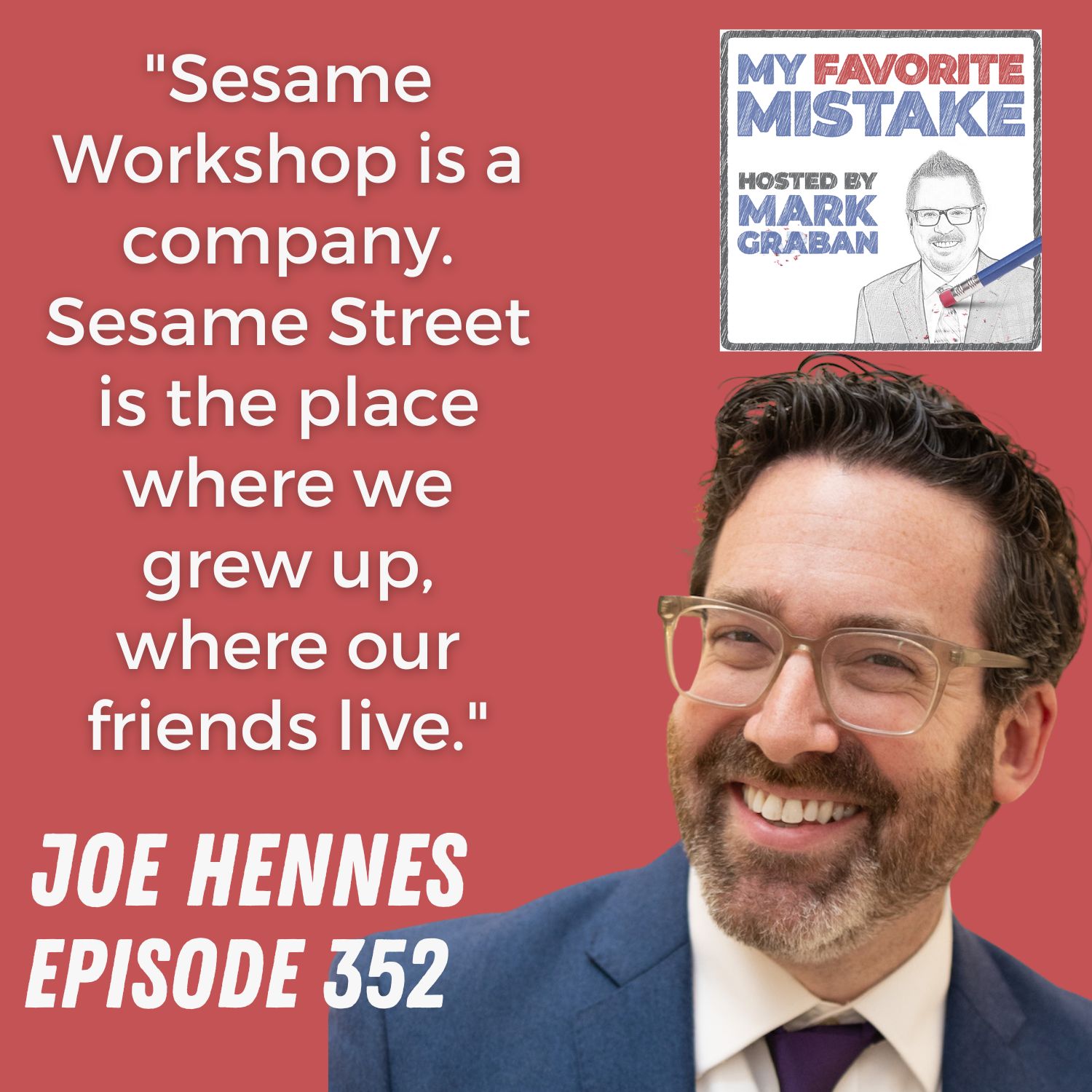
Let's also make a point that Sesame Street and Sesame Workshop are very different ideas. Sesame Workshop is a company. They have to do what's right for the bottom line. They have to follow the rules of their mission statement because they're a nonprofit. They have a board of directors to report to. There's a lot that goes into making that company run. Sesame Street is this place where we grew up, and our friends live there. Big Bird's there.
Mark Graban: The show and the place.
Seeing Yourself on 3,000 Screens
Mark Graban: Let's talk about some fun Muppets-related stuff. I'm wearing, for those who are just listening, an Animal T-shirt. I'm a drummer, so Animal is one of the characters that resonates with me. I'm laughing because it looks like Animal's trying to eat the microphone.
Joe Hennes: It's true. He would too.
Mark Graban: The way I'm blocking him, it seems like something Animal would do. We bought this Animal plush at Disney World.
Joe Hennes: And there he is, eating the microphone. Get him away from there, that's an expensive mic. You don't want him to do that.
Mark Graban: He'd eat his cymbals or his drums. Animal wanted to say hi and make an appearance. Before we met in person, I had seen you on the big screen at the theater because, I think it was the 50th anniversary of The Muppet Movie.
Joe Hennes: There was a 50, I think it was the 50th, that sounds right.
Mark Graban: What year was it? '79. 45th. Not 50. It was in 2024.
Joe Hennes: Math is hard. Three years didn't count. I knew I was going to make a mistake there.
Mark Graban: 45.
Joe Hennes: Yes, that was so surreal. I got an email from Fathom Events, the company that puts on these special screenings across the country. At first they asked me, would I be interested in shooting a video that would be shown before a screening of Labyrinth. Of course, I was excited to do it. At the last minute they said, “We're sorry, we're changing some things around. We're not going to do that anymore. But we've got The Muppet Movie coming up. Would you do that one instead?” I was like, even better. I'd much rather do The Muppet Movie than Labyrinth.
Labyrinth I think was going to be a 30-second, “Hey, I'm Joe Tough Pigs, here's a fun thing about Labyrinth. Anyway, here's the movie.” The Muppet Movie, they gave me five minutes or something. I basically recorded a video of myself talking about the movie, did some fun trivia, edited it together, sent it along. Then it's like, “Oh, hey, this is going to be seen in 3,000 theaters across the country.”
I live in New York. I have family in Cleveland, I have family in Las Vegas. This is one of those things where I sometimes do live things and my family can't see it. But this time they all went to the movie theater and got to see it on the big screen. What a thrill. To hear from other people that they went and saw it wherever they lived was super cool. I went with some friends. Seeing myself on screen is also surreal. My wife stands up in the theater and she's like, “This is him. He's on the screen.” For the four people who were in the theater with us.
Mark Graban: It probably was not a surprise to your friends. You brought them to come see the screening, which would have been totally up your alley.
Joe Hennes: If you think I could have kept my mouth shut beforehand and not told everyone I know, “Everyone go see this thing. I'm going to be there. I'm going to be on the screen.” That was a lot of fun. It's also cool that these big companies know who we are. This is something I come across a lot, of Tough Pigs being a website that, each of us who is working this thing, we're all working out of our own homes. We're not doing it in front of an audience. We forget that there are people out there who are actually looking at our website or listening to our podcasts or looking at our social media. Sometimes we're reminded, oh, right, we have an audience out there. We're not just shouting at the wall. Someone at Fathom Events was like, “Let's talk to these Tough Pigs guys.”
Fan, Critic, or Journalist?
Mark Graban: Does running a website built around The Muppets ever lead to any tension with The Muppets? They're owned now by Disney, like The Simpsons. The Simpsons always used to make fun of Disney and their lawyers. Are they happy with you writing about their products?
Joe Hennes: Thankfully, we've kept a very open and honest and professional relationship with them. We call them the big three. The big three is Disney, who owns The Muppets; Sesame Workshop, who owns Sesame Street; and the Jim Henson Company, who owns everything else. We have relationships with folks in all of the big three. When the times come, which they do, where we're still journalists, we're going to report on news whether it's good or bad. We're going to share our opinions whether they're positive or negative.
They understand that. They cannot control us. But as long as we do so in a professional manner, then we can stay in some good graces. There is of course going to be tension, because they're going to work on a thing and we're going to say it sucks, and then they're not going to be happy with us. It doesn't make any sense to me to lie about these things just so Disney will like us. That's not that important to me.
It also means that sometimes we get involved in some of the internal drama. The big example I can point to is in 2016, when we found out that Steve Whitmire was being released as the performer of Kermit the Frog and Matt Vogel was being brought in as the new Kermit. I worked directly with Disney, because I found out through the grapevine it was happening, and they were kind of thinking, “Well, we'll just change the performer, no big deal.” I went to them and said, “People are going to get really upset. You've got to say something.”
Mark Graban: Matt Vogel doesn't sound exactly like Steve Whitmire.
Joe Hennes: True. Well, Steve Whitmire doesn't sound exactly like Jim Henson. Let's remember that too. This was before we even knew, we hadn't heard anything from Matt yet. I worked closely with them on how we were going to word this report, when and where we were going to release it. We released it through Tough Pigs, so that if there were any follow-up questions, “We have the information we have, and that's it.” Disney was going to be no comment.
Of course it blew up. It completely blew up. Steve is on the news. We've got people talking on social media on the inside. The Henson family gets involved. It was such a huge story, and every single one of them was like, “Fun fact, this news was broken by a fan site. Here's the link to Tough Pigs.”
Mark Graban: Maybe we should call it a news site. Fan site, when I said it, I don't know if that's the right label.
Joe Hennes: It's not, and I don't really know what else to call us, because technically at our heart we are a fan site. But yes, we are more than just a fan site.
Mark Graban: A fan site might tend to be more just rah-rah. I'd be curious to go back. There's probably a review posted on Muppets Now that was saying, mixed bag.
Joe Hennes: I don't recall, to be honest. It is, this is a separate subject, but it is hard to not just be rah-rah, because we want the Muppet things to be good. I have written positive reviews of things that I now look back and can say, no, that is unequivocally a bad project. In the end, we all want the same thing, us as well as Disney and Sesame and Henson, and that's for these projects to be good. If we rah-rah every single project, then the quality is not going to, no one's challenging them. We need to make sure that we are celebrating the things that are actually good, and pointing out the things that are not, so that the next one will be better. That's our responsibility as a fan site, and how we can really show off our fandom in a way that is supportive and helpful.
The 50th Muppet Show Special
Mark Graban: When you say we want things to be good, from what we chatted before, we're in agreement that the new episode of The Muppet Show, this is where I got things mixed up, was the 50th.
Joe Hennes: That's how I knew right off the bat. I'm like, we couldn't have celebrated the 50th back then because we're doing the 50th now.
Mark Graban: The Muppet Show came first. The buzz, a lot of people thought it was really good. The mistake I think some people were making, and this is a polarized and politicized world, I'm not trying to be political about it, but people were going out of their way to criticize it. The mistake was saying, “Oh, clutching their pearls, some of the jokes were not exactly kid-friendly.” It's a mistake to think The Muppet Show is the same as Sesame Street.
Joe Hennes: Yes. Not only that, but a lot of these Disney projects, Disney bought the Muppets in the early 2000s. When the Muppets became a part of the Disney family, a lot of the content became a lot safer. The blue humor, the adult humor, is peppered in just enough to remind us what their roots are.
Mark Graban: It's more of a clever double entendre, maybe.
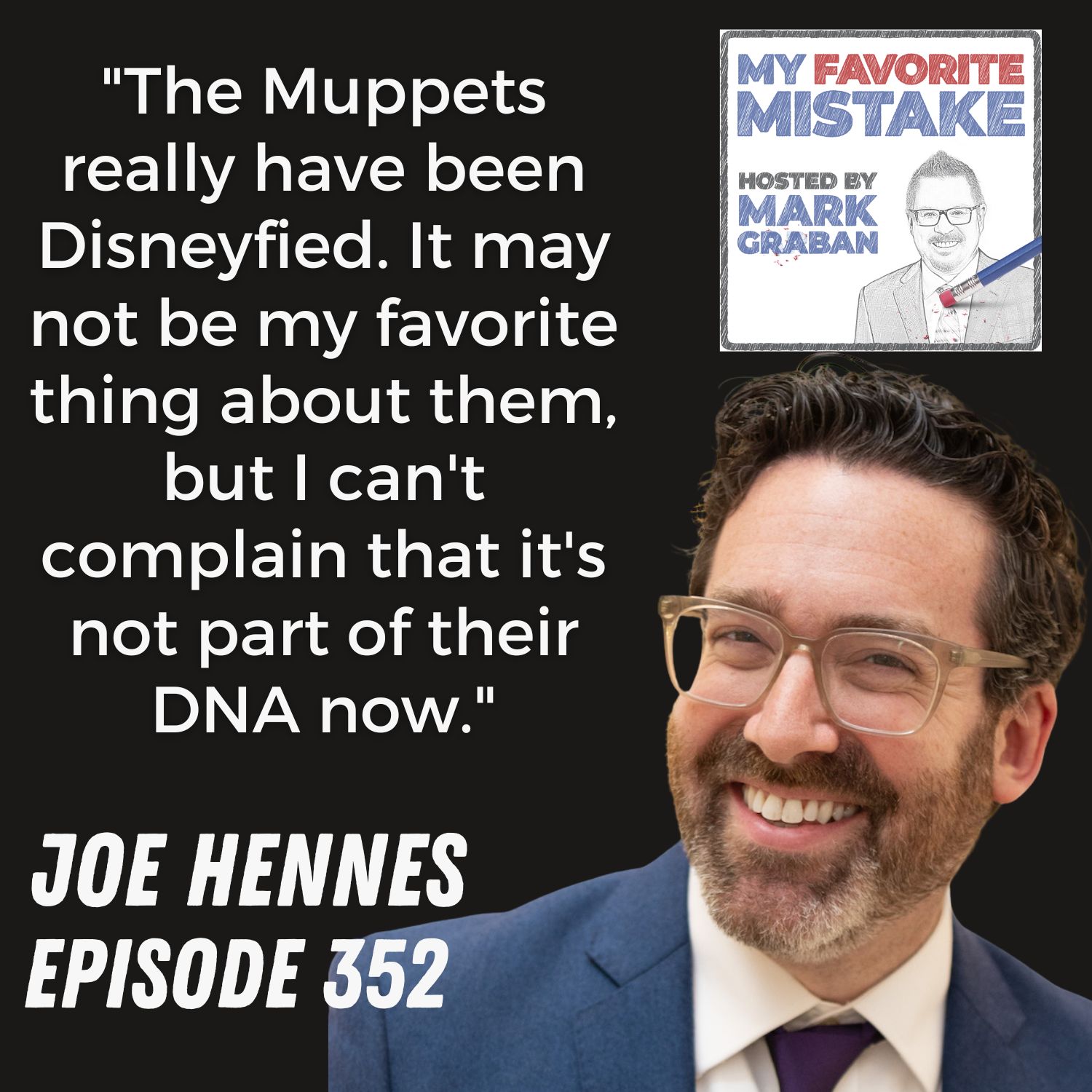
Joe Hennes: More so, and it always has been, for the most part. The Muppets really have been Disneyfied, and that's part of their evolution. It may not be my favorite thing about the Muppets, but I can't complain that it's not part of their history or their DNA now. A lot of people who haven't seen a lot of Muppet stuff before the Disney takeover, or even the years before that, the post-Jim Henson years, might just think that, “Oh yeah, Kermit the Frog, he's this nice guy,” and they put on this cutesy little Muppet Show. Then we're doing some adult humor, and it's like, whoa, whoa. Well, you've got to go back to the '70s. Go back to the '80s. You'll see that was there at the very beginning.
Sex and Violence Was the Original Title
Mark Graban: The bit of Muppet trivia I know: the original pilot was called Sex and Violence.
Joe Hennes: That's right. Sex was right in the name. And now, there's no actual sex in there. Let's just make that clear.
When Jim Henson was working on Sesame Street, doing this thing that he did not foresee himself doing, which was doing a kids' puppet show, he really wanted to branch out and do something for adults. I'm fascinated with this era in the mid-'70s, where Jim is still making his money from Sesame Street, he's busy with them all the time. With the other things he's doing, he's starting to put together a portfolio of, what else can these Muppet characters do?
If you watch the clips of Kermit the Frog on the Cher show, which are hard to find, you can see some diehard fans have probably seen a few things. Kermit wearing a tricorner hat, flirting with Cher. That's the famous one.
Or there's a great special called Out to Lunch. It is a Sesame Street/Electric Company crossover. That one is not out there to find, unfortunately. They took over the network for an hour, and they're just doing sketch comedy. The great thing about it is it's the Sesame Street characters doing The Muppet Show. You're seeing what Jim wants to do, and there's no real dirty humor.
With one exception. I'm getting my stories confused. There's another special called Julie on Sesame Street. It's Julie Andrews on Sesame Street. That one also is the Sesame Street characters doing sketches that are very Muppet Show style. One of them is Julie Andrews singing — I want to say it's “Hey, Big Spender” — with Cookie Monster. He's not singing, he's just there. She's legit doing a striptease for him. With everything she takes off, he then takes and eats. It's very sexy. Not what you expect from Cookie Monster. But it's great. So that stuff was there. Jim really wanted to get into that field with his puppets, and I think he ended up finding a happy medium with The Muppet Show in the end.
Mark Graban: If that Julie Andrews bit had been on The Muppet Show, Animal would have been a great character to be in that role.
Joe Hennes: Exactly. There's a lot of flirtation of female guests thinking Kermit is super handsome. Raquel Welch, and that kind of leaning into it.
Mark Graban: What would you say was the dirtiest thing from The Muppet Show series, where you say, “Oh, they couldn't do that today.”
Joe Hennes: I don't know about what they couldn't do today in that realm. There are things that they did back then that couldn't be done today, and it's more like, maybe you shouldn't have done that accent. The Raquel Welch stands out as one of the sexier episodes of The Muppet Show, for sure. It's what she was known for, so they really leaned into it. The other one standing out in my mind is the Rudolf Nureyev episode, the ballet dancer. He does a bit with Miss Piggy where he's in a sauna, like a steam room, wearing just a towel. She's in there too, and she's flirting with him, and they're singing “Baby It's Cold Outside.” But the roles are reversed. She's singing, “It's cold outside,” and he's trying to get out of, “I really can't stay.”
At the end of that sketch, he is half-naked in this whole thing. She's pulling on the robe that he's wearing around his waist. He's trying to get away, and he bolts, and she's left holding the robe. The camera pans over and there's a cutout in the wall in the shape of Rudolf Nureyev that he's run through. To me it's like, we could talk about sexy women left and right, but they went both ways on The Muppet Show.
Mark Graban: You might say a little bit of objectification, but people can Google. There's different commentary about moments. To your point, Disney+ has added some disclaimers about cultural depictions, and they do that with Disney films. They're not just singling out the Muppets.
Joe Hennes: It's better than erasing the history. I'd rather we point these things out and acknowledge them than ignore them.
Mark Graban: You could have a moment with kids about why we don't do certain accents anymore.
Why the New Muppet Show Special Worked
Mark Graban: Some of the commentary around the new episode of The Muppet Show, which we're all hoping is going to be a season, a reboot, let's all rewatch it so many times to bump up the data so the businesses involved say, “Yeah, we can make money making more of this.” A lot of the commentary was, “Finally. You've been trying to make The Muppets hip and modern. There was the mockumentary series on ABC. All we wanted was more Muppet Show. It was that simple.” What are your thoughts on that?
Joe Hennes: It's a great question, because for the longest time I was one of those people who said, “Absolutely not. You cannot replicate it.” Without Jim Henson, this creative genius who is at the helm, I did not believe this could be done. I didn't think that a company, whether it's Disney or someone else, could by committee make something like The Muppet Show.
Mark Graban: It would be Disneyfied, or as they say about The Simpsons, Flandersized about the characters, and just wouldn't be the same anymore.
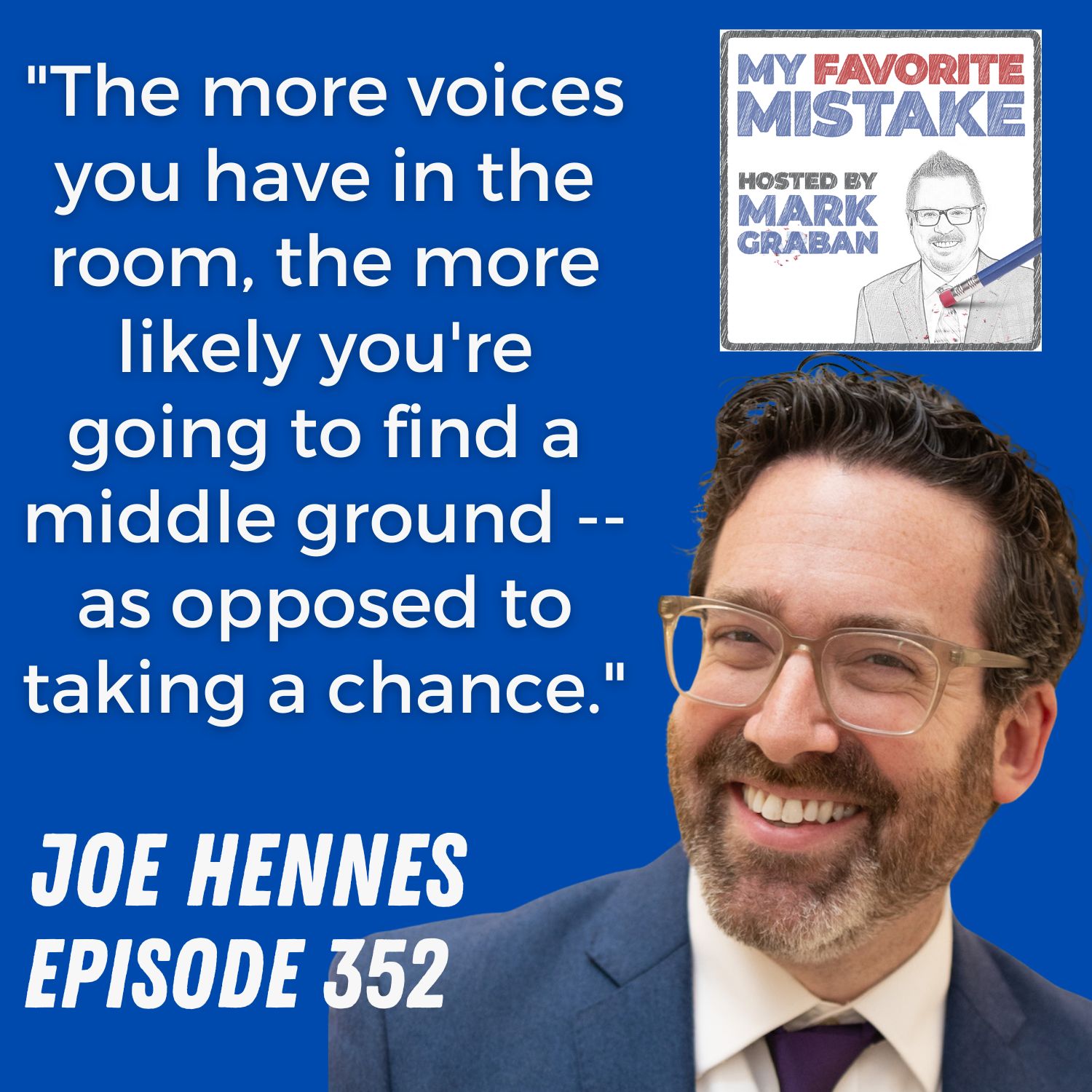
Joe Hennes: Just playing it safe. The more voices you have in the room, the more likely you're going to find a middle ground as opposed to taking a chance. On top of that, The Muppet Show came out at a time where variety shows were still a thing. They may have been on their way out by the mid-'70s, but that was a format that everyone recognized.
Look at the other attempts that The Muppet Show or The Muppets have made over the years. Muppets Tonight; actually even before that, The Jim Henson Hour, where now they're running a TV network. Muppets Tonight, now they're doing a TV show instead of a stage show. Muppets Now, we were just talking about, is kind of the YouTube version of what the sketch comedy thing would be like. Then getting out of that format for things like the mockumentary series or Muppets Mayhem. They kept trying to reinvent the wheel, and it wasn't going to happen.
It did get to a point where it felt like, well, the only thing left to try is to just bring back the old thing, the thing that everyone has been begging for for years and years. Just do it again. I am not going to lie, I was worried about it. Because if it failed, if it wasn't good, that's it. You'll never see The Muppet Show again. You will never see the inside of the Muppet Theater again, because they'll know it won't work. Thank God it worked. They had some sharp writers. The performers were on point. The fact that they took the time to recreate the theater, to rebuild old characters, there's so much love for the history in that show. I think all these things and more made it better.
Why Seth Rogen Was the Right Producer
Mark Graban: Seth Rogen as an executive producer, I don't know so much about what executive producers do, but is he someone who's a little protective, from what you know, of what The Muppet Show had been? Is he playing a role of maybe trying to push the network or Disney to do something that's not so by-committee?
Joe Hennes: Good question. I don't have any inside information. I've never met Seth Rogen yet. But looking at his history, the two projects of his that really stand out to me, when I heard that he was going to be an executive producer, it's like, “Absolutely, this is the guy.” The first one is The Studio. If you've watched The Studio on Apple TV, he is the star of that show, but he's also the executive producer. That is his show. It is so well produced. Attention to detail. That guy doing a thing for the Muppets, whatever it is, that is going to be quality.
The other thing is the Teenage Mutant Ninja Turtles Mutant Mayhem movie. He was an executive producer on that as well. What he did brilliantly there is he took the Ninja Turtles formula and he found a thousand different ways to improve on it. I'm a kid of the '80s. I grew up on Ninja Turtles. They mean a lot to me, and what he did with that was really incredible. Obviously he's coming at these franchises that he loves with this love and appreciation in his heart, and he is invested in making them as good to other people as they are to him. So yeah, Seth Rogen, totally a great choice for that role.
I don't know what his involvement is now that it's over. My hope is that he's knocking on Disney's door to say, “Hey guys, when are we doing the next one?” Maybe he's saying, “Okay, I set you up, go ahead and take the ball. I'm going back to the studio, I've got more work to do.” It's all just pure speculation. But yeah, Seth Rogen, I'm more of a fan now than I ever was before.
Why “Muppets Most Wanted” Didn't Land
Mark Graban: Maybe one other thing. In the different films, my wife and I are huge fans. The Great Muppet Caper is by far her favorite of the original three, including Muppets Take Manhattan. I love The Great Muppet Caper. When the new Muppets movie with Jason Segel came out, we loved it. But maybe this is a little bit unpopular opinion: we really loved Muppets Most Wanted, because we thought it was a caper film, and we really enjoyed the movie. In particular Constantine, the other plushie that we have in the house here. Not Evil Kermit.
Joe Hennes: His name is not Evil Kermit. A lot of people —
Mark Graban: Constantine. There are memes that have become Kermit. We loved the Constantine character, like the one thing. There's almost some meta humor where he has this reputation and he's boastful about being the world's number one criminal. But I was thinking about this earlier when I was thinking ahead to the episode: he does everything in a really half-hearted way. He's not that good of a criminal. He makes Miss Piggy mad. “Am I wearing a sign that says bother me?” He almost blows the whole thing, and he has to make it up to Piggy. There's humor in that, of course. Calling them the Mappets, getting all their names wrong. There's a lot of mistake-based humor, and almost meta humor there of, he didn't review the tapes like Ricky Gervais' character was: “You reviewed the tapes so you can impersonate Kermit.” There's a lot of mistake-based humor. He didn't get away with it either, so. Spoiler alert. Sorry.
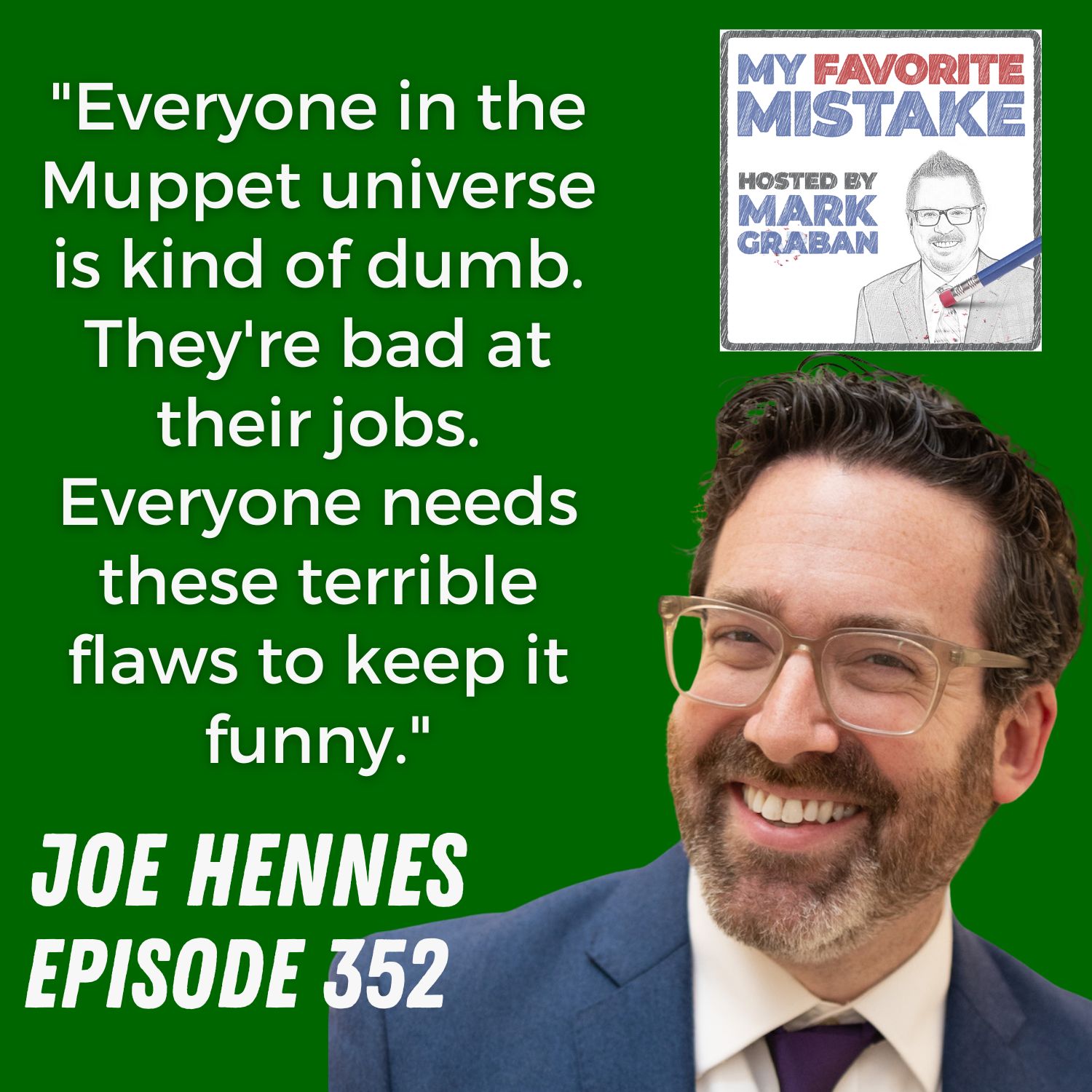
Joe Hennes: It's just fun that everyone in the Muppet universe is kind of dumb.
Mark Graban: They're too trusting, or both.
Joe Hennes: Everyone's dumb in their own way. They're bad at their jobs. That's great. Everyone needs these terrible flaws to keep it funny.
You said, is that an unpopular opinion that you love Muppets Most Wanted? I'll tell you now, it is not an unpopular opinion. It's an unpopular opinion to say you have seen the movie, because so many people have not seen this movie. The movie is fantastic. I love the movie. I like it more than the Jason Segel movie. We used to host these live events here in New York for years. Me and my Tough Pigs writing partner, Ryan Roe, we would host this show called The Muppet Vault. We would basically have screenings of Muppet clips and episodes and things like that every month. We did it for five years here in Brooklyn. We did a few of them that were related to Muppets Most Wanted because it was around that era. I remember a few times it would be a room full of Muppet fans. You're at the level of Muppet fans that you've left your home and paid a fee to sit in this room with us while we show you these clips. And show of hands, how many of you went to see Muppets Most Wanted in the theater? Eight hands go up.
Mark Graban: Poorly marketed, or —
Joe Hennes: I have so many beefs with the marketing of that movie. Here's the thing. Nobody would think of this stuff except for marketing departments and yours truly. You've got things like the title. The title stinks. The original title was The Muppets Again, which is funny. I could see why they didn't like it, but they were wrong. That's a great title.
Mark Graban: There's the song early in the film that is for that title. They're singing, “It's the Muppets again, it's the Muppets again.”
Joe Hennes: And you called your previous movie The Muppets, which is also a bad title. So just do The Muppets Again. It's hysterical. It's a great gag, and it's a shame that they got rid of it. Muppets Most Wanted means nothing. That was a bad title.
Number two, they took zero new photographs of the Muppets. If you go back and look at all the marketing materials, you've got new pictures of the human cast, Ricky Gervais and Ty Burrell and Tina Fey. You've got new pictures of Constantine, because he didn't exist beforehand. Everything else is stock photos. It's like some intern photoshopped these together. The marketing materials look cheap. They look like nobody cares.
The third thing, this is a harder thing to figure out how to fix. The 2011 Jason Segel Muppet movie came out, and there was this narrative of, the Muppets were gone, and now the Muppets are back. Of course, you and I know the Muppets were never gone. But to most people, it's like, “Oh yeah, my friends. Let's go see their new movie.” They didn't know how to transfer that to the next movie. A lot of people went, “Oh yeah, The Muppets. Didn't I just see this movie? They've always been here. I'll see the next one.” There was no real sense of urgency like there was for the previous movie.
All these things on top of each other, and nobody went to the theater. As a fan and as someone who runs a fan site, that was so hard to deal with. We're out there shouting about how great this movie is, how excited we are for it, and obviously people weren't listening to us, or not enough people were listening to us. To be told that this thing that we love was a bomb, and knowing that if there's a movie that's a bomb, that might mean that this franchise is not going to be doing anything new anytime soon, or anything big anytime soon. The double whammy of that and then the cancellation of the ABC series was really difficult for us. It felt like, well, maybe The Muppets should just be done forever. What are we doing here shouting about how great they are? Thank God that wasn't the case, but it felt like it.
Mark Graban: One other thing about Muppets Most Wanted before we wrap up. Even funnier at times than the movie, they did a lot of press, Ricky Gervais in particular. There are clips, and they're on YouTube. There's a playlist of Ricky Gervais and Constantine. Constantine as Constantine being performed by Matt Vogel, sitting there with Ricky Gervais the actor. Ricky Gervais seems to legitimately just crack up at different little Constantine things. You get the full Ricky Gervais laugh, and he's having trouble containing himself. That's fun to watch too.
Joe Hennes: I'll expand that idea, because I love seeing when these celebrities, you can tell these guys are so huge, they are choosing to work with The Muppets. This isn't someone begging Ricky Gervais to be a part of their project. Ricky Gervais is probably like, “I'm a fan, I want to be there.” Ricky Gervais doing press with Constantine, Jason Segel doing press with Walter, who was also a character he kind of co-created because he wrote the script. More recently, Seth Rogen doing press with Kermit and Piggy. Seeing the joy that they have getting to hang out with these characters, who, by the way, are real. They're sitting on the chair right next to him. They get to banter and improv together. What a joy that must be to get to do that. I just love seeing that joy on their face. They're obviously having fun, and you and I are having fun just watching them do it vicariously.
Mark Graban: It does bring a lot of joy. Sabrina Carpenter seemed to fall into that mold of being a very big star today. A very young star. She clearly didn't grow up on The Muppet Show like we did.
Joe Hennes: Probably not, but she was a Disney kid. She was on the Disney Channel when she was a young actor. I wonder if they ever had a, “Well, The Muppets are doing a thing, we're all owned by the same mouse, so we're going to collaborate a little bit.” I have no clue, but I like to think she was at least a fan beforehand.
Mark Graban: She seemed to be enjoying herself. Hopefully there's more to come.
The Case for Muppet Specials
Mark Graban: Our guest today again, Joe Hennes. The website is toughpigs.com. As we wrap up, is there any other random opinion or theory that you have about The Muppets that you'd want to share?
Joe Hennes: I wish I had something prepped for this.
Mark Graban: What about the straight-to-video movies era? Like The Muppet Christmas Carol —
Joe Hennes: Well, that was theatrical.
Mark Graban: That was theatrical. I saw them on video, but weren't there some that became straight to video?
Joe Hennes: Yes. There were a bunch of them. This isn't much of a theory or anything, but I think what you're referring to are things like Muppet Family — excuse me, Muppet Treasure Island. Muppet Treasure Island was also theatrical. But Muppet Classic Theater went straight to video. Muppets' Wizard of Oz went straight to video. This is like through the '90s into the early 2000s. There are all these, some of them are pretty okay, but a lot of them are not.
Part of me thinks we should go back to that. Now hear me out. A couple of years ago, we got Muppets Haunted Mansion on Disney+. A Gonzo vehicle, tied into the Haunted Mansion at the Disney parks. It was pretty good. It was a really good, fun special. The stakes didn't feel high. This wasn't, “We're reinventing The Muppets here.” It was, “We're just telling a fun story with these characters that you love.” Selling a little bit of merchandise, maybe it'll lead to more, whatever. I really think — and I'll add to that, this new Muppet Show episode, which technically is also a special.
The Muppets live really well in these specials. They really can spotlight these characters in an interesting way without justifying, “Well, we need $20 million to make a feature film.” As much as I would love to see more Muppet movies, I really would, this feels like a no-brainer. Why isn't Disney+ green-lighting two, three, four Muppet specials a year? I don't need a whole season of anything. I don't need them to do another Muppets Mayhem or a full season of The Muppet Show. I would love to see them, don't get me wrong. But if I heard that Disney was like, “Look, this Muppet Show thing was a big hit, but they're expensive to make, so we're just going to do them seasonally, and that's it,” oh my God, I would be ecstatic. Then they could take the time to do it right. They wouldn't feel obligated to keep it under 30 minutes, because this thing's never going to syndication. It keeps the brand alive. It allows them to do more interesting things with the characters. We don't have to have the whole cast in the whole thing every single time. Don't worry, they'll be in the next one. I think there's a lot of possibilities there, without them being forced into something that might be a little bit too big for their current state of popularity.
Mark Graban: All right. Well, Joe, hey, thank you. This has been a lot of fun. Joe Hennes, toughpigs.com again, is the website. I wish I'd prepped this. I don't have a Muppet joke or reference or callback to end it on.
Joe Hennes: How dare you. How dare you not have a Muppet reference at the ready.
Mark Graban: Let's just picture everyone can think of Waldorf and Statler heckling this episode at the end. How's that?
Joe Hennes: Yes. Insert your —
Mark Graban: Insert your own joke here.
Joe Hennes: Terrible episode, Mark. Awful. Boo. Throwing tomatoes at you.
Mark Graban: We'll see you for the next episode.
Joe Hennes: Thanks for having me, Mark. That was a blast.
Mark Graban: Thanks, Joe.