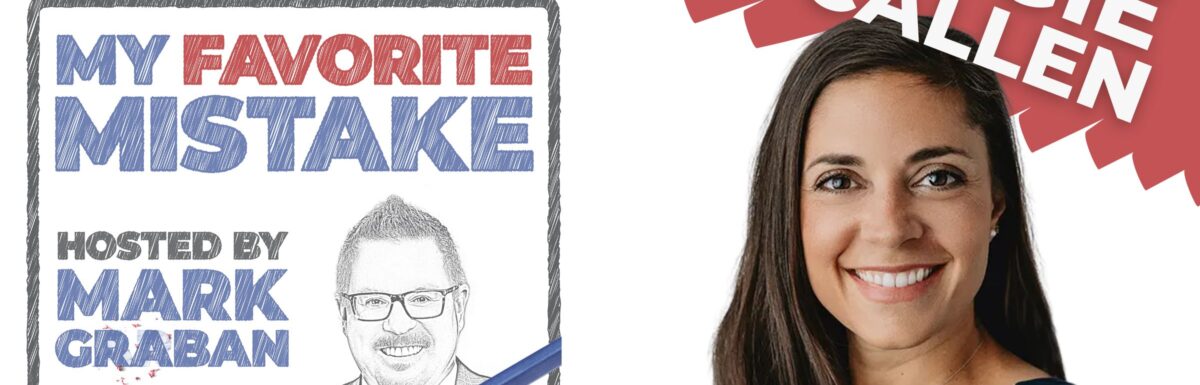
In this episode of My Favorite Mistake, Angie Callen shares why choosing engineering — despite being wired for people — became a defining learning experience that shaped her career, confidence, and purpose.
Listen:
Check out all episodes on the My Favorite Mistake main page.
My guest for Episode #334 of the My Favorite Mistake podcast is Angie Callen, founder of Career Benders, host of the No More Mondays podcast, and author of Scary Good: Discovering Life Beyond the Sunday Scaries.
Angie shares why choosing engineering — despite being wired for people — became her favorite mistake. What looked like a wrong turn at first became a powerful learning experience that shaped her confidence, clarified what meaningful work really meant to her, and ultimately led her to help others rethink their own career paths.
In our conversation, we talk about career misalignment, the pressure to follow “safe” paths, learning through action instead of perfection, and how mistakes that don’t fit us can still prepare us in unexpected ways. Angie also reflects on empathy versus compassion, the Sunday Scaries, and why so many capable people stay stuck longer than they need to.
This episode is a thoughtful look at how mistakes can become catalysts for growth — not failures — when we’re willing to reflect, learn, and make intentional changes.
Themes and Questions We Explore
- What's your favorite mistake?
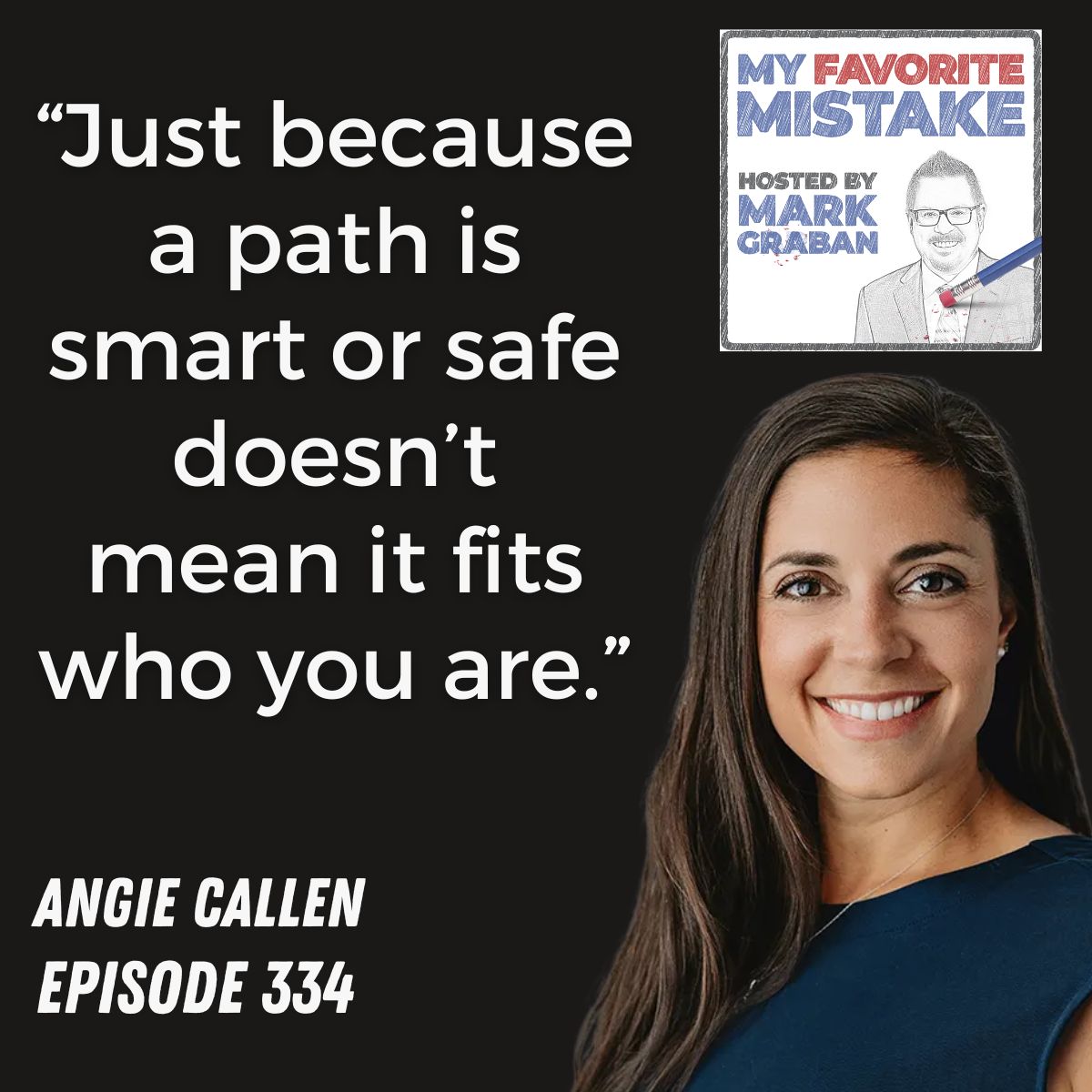
- What happens when you choose a “safe” or prestigious career that doesn’t fit who you really are
- How becoming an engineer shaped Angie’s thinking — even though it wasn’t the right long-term path
- The difference between empathy and compassion, especially in leadership and coaching
- Why so many capable people stay stuck in roles that drain them
- How confidence is built through action, not certainty or perfection
- What the “Sunday Scaries” really signal — and how to respond to them
- How mistakes that feel personal are often shaped by systems, expectations, and culture
- Why career misalignment isn’t failure — and can become a powerful source of learning
Scroll down to find:
- Video version of the episode
- How to subscribe
- Quotes
- Full transcript
Find Angie on social media:
Watch the Episode:
Memorable Moments from the Conversation:
Click on an image for a larger view

Subscribe, Follow, Support, Rate, and Review!
Please follow, rate, and review via Apple Podcasts, Podchaser, or your favorite app—that helps others find this content, and you'll be sure to get future episodes as they are released.
Don't miss an episode! You can sign up to receive new episodes via email.
This podcast is part of the Lean Communicators network.

Other Ways to Subscribe or Follow — Apps & Email
Angie Callen's Favorite Mistake
Introduction to Angie Callen
Mark Graban: Hi, welcome to My Favorite Mistake. I'm your host, Mark Graban. I'm your host, Mark Graban. Our guest today is Angie Callen, founder of Career Benders, host of the No More Mondays podcast, and author of the newly released book, Scary Good: Discovering Life Beyond the Sunday Scaries, which was released on January 8th. Before I tell you a little bit more about Angie, welcome to the podcast. How are you?
Angie Callen: Thank you for having me. I am excited both to be here and for all of the aforementioned things that have just come out into the world. So thanks for having me.
Mark Graban: Congratulations and Happy New Year. Angie is an engineer turned career coach who helps high-performing professionals rethink success when the path they followed stops feeling right. Her work and her book focus on what happens when plans fall apart and how confidence is built through action, not perfection. That sounds like a perfect fit for the themes on this podcast, Angie.
Angie Callen: I have many mistakes that I could choose to be my favorite because every single one of them led somewhere. It's a very fitting conversation for sure.
The Favorite Mistake: Choosing Engineering School
Mark Graban: We've all made mistakes. A lot of guests say it is difficult to answer the question, so I'll go ahead and throw the key question right at you here: What's your favorite mistake and why?
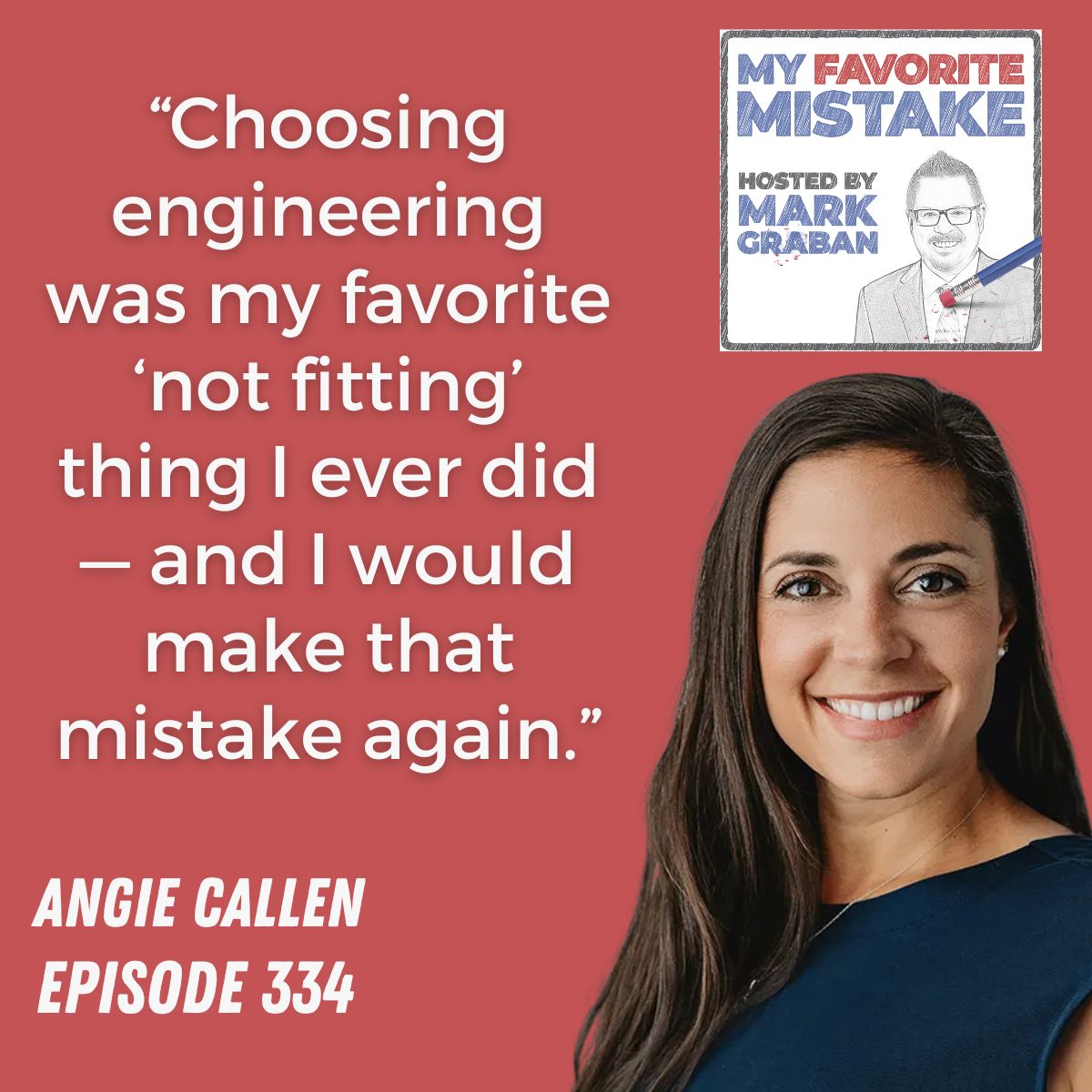
Angie Callen: This has actually been floating around in my head on and off all day because there are several that I could choose from. Ultimately, I think the one that really set the stage was choosing to go to engineering school. I say that because I call myself a former engineer who loves people. Yes, that is exactly as weird as it sounds, but that's also why the word “former” is in front of engineer. There are a lot of reasons why I love that mistake, and I actually would make it again, to be honest. But ultimately, it is the favorite “not fitting” thing that I did in life.
Mark Graban: I'm an engineer. I almost got out of engineering as a student to go study business and economics. One way of thinking about a mistake is that it doesn't mean a tragedy or a disaster, but it turned out differently than you thought. So why choose engineering school?
Angie Callen: As a newly published author, it's really interesting to talk about things I've just written about. Obviously, I would not have the book I have had I not been a former engineer who loves people. The primary reason I went to engineering school is because my dad was my math teacher in high school. He was a 40-year tenured high school math teacher.
As a high performer, I recall being very self-conscious about the fact that I did not have a clear career vocation or aspiration as an 18-year-old. My dad said to me, “Angie, you're good at math and science. Why don't you go to engineering school?” I didn't want to disappoint my dad and had no better idea, so I listened to him. In researching engineering disciplines, I chose civil engineering because, not joking, it's the one where you get to talk to people the most.
Mark Graban: You think so? Because I think of civil engineering as projects and construction. I remember friends of mine who were music majors looking at the course catalog and finding a course in the civil engineering department called literally “Concrete,” which they thought was hilarious.
Angie Callen: That was a really fun class, by the way.
Mark Graban: It's kind of a liquid, right? Concrete?
Angie Callen: How nerdy do you want to get? Because it's actually cement, aggregate, and water mixed up as concrete. So when you hear somebody refer to a sidewalk as cement, they're wrong.
Mark Graban: It's concrete. That's why I'm not a civil engineer.
Angie Callen: These are the fun facts that make me glad I went to engineering school. I know so much more about myself now, which is why going to engineering school was a mistake, but I could only work with what I had at the time. I realized that civil engineering was a more communication-based engineering because of the level of collaboration and projects. I also realized there was a certain level of applicability in that real-world aspect of it that is still weaved into me today.
The Rollercoaster to Entrepreneurship
Mark Graban: A mistake quite often brings unexpected benefits career-wise. Did you pursue an engineering job right out of school? How long did you stick with that before you thought this wasn't the right path?
Angie Callen: When you go to Carnegie Mellon and study engineering and pay for it yourself, you don't change your major when you're a junior. I actually practiced for about seven or eight years, primarily in land development. After college, I moved to Boston, learned how to ski in New England, came to Colorado on vacation, and realized I could live out here. I got to transfer here through the company I worked for.
Mark Graban: You mentioned earlier entrepreneurship. I feel a similar background; I wasn't exposed to entrepreneurship until business school. I think engineering tees you up for all sorts of other careers.
Angie Callen: I have yet to be proven wrong that social engineers who end up not loving the discipline of engineering practice make excellent entrepreneurs. It tends to be because of the problem-solving and analytical thinking paired with strong curiosity and communication skills. That creates a real hotbed for ideation plus implementation.
Mark Graban: Carnegie Mellon nowadays is known for robotics and I'm sure there are all kinds of robotics startups still coming out of there.
Angie Callen: Oh yeah. When I was there, the big thing was we had wireless on campus because they invented it. That predisposed me to high technology adoption and curiosity, which is definitely useful as we've moved from traditional to digital and now digital to AI.
Mark Graban: Were there steps in between the engineering job and starting Career Benders?
Angie Callen: This would be chapters four through eight of the rollercoaster that is the career change. I left engineering in the summer of 2010 on the heels of the Great Recession. I moved to Colorado and started work on September 8th, 2008. A week later, Lehman Brothers crashed, and everything they had set me up to do fell by the wayside. I stuck it out for a while, but it was a wake-up call.
I jumped off that career change precipice with not so much as a little dinky parachute. I spent a year exploring random things. I ran a single-artist gallery—talk about baptism by fire going from a worldwide engineering firm to a gallery. That is where I got my taste of small business. I landed in the non-profit sector for about six years, four and a half of which I ran an organization as an Executive Director. All of those things set me up to be ready to start my own business in the coaching space, and that's when Career Benders was eventually born eight years ago.
Coaching Technical Minds: Empathy vs. Compassion
Mark Graban: Are clients drawn toward you because they fit that profile of going from technical fields into something else?
Angie Callen: There are a couple of different avatars. One is technical people who want to develop professionally or conduct an intentional job search. They feel like as a former engineer, I can understand their nerd. I definitely cornered the software technology market since I live in a Colorado tech hub. Being a former engineer who loves people means I'm pretty extroverted. Working with more introverted engineers to help them build communication skills has been interesting. I don't have empathy for an introverted engineer who is interviewing; however, I have compassion and can support the communication style.
Mark Graban: I want to play word nerd for a minute. The difference between empathy and compassion is interesting. Saying you don't have empathy for these introverted engineers means it's hard to put yourself in their shoes because you are an extrovert, right? It doesn't mean you don't care.
Angie Callen: Exactly. Empathy can only go so far if you can't directly understand the experience. I can't put myself in your shoes because there is a blocker there, but I have compassion for those differences and want to help you bridge the gap.
Mark Graban: I think the words empathy and sympathy sometimes get confused. Sometimes we can only stretch the boundaries of putting ourselves in someone else's shoes so far.
Angie Callen: I agree, but I also think that doesn't mean you can use that as an excuse. There are still ways to figure out how to understand each other despite those things.
Understanding the Sunday Scaries
Mark Graban: Let's talk about the book, Scary Good: Discovering Life Beyond the Sunday Scaries. What are the Sunday Scaries?
Angie Callen: Sunday Scaries have become a corporate or workforce term for Sunday night anxiety, fear of the week, or dreading Mondays. Statistically speaking, just about everybody experiences it. On average, it's 36 times a year.
Mark Graban: It's closer to 70%.
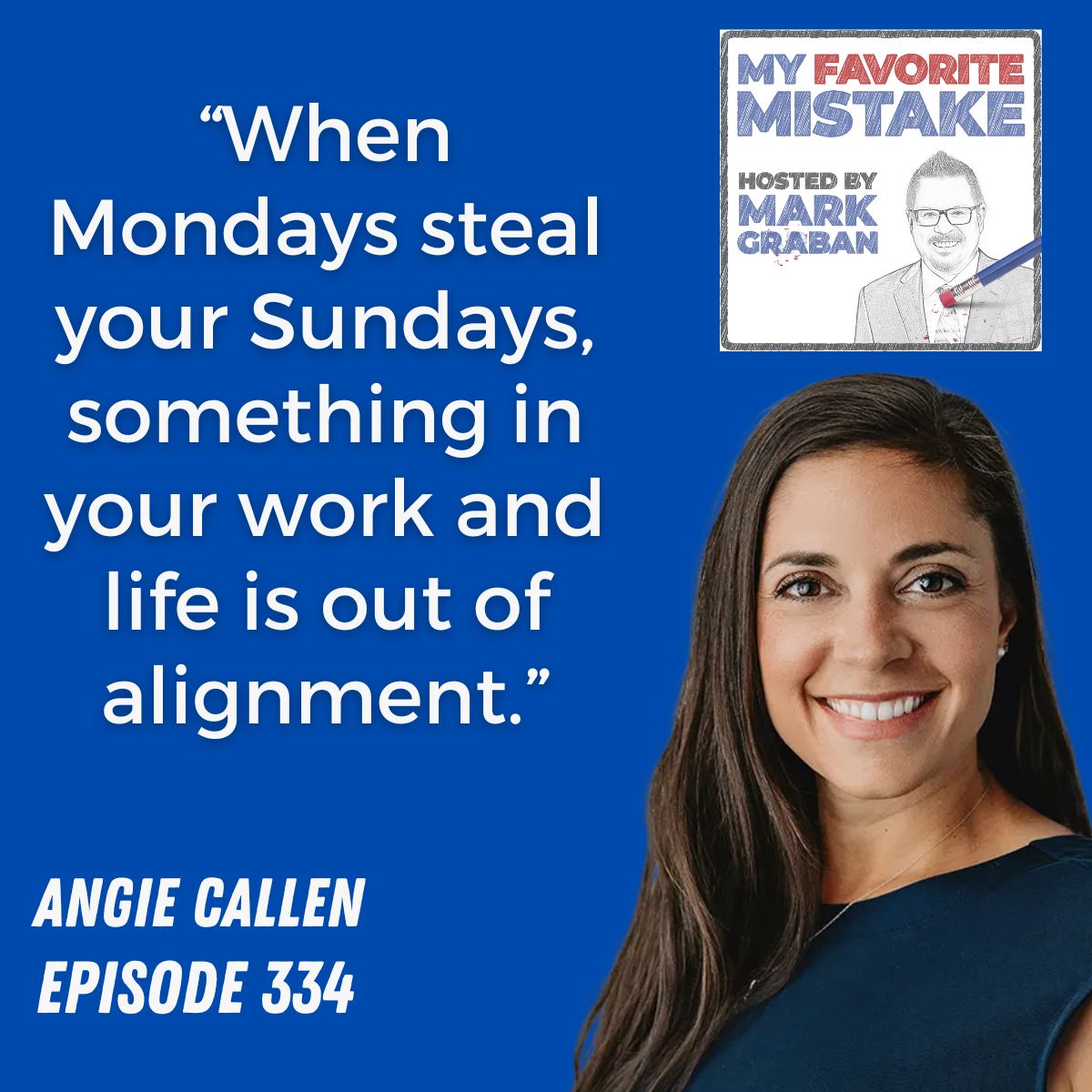
Angie Callen: Thank you for that. Basically, we allow Mondays to come in and steal our Sundays. If that is happening to you 36 times a year, there's something in your work and life combination that is out of alignment. The book explores what it means to have the Sunday Scaries and go on a journey to alleviate them.
Mark Graban: What are some of the common symptoms where it becomes a problem?
Angie Callen: When it turns into true anxiety or inability to be present right now because of what you know is coming. I've had people say, “I just want my joy back.” There is a totally different mentality to saying, “I'm going to intentionally sit down on Sunday and spend 15 minutes planning my Monday,” versus doom-scrolling your work inbox because you're afraid of what's going to pop up.
Mark Graban: What are the situations where somebody needs help managing the symptoms versus looking for the root cause—like, am I in the wrong role or career?
Angie Callen: It could be any or all of those things. I explore a lot of those in the book because I think I experienced most of them. A lot of it comes down to your individual values and purpose and making sure that is aligned and intentional. In our work, we are very susceptible to falling into default or mediocrity.
Therapy vs. Coaching: Finding the Right Help
Mark Graban: 20 years ago, I was very unhappy in a job. Through the company EAP, I talked to a therapist who was blunt and said, “The things you're talking about aren't a ‘you’ problem. You need a career coach, not a therapist.”
Angie Callen: There's a lot of correlation there. We either don't realize or don't want to admit that we might be in a career that isn't a fit, so we automatically think it's us. I've had people come to me saying, “My therapist said I need a career coach because this career is so out of alignment.”
Here is a tool: red light, yellow light, green light. If you are green-light satisfied the majority of the time, you're doing something right. If the majority of your days are falling in the red zone—more than one red zone day a week consistently—it's time to do something about it. That could mean making a change, or it might be something you have to change internally, like boundaries or perfectionism.
Mark Graban: Do you often make the suggestion of reaching out to a mental health professional?
Angie Callen: Yes. I joke that I have an honorary therapy degree after 10-plus years of coaching, but there is a level of clinical intervention I am not equipped for. Some people wait too long to make a change. They choose a career coach, but they are so far over the curve mentally and emotionally that they need clinical intervention first to work through psychological barriers.
Mark Graban: There might be a stigma where people think it's more acceptable to get a coach than a therapist.
Angie Callen: Studies show people are more likely to seek out coaching instead of therapy because of the stigma. Fundamentally, therapy is about reconciling the past, whereas coaching is about starting where you are and moving forward.
No More Mondays & the Office Space Inspiration
Mark Graban: Your podcast is No More Mondays. It makes me think of the movie Office Space.
Angie Callen: That's exactly what it was inspired by. We were trying to come up with a name and someone mentioned a movie quote. “Case of the Mondays” became “No More Mondays.” It just clicked like that.
Mark Graban: You've got to say it that way: “The Moondays.”
Angie Callen: Exactly. The TPS report will live on in infamy. There may or may not be a reference to that in my book, like in the first two paragraphs.
Mark Graban: The idea of “Thank God It's Monday” is sadly rare, isn't it?
Angie Callen: Yes. The whole idea is to explore the way we live and work now and make sure we're doing it on our terms. If you have done that, you will have “no more Mondays”—not because you aren't waiting for the end of the week, but because it doesn't matter what day it is. Work should complement your life, not compete with it.
Generational Shifts in the Workforce
Mark Graban: I wanted to ask about generational differences. Is it a new generation having a different view, or does the older generation forget what it was like to be younger?
Angie Callen: Generally speaking, there is an interesting convergence of factors shifting the future of work. Older Gen X and Baby Boomers had societal norms where you go to work Monday through Friday and retire at 62 with a pension. They didn't have the Sunday Scaries because they weren't aware enough to have them; there was no other way to be.
The Great Recession, the introduction of millennials, and digital transformation radically changed the way we work. Now, we have generations who demand autonomy and agency. I am the youngest Gen X you can be (born December 1980), so I have Gen X tendencies but am influenced by the proximity of millennials.
Mark Graban: It's hard to untangle all those variables.
Angie Callen: We're going through a cycle again with the shift from digital to AI. It's interesting how that changes the work environment. You might have a 54-year-old leader who has great communication skills but doesn't understand AI, and they have to empower their 23-year-old new grad to run with it.
Mark Graban: This introduces more triggers for Sunday Scaries.
Angie Callen: Yes. The opportunity we have is to be way more intentional, thoughtful, and deliberate about how we work and live.
The Writing Process: Confidence Through Action
Mark Graban: One last question. As an author, what's something you learned along the way that surprised you?
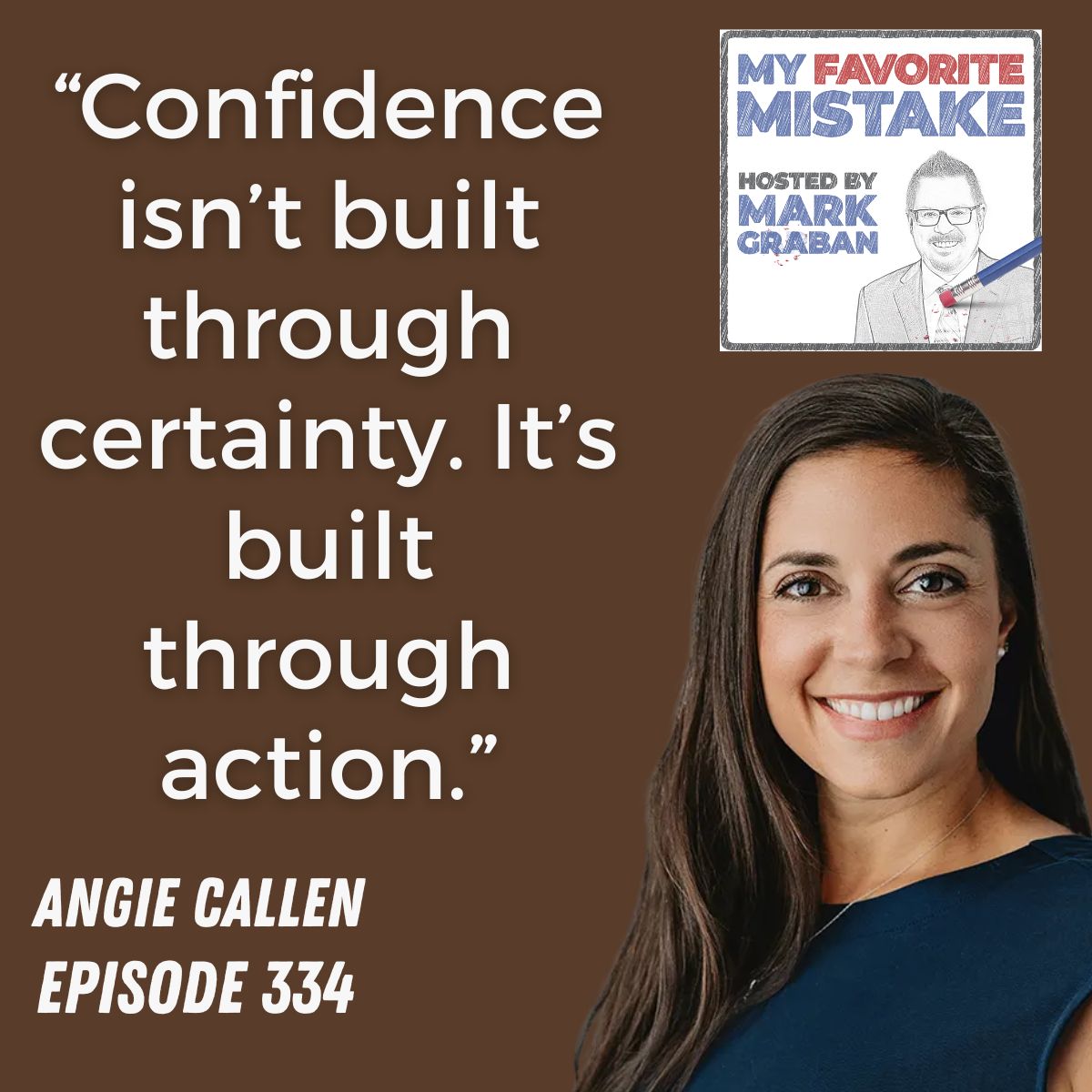
Angie Callen: You actually said something in your intro that falls into that category: “Confidence is built through action.” I had been trying to write a book for years. About three and a half years ago, I hammered out a 20,000-word memoir but realized that wasn't what I wanted to do. I write a weekly newsletter called Combating the Sunday Scaries. Around the 200th edition, it hit me: I have an audience and a perspective.
I analyzed the newsletters and teased out common themes. The one that surprised me the most was “building confidence through action.” It validated that everything I talk about supports this theory.
Mark Graban: I love that phrase. You can't think your way into being a better writer.
Angie Callen: If we're talking about favorite mistakes, if you have the confidence to act, you can be sure there's going to be a mistake in there. However, if you look at a mistake as a learning experience instead of a failure, it's completely different. Failure, loosely translated, is a learning experience. We don't grow unless these mistakes happen.
Mark Graban: That is a perfect note to end things on. Angie Callen, thank you for being here today. Check out the show notes for links to the book, Scary Good, and the podcast No More Mondays. Thanks again for joining us.
Angie Callen: Thank you for having me.