
Listen:
Check out all episodes on the My Favorite Mistake main page.
My guest for Episode #336 of the My Favorite Mistake podcast is Amy Rasdal, founder of Billable at the Beach and author of Land a Consulting Project Now. Amy left a successful corporate career to start her own consulting business—and went on to build multiple six-figure businesses while helping hundreds of others do the same.
In this episode, Amy shares her favorite mistake from the early days of consulting: undercharging for her work, even when she knew she was worth more. In a moment many listeners will recognize, Amy describes how fear showed up at exactly the wrong time—causing her to say a lower number than she had planned when asked about her rate. That experience became what she now calls a “gateway mistake,” opening the door to deeper reflection about confidence, pricing, and the hidden beliefs that hold professionals back.
We talk about why so many capable, accomplished people struggle to charge what they’re worth, how fear and uncertainty influence pricing decisions, and why selling out your time at a discount can actually limit long-term success. Amy also shares practical insights about consulting, capacity, pipelines, and the importance of leaving room for higher-value work—along with lessons she now teaches others through Billable at the Beach.
This conversation is especially relevant for anyone considering a move from corporate life into consulting, freelancing, or independent work—and for anyone who’s ever struggled with the uncomfortable question: “What should I charge?”
Themes and Questions:
- What led Amy to undercharge for her consulting work—even when she knew her value?
- How does fear show up in pricing conversations, especially for new consultants?
- Why do so many accomplished professionals struggle to “sell themselves”?
- What Amy learned once she started confidently stating her real rate—and how clients responded
- The hidden cost of selling out your time at a discounted rate
- Why underpricing can block higher-value opportunities and long-term growth
- The difference between being “busy” and building a sustainable consulting business
- How much time consultants should realistically spend on billable work vs. business development
- Why this mistake became a “gateway” to deeper self-awareness and better decisions
- Practical advice for people transitioning from corporate roles into consulting or independent work
Scroll down to find:
- Video version of the episode
- How to subscribe
- Quotes
- Full transcript
Find Amy on social media:
Watch the Episode:
Memorable Moments from the Conversation:
Click on an image for a larger view


Subscribe, Follow, Support, Rate, and Review!
Please follow, rate, and review via Apple Podcasts, Podchaser, or your favorite app—that helps others find this content, and you'll be sure to get future episodes as they are released.
Don't miss an episode! You can sign up to receive new episodes via email.
This podcast is part of the Lean Communicators network.

Other Ways to Subscribe or Follow — Apps & Email
Amy Rasdal's Gateway Mistake: Underpricing Professional Services
Mark Graban: Hi, I'm Mark Graban . Welcome to My Favorite Mistake . Our guest today is Amy Rasdal . She's the founder of Billable at the Beach . Amy made a bold leap 15 years ago, leaving behind a successful corporate career to launch her own consulting business . Since then, Amy's built not just one, but multiple six-figure businesses while helping hundreds of others do the same . She's also the author of the book Land a Consulting Project Now, and she brings deep experience from industries like internet, software, and medical devices . So Amy, welcome to the show. How are you?
Amy Rasdal: I'm good. Thanks for having me today, Mark .
Mark Graban: It is going to be great to be able to talk about the type of work you do and your book and more, but as we always do here, what's your favorite mistake?
Amy Rasdal: I've made so many by this point that it was very hard to choose a favorite, but my favorite mistake was when I first started consulting on my own . I had always been a corporate employee . Whether it was a huge corporation or a smaller startup, I'd never worked for myself, so I didn't know for sure what to charge . I did my homework . I had a dollar amount . I was confident, I knew I was worth it .
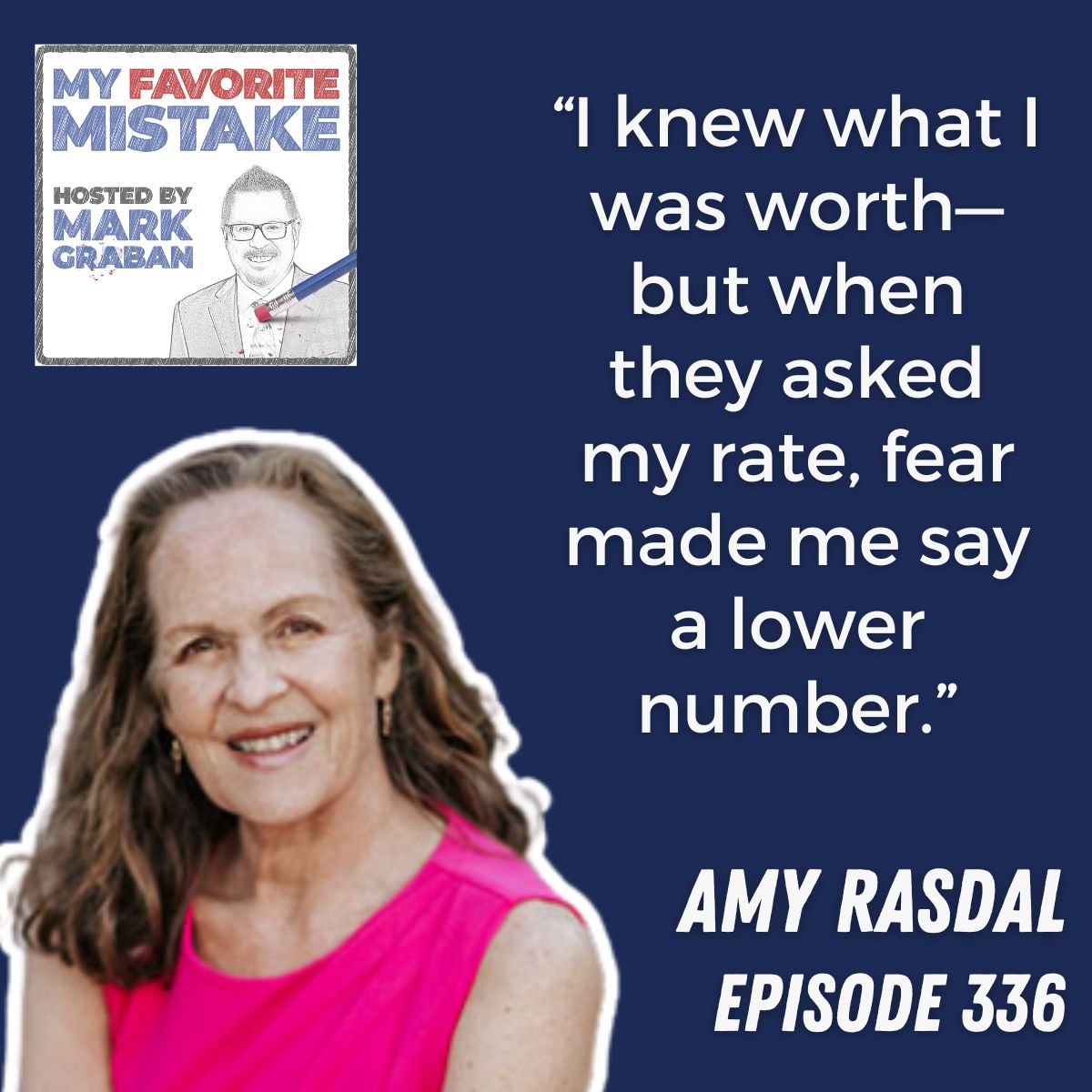
I started my consulting business and things were going along great . I get a couple years in and my pipeline starts to slow down a little bit . At first, when I would have a dry spell, it would be, “Great, let's take a little time off” . I've been doing the corporate grind for so long . But my dry spell starts to stretch out . About this time, I'm pregnant with my first child, so it's no longer just two carefree adults; we're going to have a mouth to feed . My dry spells are stretching out . I finally reached this great lead . I'm at the company, I'm meeting with them, and we're talking about this great consulting project . I'm super excited because I really needed the work . I knew what I was worth, I was confident, and even with all of that, we get to the point where they say, “What's your rate?”
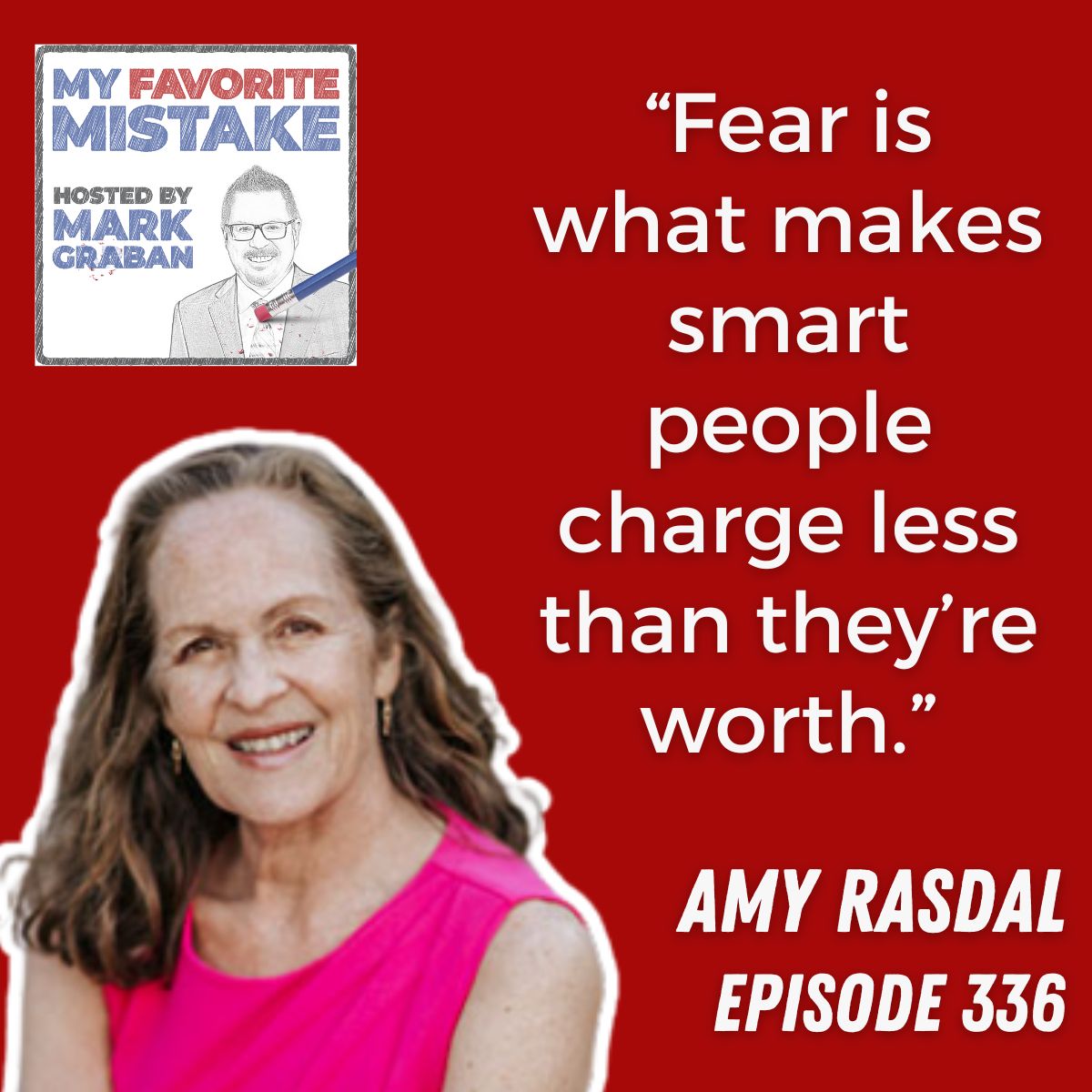
Even though I thought I was so confident, I found my mouth spitting out a dollar amount that was lower than what I knew I was worth . I realized later that what drove me to do that is fear . It's that fear that I'm going to be sitting across from you, Mark, and I'm going to say $200 and you're going to laugh in my face .
Overcoming the Fear of Selling Yourself
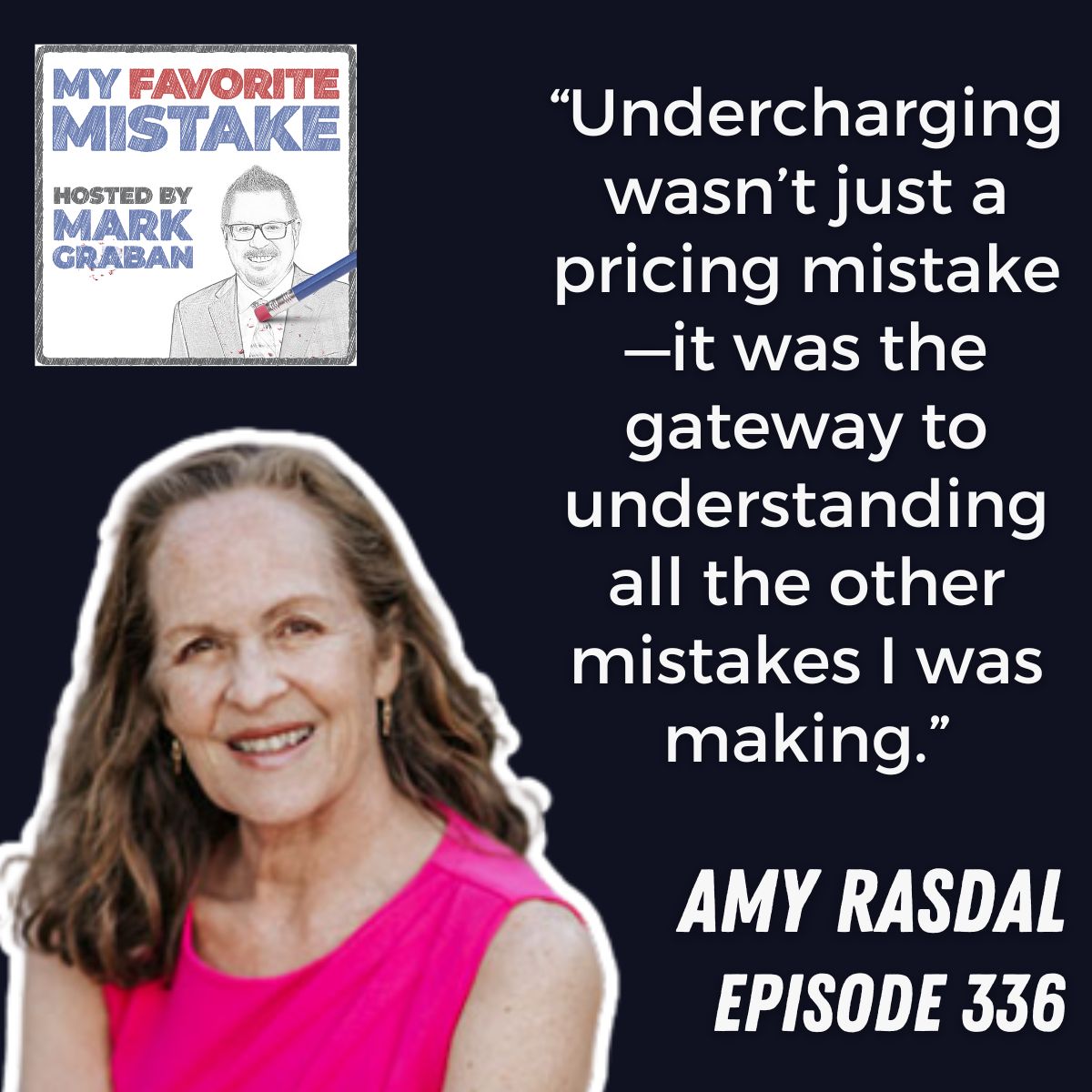
Amy Rasdal: Now the reality is, it's a professional setting . Is that really going to happen? As I started working with other people through Billable at the Beach, helping them start their own consulting practices, almost everybody was doing this . Across the board, high-level, accomplished professionals have this weird sort of fear of selling yourself—that you're not worth it . In a way, that was kind of my gateway to really digging into my other mistakes that were really limiting my forward progress in building my consulting business . That's why it was my favorite, because I feel like it was the gateway mistake . It led me to start understanding my mistakes, why I was making them, and really putting things in place to make sure that I didn't do it again .
Mark Graban: Was there a certain spark where you realized, or a certain spark where you're like, “Oh, I am making these pricing mistakes”? What woke you?
Amy Rasdal: Yes, because once I finally had the confidence to start saying my number, what it really was worth, nobody ever batted an eye . I started putting my performing arts hat on . I tell people now that you have to practice it, rehearse it, and approach it a little bit like—even if you don't feel it—it's an act of some sort. Pretend the confidence . Once you start doing that, then you'll gain the confidence . I realized there were certain mistakes that almost everybody made . Not charging enough, or wanting to immediately sell out all their capacity at a discounted rate . I thought, well, we better dig a layer deeper and figure out why are people doing that so we can stop them .
Mark Graban: Do you find, well, the whole question of setting a rate is complex . But I guess there is a real risk if we set a number that's way too high, you won't get work . I've been ghosted by potential clients, which makes me worry, “Did I make a mistake or does that just happen?”
Amy Rasdal: Most people have been, but it's true that sometimes people just can't afford it . The whole idea of figuring out how you set your rate can be a tricky one . I think that's where we start as consultants . I'm not afraid to do an hourly rate . I think it's perfectly fine as you get started with your consulting to figure out what you're doing . The whole idea of pricing is really complex . I was just listening to another podcast that was talking about micro offers—selling a talk or a training—to scale into a smaller offering so that somebody can get into it .
Why You Should Not Sell Out Full Capacity
Mark Graban: If you're 100% busy or overwhelmed at that low rate, that should be a pretty clear signal you're not asking enough . You could probably be more profitable and less stressed by charging a higher rate and being a little less busy .
Amy Rasdal: I completely agree . What I discovered is people especially earlier in their consulting career who want to sell their capacity out right away are really looking to lock in stability . They're scared because they don't have that paycheck . But they don't realize that by selling out all your capacity, you're not leaving room for other higher-paying clients . I want you to be a superhero with superpower making super pay . I want you to come in, do your really important high impact work, and then I want you to move it onto your next client .
You have to work your pipeline . If you sell out all your capacity at a discount, it means you don't leave room for higher-paying work . When are you going to be working on your pipeline? You have to leave room in your schedule . One of my other mistakes is trying to bill too many hours . A full-time consultant needs to do consulting work about 30 hours a week . You need to spend the rest of that time doing networking, marketing, and business development to keep your pipeline full . If you don't keep your foot on the gas of that sales engine, then you're going to find yourself where we started this episode—dry pipeline, baby on the way, no money in the bank .
Mark Graban: I think not leaving any time for networking, marketing, and business development is one of the things that leads to those feast and famine cycles . Especially if somebody only has one client . There's a difference between doing one full-time contract gig after another versus juggling and balancing multiple clients at the same time .
Amy Rasdal: Yes, and the reality is that's a little bit scary . At the beginning, I thought I didn't want to do too much outreach because what if I have too much business? But that would be a good problem to have . Somehow it just doesn't seem to happen that often . I can work a few 60 or 70 hours a week . There is some ebb and flow, and there's always a little bit of anxiety about whether it's all going to come in at the same time . Somehow we work that out .
Avoiding the “Corporate Math” Trap in Pricing
Mark Graban: People transitioning from corporate inevitably look at their compensation in the corporate gig and try to do the math of, “If I'm billing X hours, here's what I need to make” . Is it possible that somebody is just more compensated in corporate than they could be in consulting?
Amy Rasdal: I actually hate that math and I tell people never to do it . In my experience with hundreds of people, that math always leads to a rate that's too low . People underestimate by—it should be double to cover all the benefits, the life insurance, the health insurance, and the training . My daughter just started her first corporate job and they have unlimited PTO; she just got back from three weeks in Africa, paid . If you do want to try and do an hourly thing, then double it . But the real story is what the market will bear . If you are selling out your capacity so easily, there's probably room to take it up .
Project-Based vs. Hourly Billing Strategies
Mark Graban: What are your thoughts generally about time-based versus something more flat rate or project-based?
Amy Rasdal: I have a lot of thoughts on this . In my program, I help people who are just getting started, so I really encourage them to start out with some form of hourly-type billing . It is really tricky to specify hard scope and hard deliverables with a set project fee when you are getting started .
If you are going to do a fixed bid, do a top down and a bottom up, do your very best estimate, and then add 40% because no matter what you do, you're going to be off . I've had people in the defense contract world say they add 60% . One strategy I like is “not to exceed” . It kind of feels a little bit like a fixed bid, but it leaves you room so that if the scope really starts to change or you find unexpected things, it makes it easier to have a conversation . The most important thing is open conversations . As soon as you discover something, you need to put it on the table .
Mark Graban: It seems like maybe the more well-defined and repeatable the engagement is, the easier it would be to know a rate . 20 years ago, I was part of a consulting group that had a pretty repeatable program with hospital laboratories .
Amy Rasdal: I'm working on a new product offering for my own consulting business, a strategic mapping model . It's a set process and model, and that I will offer as a fixed fee . My goal will be to productize some little pieces .
Mark Graban: Cookie cutter is seen as such a negative, but if somebody was making dozens of holiday cookies, it would be crazy to try to shape each one by hand .
Lessons from Performing Arts and Life
Mark Graban: I want to ask a follow-up about your performing arts background .
Amy Rasdal: I went to undergrad on a music scholarship . I started out majoring in music and computer science . My instrument was the clarinet . While I was in college, I also started dancing .
I've really come to realize what a benefit it is to have that performing experience . The biggest thing is mistakes and how you deal with them . If you're doing live performance, there's nothing like it; I actually loved the mistakes . We do site-specific work, like trolley dances, where strange things happen . You're on stage and all of a sudden a fire alarm goes off . We used to have someone sneak in a playboy centerfold into the middle of the conductor's score . This idea of faking it, thinking on your feet, and being confident serves you so much . You always are going to have to perform; you're always going to have to talk to management or your employees or the boss, and if you can take a step back and view that as a performance, something about it makes that easier to do .
Mark Graban: I also reflect on mistakes I made as a performer, like in high school honors regional orchestra . I completely botched a timpani solo in Holst's The Planets . It's one thing to have a mistake pointed out, but it was more of an acknowledgment so that we don't do it again .
Amy Rasdal: Who among us hasn't sent an email to the wrong person? Everyone has done that; you've just gotta own it and apologize .
Mark Graban: Our guest again today is Amy Rasdal . Her firm is Billable at the Beach . I'd love to hear the story behind the name .
Amy Rasdal: When I first started consulting, I loved it and said, “Cancel the job search. This is the life” . I would get up early, go water ski, and then come back and work in my bathrobe . We laughed about “billable in your bathrobe,” but that didn't sound quite so good, so we came up with Billable at the Beach . It's the idea of being aspirational . Your beach can be the mountains, a golf course, or hiking the Dolomites in Italy . It's that dreamy, aspirational idea of who doesn't want to be billable at the beach .
Mark Graban: Well, that's a great goal . Thank you for sharing your favorite mistake and your lessons learned .
Amy Rasdal: Thanks for having me, Mark .