
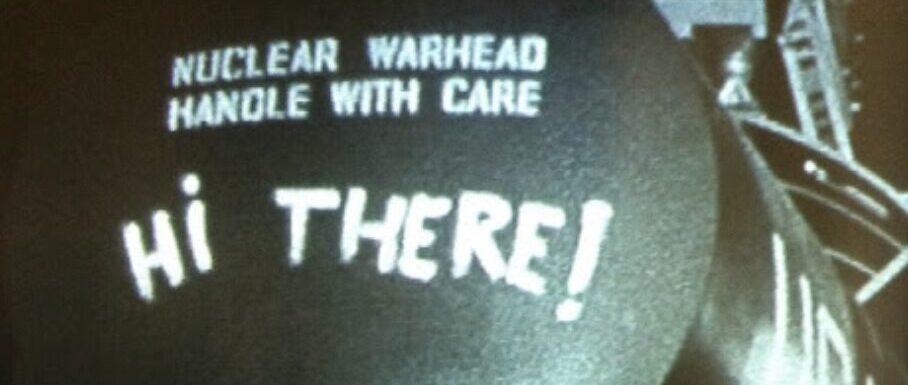
From the classic movie, Dr. Strangelove, this gloriously ridiculous warning on a nuclear bomb on a B-52 bomber:
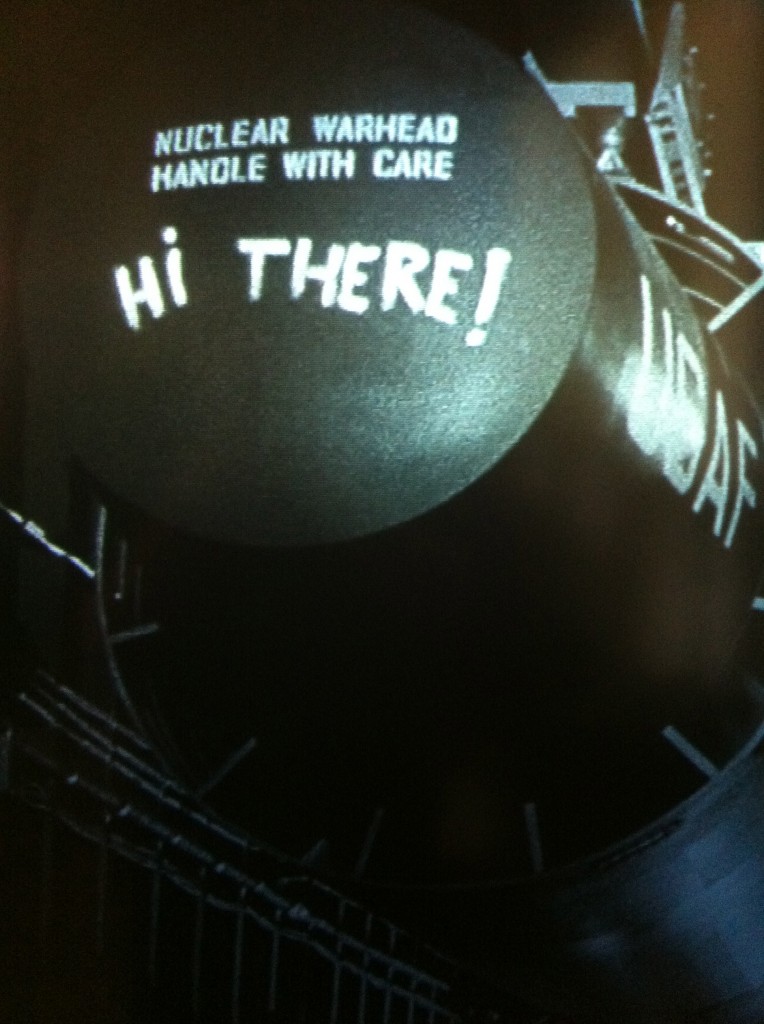
The bomb is stenciled “NUCLEAR WARHEAD – HANDLE WITH CARE,” and somebody added “HI THERE!” in paint. That's about the right level of seriousness for a warning label on a hydrogen bomb.
But the label is the least of the problems. The whole movie works as a failure-mode analysis. “Plan R” let a senior officer launch a retaliatory strike if everyone above him in the chain of command had been knocked out. It was a safeguard against one risk, and it became the path for a different one: a single unstable general. The CRM 114 discriminator on the bombers blocked any message that didn't start with a secret three-letter code. That protected against fake orders. It also blocked the recall.
That's the Lean lesson, minus the cobalt bombs. When you design a control, ask how it fails, and whether people can still stop the line when something goes wrong. A safeguard that prevents recovery isn't mistake-proofing. It's a different mistake, built in on purpose.
And the Doomsday Machine? Dr. Strangelove points out that it only works as a deterrent if everybody knows about it. The Soviets hadn't announced it yet. A warning nobody has seen doesn't prevent anything. At least most of the signs in this collection were posted where people could read them. Mostly.