
Learn More:
Mark’s page about Psychological Safety
Slides:
View the recording via KaiNexus
Download Slides (PDF)
Recording:
Polling Results:
Thanks for participating in the interactive polling!
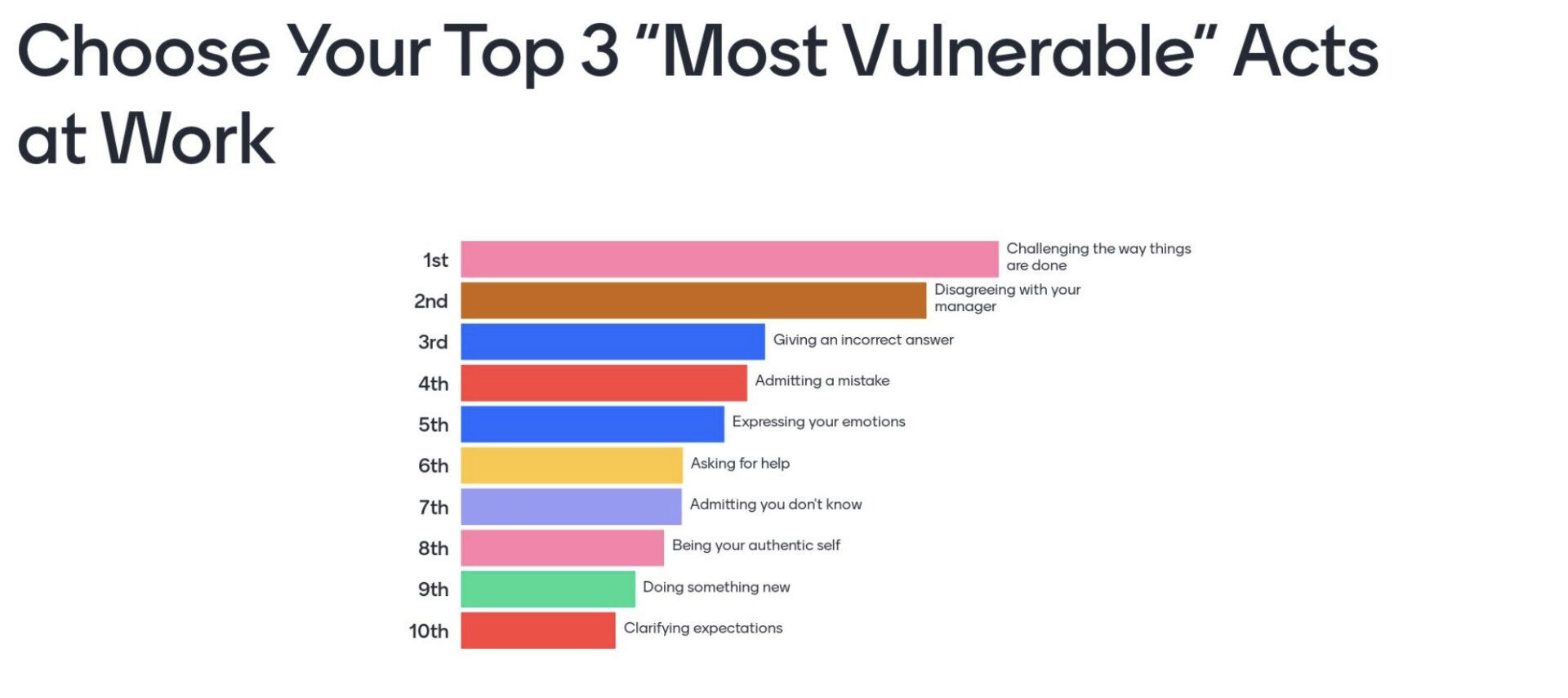
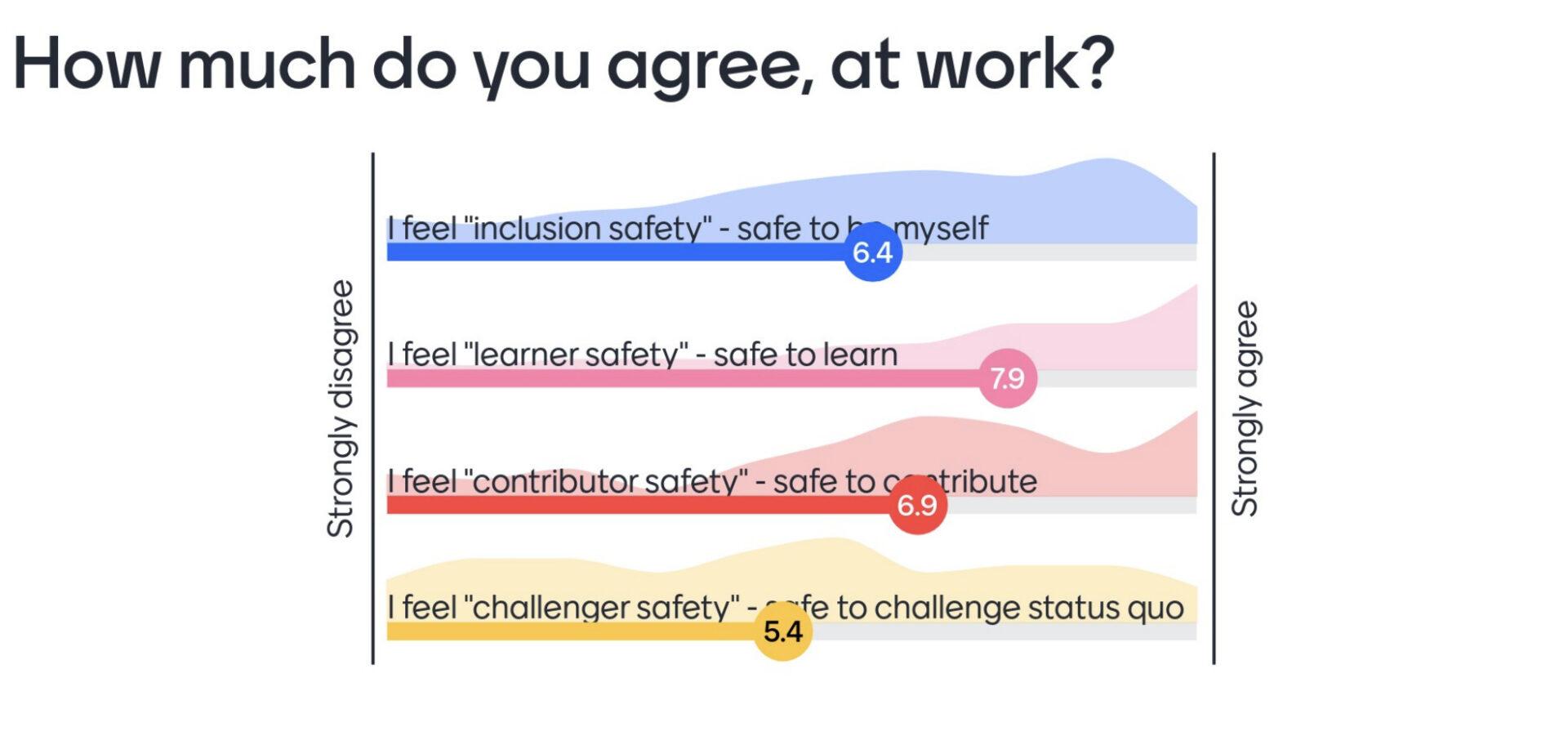
Examples of Vulnerable Acts:
| Requesting candid feedback. |
| Walking in the dark |
| Admitting when I made a mistake/bad decision. |
| Admitting a mistake |
| Admitting a mental health diagnosis |
| Accept you were wrong about an statement you made. |
| Identify a mistake that you made |
| admitting you don’t know. |
| speaking up against the norm. |
| When someone on the team has an issue that others observed, sharing with everyone that you also experienced that same mistake/issue (if true) and share how you learned through it. |
| communicating perspectives |
| Exposing my mistake to leadership |
| Calling out a serious error committed by a senior leader |
| admitting you made a mistake |
| Asking for help with workload |
| Show me how this process works? |
| pointing out problems |
| revealing personal details about yourself |
| Pointing out that the agreed-upon COA is politically correct, but doesnt address the root cause. |
| Making emotional based decisions caused by fear |
| Admitting mistakes |
| Ask the question a second time |
| Sharing ideas and fear of being judged |
| Disagreeing with someone |
| Admitting that you made a mistake or let a coworker down. |
| Admitting that you’re unsure of how to do something that you ‘should’ know how to do. |
| Suggesting a change in process to make it smoother |
| standing in front of a group of coworkers you don’t know well and sharing something personal is a vulnerable act. |
| Brainstorming sessions are good examples of vulnerable acts |
| Saying that you don’t know the answer to a question |
| disagreeing with superiors |
| Asking questions |
| Speaking up when someone does something wrong |
| Asking for feedback |
| volunteer for something |
| Telling a doctor that he’s wrong about how to manage the OR. |
| Admitting to be wrong |
| Asking an opposing question |
| Asking for help |
| Talk Not to talk |
| Challenging manager |
| Vulnerability needs to be modeled. The best boss I had, when he made mistakes, he would share with the group so everyone could learn and reflect. |
| Telling the boss they’re not doing something correct. |
| Admit you don’t know. |
| Telling your boss you have too much work or don’t know how to do something |
| keeping quiet because no cares |
| Errors related to treating veterans |
| Speaking up with a none conforming approach. |
| Questioning management on a decision |
| Speaking up against bad behavior |
| Walking in the dark. |
| Supportive of the less favorable viewpoint |
| going down stairs with no cameras |
| Say I don’t know |
| Indicating you don’t understand |
| Disagreeing with your boss on a course of action |
| Admit mistake. |
| When something didn’t work |
| Giving constructive criticism |
| Standing up for what is just |
| Admitting that you don’t know everything. |
| Apologizing to a child |
| Saying I don’t know |
| Advising that training is outdated |
| Seeing misogynistic behavior |
| Admitting I made a mistake |
| Sharing life challenges. |
| sharing my feelings |
| Saying “I don’t know” |
| Suggesting an idea that hasn’t been presented, something unique |
| Criticizing your boss. |
| Say something that contradicts the boss |
| speak up when seeing something not done correctly that could cause harm |
| Raising problem about CEO |
| Suggesting an odd idea |
| Challenging leadership to think past the status quo |
| Pointing out flaws in logic regarding improvement |
| Asking tough and potentially contoversial questions |
| Asking people to be accountable |
| Admit I don’t understand |
| Sharing data that disapproves current corpirate belief |
| challenging a decision of a colleague |
| Asking for help |
| confronting magical thinking on part of leaders who expect something we have no resources to provide |
| Offering a differing opinion |
| Telling boss they are wrong |
| Honest feedback |
| Speaking against someone with more experience than you |
| Calling out a senior leader |
| Not raising hand when there is mistake done |
| Saying the Emperor has no clothes |
| questioning a companies political acts |
| Coming across negative because you question |
| questioning a company’s political acts |
| Being your authentic self |
| Disagreeing with your manager |
Other Resources:
- The Mistakes That Make Us: Cultivating a Culture of Learning and Innovation – book by Mark Graban
- Mark’s interview with Amy Edmondson on the Lean Blog Interviews Podcast
- The 4 Stages of Psychological Safety – book by Timothy R. Clark
- The Fearless Organization – book by Amy Edmondson
- About Google’s Project Aristotle